The Azores is an archipelago of nine volcanic islands spread across 600 km of the North Atlantic, roughly 1,500 km west of mainland Portugal. Known for their dramatic volcanic landscapes, hydrangea-lined roads, world-class whale watching, and a subtropical maritime climate that stays mild year-round, the islands range from the bustling streets of Ponta Delgada on São Miguel to the single-village solitude of Corvo, home to just 400 people. Temperatures hover between 14°C (57°F) in winter and 26°C (79°F) in summer, with the eastern islands (Santa Maria, São Miguel) generally drier and warmer than the western group (Flores, Corvo), which catch the full force of Atlantic weather systems. Whether you come to climb Portugal’s highest mountain on Pico, hike the fajãs of São Jorge, sail into Horta’s legendary marina on Faial, or swim at the Azores’ best beach on Santa Maria, each island has a distinct personality shaped by its geology, climate, and history.
The Islands of the Azores
Eastern Group
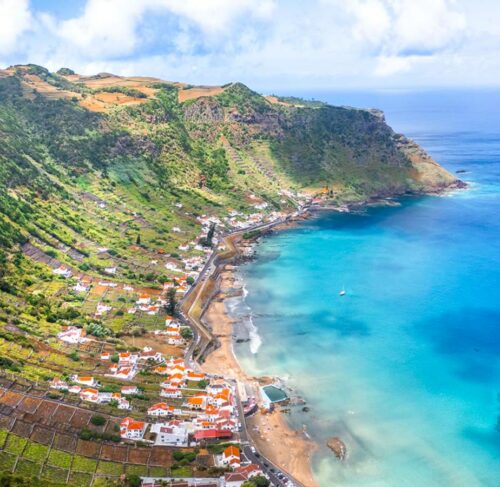
- Santa Maria — The warmest, driest, and sunniest Azorean island, with the archipelago’s best white sand beach (Praia Formosa), a surreal red clay desert at Barreiro da Faneca, and the oldest settlement in the Azores at Vila do Porto.
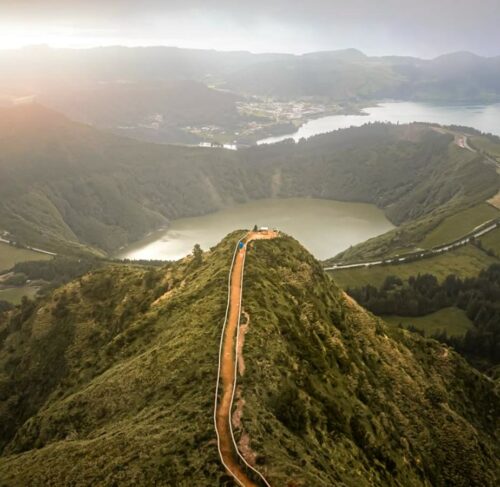
- São Miguel (Ponta Delgada) — The largest and most visited island, home to the regional capital Ponta Delgada, the twin lakes of Sete Cidades, Furnas Valley hot springs, and the only tea plantation in Europe.
Central Group
- Terceira (Angra do Heroísmo) — A UNESCO World Heritage city with cobbled streets, a 16th-century fortress, and the lively Sanjoaninas festival in June. The island is known for its impérios (colourful Holy Spirit chapels) and algar do carvão volcanic vent.
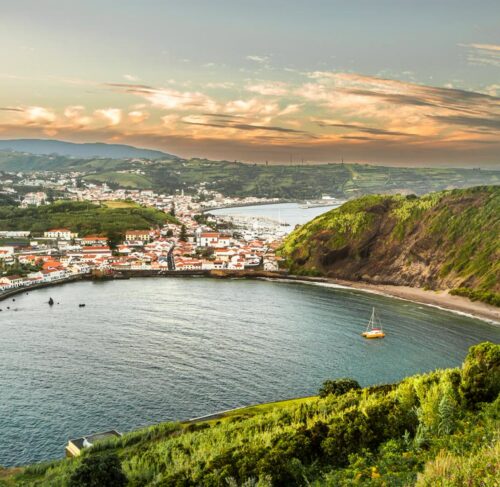
- Faial — The maritime crossroads of the Atlantic, centred on Horta Marina where transatlantic sailors paint murals and drink gin at Peter Café Sport. The Capelinhos volcano erupted as recently as 1957, and the Caldeira do Faial is one of the best rim walks in the archipelago. Blue hydrangeas cover the island every July.
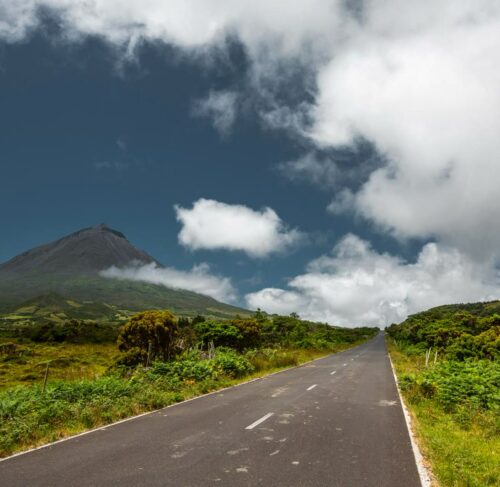
- Pico — Dominated by Ponta do Pico, Portugal’s highest mountain at 2,351 metres. The island is the Azores’ premier whale-watching destination, built on a deep whaling heritage, and its UNESCO-listed vineyards produce distinctive verdelho wine from grapes grown in black basalt corrals.
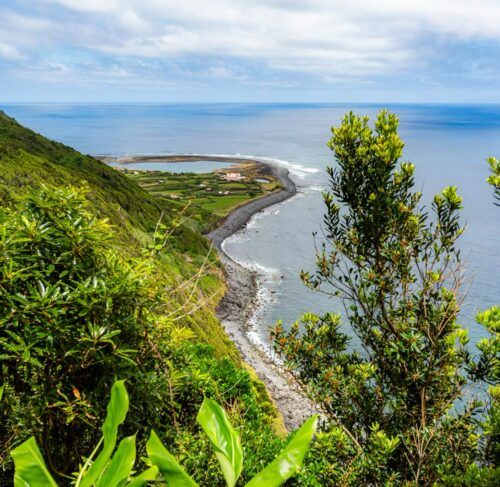
- São Jorge — A narrow volcanic ridge famous for its fajãs (flat coastal plateaus formed by landslides), the renowned São Jorge DOP cheese, uncrowded surf breaks on the north coast, and some of the best coastal hiking in the Azores.
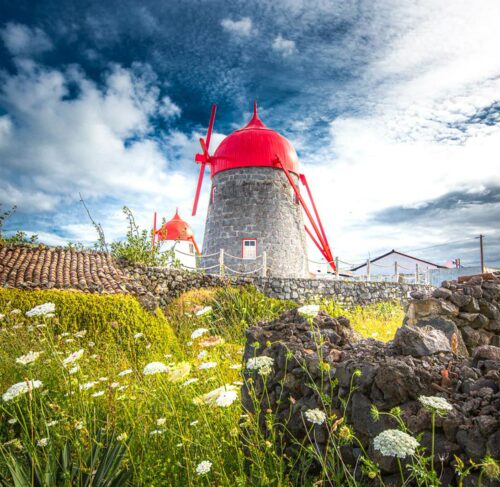
- Graciosa — The least-visited central island, a UNESCO Biosphere Reserve known for its windmills, Furna do Enxofre sulphur cave, and a gentle, bucolic landscape. (Guide coming soon.)
Western Group
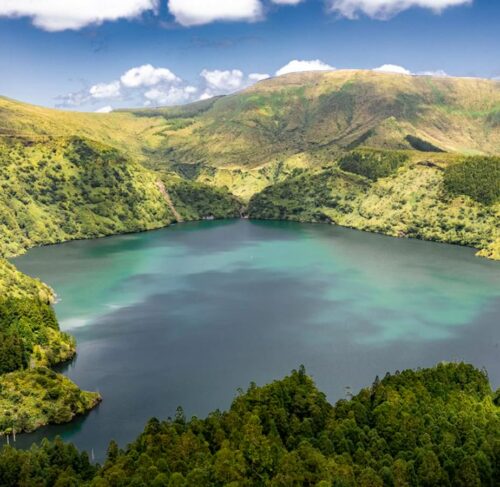
- Flores — The most beautiful island in the Azores and a UNESCO Biosphere Reserve: a waterfall-draped paradise of crater lakes, basalt columns at Rocha dos Bordões, and the spectacular multi-cascade amphitheatre at Poço da Ribeira do Ferreiro. The wettest island in the archipelago, and worth every raindrop.
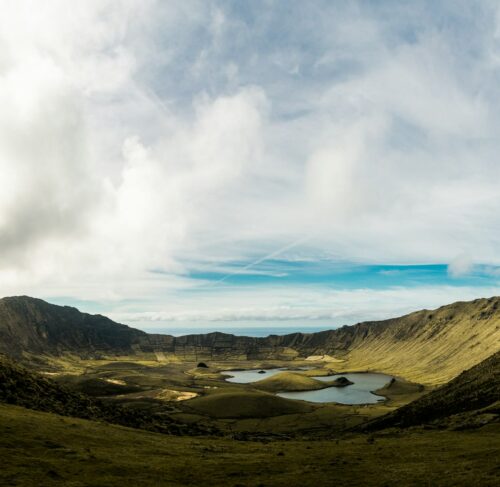
- Corvo — The smallest and most remote Azorean island at just 17 km² and 400 residents. A single volcanic cone with a massive crater (the Caldeirão) and one village. Famous among birdwatchers for American vagrant species, and among travellers seeking the most isolated community in Europe.
Getting Around the Azores
Inter-island travel is by SATA Air Açores flights or Atlânticoline ferries. The central group islands (Faial, Pico, São Jorge, Terceira, Graciosa) are connected by regular summer ferry services, with the Madalena-Horta crossing (30 minutes) running 3-5 times daily. The eastern islands (São Miguel, Santa Maria) and western islands (Flores, Corvo) rely primarily on flights. Santa Maria has no ferry connection at all. The Flores-Corvo ferry runs 1-3 times weekly and is weather-dependent — Corvo can be cut off for days during winter storms. Car rental is available on all islands except Corvo, where walking and an informal tractor shuttle are the primary transport.
Azores Weather Overview
The Azores has a subtropical maritime climate, heavily influenced by the Gulf Stream and the Azores High pressure system. Temperatures are mild year-round: winter highs of 16-18°C (61-64°F) and summer highs of 24-26°C (75-79°F). Rain is possible in any month but heaviest from October to March. The eastern islands (Santa Maria, São Miguel) are notably drier and sunnier than the western islands (Flores receives 1,600mm of rain annually vs 800mm on Santa Maria). Sea temperatures range from 16°C (61°F) in March to 24°C (75°F) in September. The best months to visit are June and September, which balance good weather with thinner crowds and lower prices than the July-August peak. Whale watching is excellent year-round, with migratory baleen whales peaking April to June and resident sperm whales most reliably seen July to October.