

 Patchy rain nearby
This post may contain affiliate links. If you purchase through them, I may earn a small commission at no extra cost to you. Thanks for supporting our small business.
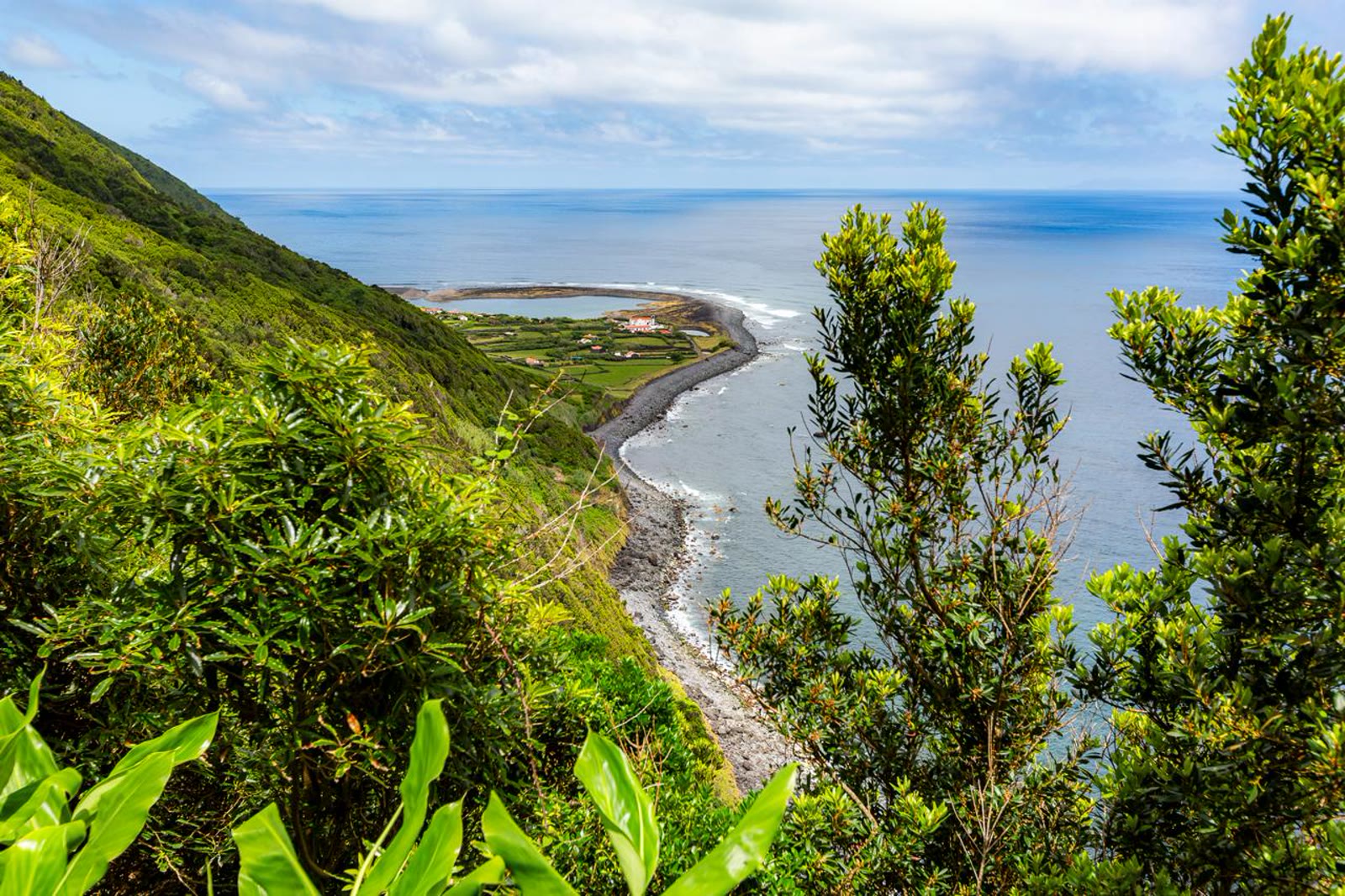
São Jorge is a long, narrow ridge of an island stretching 54 km from end to end but only 6 km wide, with dramatic cliffs plunging into the Atlantic on both sides. Known for its fajãs , flat coastal plateaus formed by ancient landslides and now classified as a UNESCO Biosphere Reserve , the island is the Azores at its most rugged and traditional. About 9,000 people live across two main towns, Velas and Calheta, supported by dairy farming and the production of the famous São Jorge cheese (Queijo São Jorge DOP). The climate is typical Azorean maritime, with temperatures from 14°C (57°F) in winter to 25°C (77°F) in summer, but the narrow, cliff-lined topography amplifies wind, and the fajãs each create their own sheltered microclimates.
Weather at a Glance
São Jorge’s weather is shaped by its unique geography: the central ridge catches Atlantic moisture, so the interior is frequently cloud-shrouded while the fajãs at sea level stay sunny. Summer (June to September) brings daytime highs of 23°C to 25°C (73°F to 77°F) with 50-70mm of monthly rain, but the fajãs like Fajã da Caldeira de Santo Cristo can feel several degrees warmer and substantially calmer. Winter runs from December to March with highs of 16°C to 17°C (61°F to 63°F) and heavy rain at 130-160mm per month. Sea temperatures peak at 23°C (73°F) in August and drop to 16°C (61°F) in March. The island’s north coast takes the full force of winter Atlantic swells, while the south coast fajãs stay sheltered. Wind is a constant factor: average speeds of 15-25 km/h year-round, strongest from November to March.
Seasonal Snapshot
- Spring (March to May): The fajãs burst into green, and temperatures climb from 17°C to 20°C (63°F to 68°F). Wildflowers carpet the cliffside trails, and hiking conditions are excellent. The Festa do Divino Espírito Santo brings processions and communal meals to villages across the island. Rainfall tapers from 100mm in March to 70mm in May.
- Summer (June to September): Peak hiking season on the official trails linking the fajãs. July and August are the driest months (50-60mm rain), and sea temperatures are at their warmest for swimming in the fajã pools. The Festa de São João in Calheta (June) and Velas’ Semana Cultural (July) draw the biggest crowds. Book guesthouses 1-2 months ahead for August.
- Autumn (October to November): October delivers the best balance of warm seas (22°C / 72°F), mild air (22°C / 72°F), and thinner crowds. November sees rain surge to 140mm, and some fajã access roads can close after heavy downpours. The cheese dairies offer tastings year-round, but autumn is when aged cheeses from spring production are at their prime.
- Winter (December to February): The wettest months at 140-170mm of rain each, but temperatures stay mild at 16°C to 17°C (61°F to 63°F). Some hiking trails on the north coast close due to landslide risk after heavy rain. The island slows to its quietest pace: restaurants in smaller villages may close for weeks. Surfers target the north coast where winter swells produce the best waves.
Quick Facts
- Warmest month: August (average high 25°C / 77°F)
- Coolest month: February (average high 16°C / 61°F)
- Wettest month: January (170mm / 6.7 inches)
- Driest month: July (50mm / 2.0 inches)
- Best months for hiking fajãs: May, June, September, October
- Unique feature: 40+ fajãs, each with its own microclimate
- Sea temperature warmest: August (23°C / 73°F)
- Wind: 15-25 km/h average, stronger in winter
Explore São Jorge
- São Jorge Weather by Month , Detailed monthly breakdown of temperatures, rainfall, wind patterns, and microclimate variations across the fajãs. Includes sea conditions for the natural swimming pools.
- Best Time to Visit São Jorge , When to hike the Fajãs Trail, the cheese festival calendar, surf season, and how to time a visit for the best weather-to-crowd ratio.
- Things to Do in São Jorge , Hiking the Fajã da Caldeira de Santo Cristo trail, surfing at Fajã de São João, visiting the São Jorge cheese factory in Beira, natural swimming pools at Simão Dias, and canyoning in the island’s interior.
- Where to Stay in São Jorge , Hotels in Velas and Calheta, restored fajã cottages, and rural guesthouses on the cliff tops. From the São Jorge Garden Hotel to simple rooms above village cafes.
- São Jorge Travel Tips & FAQ , São Jorge Airport (SJZ) connections, ferry links to Pico and Faial, fajã road access conditions, restaurant hours, and what gear to bring for hiking.
- São Jorge Events & Festivals , Festa de São João (Calheta, June), Semana Cultural das Velas (July), Festa do Divino Espírito Santo (spring), and the annual cheese fair. Dates, locations, and what to expect.
- Getting Around São Jorge , Car rental at the airport, the island’s single coastal road, taxi services in Velas and Calheta, and the access tracks down to the fajãs.
Suggested Hotels in São Jorge
São Jorge Garden Hotel
The island’s largest hotel, located on the hillside above Velas with sweeping views of the channel and Pico Mountain. Modern rooms, an outdoor pool, and a restaurant showcasing São Jorge cheese and local seafood. Best for travellers wanting resort comfort in a rural island setting.
Casa do Antigo Forno
Restored stone cottage in the Fajã de São João, steps from the natural swimming pools and surf break. Simple but beautifully restored with a kitchen, terrace, and views of the cliffs. Best for surfers, couples, and anyone wanting the authentic fajã experience with direct ocean access.
Residência Livramento
Family-run guesthouse in the centre of Velas, a short walk from the ferry terminal, restaurants, and the natural pool at Portinho da Vila. Clean, functional rooms at budget-friendly rates. Best for hikers and ferry hoppers who need an affordable, well-located base.
