


 Partly Cloudy
  Sunny
Sunny  Patchy rain nearby
 Kamakura sits on Sagami Bay 50 kilometers south of Tokyo, a compact coastal city that served as Japan’s political capital from 1185 to 1333. Today it draws visitors for its 65-plus Buddhist temples and 19 Shinto shrines, including the 13.35-meter bronze Great Buddha (Daibutsu) at Kotoku-in Temple. Forested hiking trails connect the temple clusters, and the Enoden vintage tram line links the city to the beaches and Enoshima Island. Kamakura works as both a day trip from Tokyo (60 minutes by JR Yokosuka Line) and a multi-day destination for those who want temples without the Kyoto-level crowds.
Welcome to Kamakura: Weather at a Glance
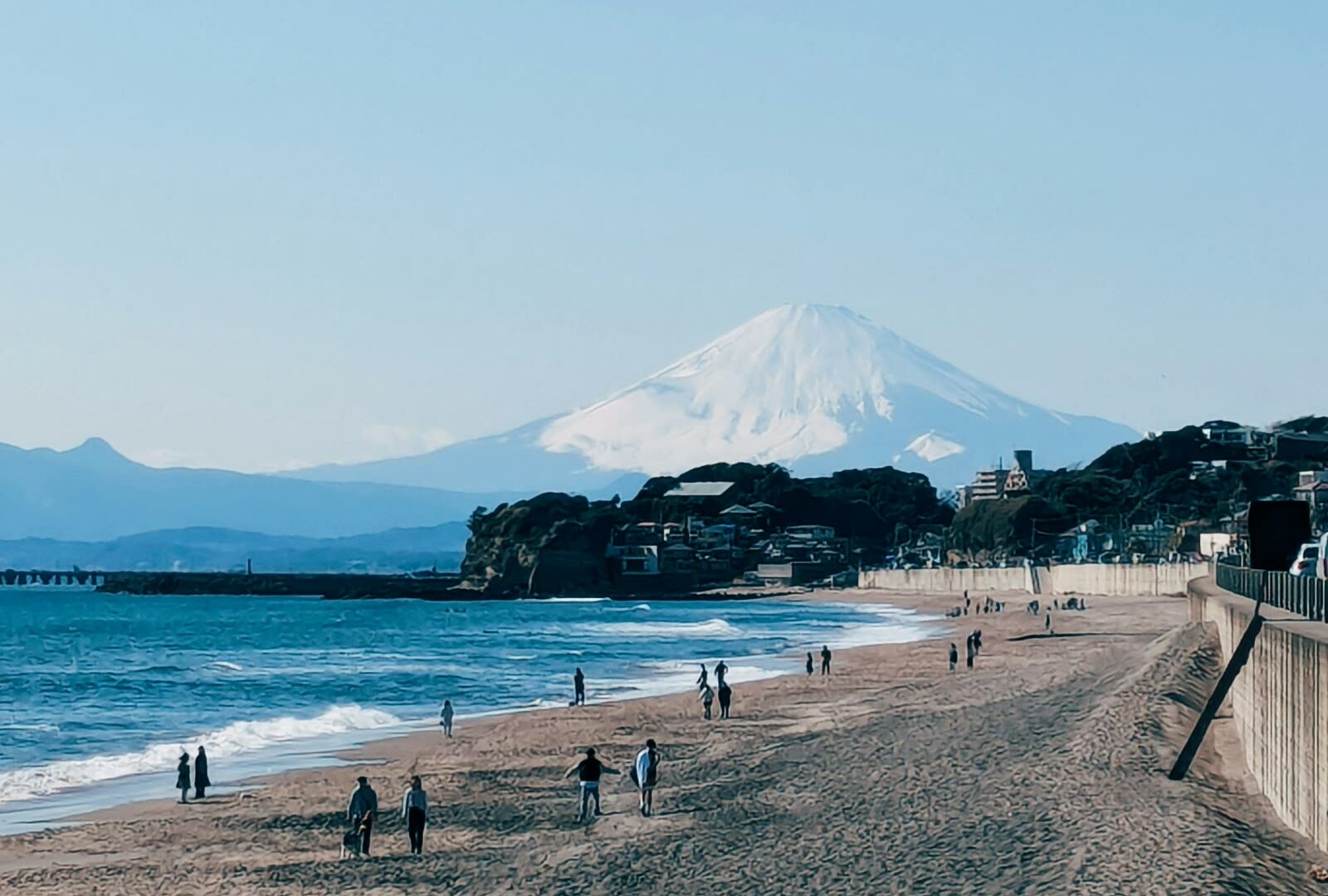
Kamakura has a humid subtropical climate tempered by its coastal position. Summer (July-August) brings heat and humidity with daytime highs of 28-29°C (82-84°F) and the opening of Yuigahama Beach for swimming. The rainy season (tsuyu) runs from mid-June to mid-July, averaging 190 mm of rain in June alone. September is the wettest month at 233 mm as typhoons track past the coast. Winter (December-February) is mild with daytime highs of 10-12°C (50-54°F), clear skies, and the best views of Mount Fuji across Sagami Bay. Spring and autumn are the shoulder seasons with the most comfortable temperatures, and the months that align with cherry blossoms and autumn foliage respectively. For a complete month-by-month breakdown with temperatures, rainfall, and sea conditions, see the Kamakura weather by month guide.
Seasonal Snapshot
- Spring (March to May): Cherry blossoms peak around March 25 to April 5 at Tsurugaoka Hachimangu and Genjiyama Park. Daytime temperatures climb from 13°C (55°F) in March to 22°C (72°F) in May. The week-long Kamakura Festival with horseback archery falls on the second Sunday of April. This is the busiest and most expensive season.
- Summer (June to August): The rainy season dominates June and early July. Yuigahama Beach opens July 1 through August 31. August is the hottest month at 29°C (84°F) and the sunniest with 7 hours daily. The Kamakura Fireworks Festival lights up the bay on a Saturday in late July.
- Autumn (September to November): September brings the typhoon peak and Kamakura’s highest rainfall (233 mm). October and November offer crisp, clear weather with daytime highs of 17-21°C (63-70°F). Japanese maples turn red at Engaku-ji and Kencho-ji from mid-November to early December.
- Winter (December to February): The driest and quietest season with daytime highs of 10-12°C (50-54°F), nights dropping to 2°C (36°F). Clear skies provide the year’s best Mount Fuji views from the beach. New Year shrine visits draw massive crowds January 1-3.
Location and Climate Influences
Kamakura occupies a natural amphitheater bounded by hills on three sides and Sagami Bay to the south. This geography channels moist Pacific air inland during summer, producing the rainy season and typhoon rainfall, while the surrounding hills provide some wind protection in winter. The city’s coastal position moderates temperature extremes compared to inland cities at similar latitude. Snowfall is extremely rare (averaging 0-3 mm per year, mostly in February). The proximity to Tokyo (50 km north) means Kamakura shares the capital’s broad climate patterns but typically runs about 1-2°C cooler in summer due to the ocean breeze. For detailed weather data by month, see the Kamakura weather by month calendar.
Quick Facts
- Best months for temples: November (autumn foliage, comfortable 17°C/63°F, 110 mm rain) and April (cherry blossoms, 18°C/64°F)
- Best beach months: Late July to August (water temp 25-26°C/77-79°F, most reliable sun)
- Warmest month: August (29°C/84°F average high, 24°C/75°F low)
- Coolest month: January (10°C/50°F high, 2°C/36°F low)
- Wettest month: September (233 mm, typhoon season)
- Driest month: December (55 mm)
- Sea temperature range: 15°C (59°F) in February to 26°C (79°F) in August
- Sunniest month: August (7 hours daily)
- Annual rainfall: 1,870 mm
Kamakura Travel Guides
- Kamakura Weather by Month: Monthly temperatures, rainfall, humidity, sunshine hours, and sea temperatures. Practical climate data for planning temple visits, beach days, and hiking trips.
- Best Time to Visit Kamakura: Specific date ranges for cherry blossoms, autumn foliage, beach season, and hydrangea viewing. Crowd levels, hotel pricing, and which months to avoid with data-driven reasons.
- Things to Do in Kamakura: The Great Buddha, Tsurugaoka Hachimangu Shrine, Hase-dera Temple, Zen temples, hiking trails, Yuigahama Beach, and Komachi-dori shopping street. All with hours, admission fees, and practical tips.
- Kamakura Events and Festivals: Complete annual calendar covering the Kamakura Festival (April), yabusame horseback archery, hydrangea season (June), fireworks (July), Grand Festival (September), autumn illuminations, and New Year shrine visits.
- Kamakura Neighborhoods Guide: Kamakura Station area, Hase temple district, Yuigahama and Zaimokuza beaches, Kita-Kamakura Zen temple cluster, and Enoshima Island. Which area suits your travel style.
- Where to Stay in Kamakura: Hotels, ryokans, and guesthouses organized by area and budget. Specific recommendations with Booking.com links, from beachfront luxury to temple-adjacent budget inns.
- Kamakura Travel Tips and FAQ: Transport from Tokyo (JR lines, Enoden, bus), visa requirements, money and tipping, safety, seasonal packing lists, day trip ideas, and temple etiquette.
Where to Stay in Kamakura
Kamakura’s accommodation ranges from traditional ryokans to modern guesthouses, concentrated in three main areas. The Kamakura Station area offers the most convenience with immediate access to restaurants and transport. Hase puts you within walking distance of the Great Buddha and the beach. Kita-Kamakura is the quietest option, with Engaku-ji and Kencho-ji temples literally across the street. Rooms book out weeks in advance during cherry blossom season and autumn foliage, so reserve early. For a complete breakdown of each area’s character and full hotel listings, see our where to stay in Kamakura guide.
Suggested Hotels in Kamakura
Modern Ryokan Kishi-Ke
A four-star contemporary ryokan overlooking Sagami Bay with two private bedrooms, kitchenette, and terrace sea views. Best for couples seeking a private Japanese inn experience with modern comforts. Check rates and availability
Kaihinsou Kamakura
An elegant traditional ryokan with a serene Japanese garden, free WiFi, and lounge with garden views, located within walking distance of Hase-dera and the Great Buddha. Best for travelers wanting an authentic ryokan stay at a moderate price. Check rates and availability
WeBase KAMAKURA
A stylish hostel and hotel hybrid with shared lounge, terrace, and a communal kitchen, located just steps from Yuigahama Beach and a 10-minute walk from the Great Buddha. Best for solo travelers and backpackers wanting beach access on a budget. Check rates and availability
City Articles
Best Time to Visit Kamakura
Kamakura is a year-round destination, but the best months for temple sightseeing and hiking are late March through early May and late October through November, when temperatures sit between 14°C and 22°C (57°F to 72°F) and rainfall is moderate. Cherry blossom season draws the largest crowds and highest hotel rates, while the June rainy season […]
Read MoreKamakura Events and Festivals
Kamakura’s festival calendar is anchored by the week-long Kamakura Festival in April and the Tsurugaoka Hachimangu Grand Festival in September, both featuring the dramatic spectacle of yabusame (samurai horseback archery). The city also marks seasonal flower blooms, including cherry blossoms in spring, hydrangeas in June, and autumn foliage in November, often with temple illuminations. Unlike […]
Read MoreKamakura Neighborhoods Guide
Kamakura is compact enough to explore on foot or by bicycle, but each of its five main areas has a distinct character that shapes where you will want to stay, eat, and spend your time. The Kamakura Station area offers the best transport links and dining, Hase is dense with temples and coastal views, Yuigahama […]
Read MoreKamakura Travel Tips and FAQ
Kamakura is one of Japan’s easiest destinations to navigate, lying just 60 minutes south of Tokyo on the JR Yokosuka Line. Most visitors arrive as day-trippers, but staying overnight transforms the experience: you get the temples to yourself before 9 AM and after 5 PM, when the tour bus crowds vanish. This guide covers the […]
Read MoreKamakura Weather by Month
Kamakura has a humid subtropical climate (Koppen Cfa), moderated by its position on Sagami Bay. Summers are hot and muggy with temperatures reaching 29°C (84°F) in August, while winters stay mild, rarely dipping below freezing. The city receives about 1,870 mm of annual rainfall, with the wettest months falling during the June rainy season and […]
Read MoreThings to Do in Kamakura
Kamakura packs more than 65 Buddhist temples and 19 Shinto shrines into a compact coastal valley, making it one of Japan’s richest historical destinations within day-trip range of Tokyo. The city served as Japan’s political capital from 1185 to 1333, and the samurai-era legacy is visible in every Zen garden, wooden statue, and hillside trail. […]
Read MoreWhere to Stay in Kamakura
Kamakura’s accommodation scene is smaller and more intimate than Tokyo’s, dominated by family-run ryokans (traditional inns), temple lodgings (shukubo), and a growing number of boutique guesthouses. There are no large international chain hotels in the city center, which means booking early is essential, especially during cherry blossom season, autumn foliage, and summer beach months. The […]
Read More