
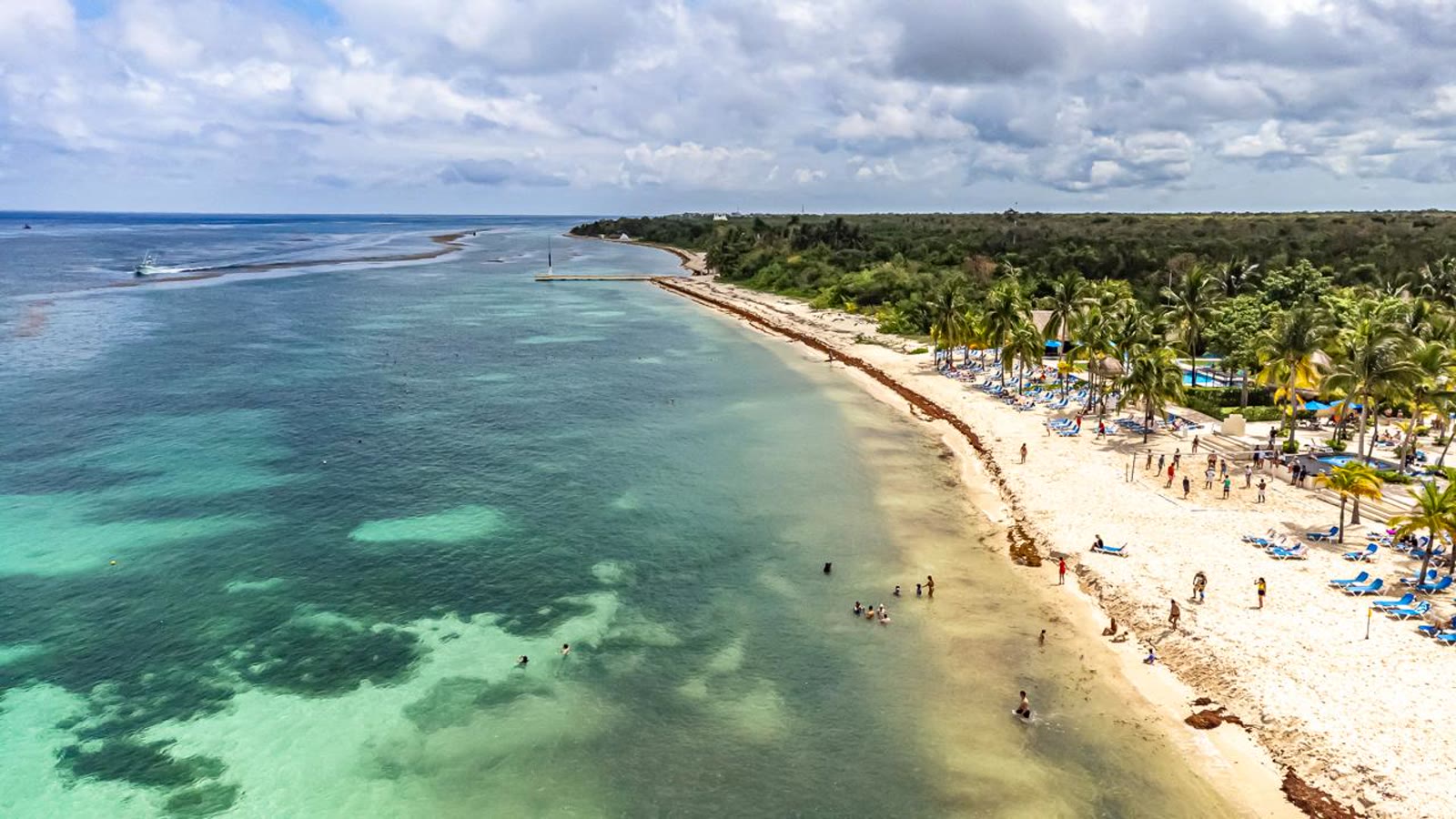
The Atlantic hurricane season runs from June 1 through November 30, the window the U.S. National Oceanic and Atmospheric Administration (NOAA) uses for the months when nearly every Caribbean storm forms. NOAA’s 1991 to 2020 average is 14 named storms, 7 hurricanes, and 3 major hurricanes per season, with activity peaking in September. Once November 30 passes, the basin switches into its dry season: trade winds return, humidity drops, and the heavy September and October downpours give way to weeks of clear, calm weather. For a winter trip, our Where to Go in December and Where to Go in January roundups line up with the city-by-city December numbers below.
Caribbean Hurricane Season Month by Month
- June: the season opens on June 1. June is the quietest month, and the few systems that do form usually spin up in the western Caribbean or the Gulf of Mexico rather than the open Atlantic.
- July: activity stays low while tropical waves begin rolling off the west coast of Africa, the seed for many later-season storms.
- August: formation ramps up sharply, and by late August the Atlantic is reliably active.
- September: the statistical peak. September 10 is the climatological peak date, and September produces more hurricanes than any other month of the year.
- October: the second-busiest month, with storm tracks shifting west toward the Gulf of Mexico and the western Caribbean.
- November: activity drops off and the season closes on November 30. A named storm in late November is rare but not impossible.
What Changes After November 30
- Trade winds return in November and hold through winter, which keeps Cancún weather in December moderate instead of the heavy, sticky air of late summer.
- Rain totals fall fast: Tulum drops from about 195mm in October to 70mm over 7 days in December, and Cartagena drops from 230mm in October to 30mm over about 3 days.
- Nortes arrive: cool fronts push through Holbox every 7 to 10 days in winter, dropping nights to 18 to 20°C (64 to 68°F) for a few days before the sun returns.
- The sea stays warm enough to swim all winter, running 26 to 27°C across the Mexican Caribbean and 27°C at Cartagena, just below the 29°C of August to October.
Caribbean Winter Weather, City by City
- Cancún: December highs run 26 to 28°C with nights of 19 to 21°C, sea temperatures around 26 to 27°C, and low rain; crowds build through the month and peak at Christmas and New Year.
- Tulum: its dry season runs November to April, and December averages a 28°C (82°F) high and 20°C (68°F) low with 70mm of rain over 7 days and a 27°C (81°F) sea.
- Cozumel: December averages 28°C (83°F) by day and 20°C (68°F) at night with 70mm of rain over 8 days, a 27°C (80°F) sea, and humidity down to 75%.
- Isla Mujeres: December brings a 28°C (82°F) high and 21°C (70°F) low with about 50mm of rain and a 26°C (79°F) sea; nortes can drop nights to 18 to 20°C.
- Holbox: December averages 28°C (82°F) by day and 20°C (68°F) at night with 42mm of rain over 5 days, 7 hours of sunshine, and a 26°C (79°F) sea.
- Puerto Morelos: December averages a 28.1°C high and 19.7°C low with 75mm of rain and a 27°C sea; February (45mm) and March (40mm) are the driest months.
- Chetumal: on the sheltered west side of the Yucatán, it gets less rain than Cancún; December averages 28°C (82°F) by day and 19°C (66°F) at night with 54mm and a 27°C (81°F) sea.
- Cartagena: its dry season runs December to April, and December averages a 31°C (88°F) high and 24°C (75°F) low with 30mm of rain over about 3 days and a 27°C sea, against October’s 230mm.

