


 Sunny
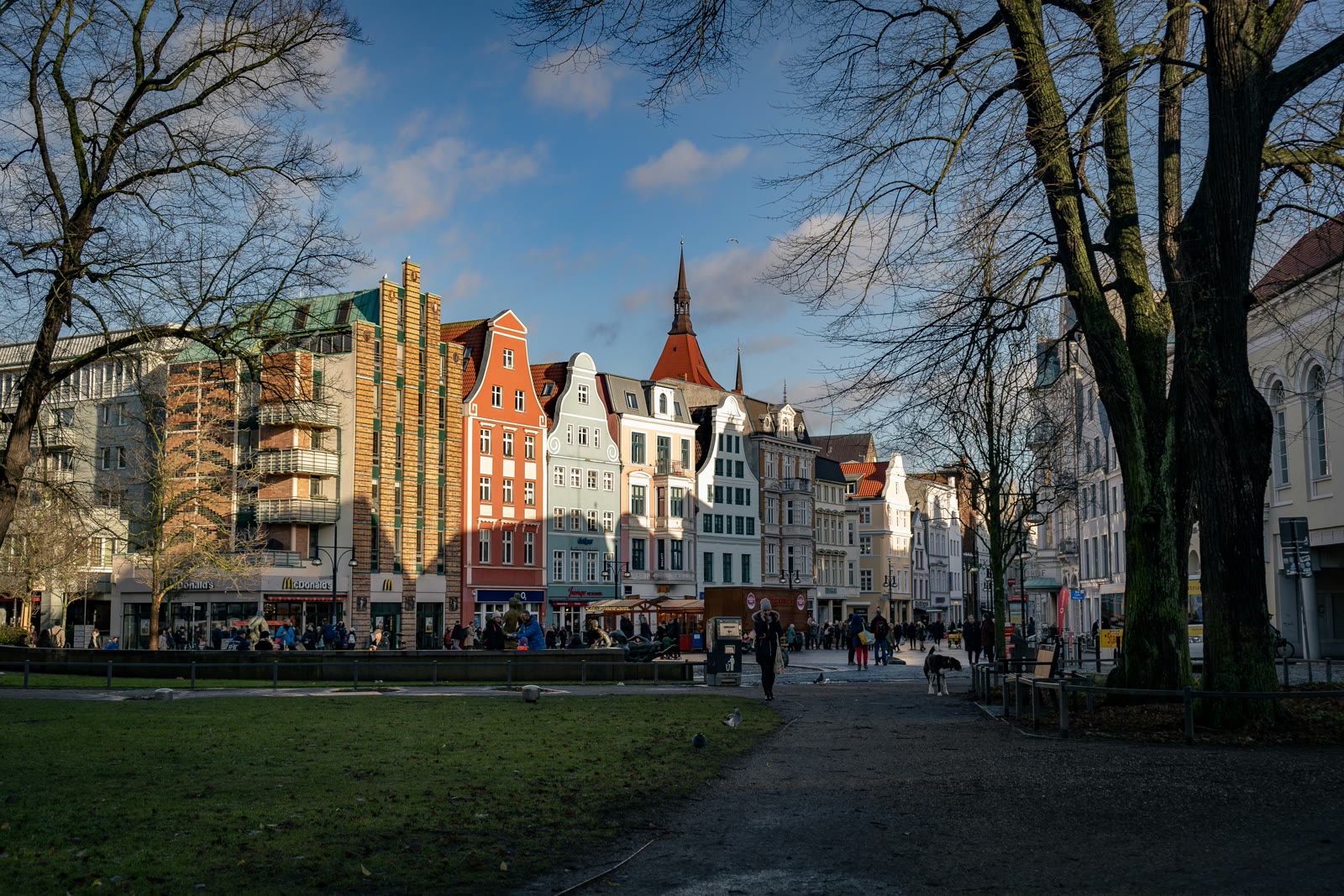
Sunny Rostock sits on the Baltic Sea coast of northern Germany, a Hanseatic port city of 210,000 where red-brick Gothic churches, a 600-year-old university, and the seaside resort of Warnemünde coexist inside a single municipality. The city’s maritime climate keeps summers mild (22°C/72°F highs in July) and winters cool rather than bitter (3°C/37°F highs in January). Rainfall is moderate and spread evenly through the year at about 600mm annually. The Warnemünde beach, a 3km sand strand 13km north of the old town, draws German holidaymakers from June through September and is reachable by a 20-minute S-Bahn ride from the city centre.
Welcome to Rostock
Rostock was founded in 1218 and grew rich in the Middle Ages as a key member of the Hanseatic League, the trading alliance that dominated the Baltic and North Sea. That wealth built the brick Gothic landmarks that define the city today: St. Mary’s Church with its functioning 1472 astronomical clock, the 117-metre spire of St. Peter’s, and the Kröpeliner Tor city gate standing sentinel since 1270. The university, founded in 1419, is the third-oldest in Germany and gives the city a population of 14,000 students who fill the cafes and bars of the KTV district year-round. Warnemünde, officially part of Rostock since 1323, evolved from a fishing village into the German Baltic’s busiest seaside resort, its wide beach and fish-cutter restaurants pulling over a million visitors each summer. The annual Hanse Sail festival in August fills the Warnow River with 200 tall ships, the largest maritime festival in the Baltic region.
Rostock Weather at a Glance
Rostock’s maritime temperate climate (Köppen Cfb) means no extreme temperatures in either direction. The Baltic Sea moderates the air: winters are milder than inland Germany, summers are cooler than cities further south. The warmest months are July and August (avg high 22°C/72°F), with the Baltic Sea reaching 18-19°C (64-66°F) at its August peak. January is the coldest month (avg high 3°C/37°F, low -1°C/30°F). The city receives about 600mm of rain annually, spread fairly evenly. June and July are the sunniest months at 240 hours each; December manages just 35 hours. May is typically the driest month (35mm), while November is the wettest (55mm) and greyest. The Baltic Sea is swimmable from late June through early September. For the full month-by-month breakdown with temperatures, rainfall, sea temperatures, and sunshine hours, see the Rostock weather by month guide.
Rostock Seasonal Snapshot
- Spring (March to May): March starts cold (8°C/46°F) but by May the city is warm and dry (17°C/63°F, 240 sun hours). Cherry blossoms line the Wallanlagen park, Warnemünde beach chairs are set out by mid-April, and the Ostseejazz festival arrives over Pentecost weekend. May is a superb month for cycling the Baltic coast route.
- Summer (June to August): Peak season. Long days (sunset after 9:45 PM in June), beach weather, and the Baltic Sea warm enough for swimming by late June. Warnemünde Week (early July) and Hanse Sail (early August) pack the city. Afternoon thunderstorms are common. Book hotels 2-3 months ahead.
- Autumn (September to November): September is the sweet spot: summer-warm days (18°C/64°F), still-swimmable sea (16°C/61°F), and crowds thin after week one. October brings autumn color to the Rostock Heath and increasing Baltic storms. November is grey, wet, and dark by 4:30 PM, though Christmas markets open late in the month.
- Winter (December to February): Cold, dark, and quiet. Christmas markets run through December 23. January and February see many Warnemünde businesses close for the season. Ferry services to Denmark and Sweden continue year-round. Hotel rates are at their lowest.
For a full breakdown of when to visit based on weather, crowds, festivals, and budget, read the best time to visit Rostock guide.
Rostock Location and Climate Influences
Rostock straddles the lower Warnow River where it meets the Baltic Sea in the state of Mecklenburg-Vorpommern, Germany’s northeasternmost region. The city is 180km northwest of Berlin, 100km east of Lübeck, and 220km south of Copenhagen across the Baltic. The coastal location is the dominant climate factor: the Baltic Sea’s thermal inertia keeps autumns warmer and springs cooler than inland cities at the same latitude. Prevailing westerly winds bring Atlantic moisture, while occasional easterlies from Siberia can push winter temperatures below -10°C (14°F) for short spells. The flat terrain offers no obstacle to wind, so Warnemünde’s beach promenade can feel raw even on mild days. Rostock’s latitude (54°N, the same as southern Alaska) means dramatic swings in daylight: 17 hours in late June versus 7.5 hours in late December.
Rostock Quick Facts
- Best beach months: July and August (Baltic Sea 17-19°C/63-66°F)
- Warmest month: July/August (avg high 22°C/72°F, peaks to 30°C/86°F)
- Coldest month: January (avg high 3°C/37°F, low -1°C/30°F)
- Wettest month: July/August (65mm) and November (55mm)
- Driest month: May (35mm)
- Sunniest months: May/June (240 hours each)
- Darkest month: December (35 hours)
- Sea temperature peak: 18-19°C (64-66°F) in August
- Annual rainfall: ~600mm
- Annual sunshine: ~1,700 hours
- Airport: Rostock-Laage (RLG), 30km southeast, limited scheduled service. Most international visitors arrive via Hamburg (HAM, 180km) or Berlin (BER, 230km)
- Train to Berlin: 2h15 on ICE (EUR 45-65)
- Train to Hamburg: 1h45 on ICE (EUR 50)
- Ferry to Denmark: 1h45 to Gedser (foot passenger from EUR 15)
- Ferry to Sweden: 5h30-7h to Trelleborg (foot passenger from EUR 25)
Things to Do in Rostock
Rostock splits naturally between the red-brick Altstadt and the seaside district of Warnemünde. In the old town, St. Mary’s Church houses the world’s oldest functioning astronomical clock (1472), the Kröpeliner Tor is the best-preserved of four original medieval city gates, and the university’s baroque festival hall hosts concerts year-round. Warnemünde delivers a 3km Baltic beach, a 1898 lighthouse you can climb (EUR 3, 135 steps), and the Alter Strom canal where fishing cutters sell smoked mackerel sandwiches directly from the deck. The Rostock Zoo ranks among Germany’s best, and the Molli steam train runs 15km from Bad Doberan through Heiligendamm, Germany’s oldest seaside resort. See the things to do in Rostock guide for full details on every attraction with opening hours, ticket prices, and practical tips.
Rostock Neighborhoods
The Altstadt is the compact historic core with most sights and mid-range to upscale hotels. Immediately west, the KTV district is the student quarter with the city’s best bars, cheap eats, and lower accommodation prices. Warnemünde, 13km north, is the beach resort with the priciest hotels and a self-contained village feel. Reutershagen and the Stadthafen offer budget and business options respectively, connected to the centre by a reliable tram network. For a full breakdown of each area’s character, who it suits, and typical prices, read the Rostock neighborhoods guide.
Rostock Events and Festivals
The Hanse Sail (early August) is Rostock’s signature event, bringing over 200 tall ships and a million visitors to the Warnow River over four days. Warnemünde Week (early July) combines an international sailing regatta with beachfront concerts and fireworks. The Christmas market (late November to December 23) fills Neuer Markt and Kröpeliner Strasse with 200 stalls. The Ostseejazz festival arrives over Pentecost weekend (late May/early June), and the Kröpeliner Tor Festival (mid-June) is a one-day street party in the KTV district. Find dates, locations, and what to expect in the Rostock events and festivals guide.
Where to Stay in Rostock
Accommodation ranges from the Radisson Blu on the Warnow River (Altstadt, EUR 150-220/night) to the Strand-Hotel Hübner directly on the Warnemünde beach promenade (EUR 180-250/night in summer). The Prize by Radisson near the KTV district offers design-forward rooms at mid-range prices (EUR 80-120). Budget travelers should look at the B&B Hotel in Broderstorf (EUR 50-80) or family-run guesthouses in Reutershagen. Book 3 months ahead for July and August, especially during Hanse Sail and Warnemünde Week. For full area-by-area hotel recommendations with Booking.com links, see the where to stay in Rostock guide.
Suggested Hotels in Rostock
Radisson Blu Hotel, Rostock
Rostock’s top-tier hotel on the Warnow River with panoramic windows, a sauna, and a restaurant serving regional Mecklenburg cuisine. Best for couples and travelers wanting full-service comfort in the city centre. Check rates and availability
Strand-Hotel Hübner
Warnemünde’s premier beachfront hotel with a full spa, pool with sea views, and elegant marble bathrooms. Best for travelers who want the Baltic Sea outside their window and a classic seaside resort experience. Check rates and availability
Prize by Radisson, Rostock City
A stylish and affordable design hotel near the Volkstheater, with air-conditioned rooms and a 24-hour lobby bar. Best for travelers who want a modern, reliable hotel at mid-range prices. Check rates and availability
Rostock Travel Tips and FAQ
Getting around Rostock is straightforward. A single tram/S-Bahn ticket costs EUR 2.40 (60 minutes), a day pass EUR 5.80. The S-Bahn to Warnemünde runs every 15 minutes from the main station (20 minutes). The Rostock-Laage Airport has limited flights; most visitors arrive via Hamburg (1h45 by ICE) or Berlin (2h15 by ICE). Ferries to Denmark (Gedser, 1h45) and Sweden (Trelleborg, 5h30-7h) depart from the overseas port. English is widely spoken in tourist-facing businesses. Tap water is safe. The city is safe, with the main precautions being beach flag awareness and watching bags during crowded festivals. For full practical details on visas, tipping, transport, packing, and family-friendliness, see the Rostock travel tips and FAQ guide.
City Articles
Best Time to Visit Rostock
Rostock’s best visiting window spans May through September, when temperatures are warmest, days are longest, and the Warnemünde seaside resort comes alive. July and August are the peak months for Baltic Sea swimming, with water temperatures reaching 18-19°C (64-66°F). But the best month depends on what you want: beach weather, festival crowds, or quiet exploration. […]
Read MoreRostock Events & Festivals
Rostock’s event calendar revolves around the Baltic Sea. The Hanse Sail tall ship festival in August is the biggest draw, bringing over 200 vessels and a million visitors to the harbour. But the city also hosts a respected jazz festival, Germany’s northernmost Christmas market, and a full week of maritime celebration in Warnemünde each July. […]
Read MoreRostock Neighborhoods
Rostock divides naturally between the historic Altstadt, the student-packed KTV district, and the seaside resort of Warnemünde 13km north. Most visitors split their time between the old town and the beach, but neighborhoods like Reutershagen and the Stadthafen offer lower prices and fewer tourists. Here is the lay of the land, broken down by area, […]
Read MoreRostock Travel Tips & FAQ
Rostock is easy to navigate once you understand the geography: Altstadt in the centre, Warnemünde 13km north on the Baltic, and an efficient S-Bahn connecting the two. German is the primary language, but English is widely spoken in hotels, restaurants, and tourist-facing businesses. Euro (EUR) is the currency, and cards are widely accepted though smaller […]
Read MoreRostock Weather by Month
Rostock has a maritime temperate climate (Köppen Cfb) shaped by the Baltic Sea, which moderates temperature extremes year-round. Winters are cool but rarely severe, summers are mild, and rainfall is spread evenly across all months. The city averages 600mm of precipitation annually with about 1,700 sunshine hours. Baltic Sea water temperatures peak at 18-19°C (64-66°F) […]
Read MoreThings to Do in Rostock
Rostock packs 800 years of Hanseatic history into its red-brick old town while the Warnemünde seaside district delivers 3km of Baltic beach. From climbing the tower of northern Germany’s oldest university church to eating smoked fish straight off the cutter at the Alter Strom canal, here are the essential things to do in Rostock, organized […]
Read MoreWhere to Stay in Rostock
Rostock accommodation splits between the historic Altstadt, the student-filled KTV district, and the seaside resort of Warnemünde 13km north. Where you stay shapes how you experience the city: walk to Hanseatic churches from an Altstadt hotel, roll out of bed onto the Baltic beach in Warnemünde, or save money in the KTV with the best […]
Read More