


 Mist
Mist  Patchy rain nearby
  Partly Cloudy
  Sunny
Sunny  Light rain
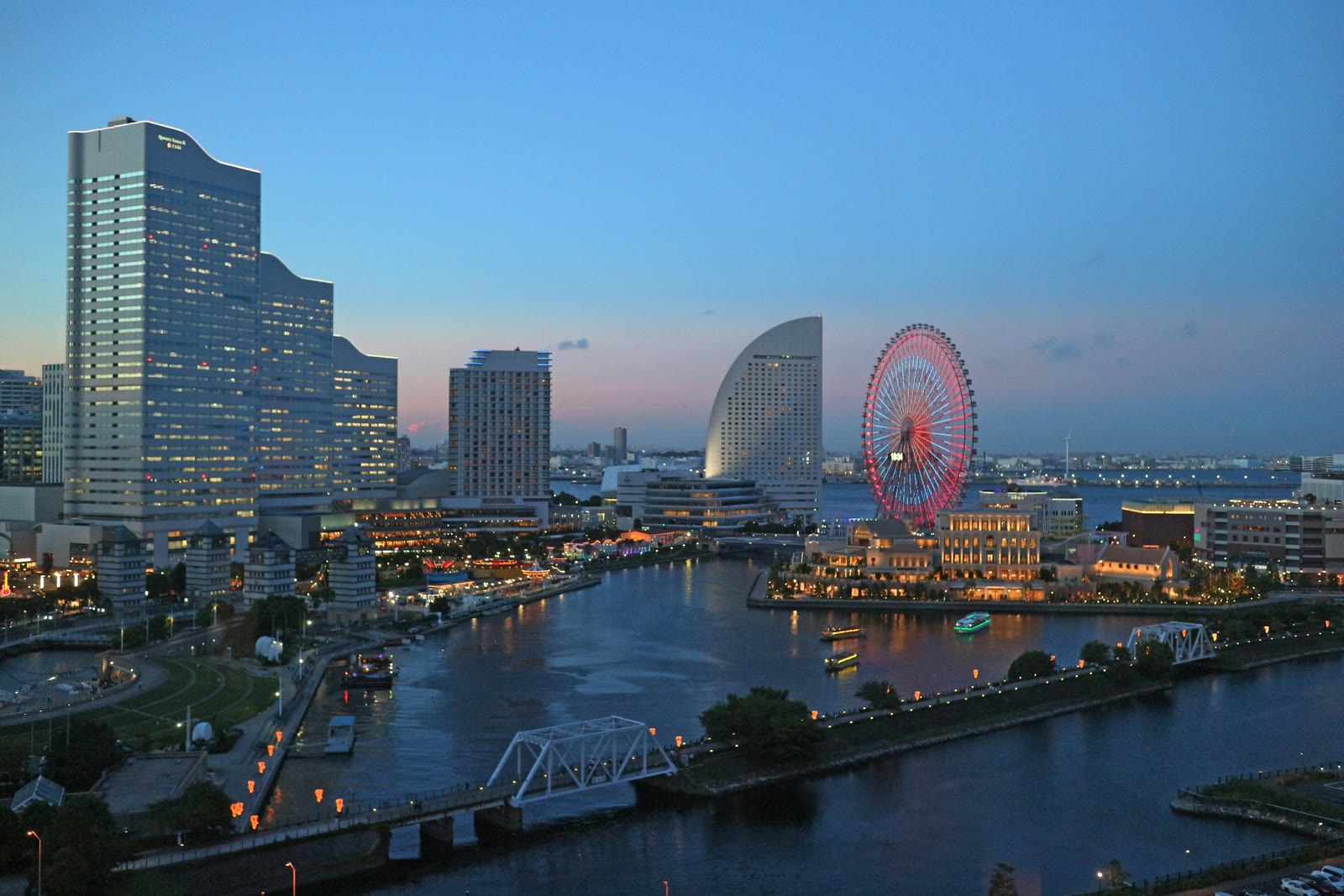
 Yokohama sits on the western shore of Tokyo Bay, just 30 kilometers south of central Tokyo, and is Japan’s second-largest city with 3.7 million residents. The city opened to international trade in 1859 after more than two centuries of national isolation, transforming from a fishing village into one of Asia’s most important ports. Today Yokohama balances a futuristic waterfront skyline with well-preserved historical districts, the largest Chinatown in Japan, and a food scene that rivals Tokyo’s. The climate is humid subtropical with four distinct seasons, moderated by the bay, making Yokohama a year-round destination with each season offering a different experience.
Yokohama Weather at a Glance
Yokohama has a humid subtropical climate (Köppen Cfa) with average annual temperatures ranging from 10°C (50°F) in January to 31°C (88°F) in August. The city receives approximately 1,630mm (64 inches) of rain annually, concentrated in the June-October period. The bay location moderates temperature extremes, Yokohama is typically 1-2°C warmer in winter and slightly cooler in summer than inland Tokyo neighborhoods. Snow is extremely rare, with measurable accumulation occurring roughly once per decade. The rainy season (tsuyu) runs from early June to mid-July, and typhoon season peaks in September. For the full month-by-month breakdown with temperatures, rainfall, and sunshine data, see our Yokohama weather by month guide.
Seasonal Snapshot
- Spring (March to May): Cherry blossoms bloom in late March and peak in the first week of April. Temperatures climb from 13°C (55°F) in March to 22°C (72°F) in May. Sankeien Garden and Yamashita Park are prime sakura viewing spots. This is peak tourism season, book hotels 4-6 months ahead.
- Summer (June to August): The rainy season (tsuyu) lasts from early June through mid-July. August brings the hottest conditions with highs of 31°C (88°F) and 80% humidity. Fireworks festivals draw massive crowds to the waterfront. Indoor attractions like the Cup Noodles Museum and Ramen Museum provide air-conditioned refuge.
- Autumn (September to November): September carries typhoon risk (230mm of rain). October and November offer the year’s most comfortable weather, sunny, dry, and 17-22°C (63-72°F). Autumn foliage peaks in Sankeien Garden around November 20-30. The Yokohama Oktoberfest at the Red Brick Warehouse runs from late September.
- Winter (December to February): Mild by Japanese standards, with daytime highs of 10-13°C (50-55°F) and nighttime lows around 2-5°C (36-41°F). This is the driest season (45-63mm per month) with clear skies and 6 hours of daily sunshine. Hotel rates drop 30-50% below spring peaks. Holiday illuminations transform the Minato Mirai waterfront.
Quick Facts
- Best months for weather: Mid-April to May and mid-October to November
- Warmest month: August (31°C / 88°F average high)
- Coldest month: January (10°C / 50°F average high, 2°C / 36°F low)
- Wettest month: September (230mm / 9.1 inches over 13 rainy days)
- Driest month: December (45mm / 1.8 inches over 5 rainy days)
- Cherry blossom peak: March 28 to April 3 (typical range)
- Typhoon season: August through October, with September as the peak month
- Sea temperature range: 16°C (61°F) in January-February to 27°C (81°F) in August
- Sunniest months: May and August (7 hours per day)
Yokohama Travel Guides
- Yokohama Weather by Month: Detailed month-by-month climate data with temperatures, rainfall, sunshine hours, and a quick-reference table covering all 12 months.
- Best Time to Visit Yokohama: Cherry blossom timing, the best months for comfortable weather, lowest hotel prices, and which months to avoid (and why).
- Things to Do in Yokohama: Complete guide to the Minato Mirai waterfront, Chinatown, Sankeien Garden, Cup Noodles Museum, Ramen Museum, historic districts, and more, with hours, prices, and transport tips.
- Yokohama Events and Festivals: Seasonal calendar covering the Sparkling Twilight fireworks, Oktoberfest, Chinese New Year, cherry blossom season, summer festivals, and holiday illuminations.
- Best Neighborhoods in Yokohama: Area-by-area breakdown of Minato Mirai 21, Kannai, Chinatown, Motomachi/Yamate, Yokohama Station, and Shin-Yokohama, who each area suits and what to expect.
- Where to Stay in Yokohama: Recommended hotels in each neighborhood at luxury, mid-range, and budget price points with verified Booking.com links.
- Yokohama Travel Tips and FAQ: Airport transport from Haneda and Narita, getting around with IC cards and the Minato Burari pass, cash vs cards, tipping (don’t), WiFi options, visas, and safety information.
Location and Climate Influences
Yokohama sits at 35.4°N latitude on the northwestern shore of Tokyo Bay, 30 kilometers (19 miles) south of Tokyo Station. The city occupies a narrow coastal plain backed by low hills reaching 100-150 meters in elevation. The bay provides a moderating influence on temperatures, winters are 1-2°C warmer than inland areas at the same latitude, and summer heat is tempered by sea breezes. The Kuroshio Current, a warm Pacific Ocean current flowing northward along Japan’s east coast, keeps sea temperatures swimmable from July through September (25-27°C / 77-81°F). Yokohama’s position inside Tokyo Bay provides better protection from Pacific typhoons than exposed coastal cities like Chiba or Shizuoka, though tropical storm remnants still bring heavy rain and gusty winds several times per year.
Suggested Hotels in Yokohama
The Yokohama Bay Hotel Tokyu
Five-star waterfront hotel occupying the upper floors of the Queen’s Square complex with panoramic Tokyo Bay views from every room, a 25-meter indoor pool, and five restaurants including a Michelin-starred French dining room. Best for couples and luxury travelers seeking a special-occasion stay in the heart of Minato Mirai. Check rates and availability
Hyatt Regency Yokohama
Modern 22-story tower overlooking Yamashita Park and Tokyo Bay with a rooftop bar, excellent breakfast buffet, and lobby design incorporating Yokohama’s maritime heritage. Best for business travelers and families seeking international chain reliability with local character. Check rates and availability
Sotetsu Fresa Inn Yokohama Higashiguchi
Clean, efficient business hotel 4 minutes from Yokohama Station with fast WiFi, multilingual check-in kiosks, and a well-reviewed Japanese-Western breakfast buffet (1,300 yen). Best for solo travelers and short-stay visitors who prioritize transit access and value. Check rates and availability
City Articles
Best Neighborhoods in Yokohama: Minato Mirai, Kannai, Chinatown & More
Yokohama’s neighborhoods range from the glass-and-steel waterfront of Minato Mirai to the narrow, atmospheric streets of the historic foreign settlement. Each district has a distinct character, price point, and target audience. This guide covers the best neighborhoods in Yokohama , what each area is known for, who it suits, and what you will find there. […]
Read MoreBest Time to Visit Yokohama: Weather, Cherry Blossoms & Crowds Guide
The best time to visit Yokohama depends on your priorities , cherry blossoms in spring, comfortable temperatures in autumn, or fewer crowds in winter. Each season offers a different experience in Japan’s second-largest city, and the relatively mild climate means there is no truly bad time to visit if you plan appropriately. This guide breaks […]
Read MoreThings to Do in Yokohama: Attractions, Museums, Gardens & Chinatown
Yokohama packs more attractions into its compact waterfront than most cities twice its size. From the futuristic Minato Mirai 21 district to the largest Chinatown in Asia outside China, the city balances ultra-modern development with well-preserved historical sites that tell the story of Japan’s opening to the world. These are the top things to do […]
Read MoreWhere to Stay in Yokohama: Hotels by Area & Budget
Where to stay in Yokohama comes down to a choice between the modern waterfront of Minato Mirai, the historic Kannai district, or the transit convenience of the Yokohama Station area. Each area suits different travel styles and budgets. This guide breaks down the best areas and specific hotel recommendations at luxury, mid-range, and budget price […]
Read MoreYokohama Events and Festivals: Fireworks, Oktoberfest & Seasonal Calendar
Yokohama’s event calendar reflects its dual identity as both a historic port city and a modern cultural hub. From traditional celebrations rooted in the 19th century to massive fireworks displays drawing hundreds of thousands of spectators, the city hosts events year-round. Here are the major Yokohama events and festivals, organized by month so you can […]
Read MoreYokohama Travel Tips & FAQ: Airport, Transport, Money, Safety & Customs
Planning a trip to Yokohama involves practical questions about airports, transport passes, money, and local customs. This Yokohama travel tips and FAQ covers everything from which airport to use to how much cash to carry, with specific numbers and names so you can plan without surprises. Yokohama Travel Tips and FAQ: Airports and Arrival Yokohama […]
Read MoreYokohama Weather by Month: Temperatures, Rainfall & Climate Guide
Yokohama has a humid subtropical climate (Köppen Cfa) with four distinct seasons. Located on the western shore of Tokyo Bay at 35°N latitude, the city experiences hot, humid summers and mild winters. Annual rainfall totals approximately 1,630mm (64 inches), with the wettest months from June through October. The city’s coastal position moderates temperature extremes compared […]
Read More