

 Patchy rain nearby
 Light rain
 Light drizzle
 Sunny
This post may contain affiliate links. If you purchase through them, I may earn a small commission at no extra cost to you. Thanks for supporting our small business.
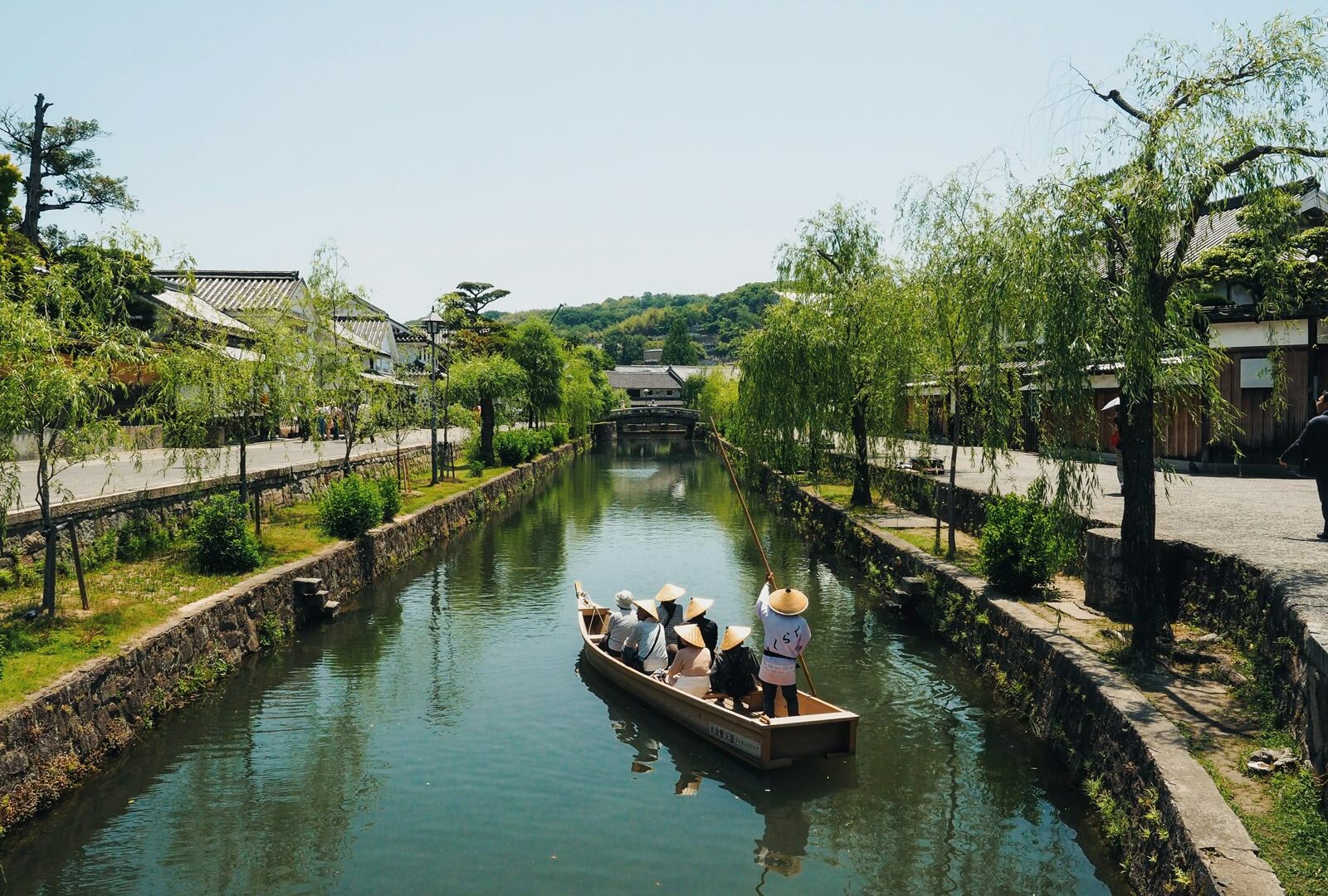
Kurashiki is a canal town in Okayama Prefecture, on the Seto Inland Sea side of Japan, best known for the Bikan Historical Quarter, a street of white-walled kura storehouses and willow trees beside the Kurashiki River. The city holds Japan’s first private Western art museum, the Ohara Museum of Art, and the Kojima district where Japanese denim was born in the 1960s. It sits 15 to 17 minutes by train from Okayama Station and works well as a one- or two-night base for the art island of Naoshima.
Welcome to Kurashiki
Kurashiki is one of the few Japanese cities that kept its Edo and Meiji-era merchant district intact instead of rebuilding it. The Bikan quarter is the reason to come: willow trees bend over the canal, boats punt past the white storehouses, and the Ohara Museum of Art holds El Greco, Monet and Matisse behind a stone wall. Outside the old town, the city is a working textile centre, and the Kojima area south of the centre still makes some of the best selvedge denim in the world.
Kurashiki Weather at a Glance
Kurashiki has a humid subtropical climate with a yearly average of 16°C (61°F) and about 1,042mm of rain. January is the coldest month with highs around 9°C (48°F) and lows near freezing, while August peaks at 31°C (88°F). Rain concentrates in the tsuyu rainy season of June and July, when July alone averages 154mm, and the driest months are January and December with about 34mm and 40mm.
The Seto Inland Sea keeps the city slightly drier and milder than the Japan Sea coast to the north, but summers are still humid and September sits in typhoon season. Snow is rare in winter, making the historic quarter walkable year-round.
Kurashiki by Season
- Winter (Dec-Feb): Dry and quiet, with highs of 9-11°C (48-52°F) and the lowest hotel rates; hina doll displays begin in late February.
- Spring (Mar-May): Cherry blossoms in late March to early April, then mild 18-23°C (64-73°F) days ideal for the canals; the Kojima Textile Festival runs the last weekend of April.
- Summer (Jun-Aug): The tsuyu rainy season peaks in June and July with 150-154mm per month, then hot and humid August; the Tenryo Summer Festival hits the first Saturday after July 20.
- Autumn (Sep-Nov): September stays warm and is typhoon season, then October and November cool to 16-22°C (61-72°F) with clear skies and turning maples.
Kurashiki Travel Guides
- Kurashiki Weather by Month: Month-by-month temperatures, rainfall and humidity, plus what to pack each season.
- Best Time to Visit Kurashiki: The best months for weather, low prices, fewer crowds and specific festivals.
- Things to Do in Kurashiki: The Ohara Museum, canal boats, Kojima Jeans Street and day trips to Naoshima.
- Events and Festivals in Kurashiki: The Tenryo Summer Festival, textile festivals and the spring illuminations.
- Neighborhoods in Kurashiki: Bikan, the station area, Kojima and Tamashima, and who each one suits.
- Where to Stay in Kurashiki: Ryokan in the Bikan quarter and business hotels at the station, with hotel picks per area.
- Kurashiki Travel Tips and FAQ: Airports, train connections, money, tipping and safety answers.
Location and Climate Influences
Kurashiki faces the Seto Inland Sea in southern Okayama Prefecture, between Okayama city and the Seto Ohashi Bridge that connects Honshu to Shikoku. The inland sea moderates the extremes of central Japan, keeping winters drier and warmer than the Japan Sea coast, while the Chugoku mountains to the north block much of the winter snowfall. The result is a mild climate that makes the outdoor canal district pleasant for much of the year.
Kurashiki Quick Facts
- Best months: April, May, October and November for mild weather.
- Warmest month: August, highs of 31°C (88°F).
- Coldest month: January, lows near 0°C (32°F).
- Wettest month: July at 154mm.
- Driest month: January at 34mm.
- From Okayama Station: 15 to 17 minutes by JR Sanyo Line, about ¥340.
- Top sights: Bikan Historical Quarter, Ohara Museum of Art (¥2,000), Kojima Jeans Street.
Where to Stay in Kurashiki
Stay in the Bikan Historical Quarter for ryokan and boutique hotels inside the old town, or near Kurashiki Station for cheaper business hotels a short walk from the trains and the Mitsui Outlet Park. The two areas are only a 15-minute walk apart, so either base works for sightseeing.
Suggested Hotels in Kurashiki
Ryori Ryokan Tsurugata
A four-star ryokan set in an Edo-period building in the Bikan quarter, with Japanese-style rooms, public baths and kaiseki dining, rated 9.2. Best for couples wanting an authentic stay. Check rates and availability
Kurashiki Ivy Square
A historic hotel inside the 1889 red-brick cotton mill at the edge of the Bikan quarter, with ivy-covered courtyards and two restaurants. Best for travellers who want character with hotel amenities. Check rates and availability
Kurashiki Station Hotel
A budget two-star hotel near the south exit of JR Kurashiki Station, with compact rooms, a public bath and a sauna. Best for solo travellers and early trains. Check rates and availability
