

This post may contain affiliate links. If you purchase through them, I may earn a small commission at no extra cost to you. Thanks for supporting our small business.
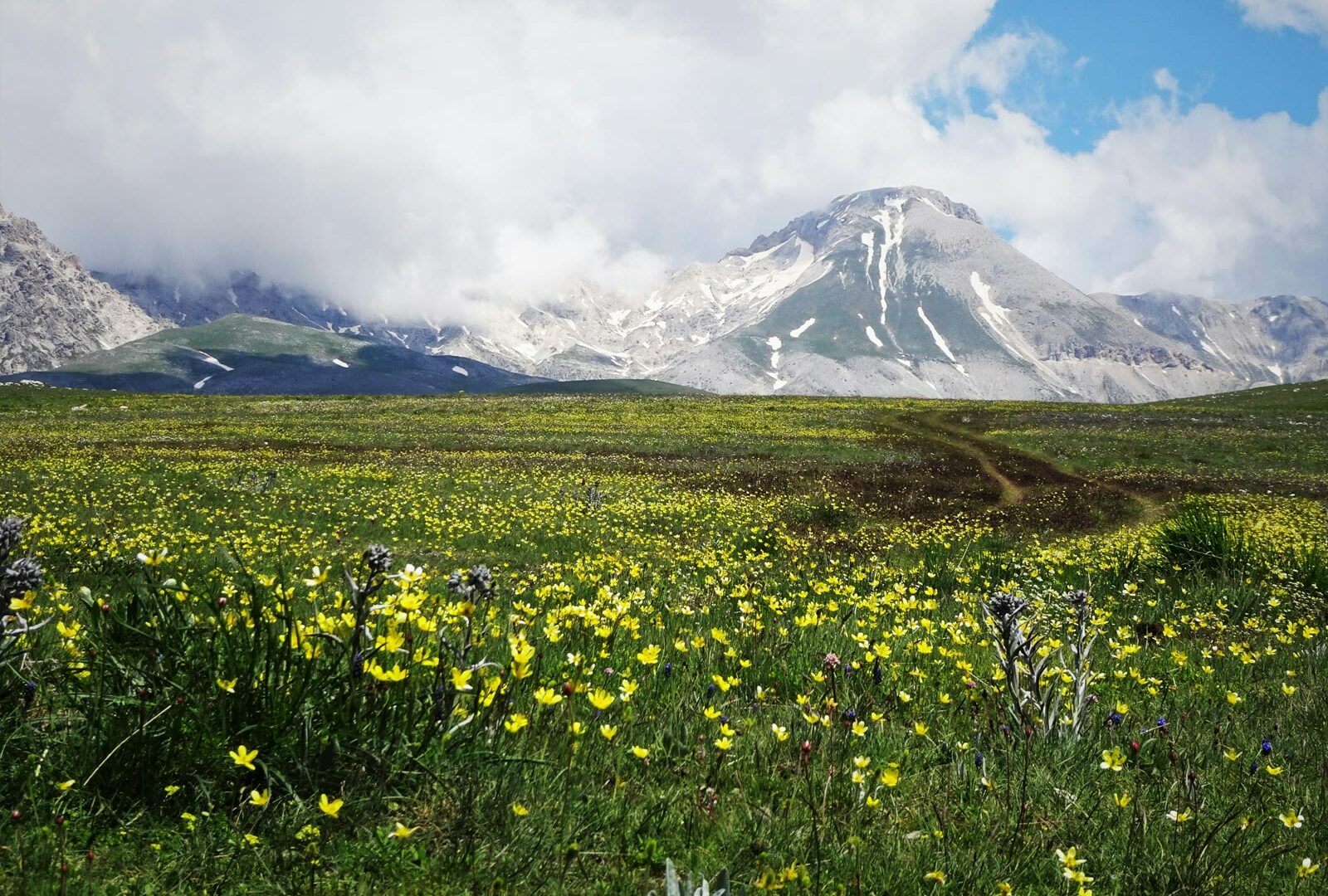
L’Aquila is the mountain capital of Abruzzo, set at 721 metres (2,365 feet) in a broad Apennine valley ringed by the highest peaks in central Italy. The city was founded in the 13th century as a federation of 99 castles and rebuilt with remarkable determination after the devastating 2009 earthquake. Today it offers a rare combination: a restored medieval centro storico with Romanesque basilicas and a Spanish fortress, paired with direct access to the Gran Sasso National Park and the Campo Imperatore plateau, nicknamed “Little Tibet.” The climate is continental mountain, with cold snowy winters that feed two ski resorts within 35 km, warm but rarely hot summers perfect for hiking and climbing, and golden autumns that bring truffles and chestnut festivals to the surrounding villages.
Welcome to L’Aquila
L’Aquila sits at the physical and cultural crossroads of Abruzzo, roughly 100 km northeast of Rome and 90 km from the Adriatic coast. The Gran Sasso massif, dominated by Corno Grande (2,912 m), rises abruptly 20 km to the northeast and defines both the skyline and the local identity. The city’s historical core was laid out in the 1250s with a distinctive grid of wide streets and large piazzas that sets it apart from the narrow medieval warrens of most Italian hill towns. After the 2009 earthquake destroyed or damaged much of the centro storico, L’Aquila spent over a decade in reconstruction. The result, visible today, is a city that has been meticulously restored rather than modernised: the pink-and-white stone of Santa Maria di Collemaggio glows as it did in the 13th century, the Spanish Fort’s bastions stand as solidly as in 1534, and the Fountain of 99 Spouts still pours mountain spring water from 99 carved stone masks. The University of L’Aquila, with roughly 25,000 students, gives the city a youthful energy that balances its ancient bones.
L’Aquila Weather and Climate at a Glance
L’Aquila’s 721-metre elevation produces a continental mountain climate with four distinct seasons and significant temperature swings between day and night, even in summer. Daytime highs in July and August average 27°C (81°F), but nights cool to around 15°C (59°F). Winter brings daytime highs of 6-8°C (43-46°F), overnight lows of -1°C (30°F), and reliable snowfall from December through March. Annual precipitation averages 700-750 mm (27-30 inches), spread across 80-90 rain days. The driest and sunniest months are July and August (40-45 mm rain, 9-10 hours of sunshine). The wettest are October and November (75-80 mm, 9-10 rain days). For detailed month-by-month numbers, check our full L’Aquila weather by month guide.
L’Aquila Seasonal Snapshot
- Spring (March to May): March starts chilly with snow possible. By May, temperatures reach 19°C (66°F) and wildflowers blanket the Gran Sasso lower slopes. The best hiking window for trails below 1,800 m. University students return to outdoor piazzas. Pack layers and a rain jacket.
- Summer (June to August): Warm days (23-27°C / 73-81°F) and cool nights (13-15°C / 55-59°F). The driest season with 10 hours of daily sun in July. All mountain trails and via ferrata routes are open. August brings the Perdonanza Celestiniana and Italian holiday crowds. Book accommodation months ahead.
- Autumn (September to November): September is golden and warm at 22°C (72°F). October brings autumn foliage, chestnut and truffle festivals, and increased rain (75 mm). November is the wettest month (80 mm) and signals winter’s approach. The best season for food-focused travel.
- Winter (December to February): Cold (6-8°C / 43-46°F highs) with reliable snow. Ski resorts at Campo Imperatore and Campo Felice operate from mid-December through March. Christmas markets fill Piazza del Duomo. Hotel prices drop 30-40%. The quietest and cheapest season for city sightseeing.
L’Aquila Quick Facts
- Best months for hiking: June and September (warm days, trails open, fewer crowds than August)
- Best months for skiing: January and February (most reliable snow at Campo Imperatore and Campo Felice)
- Warmest month: July and August (27°C / 81°F average high)
- Coldest month: January (6°C / 43°F high, -1°C / 30°F low)
- Wettest month: November (80 mm / 3.1 inches over 10 rain days)
- Sunniest month: July (10 hours of sunshine per day)
- Elevation: 721 m (2,365 ft)
- Nearest airport: Rome Fiumicino (FCO, 135 km, 1.5 hours by car)
Where Is L’Aquila?
L’Aquila sits in the Aterno River valley in the central Apennines, 100 km northeast of Rome and 90 km west of the Adriatic coast at Pescara. The city is the capital of the Abruzzo region and the seat of the province of the same name. The Gran Sasso massif, the highest mountain range in the Apennines, rises 20 km to the northeast and strongly influences the local climate by blocking maritime air from the Adriatic. This creates colder winters and drier summers than cities at similar latitudes on the coast. The A24 motorway connects L’Aquila directly to Rome (1 hour 15 minutes) and Teramo (40 minutes), while the SS17 highway links the city south to Sulmona and north to the Gran Sasso access points at Fonte Cerreto and Assergi.
L’Aquila Travel Guides
Plan your visit with our detailed guides covering every aspect of travelling to L’Aquila. Each guide is written with concrete, practical information: exact prices, opening hours, bus numbers, and specific recommendations, not vague generalities.
- L’Aquila Weather by Month: Month-by-month climate data with temperature and rainfall tables, what to pack for each season, and how the mountain elevation affects conditions throughout the year.
- Best Time to Visit L’Aquila: Detailed seasonal analysis covering the best windows for hiking, skiing, festivals, and budget travel. Specific months to target and avoid with pricing data.
- Things to Do in L’Aquila: All major attractions with opening hours, ticket prices, and practical tips. Covers historic landmarks (Basilica of Collemaggio, Spanish Fort, Fountain of 99 Spouts), outdoor activities in the Gran Sasso National Park, and day trips to Rocca Calascio, Santo Stefano di Sessanio, and Sulmona.
- L’Aquila Events and Festivals: Complete annual calendar from the UNESCO Perdonanza Celestiniana (August) through Christmas markets, spring sagre, summer jazz, and autumn truffle fairs. Dates, locations, and what to expect.
- L’Aquila Neighborhoods Guide: Breakdown of each area: centro storico, university quarter, San Marciano, western suburbs, and countryside. Who each area suits, average hotel prices, and restaurant recommendations.
- Where to Stay in L’Aquila: Specific hotel, B&B, and agriturismo recommendations with area-by-area breakdowns. Three hotels per area (luxury, mid-range, budget) with verified Booking.com links.
- L’Aquila Travel Tips and FAQ: Airport and transport logistics, car rental advice, winter driving precautions, tipping customs, safety, healthcare, WiFi, and answers to the most common visitor questions.
Where to Stay in L’Aquila
Your accommodation choice in L’Aquila shapes the trip. The historic centre puts every landmark within walking distance but has limited parking. The western suburbs offer larger hotels with free parking and motorway access. Countryside agriturismi deliver mountain views and home-cooked food but require a car. For a complete area-by-area breakdown with nine specific hotel recommendations, see our full where to stay in L’Aquila guide.
Suggested Hotels in L’Aquila
Canadian Hotel
L’Aquila’s only 4-star hotel, built post-2009 with 42 modern rooms, an indoor pool, a fitness room, and underground parking. The on-site restaurant serves solid Abruzzese dishes and a breakfast buffet with local cheeses and cured meats. Best for families and travellers wanting reliable full-service comfort. Check rates and availability
Hotel San Michele
A 14-room hotel in a 16th-century palazzo two minutes from Piazza del Duomo. Terracotta floors, beamed ceilings, and a courtyard breakfast give it the most character of any city-centre option. The quiet lane location means you hear church bells, not traffic. Best for couples and sightseeing-focused travellers. Check rates and availability
Agriturismo La Valle
A family-run farm in Preturo (8 km west) with a swimming pool, home-cooked Abruzzese dinners from farm-raised lamb and vegetables, and the best Gran Sasso sunset views of any accommodation near L’Aquila. The six farmhouse rooms are simple but comfortable, and the welcome is warm. Best for couples and food-focused travellers wanting a countryside escape. Check rates and availability
