


 Moderate rain
  Sunny
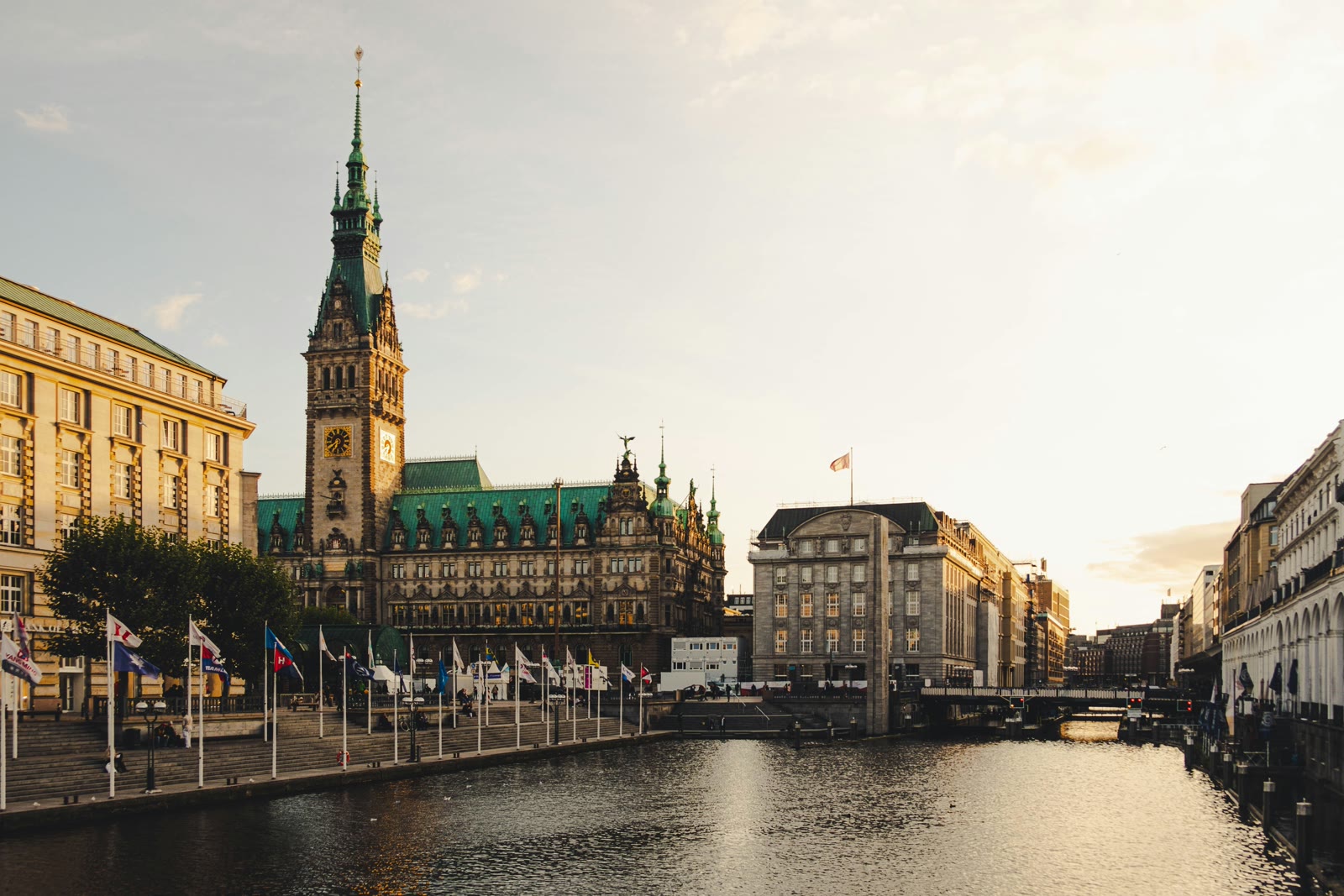
Sunny Hamburg, Germany’s second-largest city with 1.9 million residents, sits on the Elbe River 110 km from the North Sea. It’s a city defined by water: the Alster lakes in its center, the Elbe flowing through its southern edge, and Europe’s second-busiest port shaping its economy and identity since the 12th century. Hamburg has more bridges than Venice and Amsterdam combined (2,500+) and more millionaires per capita than any other German city.
Welcome to Hamburg: Germany’s Waterfront Powerhouse
Hamburg doesn’t feel like a typical German city. The port gives it a maritime outlook; the media and advertising industries give it a creative edge; and the Reeperbahn gives it a nightlife reputation that draws party tourists from across Europe. But Hamburg is also dignified and wealthy: the Elbphilharmonie concert hall, the Kunsthalle art museum, and the Jungfernstieg shopping boulevard represent a city that’s spent centuries accumulating culture and capital.
The mix of the gritty (St. Pauli, the Fischmarkt at dawn) and the grand (Binnenalster lake cruises, the Fairmont Vier Jahreszeiten) is what makes Hamburg work as a travel destination. Paddle a boat on the Alster in the morning, walk the Speicherstadt canals at dusk, and end up at a club on the Reeperbahn at 2:00 AM. The city supports all three impulses in one day.
Hamburg Climate Overview: What to Expect Each Season
Hamburg has a temperate oceanic climate shaped by North Sea winds and the city’s extensive waterways. Summer highs reach 22°C (72°F) in July and August. Winter highs average 4-5°C (39-41°F) with overnight lows near freezing. The city receives 725mm of rain annually across roughly 185 rainy days, more than London or Amsterdam.
Rain tends toward persistent drizzle rather than heavy downpours. Wind is the constant variable; a 10°C day can feel like 5°C when a North Sea wind kicks up. May is the sunniest month (223 hours), December the darkest (37 hours). For complete month-by-month climate data, see our Hamburg weather by month guide.
Hamburg Seasonal Snapshot
Spring (March to May): Temperatures rise from 8°C to 17°C (46°F to 63°F). Cherry blossoms line the Alster in late April. The Hafengeburtstag port festival in May draws 1.5 million visitors. April is the driest month (43mm). Hotel prices are moderate, 25-35% below summer peaks. Our best time to visit Hamburg breakdown covers the best spring windows.
Summer (June to August): Highs reach 22°C (72°F) with long daylight stretching past 10:00 PM in June. This is also the wettest season (71-77mm monthly), with brief afternoon thunderstorms. The beach bars along the Elbe open, the Alster fills with sailboats, and the Summer Dom fair draws crowds. Hotel prices peak, especially during the July-August school holidays.
Autumn (September to November): September holds 18°C (64°F) with manageable rain. By November it’s 8°C (46°F) with 87% humidity and just 53 hours of sunshine. The Reeperbahn Festival fills the clubs in September, and the Christmas markets open in late November.
Winter (December to February): Highs average 4-5°C (39-41°F), overnight lows drop to 0°C (32°F). The Christmas markets (late November through December 23) transform the city squares. January and February offer the lowest hotel rates, with 4-star rooms available for €90-110. Daylight runs just 8:00 AM to 4:30 PM in December.
Things to Do in Hamburg
The Miniatur Wunderland (world’s largest model railway), the Elbphilharmonie (architectural landmark with free viewing platform), a harbor boat tour from Landungsbrücken
the Speicherstadt (UNESCO-listed warehouse district) form the essential Hamburg circuit. For full details including opening hours, ticket prices, and practical tips, see our things to do in Hamburg guide.
Hamburg Neighborhoods
The Altstadt (historic center), HafenCity (modern waterfront), St. Pauli (nightlife), Sternschanze/Karolinenviertel (indie and creative), and Altona (upscale residential) each offer distinct experiences. Our Hamburg neighborhoods guide maps all key districts with hotel price ranges.
Where to Stay in Hamburg
Accommodation ranges from the Fairmont Vier Jahreszeiten on the Alster to the hip 25hours Hotel in HafenCity to the budget-friendly Superbude in St. Pauli. Prices swing 35-50% between January and July. Our where to stay in Hamburg guide names specific hotels at luxury, mid-range, and budget tiers in each neighborhood.
Suggested Hotels in Hamburg
Fairmont Hotel Vier Jahreszeiten
Hamburg’s most prestigious 5-star hotel on the Binnenalster, operating since 1897 with a Michelin-starred restaurant, a cigar lounge, and rooms overlooking the Alster lake. Best for luxury travelers and special occasions. Check rates and availability
25hours Hotel HafenCity
A nautically themed design hotel at Uberseeallee 5 with ship-cabin-inspired rooms, a rooftop sauna with port views, and a restaurant serving modern German comfort food. Best for design lovers and young couples. Check rates and availability
Superbude St. Pauli
A trendy budget hotel/hostel hybrid with creatively designed rooms, a communal kitchen, free guitar rental, and a lively bar in the heart of Hamburg’s nightlife district. Best for young travelers and groups. Check rates and availability
Hamburg Events and Festivals
The Hafengeburtstag (Harbor Birthday, second weekend of May) is Hamburg’s signature event with 1.5 million attendees. The Dom funfair runs three times annually (spring, summer, winter). The Reeperbahn Festival fills 90+ music venues in September. Christmas markets fill the city from late November. Our Hamburg events and festivals calendar lists every major event with dates and ticket prices.
Hamburg Travel Tips and FAQ
Hamburg Airport (HAM) is 11 km north of the city center. The S1 S-Bahn connects to the Hauptbahnhof in 25 minutes (€3.80). The HVV public transport network covers the city efficiently. Tipping is 5-10% at restaurants. Cash is still common; carry euros. For all practical details including safety, visas, and local customs, see our Hamburg travel tips and FAQ guide.
City Articles
Best Time to Visit Hamburg
Hamburg’s best visiting window depends on your priorities: warm weather for harbor cruises, low prices for a budget city break, or specific events like the Hafengeburtstag port festival. Here’s the month-by-month breakdown with data to back each recommendation. Best Time to Visit Hamburg: Month-by-Month Guide Best Weather in Hamburg: May, June, and September May delivers […]
Read MoreHamburg Events and Festivals
Hamburg’s event calendar is anchored by the Hafengeburtstag (Harbor Birthday) in May, three major funfairs (Dom) spread across the year, and a Christmas market scene that fills the city from late November. Here’s the full annual calendar with specific dates and practical details. Hamburg Events and Festivals: Annual Calendar Hamburger Dom (Spring: Late March to […]
Read MoreHamburg Neighborhoods
Hamburg spreads across 755 square kilometres with distinct districts separated by the Alster lakes and Elbe River. The city center clusters around the Binnenalster; the nightlife in St. Pauli; the grit-to-gentrification story of Altona and Schanzenviertel; and the sleek new HafenCity on the waterfront. Here’s the breakdown of Hamburg’s key neighborhoods. Hamburg Neighborhoods: Where to […]
Read MoreHamburg Travel Tips and FAQ
Hamburg is Germany’s second-largest city with 1.9 million residents and a working port that processes 8.7 million containers per year. It’s a wealthy, green, water-defined city where the practicalities of visiting are straightforward but not identical to Berlin or Munich. Here’s what you need to know. Hamburg Travel Tips and FAQ: Practical Information Hamburg Airport […]
Read MoreHamburg Weather by Month
Hamburg has a temperate oceanic climate strongly influenced by its position on the Elbe River, 110 km from the North Sea. The city experiences cool winters, mild summers, and rainfall distributed year-round with a slight summer maximum. Wind is a constant presence, and the humidity rarely dips below 75%. Hamburg Weather by Month: Temperature, Rainfall, […]
Read MoreThings to Do in Hamburg
Hamburg packs Europe’s second-largest port, the world’s largest miniature railway, a striking new concert hall, and a historic warehouse district onto the Elbe River. The city has more bridges than Venice and Amsterdam combined (2,500+). Here are the specific things to do, with practical details. Top Things to Do in Hamburg: Attractions, Landmarks, and Activities […]
Read MoreWhere to Stay in Hamburg
Hamburg’s accommodation spans waterfront luxury in HafenCity, business hotels in the Altstadt, and budget guesthouses in the Schanzenviertel. Your neighborhood choice determines your walk to the sights, your noise level, and your nightly rate. Here’s where to stay in Hamburg with specific hotel recommendations. Where to Stay in Hamburg: Best Areas and Hotels Where to […]
Read More