

 Overcast
 Heavy snow
 Partly Cloudy
 Moderate snow
This post may contain affiliate links. If you purchase through them, I may earn a small commission at no extra cost to you. Thanks for supporting our small business.
Garmisch-Partenkirchen is a mountain resort town of about 27,000 people in Upper Bavaria, 80 km south of Munich, at the foot of Germany’s highest peak, the Zugspitze (2,962 m). The town sits at 708 m elevation, averages about 1,250 mm of precipitation a year, and runs from a January high of 2°C (36°F) to a July high of 22°C (72°F). It hosted the 1936 Winter Olympics and still draws skiers, hikers, and day-trippers to its cable cars and gorge in every season. This guide covers the weather, the timing, the sights, and where to sleep.
Welcome to Garmisch-Partenkirchen
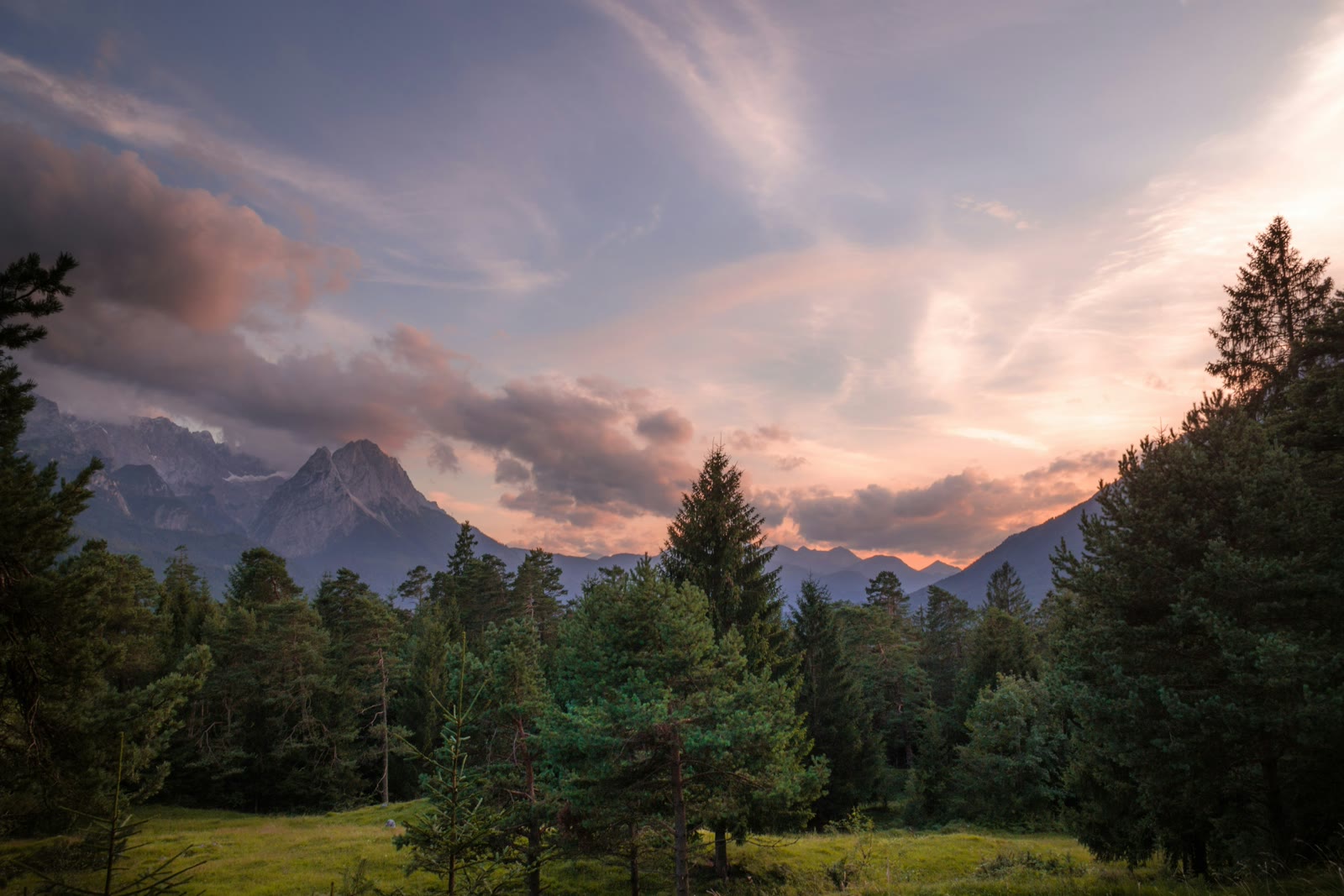
Garmisch-Partenkirchen is two villages joined in 1935 for the Winter Olympics, and the split still shows. Garmisch is the busy western half, built around the railway station, the pedestrian zone, and the Kurpark, while Partenkirchen keeps a quieter old town along the frescoed Ludwigstrasse. The Zugspitze rises to the south, the Wetterstein range forms the border with Austria, and the Partnach river cuts the gorge that gives the town its best short walk. The town’s real asset is its cable car network, which lifts you from the valley floor to 2,962 m in under an hour.
Garmisch-Partenkirchen Weather at a Glance
Garmisch-Partenkirchen has a humid continental climate with an alpine punch. Winters are cold and snowy, with January averaging 2°C (36°F) by day and -6°C (21°F) at night, and snow cover on the valley floor from early December to late March. Summers are mild, with July reaching 22°C (72°F) by day and 11°C (52°F) at night, and afternoon thunderstorms are routine.
Rainfall is heavy by German standards, around 1,250 mm a year, with the wettest months in June, July, and August (150 to 160 mm each). Foehn winds off the Alps regularly spike winter temperatures by 10°C or more within hours. The Zugspitze summit stays near or below freezing all year and holds snow even in August.
Seasonal Snapshot
- Winter (December to February): deep snow, ski season on the Zugspitze and Garmisch-Classic slopes, and the New Year’s ski jumping.
- Spring (March to May): slow thaw, muddy lower trails, and the first valley flowers by mid-May.
- Summer (June to August): warm hiking days with afternoon storms, open mountain huts, and the Festwoche in August.
- Autumn (September to November): crisp clear days, empty trails, and the first summit snow from October.
Garmisch-Partenkirchen Travel Guides
- Garmisch-Partenkirchen weather by month: month-by-month temperatures, rainfall, snow cover, and Zugspitze summit conditions.
- best time to visit Garmisch-Partenkirchen: the best months for skiing, hiking, low prices, and specific events.
- things to do in Garmisch-Partenkirchen: the Zugspitze, the Partnach Gorge, the Olympic ski jump, and the frescoed old town.
- Garmisch-Partenkirchen events and festivals: the Four Hills Tournament, the Partenkirchner Festwoche, and the Christmas markets.
- best neighborhoods in Garmisch-Partenkirchen: Garmisch centre, Partenkirchen old town, Riessersee, and Grainau, and who each suits.
- where to stay in Garmisch-Partenkirchen: hotel picks by district and budget across the two halves of town.
- Garmisch-Partenkirchen travel tips: Munich Airport transfers, Bayern-Ticket fares, the guest card, and money tips.
Location and Weather Influences
The town sits in a wide alpine basin where the Loisach valley meets the Wetterstein range, about 80 km south of Munich and 30 km north of the Austrian border at Mittenwald. Elevation is the main weather driver: at 708 m the valley floor is already cooler and wetter than Munich, and the surrounding peaks of 2,500 to 2,962 m create orographic lift that squeezes out heavy precipitation on both snow and rain days. The north-south valleys also channel foehn winds, which is why winter thaws and sudden warm spells are a regular feature of the local forecast.
Quick Facts
- Warmest month: July, 22°C (72°F) high
- Coldest month: January, -6°C (21°F) low
- Wettest month: July, 160 mm; driest is February at 60 mm
- Annual precipitation: about 1,250 mm
- Elevation: 708 m in town, 2,962 m on the Zugspitze
- Nearest airport: Munich (MUC), about 120 km north
- Train from Munich: about 1 hour 15 minutes
Where to Stay in Garmisch-Partenkirchen
Most visitors stay in one of three zones: the Garmisch centre for convenience, Partenkirchen old town for atmosphere, or near the Zugspitzbahn and ski lifts for early starts. Rates swing from around EUR 80 a night in a guesthouse to EUR 350 and up in a four-star spa resort, roughly doubling over Christmas and New Year.
Suggested Hotels in Garmisch-Partenkirchen
Hotel Zugspitze
A family-run four-star on Klammstrasse in the Garmisch centre with a 1,000 m² spa, an indoor pool, and a Michelin-recommended restaurant, rated 9.6 for location on Booking.com. Best for couples and spa-goers who want to step straight into the pedestrian zone. Check rates and availability
Mercure Hotel Garmisch-Partenkirchen
A non-smoking four-star near the Olympia stadium with an indoor pool, a tennis court, and a country-style restaurant with a beer garden. Best for skiers and families who want the jumps and cable cars on their doorstep. Check rates and availability
Atlas Grand Hotel
A traditional guesthouse on Ludwigstrasse with a natural outdoor pool and a sauna area facing the Zugspitze, rated 9.4 for location. Best for budget travellers who still want a central spot and a mountain view. Check rates and availability
