

 Sunny
 Overcast
 Partly Cloudy
This post may contain affiliate links. If you purchase through them, I may earn a small commission at no extra cost to you. Thanks for supporting our small business.
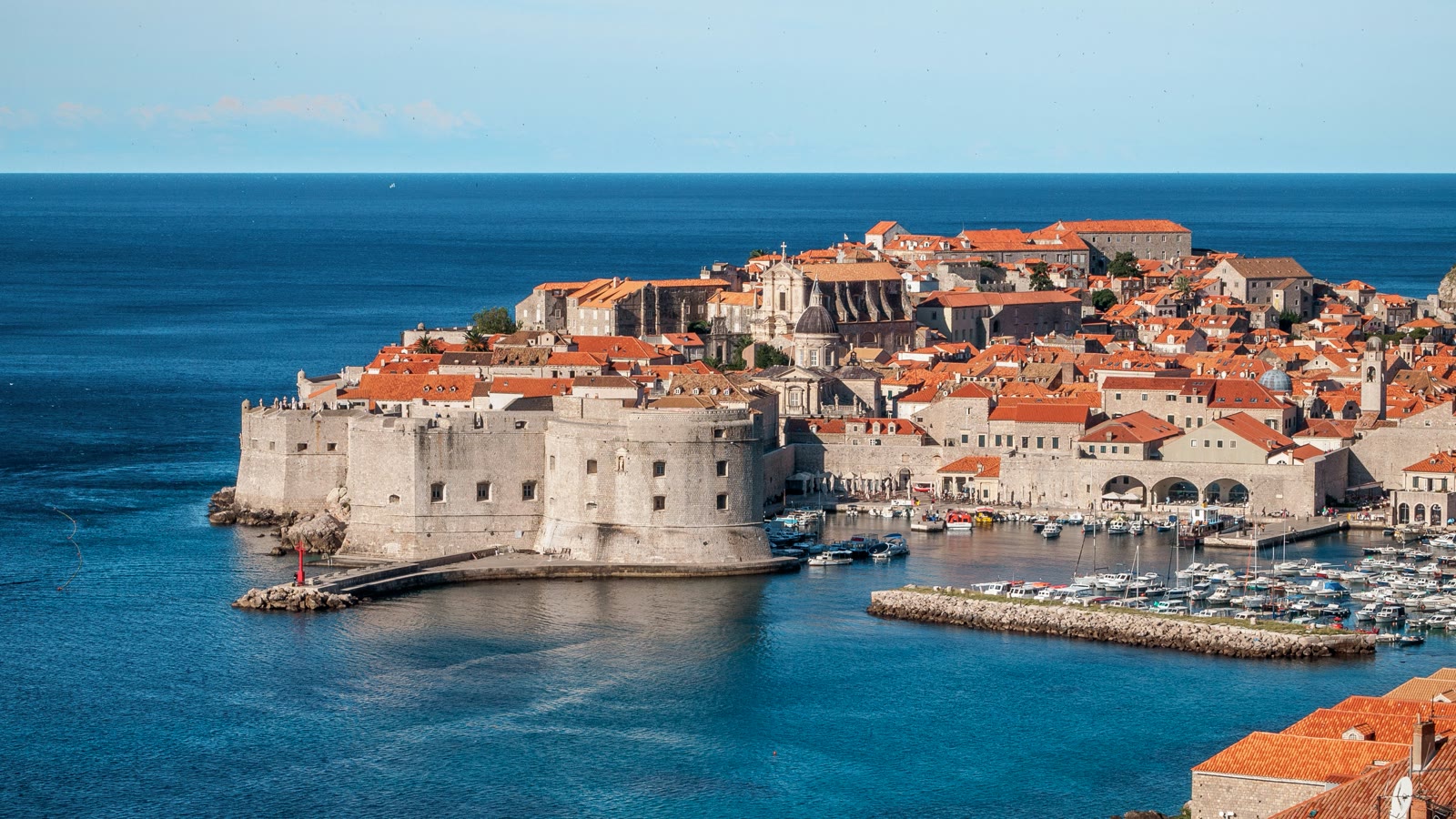
Dubrovnik occupies a dramatic position on Croatia’s southern Dalmatian coast, its medieval limestone walls plunging directly into the Adriatic Sea. The city has a Mediterranean climate with hot, dry summers and mild, wet winters, shaped by its coastal position and the sheltering Dinaric Alps immediately behind it. With roughly 2,600 hours of sunshine per year and sea temperatures warm enough for swimming from June through October, Dubrovnik works as a beach destination, a cultural city break, and a base for exploring the islands and coastline of southern Croatia. The bura wind, a cold northeasterly that races down from the mountains, can strike at any time of year but is strongest from November to March.
Welcome to Dubrovnik
Dubrovnik is a city built on limestone and salt. The walls that made it an independent maritime republic for 450 years now draw over a million visitors annually. Walking the 1,940-meter circuit of those walls is the essential Dubrovnik experience, but there is far more: the cable car to Mount Srd for panoramic views, the car-free nature reserve of Lokrum Island a short ferry ride away, and a food scene that runs from Michelin-starred restaurants to family-run konobas serving black risotto and fresh oysters from nearby Ston. Game of Thrones fans will recognize the city as King’s Landing, and the walking tours that connect filming locations to real history are genuinely well done. The Old Town is compact and pedestrian-only; you can cross it in 5 minutes but spend days exploring its alleys, churches, and hidden cafes.
Dubrovnik Climate at a Glance
Dubrovnik’s climate is classic Mediterranean (Koppen Csa), with summer heat moderated by sea breezes and winter cold kept at bay by the Adriatic. Summers are reliably sunny: July averages 29°C (84°F) with just 28 mm (1.1 in) of rain, and you can count on 11 hours of sunshine per day. Winters are mild but wet: January averages 12°C (54°F) during the day and 6°C (43°F) at night, with 96 mm (3.8 in) of rain over 11 days. The wettest month is November (165 mm / 6.5 in), and the driest is July (28 mm / 1.1 in). Sea temperatures peak at 25°C (77°F) in August and drop to 14°C (57°F) in January through March. The bura wind defines the winter experience: it can gust past 100 km/h, disrupt ferry services, and make a 12°C day feel like 5°C.
Dubrovnik Seasonal Snapshot
- Spring (March-May): The city wakes up. March is still cool (highs of 14°C/57°F) but flowers bloom and outdoor cafes set up. April sees all attractions reopen and comfortable walking weather. May is nearly perfect: warm days (22°C/72°F), warm sea (18°C/64°F), and the summer crowds have not yet arrived. Best season for hiking, photography, and enjoying the Old Town without elbowing through crowds.
- Summer (June-August): Hot, crowded, and expensive. July and August deliver 29°C (84°F) highs, 11 hours of sun, and sea at 25°C (77°F). The Dubrovnik Summer Festival fills the Old Town with theater and music. Cruise ships bring thousands daily. Book everything months ahead and walk the walls at 8 AM.
- Autumn (September-November): September is arguably the best month: summer warmth (25°C/77°F) without summer crowds. October is still swimmable early in the month, with the Good Food Festival adding culinary appeal. November is the wettest month and the city goes quiet as the cruise season ends and seasonal businesses close.
- Winter (December-February): Cool, wet, and windy, with highs around 12°C (54°F). The bura wind is strongest. Many restaurants and hotels close for the season. But the Winter Festival in December brings Christmas markets and concerts, and February’s Feast of St. Blaise is Dubrovnik’s most authentic local celebration.
Dubrovnik Travel Guides
Plan every aspect of your trip with our detailed Dubrovnik guides, each covering a specific topic in depth:
- Dubrovnik Weather by Month: Monthly temperature, rainfall, sunshine, and sea temperature data with a comparison table. Find out exactly what weather to expect for your travel dates.
- Best Time to Visit Dubrovnik: Season-by-season breakdown of weather, crowds, prices, and events. Pinpoint the ideal window for your travel style, whether you want beach weather or empty streets.
- Things to Do in Dubrovnik: City walls, Mount Srd cable car, Lokrum Island, sea kayaking, Game of Thrones tours, and day trips to Mostar and Kotor. Practical details with prices, hours, and tips.
- Dubrovnik Events and Festivals: From the Summer Festival and Feast of St. Blaise to the Good Food Festival and Winter Festival. Month-by-month calendar with dates and what to expect.
- Best Neighborhoods in Dubrovnik: Old Town, Pile, Ploce, Lapad, Babin Kuk, and Gruz. What each area is known for, who it suits, and what you will pay.
- Where to Stay in Dubrovnik: Area-by-area accommodation guide with specific hotel recommendations for luxury, mid-range, and budget travelers. Booking.com links included.
- Dubrovnik Travel Tips and FAQ: Airport transfers, public transport, money, safety, crowd avoidance, visa rules, and answers to the questions every first-time visitor asks.
Dubrovnik Location and Geography
Dubrovnik sits at 42.65°N latitude, roughly level with Rome and just north of Barcelona. It occupies a narrow strip of Dalmatian coast where the Dinaric Alps plunge into the Adriatic, creating a sheltered natural harbor that the Republic of Ragusa exploited for centuries. The Old Town is built on a rocky peninsula, with the Adriatic on three sides. Mount Srd (412 m / 1,352 ft) rises immediately behind the city, serving as both a scenic backdrop and a weather barrier: it blocks some of the bura wind and creates a rain shadow effect. The Peljesac peninsula and the island of Korcula lie to the northwest, the Elaphiti Islands to the immediate west, and the border with Bosnia and Herzegovina is just 10 km (6 miles) inland. Montenegro begins 40 km (25 miles) to the southeast.
Dubrovnik Quick Facts
- Population: 42,615 (2021 census)
- UNESCO Status: World Heritage Site since 1979
- Currency: Euro (EUR), adopted January 2023
- Airport: Dubrovnik Airport (DBV), Cilipi, 20 km southeast
- Time Zone: Central European Time (CET, UTC+1; CEST in summer)
- Language: Croatian (English widely spoken in tourist areas)
- Warmest Month: July/August, average high 29°C (84°F)
- Coldest Month: January, average high 12°C (54°F), low 6°C (43°F)
- Wettest Month: November, 165 mm (6.5 in)
- Driest Month: July, 28 mm (1.1 in)
- Warmest Sea: August, 25°C (77°F)
- Annual Sunshine: ~2,600 hours
- Swimming Season: June through October
- City Walls Length: 1,940 meters (6,365 ft), up to 25 m (82 ft) high
Suggested Hotels in Dubrovnik
Villa Dubrovnik
A cliffside 5-star hotel with panoramic Old Town views, a private funicular, and an infinity pool suspended over the Adriatic. Best for couples and luxury travelers celebrating a special occasion. Check rates and availability
Hotel Kompas
A modern 4-star hotel on the Lapad promenade with a rooftop pool, beach access, and a popular sunset bar. Best for families and couples who want beach proximity at a moderate price. Check rates and availability
Berkeley Hotel
A small family-run 3-star hotel on a quiet Lapad street with generous breakfasts and exceptionally helpful owners. Best for budget travelers who value personal service over luxury amenities. Check rates and availability
