

 Sunny
 Partly Cloudy
 Overcast
This post may contain affiliate links. If you purchase through them, I may earn a small commission at no extra cost to you. Thanks for supporting our small business.
Toronto, Canada’s largest city and the capital of Ontario, sits on the northwestern shore of Lake Ontario. Its humid continental climate delivers four sharply defined seasons: snowy winters, pleasant springs, hot and humid summers, and crisp autumns with spectacular fall colors. The lake moderates temperatures in the downtown core, keeping the waterfront 2-3°C warmer in winter and cooler in summer than inland suburbs. With 2,038 hours of annual sunshine and 815mm of precipitation spread evenly across the year, Toronto has no dry season , carry an umbrella regardless of when you visit.
Welcome to Toronto
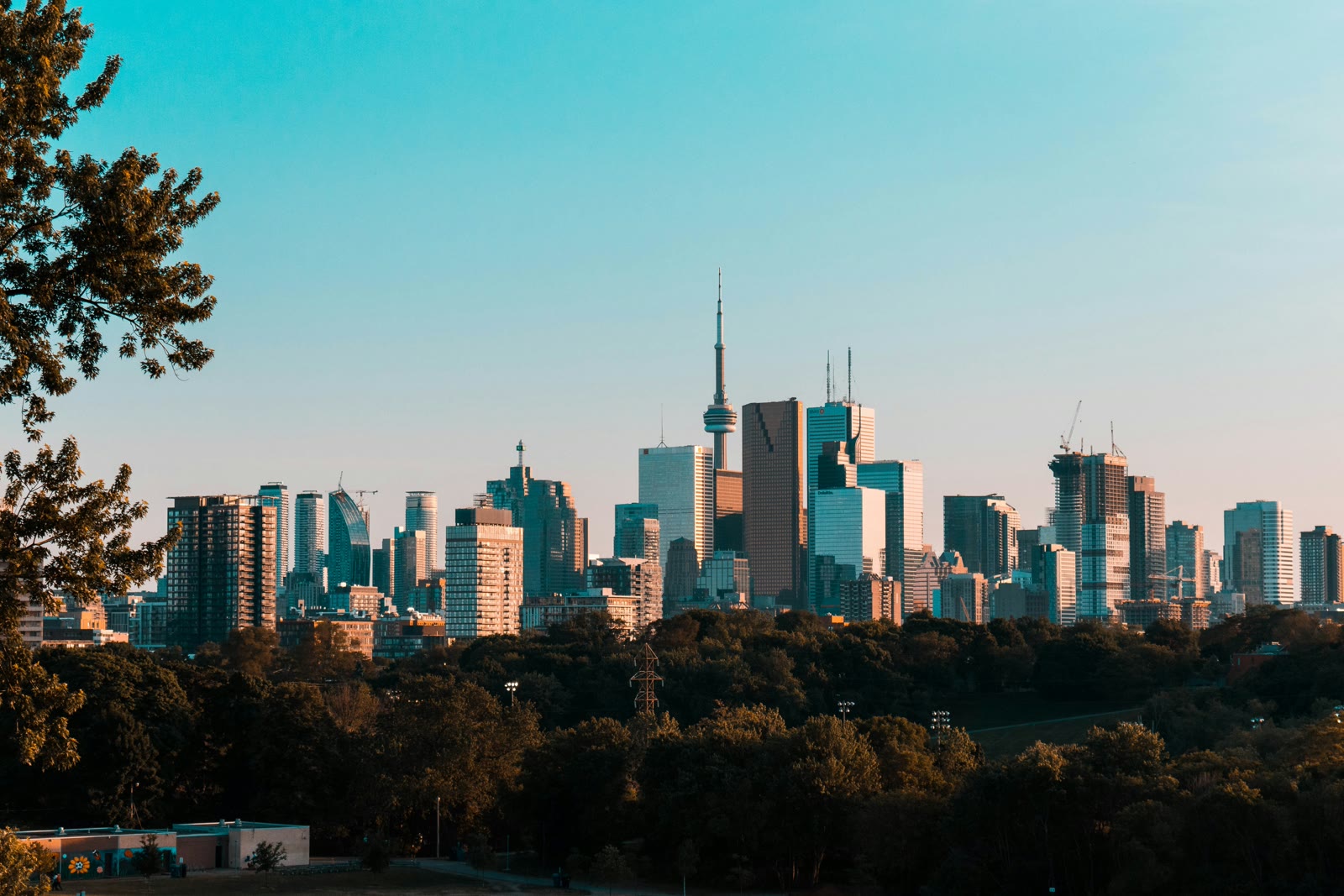
A city of 2.9 million people (6.7 million in the Greater Toronto Area), Toronto is one of the most multicultural cities on the planet , over 50% of residents were born outside Canada. You hear it in the 180 languages spoken on the streets, taste it in the food (from Ethiopian injera to Tibetan momos within a few blocks), and feel it in the distinct character of neighborhoods like Chinatown, Little Italy, Greektown, and Little India. The city runs on a grid that makes navigation straightforward, anchored by Yonge Street (the central north-south spine) and the shoreline of Lake Ontario. The CN Tower, visible from almost everywhere, serves as an orientation landmark: the lake is south, the tower is downtown.
Toronto Weather at a Glance
Toronto’s climate is defined by extremes. January lows average -7°C (19°F) with 120cm of annual snowfall, while July highs reach 27°C (81°F) with humidity pushing the humidex above 35°C (95°F). The lake keeps spring cool (April highs of 12°C/54°F) and autumn mild (October highs of 14°C/57°F). Lake Ontario water temperatures reach a swimmable 21°C (70°F) by August, but only from late July through early September. The PATH underground pedestrian network , 30km of tunnels connecting 75 downtown buildings , makes the city walkable even in the depths of winter. For a month-by-month breakdown with temperature, rainfall, and sunshine data, see the Toronto weather by month guide.
Toronto Seasons: A Quick Snapshot
- Winter (December to February): Cold and snowy, with highs of -1°C to 2°C (30-36°F). The PATH underground network keeps downtown accessible. Winterlicious restaurant festival in late January delivers prix-fixe dining deals. Nathan Phillips Square skating rink is free. Lowest hotel rates of the year.
- Spring (March to May): Variable and unpredictable. March can still bring 20cm of snow or an early thaw. Cherry blossoms in High Park peak late April to early May. May is excellent , 19°C (66°F) highs and 229 sunshine hours , before summer prices and crowds arrive.
- Summer (June to August): Hot and humid with the city’s best weather. July averages 27°C (81°F). The festival calendar peaks with Pride, Caribana, Summerlicious, and the Canadian National Exhibition. Toronto Islands beaches are swimmable. Book hotels 2-3 months ahead for summer weekends.
- Autumn (September to November): The best season overall. September is still summer-warm at 21°C (70°F) but without July’s humidity. Fall colors peak in mid-October. November is the one genuinely unpleasant month , cold rain, grey skies, and the first snow. TIFF takes over the city for the first two weeks of September.
Explore Toronto: Complete Travel Guides
Everything you need to plan a Toronto trip, organized by topic. Each guide covers its subject in detail with practical information , specific prices, opening hours, public transit stops, and seasonal considerations.
- Toronto Weather by Month: A complete climate guide with monthly temperature, rainfall, snowfall, sunshine hours, and Lake Ontario water temperature data. Includes a comparison table and seasonal breakdowns so you know exactly what to pack for each month.
- Best Time to Visit Toronto: Date-specific advice on the best months for weather, the cheapest months for hotels, when to avoid crowds, and which months align with specific events (TIFF, Caribana, cherry blossoms). Includes a season-by-season summary.
- Things to Do in Toronto: Iconic landmarks (CN Tower, Toronto Islands), museums (ROM, AGO, Hockey Hall of Fame), neighborhoods (Kensington Market, Distillery District, St. Lawrence Market), outdoor spaces (High Park, Harbourfront), and day trips (Niagara Falls). Every attraction includes opening hours, ticket prices, and TTC directions.
- Toronto Events and Festivals: A month-by-month calendar covering TIFF, Caribana, Pride, Nuit Blanche, the CNE, Winterlicious/Summerlicious, Doors Open, the Christmas Market, and more. Each entry includes approximate dates, ticket information, and crowd-management tips.
- Toronto Neighborhoods: A practical guide to the city’s most important neighborhoods: Downtown Core, Yorkville and the Annex, Queen West and West Queen West, Kensington Market and Chinatown, the Distillery District, Leslieville and The Beaches, and Midtown. Each entry covers who the neighborhood suits and average hotel prices.
- Where to Stay in Toronto: Area-by-area hotel recommendations with three specific hotels (luxury, mid-range, budget) per neighborhood: Downtown Core, Yorkville, and Queen West. Each hotel has a detailed description, best-for recommendation, and a verified Booking.com link.
- Toronto Travel Tips and FAQ: Practical information on airports (Pearson YYZ and Billy Bishop YTZ), public transit (TTC fares, Presto cards, UP Express), tipping customs, visa requirements, safety, weather packing advice, and technology and connectivity tips.
Location and What Influences Toronto’s Weather
Toronto sits at 43°N latitude , roughly the same as Florence, Italy, or the south of France , but its continental climate means weather nothing like the Mediterranean. The city’s position on the northwestern shore of Lake Ontario creates microclimate effects: the lake cools the downtown in spring and early summer (delaying the warm-up by 2-3 weeks compared to inland suburbs like Markham), keeps the core warmer in fall and winter, and generates lake-effect snow when cold northwest winds cross the open water. The Niagara Escarpment, 50km west, creates a snowbelt effect that dumps heavier snow on the western suburbs (Mississauga, Oakville) while downtown often gets less. On summer afternoons, lake breezes can drop waterfront temperatures by 3-5°C within an hour.
Toronto Quick Facts
- Warmest months: July and August (27°C/81°F highs)
- Coldest months: January and February (-1°C/30°F highs, -7°C/19°F lows)
- Wettest month: November (75mm over 10 days)
- Sunniest month: July (280 hours)
- Best months for sightseeing: June and September
- Best months for budget: January and February (hotel rates drop 40-50%)
- Lake Ontario swimming season: Late July to early September (water reaches 21°C/70°F)
- Annual snowfall: 120cm (47 inches)
- Annual sunshine: 2,038 hours
Suggested Hotels in Toronto
Fairmont Royal York
Toronto’s historic grand railway hotel, directly across from Union Station with direct PATH and UP Express access. The 1929 lobby with hand-painted ceilings and travertine columns is a landmark in its own right. Best for travelers who want a historic landmark experience with unbeatable transit connections. Check rates and availability
Chelsea Hotel Toronto
Canada’s largest hotel with 1,590 rooms, located on the edge of the Garden District. The Chelsea is family-focused with a kids’ activity center, indoor pool with waterslide, and a 5-minute walk to the Eaton Centre. Best for families who want mid-range pricing with kid-specific amenities. Check rates and availability
Holiday Inn Toronto Downtown Centre
A reliable chain hotel at 30 Carlton Street, next to the former Maple Leaf Gardens. The College subway station is 2 minutes away on foot. Best for budget-conscious travelers who want a clean, predictable room with direct subway access. Check rates and availability
