


 Patchy rain nearby
  Sunny
Sunny Naha is the capital of Okinawa, Japan’s southernmost prefecture, and the gateway to a chain of subtropical islands stretching toward Taiwan. The city sits on the East China Sea at 26 degrees north latitude, roughly the same as Miami or Dubai, and its humid subtropical climate means warm temperatures year-round with no freezing days on record. Naha receives about 2,040mm of rain annually across 128 rain days, concentrated in the May-June rainy season and the August-September typhoon window. Sea temperatures range from 22°C (72°F) in February to 29°C (84°F) in mid-summer, keeping beaches swimmable from April through November.
For a detailed month-by-month breakdown with temperature averages, rainfall data, and humidity levels, see the Naha weather by month guide. If you are deciding when to book your flights, the best time to visit Naha guide breaks down each season by weather, crowds, and prices.
Weather at a Glance: Naha Climate Overview
Naha’s climate is defined by four distinct phases. Winter (December to February) is mild and relatively dry, with highs of 19-21°C (66-70°F) and the lowest rainfall of the year at 105-120mm per month. Spring (March to May) warms quickly, but May kicks off the tsuyu rainy season, with rainfall doubling from April’s 165mm to 232mm. Summer (June to September) is hot, humid, and punctuated by typhoons, with June being the single rainiest month at 247mm. Autumn (October to November) is the sweet spot: warm, drier, and largely typhoon-free after mid-October, with highs of 24-27°C (75-82°F) and humidity dropping into the 60s.
Naha Seasonal Snapshot
Winter (Dec-Feb): Cherry blossoms in February, whale watching, lowest hotel rates, 19-21°C daytime highs. Spring (Mar-May): Warming seas, Golden Week crowds in late April/early May, rainy season begins mid-May. Summer (Jun-Sep): Peak heat and humidity, typhoon risk, Eisa dance festivals, sea at 29°C. Autumn (Oct-Nov): Best overall weather, Naha Great Tug-of-War in October, Shuri Castle Festival in November, 24-27°C highs with low humidity.
Naha Travel Guides
Start with the things to do in Naha guide covering Shuri Castle, Makishi Public Market, Naminoue Beach, and the Tsuboya Pottery District with opening hours and ticket prices. The events and festivals in Naha guide details the Great Tug-of-War in October, the Ten Thousand Eisa Dance Parade in August, and the Naha Hari Dragon Boat races in May.
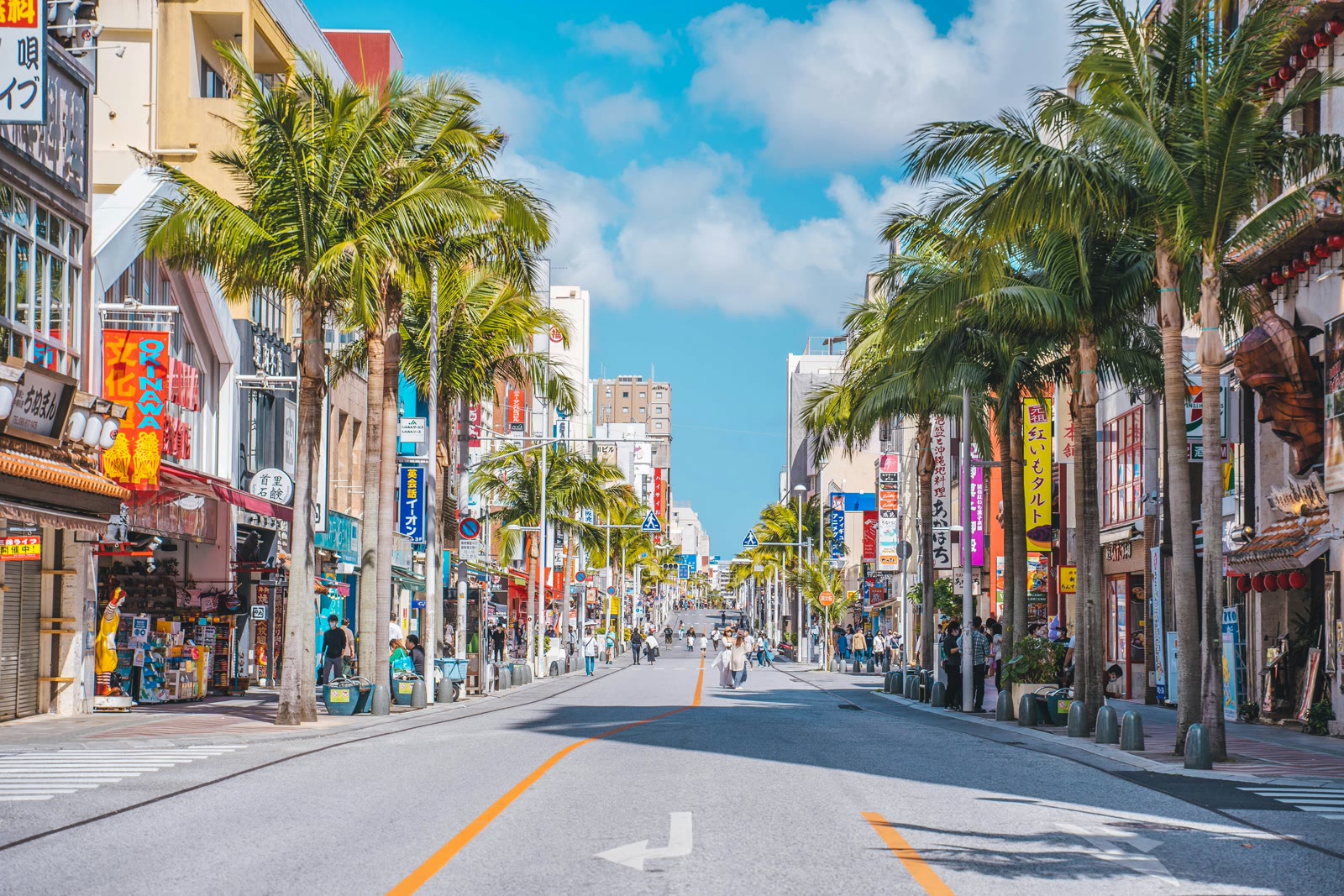
The Naha neighborhoods guide compares Kokusai Dori, Shuri, Kumoji, Tsuboya, Omoromachi, and Tomari Port with hotel price ranges and who each area suits. For specific hotel recommendations at luxury, mid-range, and budget levels in each neighborhood, see the where to stay in Naha guide. The
Naha travel tips and FAQ covers airport transport, the Yui Rail monorail, cash and card norms, tattoo policies, typhoon preparedness, and local etiquette.
Naha Quick Facts
Best months overall: mid-October to November (warm, dry, typhoon-free). Warmest month: August, 31.8°C (89°F) average high. Coolest month: January, 14.3°C (58°F) average low. Wettest month: June, 247mm rainfall. Sunniest months: July and August, 8+ hours of sunshine per day. Sea temperature range: 22°C (Feb) to 29°C (Jul-Sep). Typhoon season: June to November, peak risk August-September. Rainy season (tsuyu): mid-May to mid-July. Airport: Naha Airport (OKA), 12-20 minutes to city center via Yui Rail monorail. Currency: Japanese Yen (JPY). Tipping: Does not exist in Japan. Do not tip.
Suggested Hotels in Naha
Hyatt Regency Naha
A five-star property directly on Kokusai Dori with spacious rooms, four restaurants including a teppanyaki grill, and a rooftop pool with city views. The design incorporates Ryukyu glass and limestone throughout. Best for couples and travelers who want full-service luxury without leaving the city center. Check rates and availability
Okinawa NaHaNa Hotel & Spa
Centrally located near Asahibashi Monorail Station with a natural hot-spring spa fed by water from 1,000 meters underground, two restaurants, and modern rooms. Best for couples and solo travelers who want spa facilities at a moderate price. Check rates and availability
Naha Tokyu REI Hotel
A reliable business hotel five minutes from Asahibashi Station with compact but well-designed rooms, free coffee and tea in the lounge, and a buffet breakfast with freshly baked bread. Best for solo travelers and business visitors who want a clean, functional base at a reasonable price. Check rates and availability
City Articles
Best Neighborhoods in Naha
Naha is a compact city of about 320,000 people, but its neighborhoods each have a distinct character shaped by history, geography, and function. The Yui Rail monorail connects most districts along a north-south spine, making it easy to move between areas. Here are the best neighborhoods in Naha, what they offer, and who they suit […]
Read MoreBest Time to Visit Naha
Naha and Okinawa offer something different in every season, but the sweet spot for most travelers falls between mid-October and early December, or from late March to early May. These windows avoid both the oppressive humidity of summer and the peak typhoon months while still delivering warm temperatures and swimmable seas. Here is the breakdown […]
Read MoreEvents and Festivals in Naha
Naha’s festival calendar is driven by Okinawa’s distinct cultural heritage: a blend of Ryukyu Kingdom traditions, Chinese influences, Shinto practices, and modern Japanese celebrations. From the massive tug-of-war that stops traffic on Highway 58 to the rhythmic pounding of eisa drums on Kokusai Dori, these events give you a reason to visit beyond the beaches. […]
Read MoreNaha Weather by Month
Naha, the capital of Okinawa Prefecture, sits at 26 degrees north latitude in the East China Sea, giving it a humid subtropical climate with no real winter. The city receives about 2,040mm of rain annually, spread across roughly 128 rain days. Sea temperatures stay between 22°C in February and 29°C from July through September. Typhoon […]
Read MoreThings to Do in Naha
Naha packs more history and culture into its compact city center than almost anywhere else in Japan. The former capital of the Ryukyu Kingdom blends Chinese, Japanese, and Southeast Asian influences in its architecture, food, and traditions. From the reconstructed Shuri Castle to the chaotic energy of Makishi Public Market, here are the essential things […]
Read MoreTravel Tips for Naha: Transport, Safety, Money & FAQ
Naha is Japan’s southern gateway and operates on a slightly different rhythm from mainland cities. The subtropical climate, Ryukyu cultural heritage, and large U.S. military presence in Okinawa mean different norms for transport, tipping, and daily logistics. Here are the practical travel tips and answers to common questions for visiting Naha. For more context, see […]
Read MoreWhere to Stay in Naha
Naha’s accommodation ranges from international chain hotels in Omoromachi to family-run minshuku guesthouses near Shuri Castle. The Yui Rail monorail makes it easy to stay in quieter neighborhoods while keeping the city center within a 15-minute ride. Hotel rates peak during Golden Week (late April to early May), Obon (mid-August), and the Naha Great Tug-of-War […]
Read More