

 Patchy rain nearby
 Cloudy
 Partly Cloudy
This post may contain affiliate links. If you purchase through them, I may earn a small commission at no extra cost to you. Thanks for supporting our small business.
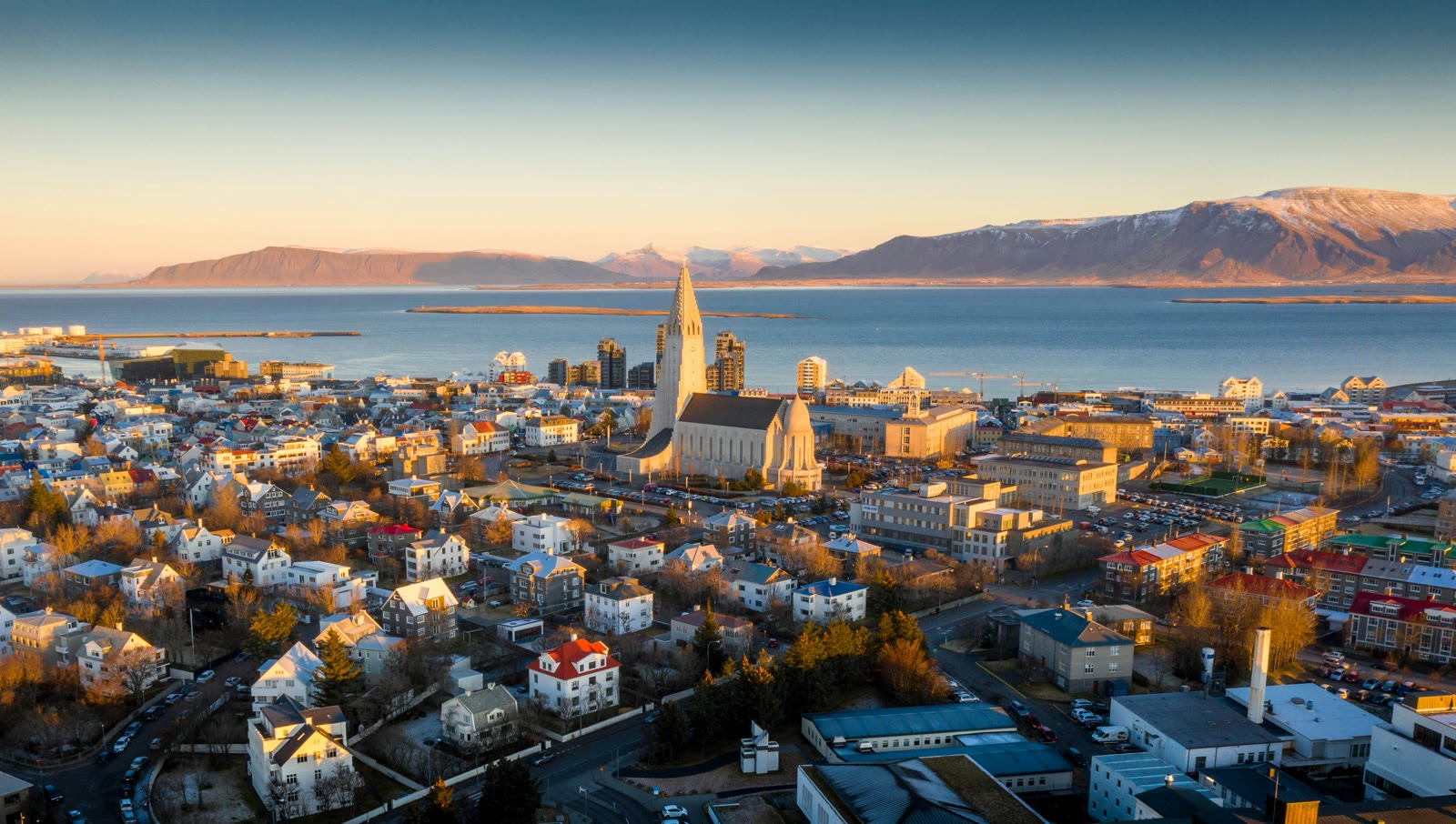
Reykjavik is the world’s northernmost capital city, sitting at 64 degrees North on Iceland’s southwest coast. With a population of roughly 135,000 (about 235,000 in the greater capital region), it is a compact city defined by its dramatic natural setting between the North Atlantic and volcanic mountains, its geothermal energy, and a culture that blends Viking heritage with world-class contemporary design and music. The Gulf Stream keeps Reykjavik’s climate surprisingly temperate for its latitude: winters average around 0 degrees C (32 degrees F), milder than New York or Chicago, while summers are cool with highs of 13 degrees C (56 degrees F) and up to 21 hours of daylight. This guide covers everything you need to plan your trip, from month-by-month weather data to the best things to do, where to stay, and practical travel tips.
Welcome to Reykjavik
Founded as a farmstead by Ingolfur Arnarson, Iceland’s first Norse settler, around 874 AD, Reykjavik means “Smoky Bay” in Icelandic, named for the steam rising from the area’s geothermal hot springs. It remained a small fishing village until the 19th century, then grew rapidly after gaining municipal status in 1786 and became the capital when Iceland achieved home rule in 1904. Today, it is a city where you can walk from the Parliament building to a geothermal beach in 25 minutes, eat a 600-krona hot dog that Bill Clinton once ordered, and watch the Northern Lights dance over a modernist concert hall. The city’s modest scale means most attractions, restaurants, and hotels are within walking distance, while the Golden Circle, Blue Lagoon, and South Coast are all day-trip distance.
Reykjavik Weather at a Glance
Reykjavik has a subpolar oceanic climate (Koppen Cfc) heavily moderated by the Gulf Stream. The average annual temperature is 4.3 degrees C (39.7 degrees F). The warmest month is July with average highs of 13.5 degrees C (56 degrees F), and the coldest is January with average lows of minus 3 degrees C (27 degrees F). Annual precipitation is 800 to 850 mm (31 to 33 inches) spread across roughly 170 rain days. October is the wettest month (86 mm or 3.4 inches). May is the driest (44 mm or 1.7 inches). Wind is a constant: average speeds are 18 to 22 km/h (11 to 14 mph) year-round, with winter gusts frequently exceeding 40 km/h (25 mph).
Daylight swings from a brief 4 hours in late December to nearly 21.5 hours at the summer solstice in June. The midnight sun period (when the sky never reaches full darkness) runs from mid-May to early August. The Northern Lights season runs from late August to mid-April, with peak viewing in October, November, February, and March.
Reykjavik Seasonal Snapshot
- Winter (November to February): Temperatures 2 to minus 3 degrees C (36 to 27 degrees F). Daylight 4 to 6 hours. Peak Northern Lights season. Hotel rates at their lowest except Christmas and New Year. Frequent storms and icy streets. Best for aurora hunting, geothermal pools in the dark, and the Winter Lights Festival in early February.
- Spring (March to May): Temperatures 3.5 to 9.5 degrees C (38 to 49 degrees F). Daylight 12 to 18 hours. Northern Lights visible through mid-April. May is the driest month. Puffins return in mid-May. Best for fewer crowds, reasonable prices, hiking as trails clear, and the First Day of Summer celebration in April.
- Summer (June to August): Temperatures 10 to 13.5 degrees C (50 to 56 degrees F). Daylight 17.5 to 21.5 hours. Midnight sun peaks at the June solstice. All roads open including the Highlands. Whale watching is at its best. Hotel rates peak (40 to 60 percent above winter). Best for outdoor activities, festivals, and road trips.
- Autumn (September to October): Temperatures 10 to 6.5 degrees C (50 to 44 degrees F). Daylight 11.5 to 8 hours. Northern Lights return by mid-September. October is the wettest month. Autumn colors in September. Northern Lights season begins in earnest. Best for aurora and fall foliage, but October storms can disrupt plans.
Reykjavik Travel Guides
Plan every aspect of your trip with our detailed Reykjavik guides. Each article covers a specific topic with concrete information: real numbers, named places, exact costs, and practical advice.
- Reykjavik Weather by Month – Month-by-month breakdown of temperatures, rainfall, daylight hours, sea temperatures, and Northern Lights viewing conditions, with a quick-reference comparison table.
- Best Time to Visit Reykjavik – When to go for the Northern Lights, midnight sun, lowest prices, or fewest crowds. Season-by-season breakdown with activity-specific recommendations.
- Things to Do in Reykjavik – Hallgrimskirkja, Sky Lagoon, whale watching, Golden Circle day trips, food walks, Northern Lights tours, and more, with hours, ticket prices, and practical tips.
- Reykjavik Events & Festivals – New Year’s Eve fireworks, Iceland Airwaves, Culture Night, Winter Lights Festival, National Day, RIFF film festival, and Christmas season, with dates and what to expect.
- Reykjavik Neighborhoods – Miðborg, Vesturbær, Grandi, Laugardalur, and Hafnarfjörður: character, hotel prices, who each area suits best.
- Where to Stay in Reykjavik – Best hotels in Miðborg, Grandi, and Laugardalur with luxury, mid-range, and budget picks for each area, plus verified Booking.com links.
- Reykjavik Travel Tips & FAQ – Keflavik Airport transfers (ISK 4,500 by Flybus), getting around, money and tipping, safety, what to pack, and answers to common questions.
Reykjavik Quick Facts
- Best months for Northern Lights: October, November, February, March
- Warmest month: July (13.5 degrees C / 56 degrees F average high)
- Coldest month: January (minus 3 degrees C / 27 degrees F average low)
- Driest month: May (44 mm / 1.7 inches)
- Wettest month: October (86 mm / 3.4 inches)
- Peak daylight: June 21 (21.5 hours)
- Minimum daylight: December 21 (4 hours)
- Sea temperature range: 4 degrees C (39 degrees F) in winter to 11 degrees C (52 degrees F) in July to August
- Airport: Keflavik International (KEF), 50 km / 31 miles southwest
- Currency: Icelandic krona (ISK). Credit cards accepted everywhere.
- Language: Icelandic, but English is universally spoken
- Tap water: Safe and excellent. Do not buy bottled water.
Suggested Hotels in Reykjavik
The Reykjavik EDITION
A 5-star Marriott property on the harbour edge of Miðborg, the EDITION features 253 rooms, a rooftop bar with views of Mount Esja and Faxafloi Bay, the Tides seafood restaurant, and a basement nightclub. Opened in 2021 in a prime waterfront location. Best for luxury travelers and couples seeking Reykjavik’s highest-end stay. Check rates and availability
Hotel Borg by Keahotels
An Art Deco landmark from 1930 on Austurvollur Square, Hotel Borg offers 99 rooms with classic black-and-white tiled bathrooms, a spa with sauna and hot tub, and an Italian restaurant. Steps from Parliament, the city’s main shopping street, and the Settlement Exhibition. Best for couples and history enthusiasts who want classic elegance in the geographic center of Reykjavik. Check rates and availability
Fosshotel Reykjavik
Iceland’s tallest hotel at 16 stories with 320 rooms, a fitness center, craft beer bar, and the Haust restaurant. Upper-floor rooms deliver panoramic views of Reykjavik, the bay, and Mount Esja. Located at the edge of Laugardalur near the main Hlemmur bus interchange and the city’s largest geothermal pool. Best for budget-conscious travelers who want big-hotel amenities and skyline views. Check rates and availability
