

 Sunny
 Overcast
This post may contain affiliate links. If you purchase through them, I may earn a small commission at no extra cost to you. Thanks for supporting our small business.
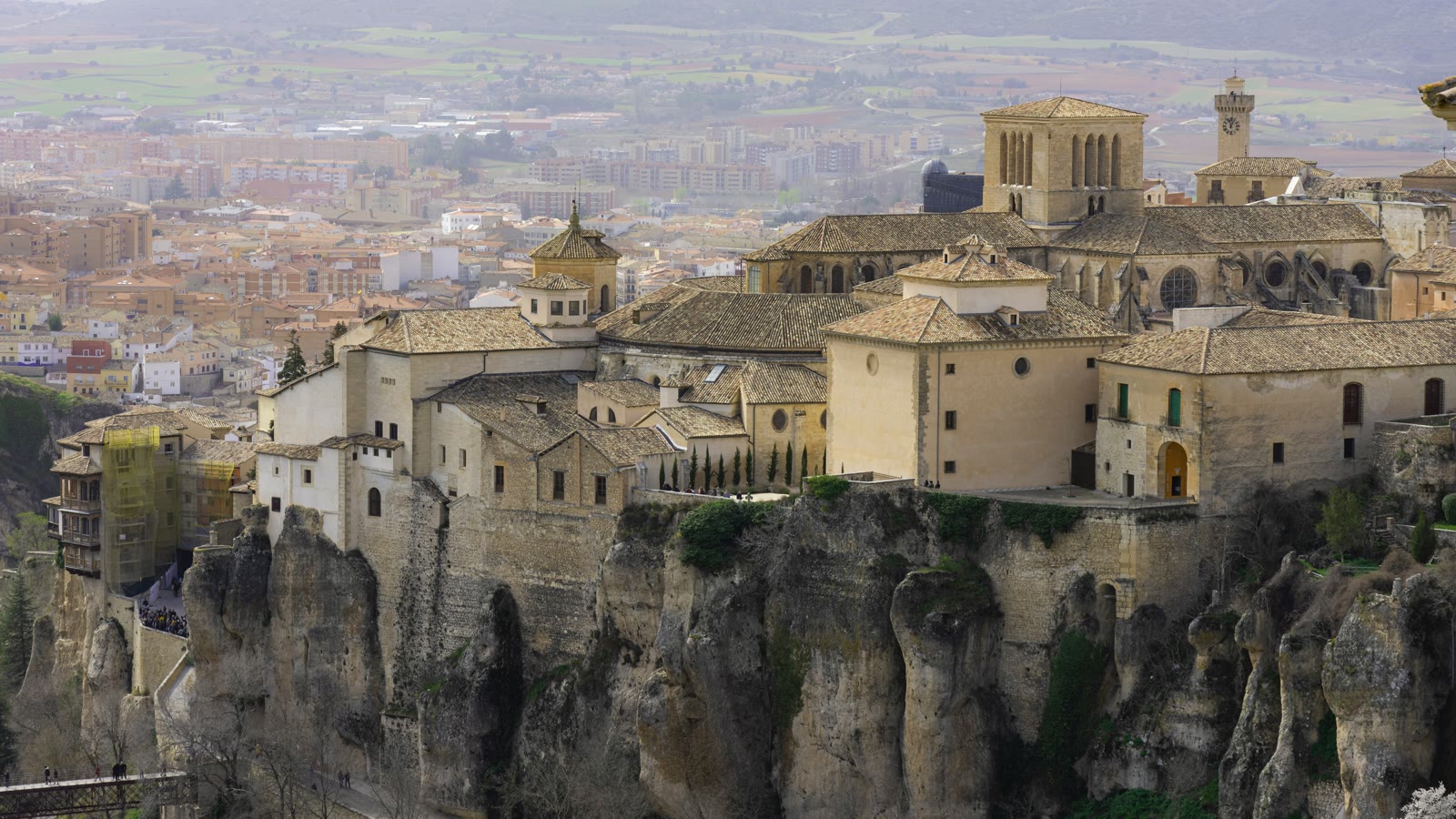
Cuenca is a UNESCO World Heritage city in Castilla-La Mancha, central Spain, built on a limestone ridge 956 metres above sea level between the gorges of the Huécar and Júcar rivers. Its hanging houses, its 12th-century Gothic cathedral and its iron footbridge over a 60-metre drop draw day-trippers from Madrid, 55 minutes away by high-speed train, while the cold, frosty winters and hot, dry summers of the Serranía de Cuenca shape a travel season that peaks in spring and September. This page is the hub for seven detailed guides covering everything from monthly weather to where to stay.
Welcome to Cuenca
Cuenca does two things better than almost anywhere else in Spain: it stacks an entire historic centre onto a single narrow ridge, and it hangs its most famous houses over the edge of a cliff. You come for the Casas Colgadas, stay for the quiet of the upper town at dusk, and leave having seen the first Gothic cathedral in the country and, with a car, a field of limestone sculptures half an hour into the mountains. The city is small, about 55,000 people, and almost everything worth seeing fits inside a square kilometre, which is why it works so well as a day trip or a one-night stop on a Madrid-to-Valencia route.
Cuenca Weather at a Glance
Cuenca has a continental Mediterranean climate shaped almost entirely by its altitude. The city sits at 956 metres in the Serranía de Cuenca, which makes it colder than almost any other provincial capital in central Spain. The annual average temperature is 13.1°C (56°F), but the spread is wide: January averages 4.6°C (40°F) with night-time lows of -0.5°C (31°F) and 17.8 frost days, while July averages 23.6°C (74°F) with daytime highs of 31.4°C (89°F).
Rainfall totals 501 mm a year and is unevenly distributed. The wettest months are October (60 mm), April (58 mm) and December (58 mm), and the driest is July at just 10 mm. Sunshine follows the opposite pattern, peaking at 357 hours in July and falling to 136 in December. Snow is light but regular in winter, averaging 2.3 days in January and 2.0 in February, and it rarely lingers at street level. The full monthly data table is in our Cuenca weather by month guide.
Cuenca by Season
- Winter (December to February): cold and crisp, with frost on 14 to 18 days a month, light snow and daytime highs of 10°C to 12°C. The quietest and cheapest season, and the best time to see the old town without crowds.
- Spring (March to May): warming from 8.8°C in March to 14.6°C in May, with the year’s heaviest rain in April (58 mm). Holy Week, with the Las Turbas procession, falls in this window and fills the city.
- Summer (June to August): hot and very dry, with July highs of 31.4°C and just 10 mm of rain. Mornings and evenings are the time to sightsee; nights cool to about 15°C.
- Autumn (September to November): September stays warm at 18.8°C and hosts the San Mateo festival, then October turns wet and November brings the first frost. The best season for photography.
Cuenca Travel Guides
These seven guides cover the city in detail. Start with weather and timing, then work through the attractions and practicalities.
- Cuenca Weather by Month: the full AEMET climate table, month by month, with temperatures, rainfall, frost and sunshine hours.
- Best Time to Visit Cuenca: which months deliver the best weather, the lowest prices and the fewest crowds, and exactly when to avoid.
- Things to Do in Cuenca: the hanging houses, the cathedral, the San Pablo bridge and the Ciudad Encantada, with prices and opening hours.
- Cuenca Events and Festivals: Semana Santa and Las Turbas, the San Mateo vaquillas and the summer San Julián fair, with dates.
- Cuenca Neighborhoods: the old town, the castle quarter, San Antón and the modern centre, and who each district suits.
- Where to Stay in Cuenca: the best hotels in the old town and the lower city, split by area and budget.
- Cuenca Travel Tips and FAQ: trains from Madrid, city buses, money, tipping, tap water and safety, plus quick answers to common questions.
Where Cuenca Is and What Shapes Its Weather
Cuenca is the capital of the province of the same name, in the eastern part of Castilla-La Mancha. It sits 165 km southeast of Madrid and about 200 km northwest of Valencia, on the A-40 motorway and the Madrid-to-Valencia high-speed rail line. The old town occupies a spur of rock where the Júcar river curves to the north and the Huécar to the south, cutting the deep gorges that the hanging houses overlook. That geology, plus the altitude of the surrounding Serranía de Cuenca, drives the climate: cold air pools in the gorges on winter nights, and the high plateau bakes under clear skies in July and August.
Cuenca Quick Facts
- Population: about 55,000, with a wider province of around 195,000.
- Elevation: 956 metres above sea level.
- UNESCO World Heritage: inscribed in 1996 for the historic walled town.
- Distance from Madrid: 165 km, roughly 55 minutes by AVE train or 1 hour 40 minutes by car.
- Annual rainfall: 501 mm, wettest in October at 60 mm.
- Warmest month: July, averaging 23.6°C (74°F) with highs of 31.4°C (89°F).
- Coldest month: January, averaging 4.6°C (40°F) with lows of -0.5°C (31°F).
- Best months to visit: May, June and September.
Where to Stay in Cuenca
Choose between the hilltop old town and the flat modern centre. The old town puts you beside the cathedral and the hanging houses but means steep streets and higher rates; the centre is cheaper, flatter and a short bus ride from the sights. The where to stay in Cuenca guide lists three recommended hotels in each area, from the Parador de Cuenca to budget guesthouses.
Suggested Hotels in Cuenca
Parador de Cuenca
A converted 16th-century convent on the cliff opposite the hanging houses, with a terrace over the Huécar gorge and the best view in the city. Best for couples and special occasions. Check rates and availability
NH Ciudad de Cuenca
A modern four-star on Ronda de San José with a fitness centre and a Mediterranean restaurant serving La Mancha specialities. Best for business travellers and families. Check rates and availability
Posada San José
A two-star guesthouse on Calle Julián Romero in the old town, with gorge views and a traditional restaurant, rated 8.9 by guests. Best for budget travellers and solo visitors. Check rates and availability
