

 Overcast
 Sunny
 Patchy rain nearby
This post may contain affiliate links. If you purchase through them, I may earn a small commission at no extra cost to you. Thanks for supporting our small business.
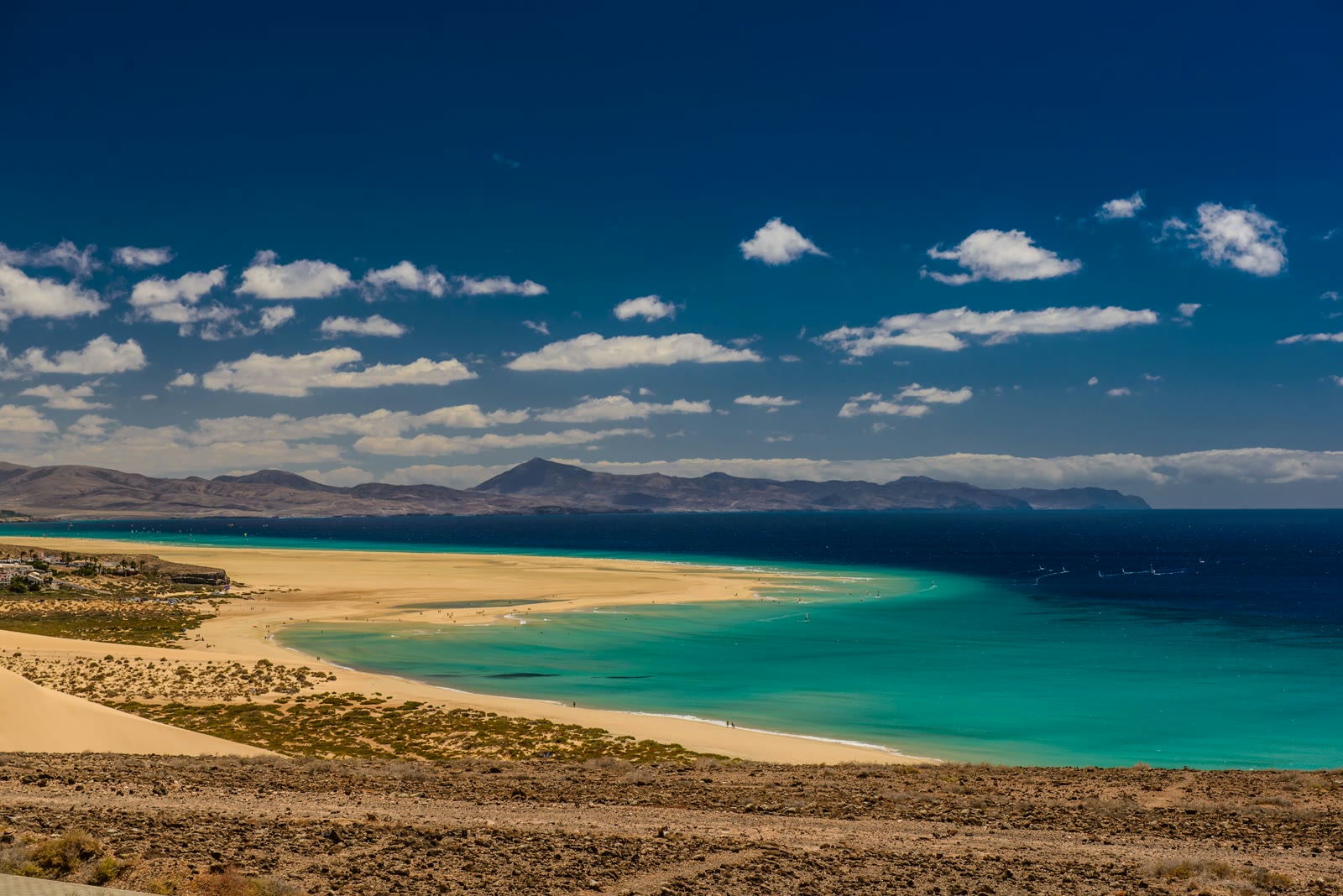
Fuerteventura, the second-largest Canary Island, sits in the Atlantic Ocean 100 km off the coast of Morocco. Known for over 150 km of coastline with white and gold-sand beaches, a subtropical desert climate that delivers 3,000 hours of sunshine per year, and some of the world’s most consistent trade winds, the island draws beach lovers, wind sports enthusiasts, and winter sun seekers in roughly equal measure. The interior is a UNESCO Biosphere Reserve of volcanic cones, lava fields, and small whitewashed villages producing award-winning goat cheese. This guide covers everything from monthly temperatures and wind patterns to the best beaches, resorts, and practical tips for getting around.
Fuerteventura Weather at a Glance
Fuerteventura has the driest climate of all the Canary Islands, with annual rainfall below 150mm and most of it falling between November and February. Daytime temperatures range from 21°C (70°F) in January to 28°C (82°F) in August. The persistent northeasterly trade winds, strongest from March through August at 20 to 35 km/h, are what make the island a world-class windsurfing and kitesurfing destination. Sea temperatures range from 18°C (64°F) in February to 23°C (73°F) in September. For a detailed month-by-month breakdown with temperature, rainfall, sunshine, and sea temperature data, see the Fuerteventura weather by month guide.
The calima, a hot dry wind carrying Saharan dust, can affect the island at any time of year but is most common from July to September. During a calima event, temperatures can spike to 32°C (90°F) or higher, visibility drops, and air quality worsens for 2 to 3 days at a time. These events are unpredictable but generally brief. If you have respiratory issues like asthma, check the forecast before travelling in late summer and consider packing a mask for calima days.
Seasonal Snapshot
- Winter (December to February): Daytime highs of 21 to 22°C (70 to 72°F), 6 hours of daily sunshine, highest chance of rain (15 to 20 mm/month across 3 to 4 days). The sea cools to 18 to 20°C (64 to 68°F). Carnival in February is the highlight. Hotel rates are at their lowest outside of Christmas and New Year.
- Spring (March to May): Daytime highs of 22 to 24°C (72 to 75°F), 7 to 9 hours of sunshine, almost zero rain by May. The trade winds peak, drawing wind sports athletes to Sotavento and Flag Beach. Wildflowers bloom in the dunes and volcanic interior. Hotel rates remain moderate through May.
- Summer (June to August): Daytime highs of 26 to 28°C (79 to 82°F), 10 to 11 hours of sunshine, no measurable rain. Sea temperatures peak at 23°C (73°F). August is the busiest and most expensive month. The wind drops to its annual low in August, making it the best time for non-wind-sports beach days.
- Autumn (September to November): Daytime highs of 24 to 27°C (75 to 81°F), 6 to 8 hours of sunshine. September has the warmest sea of the year (23°C/73°F) with fewer crowds than August. Rain returns gradually in October and November. November is the cheapest month outside of the festive period.
Plan Your Trip
- Fuerteventura weather by month: Month-by-month temperatures, rainfall in mm, sunshine hours, sea temperatures, and wind data with a climate comparison table. Find out exactly what weather to expect for any month.
- best time to visit guide: When to visit for the best beach weather (July to September), the strongest winds for kite and windsurfing (March to August), the lowest prices (November, late January), and which months to avoid and why.
- things to do in Fuerteventura: The best things to do from the Corralejo Dunes and Lobos Island to surfing at El Cotillo, kitesurfing at Sotavento, hiking the volcanic interior, and exploring the historic village of Betancuria. Opening times, ticket prices, and practical tips for every attraction.
- events and festivals calendar: Fuerteventura’s annual event calendar covering Carnival (February/March), the Kiteboarding World Cup (July/August), the Romeria pilgrimage (September), and the International Kite Festival (November). Dates, locations, and what to expect.
- neighborhood guide: Compare every major area from the surf town of Corralejo and the bohemian fishing village of El Cotillo to the family-friendly Caleta de Fuste and the wind sports hub of Costa Calma. Find the right base for your trip.
- where to stay: Hotel recommendations for every budget and area. Area-by-area guide with specific hotel picks in Corralejo, Caleta de Fuste, Costa Calma, and Morro Jable. Each hotel includes a description and direct Booking.com link.
- travel tips and FAQ: Practical travel information covering Fuerteventura Airport (FUE), car hire and bus routes, visa requirements, tipping norms, safety, tap water, and answers to frequently asked questions about the island.
Location and Climate Context
Fuerteventura sits at 28°N latitude in the Atlantic Ocean, 100 km west of the Moroccan coast and 1,050 km southwest of mainland Spain. It is the closest Canary Island to Africa, which explains its desert climate: the prevailing northeasterly trade winds pick up moisture over the Atlantic but do not produce significant rainfall because the island is too low to force the air upward. The highest point on the island is Pico de la Zarza at 807 metres on the Jandia peninsula in the south. The flat, low-lying terrain is what makes Fuerteventura drier and windier than the more mountainous Canary Islands like Tenerife and Gran Canaria.
Quick Facts
- Best months for beach weather: July, August, September
- Best months for wind sports: March through August (peak April to July)
- Warmest month: August (28°C / 82°F average high, can reach 32°C/90°F during calima)
- Coolest month: January (21°C / 70°F average high)
- Wettest month: December (20mm across 4 to 5 days)
- Warmest sea temperature: September (23°C / 73°F)
- Annual sunshine: 3,000 hours
- Time zone: WET (UTC+0) / WEST (UTC+1), same as UK, one hour behind mainland Spain
- Currency: Euro
- Airport: Fuerteventura Airport (FUE), 5km south of Puerto del Rosario
Suggested Hotels in Fuerteventura
Secrets Bahia Real Resort and Spa
A 5-star adults-only beachfront resort in Corralejo with two outdoor pools, seven restaurants, a full-service spa, and views across to Lobos Island and Lanzarote. Best for couples seeking a luxury all-inclusive escape without children. Check rates and availability
Sheraton Fuerteventura Golf and Spa Resort
A 4-star beachfront resort in Caleta de Fuste with four outdoor pools, a full spa, mini-golf, and easy access from the airport just 10 minutes away. Best for families, golfers, and travellers who want resort facilities with a trusted international brand. Check rates and availability
Hotel Riu Oliva Beach Resort
An all-inclusive 3-star hotel set right inside the Corralejo Dunes Natural Park with Grandes Playas beach at its doorstep, two pools, and family entertainment. Best for families and budget-conscious all-inclusive travellers who want an unbeatable beachfront location. Check rates and availability
