

 Patchy rain nearby
 Partly Cloudy
 Overcast
This post may contain affiliate links. If you purchase through them, I may earn a small commission at no extra cost to you. Thanks for supporting our small business.
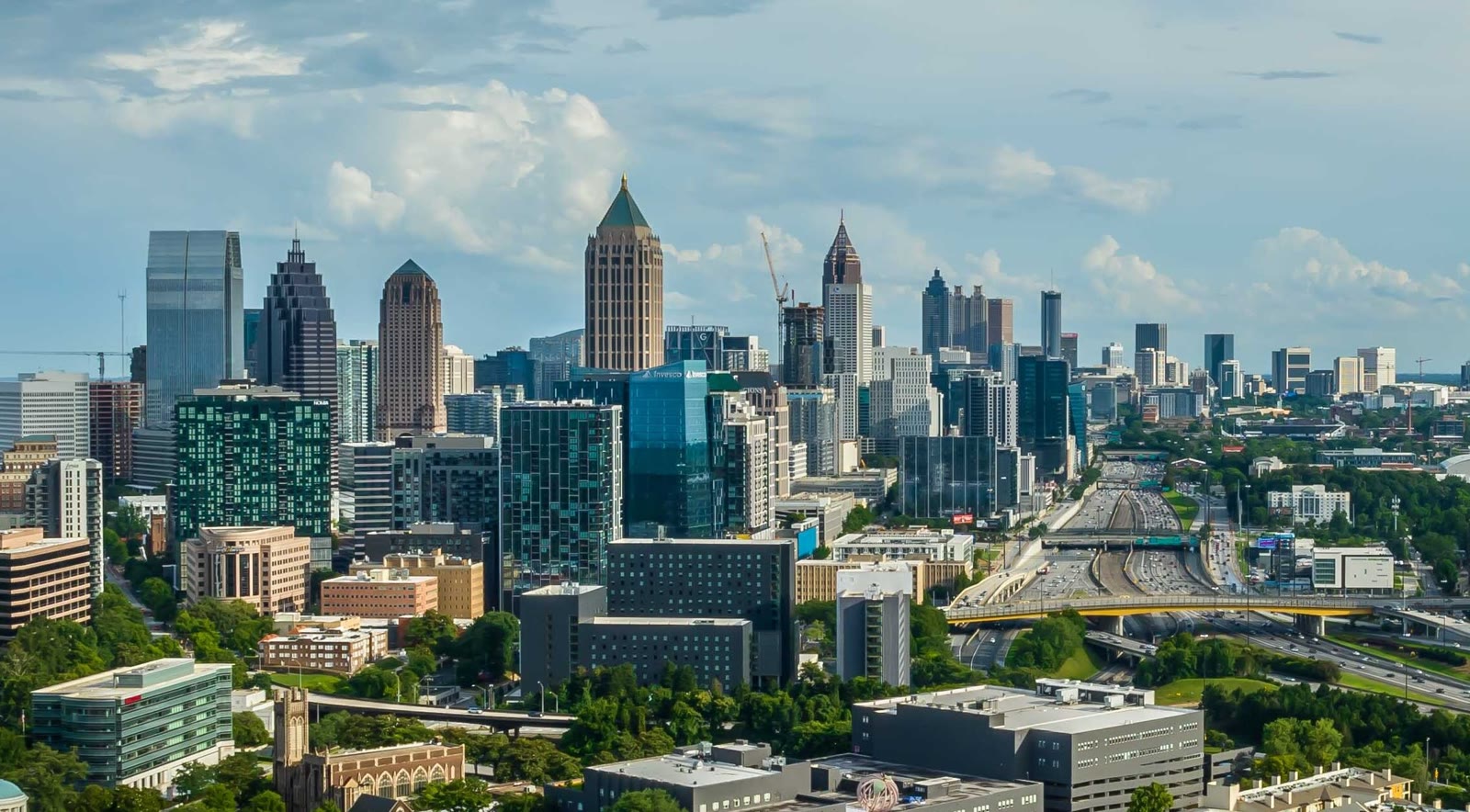
Atlanta is the capital of Georgia and the economic hub of the American Southeast, a city of roughly 500,000 people in a metro area of more than 6 million. Its humid subtropical climate means hot, stormy summers and mild, short winters, with an annual average of 62F (17C) and about 50 inches (1,281 mm) of rain spread across the year. Hartsfield-Jackson Atlanta International Airport, the busiest in the world, makes it an easy gateway, and the city’s neighborhoods stretch from the skyscrapers of Downtown and Midtown to the tree-lined eastside BeltLine districts. Use the guides below to plan a visit around the weather.
Atlanta Weather at a Glance
Atlanta sits at about 1,050 feet (320 m) above sea level on the Piedmont plateau, roughly 250 miles (400 km) from the Atlantic and Gulf coasts, so it gets the Southeast’s humidity without any ocean breeze to cool it down. July is the hottest month with an average high of 90F (32C) and a low of 71F (22C), while January is the coldest with a high of 54F (12C) and a low of 35F (2C). Rainfall runs 50.43 inches (1,281 mm) a year with no dry season, and the city logs about 2,738 hours of sunshine annually.
The defining features are the summer heat and the spring pollen. Afternoon thunderstorms fire on roughly half the days from June through August, usually between 2 and 6 pm, and the heat index regularly tops 100F (38C). Snow is rare, about 2 inches a year, but even a dusting can shut the roads. Spring brings the Southeast’s heaviest tree pollen from late March through April, when Atlanta often tops national allergy rankings.
Atlanta’s Seasons at a Glance
- Spring (March to May): warms from 65F (18C) in March to 80F (27C) in May, with the lowest rainfall of the year in May at 3.56 inches (90 mm). Pollen peaks in late March and April.
- Summer (June to August): hot and humid, with July peaking at 90F (32C) and afternoon thunderstorms most days. July is the wettest month at 4.75 inches (121 mm).
- Fall (September to November): the driest, most comfortable stretch, with October averaging 73F (23C) and just 3.28 inches (83 mm) of rain. Peak fall color runs late October into November.
- Winter (December to February): mild, with highs in the 50s Fahrenheit and overnight lows near freezing. Snow is rare and brief, and January and February bring the cheapest hotel rates.
Atlanta Travel Guides
- Atlanta Weather by Month: monthly temperatures, rainfall, humidity and sunshine with a full data table.
- Best Time to Visit Atlanta: the right months for weather, lower prices and fewer crowds, plus events.
- Things to Do in Atlanta: 17 attractions with hours, prices and practical tips, from the aquarium to the BeltLine.
- Atlanta Events and Festivals: a season by season calendar of the city’s biggest festivals and games.
- Atlanta Neighborhoods: Downtown, Midtown, Buckhead and the eastside, with hotel price ranges.
- Where to Stay in Atlanta: the best areas and hotels, broken into luxury, mid-range and budget.
- Atlanta Travel Tips: airport, MARTA, costs, tipping and answers to common questions.
Atlanta’s Location and Climate
Atlanta’s position on the Piedmont, a rolling plateau between the Appalachian Mountains to the north and the coastal plain to the south, gives it a climate that’s cooler than Florida but warmer than the Midwest. Elevation knocks a few degrees off the summer heat compared with lower-lying cities, but the humid air drawn up from the Gulf of Mexico keeps the heat index high. The city gets its heaviest rain from summer thunderstorms and winter frontal systems, and it sits on the northern edge of the region’s tornado risk, with severe weather most likely in March and April.
Atlanta Quick Facts
- Warmest month: July, averaging 90F (32C) high and 71F (22C) low
- Coolest month: January, averaging 54F (12C) high and 35F (2C) low
- Wettest month: July at 4.75 inches (121 mm)
- Driest month: October at 3.28 inches (83 mm)
- Annual rainfall: 50.43 inches (1,281 mm)
- Annual sunshine: 2,738 hours
- Snow: about 2 inches (5 cm) a year, rare and brief
- Thunderstorm days: roughly 50 a year, most May through August
- Best months to visit: April, May, September and October
Where to Stay in Atlanta
Most visitors base themselves in one of three districts. Downtown puts you next to the Georgia Aquarium, World of Coca-Cola and the stadiums. Midtown is the walkable arts and nightlife center with Piedmont Park and the Fox Theatre. Buckhead is the upscale shopping district with the city’s densest luxury hotels. MARTA’s rail lines link all three to the airport, so you can explore the whole city without a car.
Suggested Hotels in Atlanta
The St. Regis Atlanta
A resort-style luxury hotel in Buckhead with a 40,000-square-foot spa, a palm-lined pool piazza, and the Atlas restaurant. Best for couples who want a quiet high-end retreat. Check rates and availability
Hyatt Regency Atlanta
This landmark atrium hotel sits on Peachtree Street downtown, one block from MARTA and a short walk from Centennial Olympic Park, with a rooftop restaurant and pool. Best for convention-goers and families. Check rates and availability
Hampton Inn and Suites Atlanta-Downtown
A dependable budget pick with free breakfast and free Wi-Fi a short walk from the aquarium and Centennial Olympic Park. Best for budget travelers who want to be downtown. Check rates and availability
