


 Light rain shower
  Patchy rain nearby
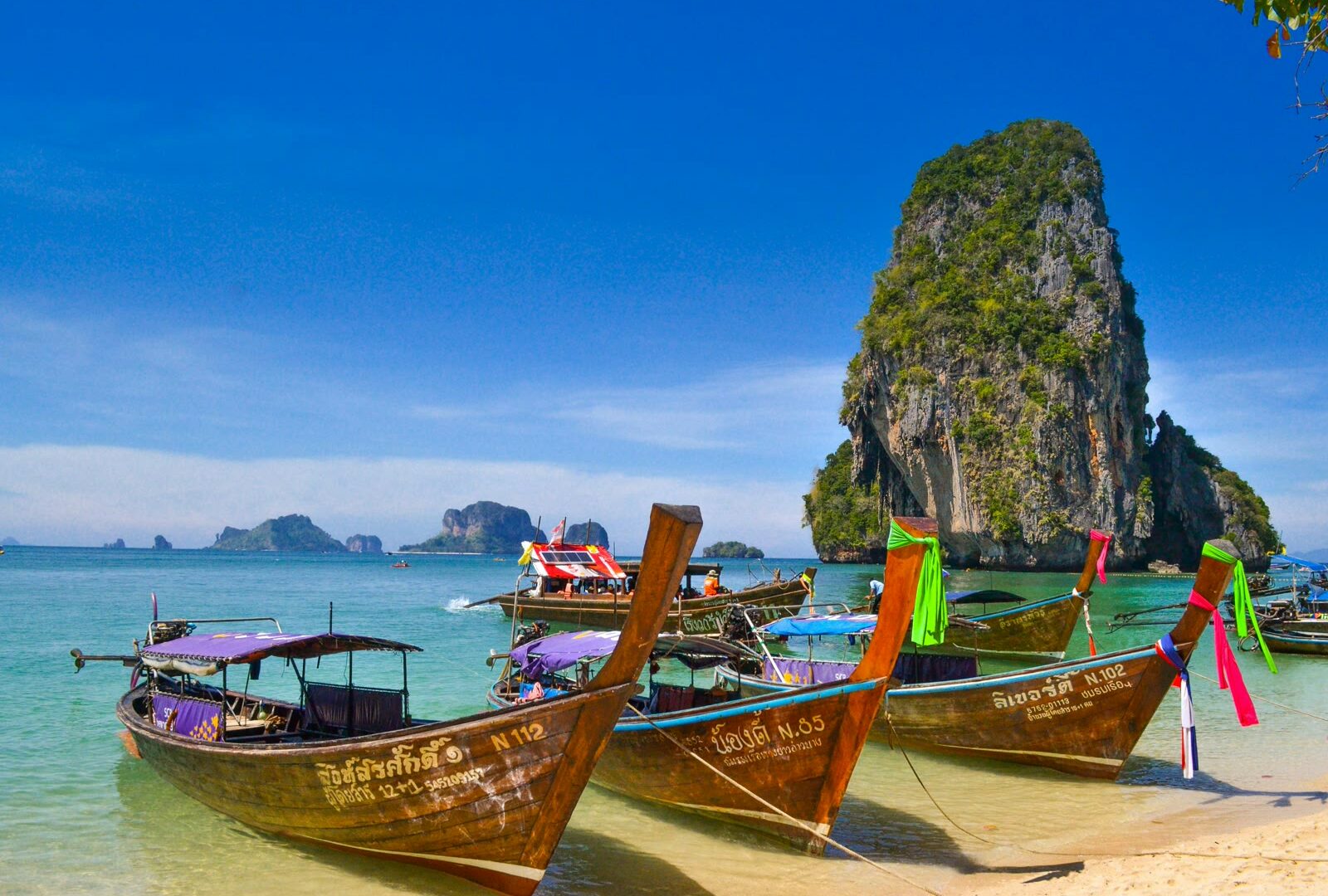
 Krabi province stretches along Thailand’s Andaman coast across 4,708 square kilometres, anchored by Krabi Town on the Krabi River and the resort beaches of Ao Nang, Railay, and Koh Lanta to the south. Unlike the island destinations, Krabi’s defining features are its limestone karst formations: over 150 sheer cliffs rising from emerald water, creating a landscape that draws rock climbers from around the world (700-plus bolted routes) and fills Instagram feeds. Krabi International Airport (KBV) handles direct flights from Singapore, Kuala Lumpur, and major Thai cities. The province receives approximately 2,400mm of rain annually, concentrated May through October during the southwest monsoon, with a dry November to April window that delivers the best climbing, diving, and island-hopping conditions. Krabi Town itself is a functional transport hub; the beaches and islands are the destination.
Krabi Weather Overview
Krabi follows the Andaman monsoon pattern: dry season November through April, rainy season May through October. High season (December to March) delivers 30degC to 33degC (86-91degF) highs, 8-plus hours of daily sunshine, and calm, clear seas , the best window for the 4-island tour, Hong Islands, and Phi Phi day trips. April is the hottest month reaching 34degC (93degF). May through October brings 200mm to 350mm monthly rainfall, typically as intense 1 to 2-hour afternoon storms, with mornings remaining dry and usable. September is the wettest month at 320mm. Humidity stays at 75 to 85 percent during the rainy months. The sea stays warm at 28degC to 30degC year round. Rock climbing on Railay’s overhanging routes is possible year round; the cliffs dry quickly after rain. Annual sunshine averages 2,200 hours.
Krabi Quick Facts
- Best months: December to March (dry, calm seas, best visibility)
- Warmest month: April at 34degC (93degF)
- Wettest month: September at 320mm (21 rain days)
- Driest month: February at 30mm (3 rain days)
- Sea temperature: 28-30degC (82-86degF) year round
Krabi Travel Guides
- Best Beaches in Krabi: Railay, Phra Nang, Ao Nang, Tubkaek, Klong Muang, Koh Hong , ranked with swimming conditions, accessibility, and facilities.
- Things to Do in Krabi: Tiger Cave Temple, Emerald Pool, rock climbing on Railay, 4-island snorkelling tour, Hong Islands kayaking, and Krabi Town night market.
- Day Trips from Krabi: Phi Phi Islands, Hong Islands, Koh Lanta, the Emerald Pool and hot springs, and the border run to Koh Lipe.
- Where to Stay in Krabi: Area guide covering Ao Nang, Railay, Klong Muang, Tubkaek, and Krabi Town. Suggested hotels for every budget in each area.
- Getting Around Krabi: Airport transfers (KBV), longtail boats to Railay, songthaews, motorbike rental, and ferry connections to Phi Phi, Koh Lanta, and Phuket.
Suggested Hotels in Krabi
Rayavadee
Krabi’s most iconic resort, set on 26 acres of coconut groves between Railay, Phra Nang, and Nam Mao beaches with 102 two-storey pavilions. The Grotto restaurant, built into a limestone cave on Phra Nang Beach, serves grilled seafood at sunset. Best for honeymooners and milestone celebrations.
Holiday Inn Resort Krabi Ao Nang Beach
Directly on Ao Nang Beach with two pools, a kids’ club, and family rooms. The beachfront location puts you steps from longtail boats to Railay. Best for families wanting Ao Nang’s convenience with international hotel standards.
Pak-Up Hostel
Krabi Town’s top hostel in a converted schoolhouse with a courtyard bar, dorm beds from 300 THB, and private rooms. A 5-minute walk from the Krabi Town night market. Best for backpackers using Krabi Town as a transit base.
City Articles
Best Beaches in Krabi
Krabi’s coastline splits between the mainland beaches of Ao Nang, Railay, and Klong Muang, and the offshore islands of the Hong archipelago and Koh Lanta. The defining feature of the best beaches in Krabi is the limestone karst backdrop: on Railay and Phra Nang you swim in the shadow of 200-metre cliffs, while Koh Hong’s […]
Read MoreDay Trips from Krabi
Krabi’s position midway along the Andaman coast makes it the ideal base for island-hopping: Phi Phi is 45 minutes by speedboat, Koh Lanta 2 hours by ferry, and the Hong Islands just 25 minutes by longtail. Unlike Phuket where you spend 2-plus hours commuting to the departure pier, Krabi’s tours leave directly from Ao Nang […]
Read MoreGetting Around Krabi
Krabi’s transport system revolves around two hubs: Krabi Town on the river, the ferry and bus gateway, and Ao Nang on the coast, the beach and tour hub. Between them, longtail boats handle the beach-hopping, songthaews run fixed routes, and motorbikes unlock the inland waterfalls and hot springs. This guide to getting around Krabi covers […]
Read MoreThings to Do in Krabi
Krabi’s limestone karst landscape shapes every activity here: rock climbing on 700-plus bolted routes, kayaking through sea caves at Koh Hong, and climbing 1,260 steps to a mountaintop Buddha. The top things to do in Krabi range from half-day temple climbs to full-day island-hopping tours, and many are accessible year round even during the May […]
Read MoreWhere to Stay in Krabi
Krabi’s accommodation splits across five areas: Ao Nang for beach access and tour departures, Railay for car-free beach and climbing life, Krabi Town for budget transit stays, Klong Muang for mid-range resort seclusion, and Tubkaek for luxury isolation with Hong Island views. Where to stay in Krabi depends entirely on whether you’re here to climb, […]
Read More