

 Smoky haze
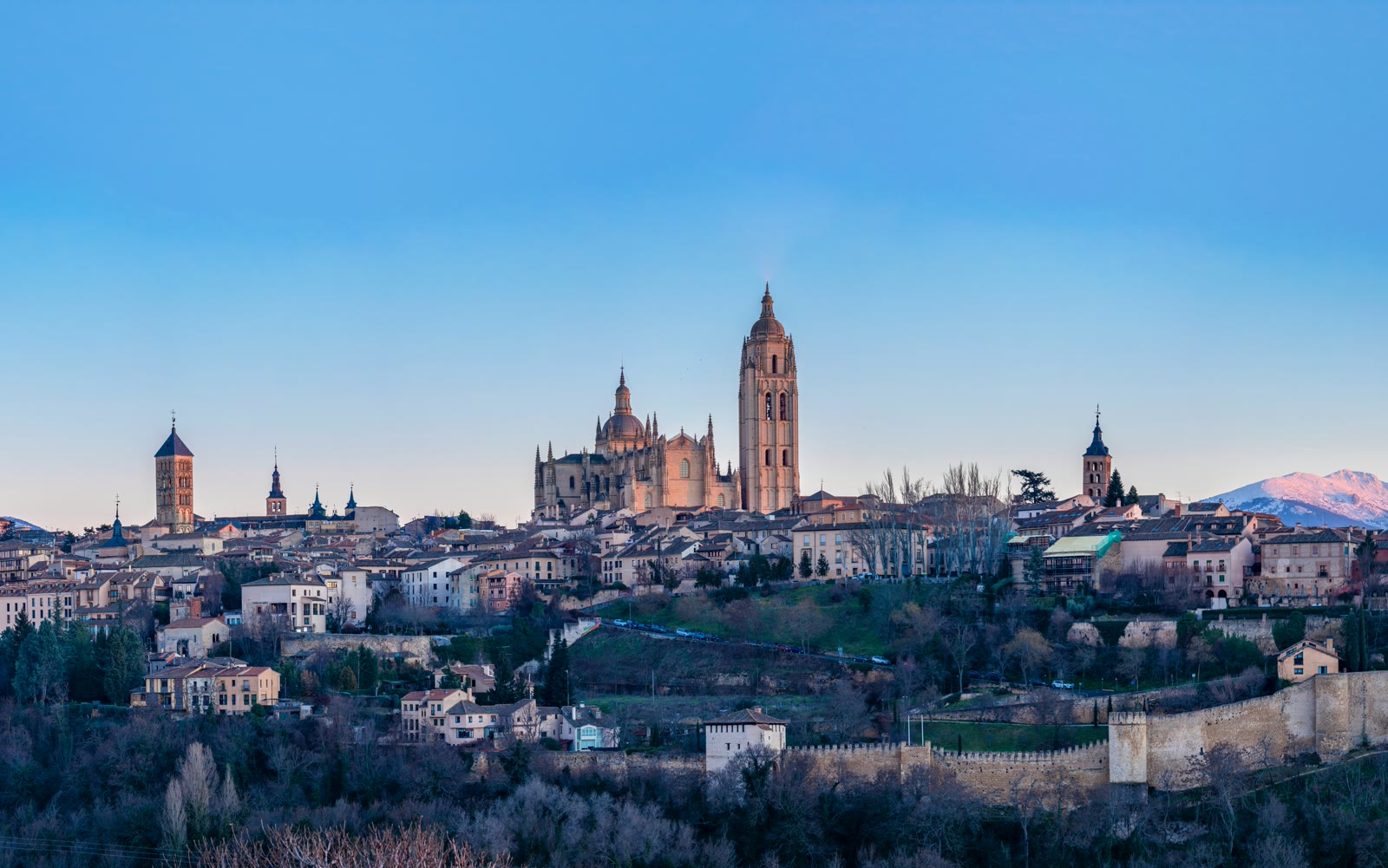
 Segovia sits on a rocky plateau in central Spain’s Castilla y León region, 90km northwest of Madrid and 1,005 metres above sea level. Its Roman aqueduct, built around 100 AD with 167 unmortared granite arches, still dominates the city entrance , one of the best-preserved Roman engineering works anywhere. The Alcázar castle, with its slate turrets rising from a cliff edge, reportedly inspired the Disney castle design. The cathedral, Spain’s last Gothic cathedral, earned the nickname “the Lady of Cathedrals” for its elegant proportions. Together these three monuments earned the old town UNESCO World Heritage status in 1985, and they pull over 500,000 visitors annually to a city of just 52,000 residents. Come for the aqueduct and the Alcázar, stay for cochinillo (roast suckling pig) at a century-old mesón, empty cobblestone streets after the day-trippers leave at 6pm, and the walkable 2km stretch from one end of the old town to the other.
Welcome to Segovia: A UNESCO City One Hour from Madrid
Segovia works as a day trip , 27 minutes on the AVE from Madrid’s Chamartín station drops you 6km from the aqueduct , but the city transforms after sunset. The day-tripper coaches pull out around 6pm and the old town reverts to a quiet provincial city where locals do their evening paseo around Plaza Mayor, tapas bars fill with Spanish voices rather than tour-group languages, and the illuminated aqueduct arches reflect gold against the night sky. Staying overnight costs less than a comparable Madrid hotel night and buys you a completely different city. The elevation (1,005m) gives Segovia a climate distinct from Madrid’s: colder winters with frost and occasional snow, cooler summer evenings even in July and August, and a compressed but beautiful spring that carpets the surrounding countryside in almond blossom for roughly three weeks in March.
Segovia Weather at a Glance
Segovia has a continental Mediterranean climate shaped by its 1,005-metre elevation. Summers are hot and bone-dry , July and August average 30°C (86°F) by day but cool to 14 to 15°C (57 to 59°F) at night, a 15-degree swing that lets you eat dinner outdoors comfortably even in peak summer. Winters are cold: January daytime highs average 8°C (46°F) with overnight lows dropping to freezing. Snow falls on 3 to 5 days per year, typically in January and February, and usually melts within a day in the city centre though it lingers on the Sierra de Guadarrama peaks visible from the Alcázar. Spring (April to May) and autumn (September to October) are the most comfortable seasons for walking the old town. The city gets about 460mm of rain annually, concentrated in spring (April and May) and autumn (October and November). July and August combine for barely 34mm of rain across 6 wet days , you are extremely unlikely to need an umbrella in summer.
Segovia Seasonal Snapshot
- Spring (March to May): Almond trees bloom around the city walls in March, daytime highs climb from 14°C to 21°C. Titirimundi international puppet festival takes over the old town for 5 days in mid-May , book accommodation 6 weeks ahead. Semana Santa (Holy Week) brings solemn processions if Easter falls in March or April. The best overall season for comfortable sightseeing.
- Summer (June to August): Hot days (27 to 30°C), long evenings (sunset after 9:30pm), and minimal rain. The Fiestas de San Juan y San Pedro fill the last week of June with concerts, parades, and street food. August weekends bring an influx of madrileños escaping the Madrid heat , book ahead for Friday and Saturday nights.
- Autumn (September to November): September is the second-best month after May , daytime highs of 25°C, only 5 rain days, and the Feria de Día fills the plazas with food stalls and live music. October brings autumn colours to the Eresma valley and the wettest month of the year (55mm). November is quiet and chilly with hotel rates at their lowest since January.
- Winter (December to February): Coldest season with frost, occasional snow, and daytime highs of 8 to 10°C. The lowest hotel prices of the year (€40 to 70 for a double). The Christmas market fills Plaza Mayor from December to January 6, and the illuminated aqueduct and Alcázar make evening walks worthwhile despite the cold.
Segovia Quick Facts
- Best months to visit: May and September for weather, June for long daylight hours, January to February for lowest prices
- Warmest month: July and August (30°C / 86°F average high)
- Coldest month: January (8°C / 46°F average high, 0°C / 32°F average low)
- Wettest month: May and October (55mm / 2.2 inches)
- Driest month: August (16mm / 0.6 inches)
- Annual sunshine hours: Approximately 2,500
- Elevation: 1,005 metres (3,297 feet) above sea level
- Population: ~52,000
- Nearest airport: Madrid-Barajas (MAD), 105km southeast (1 hour 20 minutes by car via AP-6 toll motorway)
- Train from Madrid: AVE high-speed train, 27 minutes from Madrid-Chamartín, €13 to 25 one-way
Segovia Climate Guides
- Segovia Weather by Month: Month-by-month temperature tables, rainfall data, sunshine hours, and what to pack for each season.
- Best Time to Visit Segovia: Which months deliver the best combination of weather, manageable crowds, and reasonable prices , with specific festival dates to plan around.
Segovia Travel Guides
- Things to Do in Segovia: The aqueduct, Alcázar, cathedral, and more , 12 attractions with opening hours, ticket prices, and practical tips for making the most of your visit.
- Segovia Events and Festivals: From Semana Santa processions to the Titirimundi puppet festival and the Fiestas de San Juan y San Pedro , the complete Segovia events calendar.
- Best Neighborhoods in Segovia: Where to base yourself: the old town inside the walls, the San Millán area near the aqueduct’s source, the Plaza Mayor zone, or the quieter slopes below the Alcázar.
Segovia Practical Guides
- Where to Stay in Segovia: Detailed hotel recommendations across three areas: the old town, San Millán, and outside the walls , with specific properties from luxury Parador to budget hostal, all with real Booking.com links.
- Segovia Travel Tips and FAQ: How to get the 27-minute AVE from Madrid, what cochinillo costs, how to get around, tipping customs, safety, and the practical questions every visitor asks at the tourist office.
Suggested Hotels in Segovia
Parador de Segovia
The Parador occupies a hilltop with a panoramic restaurant view over the entire old town, cathedral, and Alcázar , the single best vista in Segovia. Facilities include an outdoor swimming pool (June to September), extensive gardens, and free parking. Best for travellers with a car who want resort comfort and the iconic Segovia panorama. Check rates and availability
Hotel San Antonio El Real
A 4-star hotel inside a converted 15th-century Franciscan monastery near the aqueduct’s source, with a Mudéjar coffered ceiling in the cloister and a restaurant serving cochinillo in the original monks’ refectory. Best for travellers wanting a historic stay at mid-range prices, 10 minutes’ walk from the aqueduct. Check rates and availability
Hotel Don Felipe
A modern 3-star on Calle Real in the heart of the old town, with a rooftop terrace offering a 270-degree view of the cathedral, Alcázar, and mountains. Air-conditioned rooms and a quiet location make this the best mid-range option for central access. Best for first-time visitors wanting a central, comfortable base at a reasonable price. Check rates and availability
City Articles
Best Neighborhoods in Segovia
Segovia is a compact city , the entire UNESCO-listed old town stretches roughly 1.5km from the aqueduct at one end to the Alcázar at the other, and you can walk from one to the other in 25 minutes. This means the concept of “neighbourhoods” in Segovia is more about historical character and hotel location than […]
Read MoreBest Time to Visit Segovia
The best time to visit Segovia for comfortable sightseeing weather is May through mid-June and September. Daytime temperatures sit between 21°C and 27°C (70 to 81°F), rain is modest at 5 to 9 wet days per month, and the city feels lively without being overwhelmed by crowds. If your priority is rock-bottom hotel prices and […]
Read MoreSegovia Events and Festivals
Segovia’s event calendar hinges on three major festivals: Semana Santa (Easter week, March or April), Titirimundi (international puppet theatre, mid-May), and the Fiestas de San Juan y San Pedro (late June). These three draw the biggest crowds and block out the most accommodation. Beyond them, the city runs smaller but atmospheric events year-round: a September […]
Read MoreSegovia Travel Tips and FAQ
Segovia is the easiest day trip from Madrid , 27 minutes on the AVE high-speed train gets you here faster than crossing the Spanish capital by metro , but the city rewards an overnight stay. The old town empties of day-trippers by 6pm, and the two hours before sunset are when the honey-coloured stone of […]
Read MoreSegovia Weather by Month
Segovia sits on a high plateau at 1,005 metres (3,297 feet) above sea level in central Spain’s Castilla y León region. The elevation gives the city a continental Mediterranean climate with sharp seasonal contrasts , hot, dry summers and cold winters where temperatures regularly dip below freezing. Spring and autumn are compressed shoulder seasons, each […]
Read MoreThings to Do in Segovia
Segovia packs more UNESCO-listed monuments per square kilometre than almost any other city in Spain. The Roman aqueduct, the Alcázar fortress, and the cathedral form a trio of landmarks that justify the day trip from Madrid, but the city rewards an overnight stay with quieter morning streets, atmospheric evening walks, and the chance to eat […]
Read MoreWhere to Stay in Segovia
Segovia’s accommodation landscape is dominated by historic conversions , monasteries, palaces, and traditional Castilian houses turned into hotels , alongside a solid mid-range offering in the modern area south of the aqueduct. You will not find international chain hotels (no Marriott or Hilton) in the city centre; the largest branded property is the Eurostars Plaza […]
Read More