
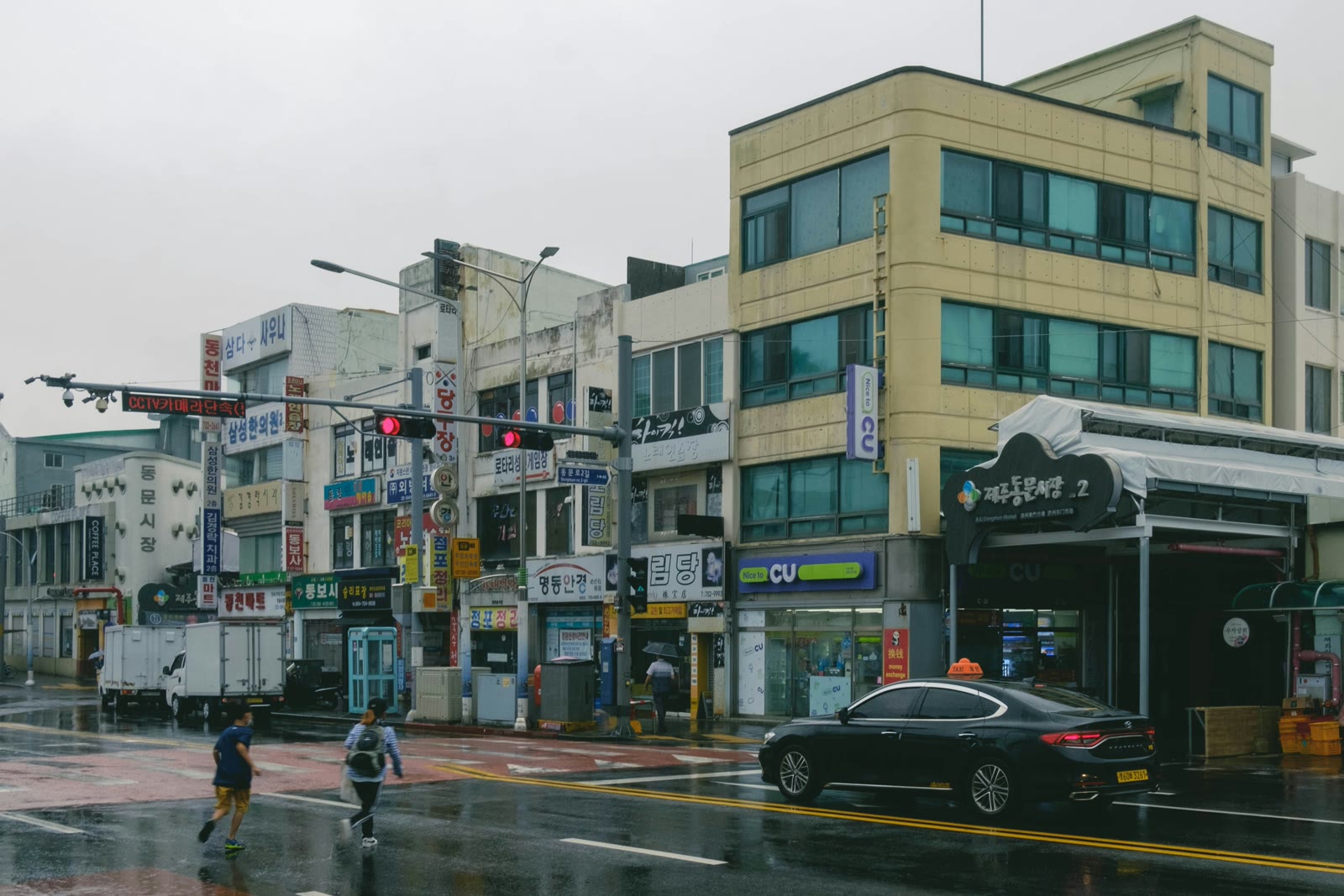

 Patchy rain nearby
  Sunny
Sunny  Overcast
 This post may contain affiliate links. If you purchase through them, I may earn a small commission at no extra cost to you. Thanks for supporting our small business.
Jeju City, the capital of Jeju Island off South Korea’s southern coast, serves as the gateway to a volcanic island shaped by Hallasan Mountain and surrounded by 437km of coastline. The island is South Korea’s most popular holiday destination, drawing roughly 15 million visitors per year with its UNESCO World Heritage sites, subtropical climate, and distinct food culture. Jeju City itself is a busy port and administrative hub on the north coast, but the real draw is the island beyond: dormant craters, lava tubes, female free-divers, tangerine orchards, and some of East Asia’s best beach-and-mountain combinations in a compact area about 1.5 hours across by car.
Welcome to Jeju City
Jeju Island sits 90km south of the Korean Peninsula in the Korea Strait, roughly 450km from Seoul. At 1,849 square kilometers, it’s about three times the size of Seoul but with fewer than 700,000 permanent residents. The island formed entirely from volcanic activity: Hallasan, a 1,947m (6,388 ft) shield volcano at the center, last erupted around 5,000 years ago and created the lava tubes, basalt columns, and crater lakes that now draw geology enthusiasts from around the world. The island’s volcanic soil supports 90% of South Korea’s tangerine production and gives the local green tea its distinctive mineral taste. Jeju was named a UNESCO World Natural Heritage site in 2007 (Jeju Volcanic Island and Lava Tubes) and a UNESCO Global Geopark in 2010.
Jeju City Weather at a Glance
Jeju has a temperate humid subtropical climate, milder than mainland Korea thanks to the surrounding sea. Winter daytime highs stay around 9-12°C (48-54°F) with nighttime lows rarely dipping below freezing in the city. Summer brings heat, humidity, and the East Asian monsoon: July and August average 29-30°C (84-86°F) with 240-260mm of monthly rain, concentrated in short intense downpours rather than all-day drizzle. Spring (April-May) and autumn (October-November) offer the best weather, with dry days, low humidity, and temperatures of 16-22°C (61-72°F). The island receives about 1,450mm (57 inches) of rain annually, roughly 60% of it between June and September. Sea temperatures range from 13°C (55°F) in February to 26°C (79°F) in August. For detailed monthly data, see the Jeju City weather by month guide.
Jeju City Seasonal Snapshot
- Spring (March to May): Cherry blossoms peak late March to early April on Jeonnong-ro street in Jeju City. Yellow canola flowers blanket fields through April. Temperatures climb from 8-13°C (46-55°F) in March to 16-22°C (61-72°F) in May. Moderate rain (90-100mm/month). Peak domestic tourism season. Book 6-8 weeks ahead.
- Summer (June to August): Hot and humid with monsoon rains peaking in July-August (240-260mm/month, 14 rainy days each). August highs reach 30°C (86°F) with humidity above 80%. Sea warms to 24-26°C (75-79°F). Typhoon season from July through September with 1-2 direct hits per year on average. Korean school holidays crowd the island late July through mid-August.
- Autumn (September to November): September starts hot and muggy but October delivers ideal conditions: 16-22°C (61-72°F), just 7 rainy days, clear skies. Autumn foliage on Hallasan peaks in late October to early November. Tangerine harvest begins in November. The second-most popular season. Book 4-6 weeks ahead for October.
- Winter (December to February): Mild but windy, 5-12°C (41-54°F). Driest season with 55-65mm monthly rain. Hallasan summit gets snow cover for winter hiking with crampons. Hotel prices drop 40-60% from peak rates. The Seongsan Sunrise Festival on January 1 and Jeongwol Daeboreum Fire Festival in early March (lunar calendar) are the season’s highlights.
Jeju City Quick Facts
- Best months for weather: April, May, October, early November
- Best months for cherry blossoms: March 25 to April 5 (peak bloom)
- Best months for swimming: July and August (sea temp 24-26°C / 75-79°F)
- Warmest month: August (average high 30°C / 86°F)
- Coldest month: January (average high 9°C / 48°F, low 5°C / 41°F)
- Wettest month: August (260mm / 10.2 inches, 14 rain days)
- Driest month: December (55mm / 2.2 inches, 10 rain days)
- Sunniest months: April and May (7 hours/day)
- Typhoon season: July through September
- Annual visitors: Approximately 15 million (90%+ domestic Korean tourists)
Jeju City Travel Guides
- Jeju City Weather by Month: Monthly temperatures, rainfall, sea temperatures, and what to pack. Includes data table comparing all 12 months and seasonal breakdowns for winter, spring, summer, and autumn conditions.
- Best Time to Visit Jeju City: When to come for cherry blossoms, best hiking conditions on Hallasan, avoiding summer crowds and typhoons, budget travel windows, and month-by-month recommendations based on your priorities.
- Things to Do in Jeju City: Hallasan National Park hikes, Seongsan Ilchulbong sunrise, Manjanggul lava tube, Haenyeo female divers, waterfalls, beaches, Osulloc Tea Museum, and cultural attractions with prices, hours, and bus routes.
- Jeju City Events and Festivals: Jeongwol Daeboreum Fire Festival, cherry blossom and canola flower festivals, Seongsan Sunrise Festival, Jeju Tangerine Festival, Olle Walking Festival, and the summer music season.
- Best Neighborhoods in Jeju City: Comparing Jeju City downtown, Seogwipo/Jungmun, east coast (Seongsan/Hamdeok), west coast (Aewol/Hallim), and Hallasan foothills. Hotel price ranges, restaurant access, and which area suits which traveler.
- Where to Stay in Jeju City: Specific hotel recommendations for every budget in Jeju City, Seogwipo/Jungmun, and the east coast. Includes luxury resorts, mid-range business hotels, and budget guesthouses with Booking.com links.
- Jeju City Travel Tips and FAQ: Jeju International Airport guide, rental cars vs buses, visa-free entry rules, SIM cards and money, local food recommendations, safety advice, and answers to first-time visitor questions.
Where to Stay in Jeju City
Most visitors base themselves in one of four areas. Jeju City itself (around the airport and Shinjeju) works best for short stays, restaurant access, and public transport convenience. The Jungmun Tourist Complex in Seogwipo on the south coast has the luxury resorts (The Shilla Jeju, Lotte Hotel Jeju) and the island’s best swimming beach. The east coast near Seongsan offers guesthouses and pensions for sunrise hikers, while the northwest coast (Aewol) has boutique hotels and the island’s cafe strip. For detailed area comparisons and hotel prices, see the neighborhoods guide and the where to stay guide.
Suggested Hotels in Jeju City
The Shilla Jeju
Jeju’s premier 5-star resort in the Jungmun Tourist Complex on the south coast. Ocean-view rooms, a private beach, six dining options, outdoor and indoor pools, a full-service spa, and landscaped cliffside gardens overlooking the Pacific. Best for couples and honeymooners seeking a luxury island resort experience. Check rates and availability
Lotte City Hotel Jeju
A reliable 4-star business hotel in central Jeju City’s Yeondong district. Fitness center, sauna, seasonal rooftop pool, and clean modern rooms 10 minutes by taxi from the airport. Walking distance to Jeju’s best Korean BBQ restaurants and the Shinjeju shopping area. Best for first-time visitors who want a convenient city base at mid-range prices. Check rates and availability
Hotel Leo
A design-focused boutique hotel in Shinjeju with an art gallery in the lobby, wood-floored rooms, complimentary evening wine, and a short walk to the Nohyeong-dong restaurant street. Style and comfort at prices well below the Jungmun resorts. Best for solo travelers and couples who appreciate design and want Jeju City convenience. Check rates and availability
