
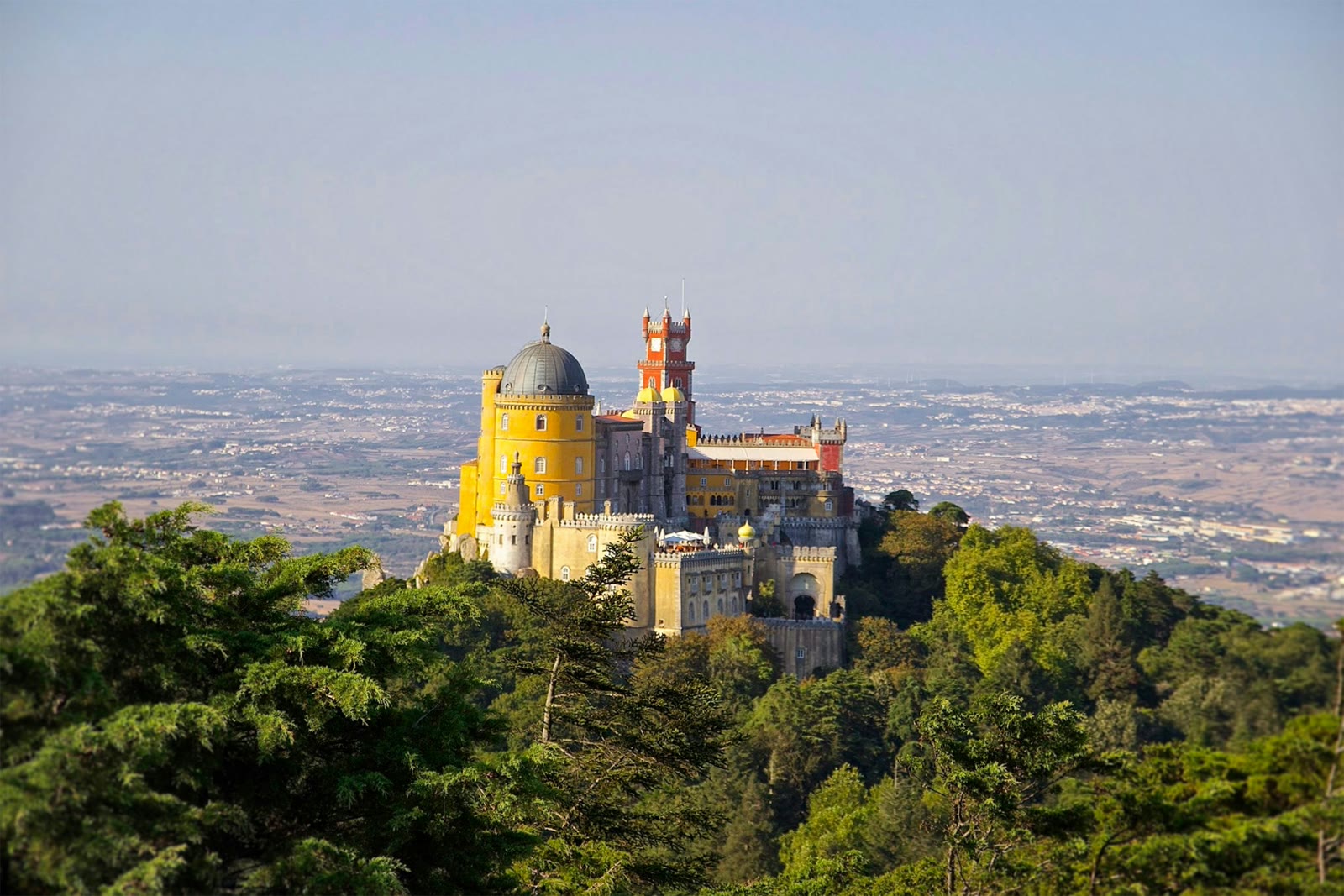


Sintra is a UNESCO World Heritage town tucked into the pine-forested Serra de Sintra mountains, 25 km (16 miles) northwest of Lisbon. It packs a remarkable concentration of Romantic-era palaces, a 9th-century Moorish castle, mystical gardens, and wild Atlantic beaches into a compact area. The town sits at roughly 200 metres (656 feet) of elevation, creating a microclimate that is cooler, wetter, and mistier than Lisbon , a welcome escape during the capital’s 35°C (95°F) summer heatwaves. Most visitors come on a day trip from Lisbon, but Sintra rewards an overnight stay, especially in spring and autumn when the crowds thin and the morning mist burns off to reveal one of Portugal’s most atmospheric settings.
Welcome to Sintra: Palaces, Mist and Atlantic Light
Arriving by train from Lisbon’s Rossio station (40 minutes, €2.30 each way), you step off at a small station 200 metres below the town center. The twin chimneys of the Sintra National Palace are the first thing you see , a 14th-century landmark that has anchored the town’s skyline since long before the Romantic tourists arrived. The walk uphill into town passes the modern Olga Cadaval Cultural Centre on your left, then winds through Estefânia, the residential neighbourhood where several excellent guesthouses cluster near the station. Once you reach Praça da República, the historic heart, you are standing in front of the National Palace with Piriquita’s famous pastry shop two streets away, the Quinta da Regaleira a 10-minute walk west, and the forest trails to Pena Palace climbing uphill to the east.
Sintra’s appeal is layered. The palaces , Pena, Monserrate, the National Palace , are visually spectacular and historically rich. But the town also rewards walkers: the network of forest trails connecting the monuments through oak and eucalyptus groves, the coastal path from Praia Grande to the cliff-top village of Azenhas do Mar, and the windswept headland at Cabo da Roca (continental Europe’s westernmost point). The local food culture holds its own, too: travesseiros (almond-cream puff pastries) from Piriquita, queijadas (small cheesecakes), grilled Atlantic fish at beachfront restaurants, and the distinctive Colares wines produced from vines growing in sand dunes just inland from the sea.
Sintra Weather at a Glance
Sintra has a Mediterranean climate with strong Atlantic influence. The elevation and proximity to the ocean create a microclimate that keeps the town 5-8°C cooler than Lisbon year-round. Summers (June-September) are warm and dry: highs of 24-27°C (75-81°F), only 2-6 rain days per month, and 9-12 hours of daily sunshine. The famous morning mist typically clears by mid-morning. Winters (November-February) are cool and wet: highs of 14-15°C (57-59°F), 13-14 rain days per month, and just 5 hours of sun. The mist can linger all day. Spring (March-May) and autumn (October) are transitional , variable but often beautiful, with spring blooms and autumn golden light. Annual rainfall averages 850-950 mm, concentrated between October and March. Sea temperatures at the nearby beaches range from 15°C (59°F) in winter to 19°C (66°F) in late summer. For a detailed month-by-month breakdown with temperature and rainfall tables, see our Sintra weather by month guide.
Sintra Seasonal Snapshot
- Spring (March to May): Gardens burst into bloom (camellias in March, wisteria in April). Temperatures climb from 17°C to 20°C (63-68°F). Rain decreases through May. Easter week brings a domestic tourism spike. The second half of May is arguably the single best period: warm, relatively dry, gardens at peak, crowds manageable.
- Summer (June to August): Best weather , warm (24-27°C / 75-81°F), almost no rain, 11-12 hours of sun. Also the busiest: queues at Pena Palace can exceed 2 hours by 10:30 AM. Arrive at opening time (9:30 AM) with pre-booked tickets. June’s Santos Populares bring street festivals. Late afternoons and early mornings are the best times to explore.
- Autumn (September to November): September rivals June for best month , warm sea, thinning crowds, still-dry weather. October brings golden light, turning leaves, and the return of the mist. November is the tipping point into winter with 120 mm of rain across 13 days. The Feira de São Martinho (November 11) fills the town square with roasted chestnuts and local wine.
- Winter (December to February): Wettest, coolest, and quietest. Highs of 14-15°C (57-59°F), rain on half the days. Hotels drop 30-50% from summer rates. The Christmas market runs December through January 6. Excellent for photographers (moody mist and dramatic light) and anyone who wants Sintra without the crowds. Structure your days around indoor palace tours and long lunches.
Sintra Travel Guides
Plan your trip with our full collection of Sintra guides. Each covers a key aspect of visiting , from month-by-month weather data to specific hotel picks in every neighbourhood.
- Sintra Weather by Month: Detailed climate data with a month-by-month table of temperatures, rainfall, sunshine hours, and sea temperatures. Understand Sintra’s microclimate before you pack.
- Best Time to Visit Sintra: Month-by-month analysis of weather, crowds, prices, and events. Find the ideal window for your travel style and budget.
- Things to Do in Sintra: The complete guide to Sintra’s palaces, gardens, hiking trails, beaches, and food , with ticket prices, opening hours, and practical tips for every attraction.
- Sintra Events and Festivals: The annual calendar of classical music, traditional fairs, Christmas markets, and cultural events. Plan your visit around Sintra’s best festivals.
- Best Neighborhoods in Sintra: Area-by-area breakdown of where to base yourself , historic center, São Pedro, Estefânia, coastal villages, and wine country. With average hotel prices for each.
- Where to Stay in Sintra: Specific hotel recommendations for every area and budget, from the five-star Tivoli Palácio de Seteais to backpacker hostels near the train station. All with Booking.com links.
- Sintra Travel Tips and FAQ: Everything practical , trains from Lisbon, bus routes, ticket costs, what to wear, safety, tipping customs, and answers to the most common visitor questions.
Sintra Quick Facts
- Best months for weather: May, June, September
- Warmest month: August (27°C / 81°F average high)
- Coldest month: January (14°C / 57°F average high)
- Wettest month: December (125 mm, 14 rain days)
- Driest month: July (5 mm, 2 rain days)
- Sea temperature: 15°C (59°F) in winter, 19°C (66°F) in late summer
- Sunniest month: July (12 hours/day)
- Train from Lisbon: 40 minutes, €2.30 each way, Rossio station
- UNESCO status: Cultural Landscape, inscribed 1995
- Elevation: 200 metres (656 feet) at town center, 529 metres (1,736 feet) at Pena Palace
Where to Stay in Sintra
Sintra’s accommodation spans five-star palace hotels, mid-range guesthouses in historic villas, and modern hostels near the train station. The historic center is the most convenient but most expensive; the surrounding neighbourhoods offer better value. For a full area-by-area breakdown with hotel picks for every budget, see our where to stay in Sintra guide.
Suggested Hotels in Sintra
Tivoli Palácio de Seteais
An 18th-century neoclassical palace turned five-star hotel set in manicured gardens with direct views to Pena Palace and the Moorish Castle. Rooms feature period antiques, silk wallpaper, and marble bathrooms. The restaurant serves Portuguese fine dining on a terrace overlooking the Sintra mountains. Best for couples and honeymooners seeking a historic stay. Check rates and availability
Sintra Boutique Hotel
A modern 18-room hotel facing the National Palace on Praça da República, the most central location in Sintra. Soundproofed rooms with wood floors, rain showers, and a ground-floor restaurant. Best for first-time visitors who want to step out of the hotel and be in the middle of Sintra. Check rates and availability
Nice Way Sintra Hostel
A modern hostel 300 metres from the train station with clean dorms (privacy curtains, lockers), private en-suite rooms, a garden terrace, and communal kitchen. Breakfast included. Best for backpackers, solo travellers, and anyone prioritising budget and train access. Check rates and availability
City Articles
Best Neighborhoods in Sintra
Sintra is not a single town but a municipality spanning mountain, forest, and Atlantic coastline. The term “Sintra” typically refers to the historic core around the National Palace, but the broader area includes distinct neighbourhoods and villages with different characters, price points, and practical advantages. Where you stay (or focus your time) shapes your Sintra […]
Read MoreBest Time to Visit Sintra
Sintra is a year-round destination, but the experience differs dramatically by season. The best time to visit Sintra for balanced weather and manageable crowds is May through early June and late September through mid-October. During these windows you get daytime temperatures of 20-25°C (68-77°F), 8-10 hours of sunshine, relatively light rain, and fewer tourists than […]
Read MoreSintra Events and Festivals
Sintra’s event calendar is modest compared to Lisbon’s, but the town punches above its weight for classical music and traditional religious festivals. The palace courtyards, gardens, and churches double as venues, giving even small events a dramatic setting. Most festivals are concentrated between June and October, with the summer classical music festival being the main […]
Read MoreSintra Travel Tips and FAQ
Sintra is easy to reach from Lisbon but has its own set of logistical quirks that trip up first-time visitors. The hills are real, the parking is terrible, and the microclimate will catch you out if you dress for Lisbon. This guide covers everything practical: transport, tickets, costs, safety, and the questions travellers ask most […]
Read MoreSintra Weather by Month
Sintra sits in the Sintra Mountains at roughly 200 metres (656 feet) above sea level, just 25 km (16 miles) northwest of Lisbon. Its elevation and proximity to the Atlantic create a microclimate that is noticeably cooler, wetter, and foggier than the Portuguese capital. While Lisbon basks in sunshine, Sintra can be wrapped in mist […]
Read MoreThings to Do in Sintra
Sintra packs more UNESCO-listed monuments per square kilometre than almost anywhere in Europe. The town and its surrounding mountain range hold palaces, a Moorish castle, mystical gardens, and wild Atlantic beaches. Most visitors come on a day trip from Lisbon and try to cram Pena Palace, the historic center, and maybe one more site into […]
Read MoreWhere to Stay in Sintra
Choosing where to stay in Sintra comes down to a trade-off between atmosphere, convenience, and budget. The historic center puts palaces and restaurants on your doorstep but costs more and punishes you with hills and parking headaches. The surrounding neighbourhoods and coastal villages offer better value and a different side of Sintra but require transport. […]
Read More