

 Sunny
Sunny  Overcast
  Partly Cloudy
 This post may contain affiliate links. If you purchase through them, I may earn a small commission at no extra cost to you. Thanks for supporting our small business.
Warsaw, Poland’s capital and largest city, sits on the Vistula River in the heart of the Mazovian Plain. Home to 1.8 million residents (3.1 million in the metro area), it is one of Central Europe’s fastest-growing capitals, with a skyline that mixes reconstructed Gothic churches, Stalinist-era palaces, and glass office towers. Warsaw’s climate is humid continental (Köppen Dfb), defined by cold, snowy winters and warm summers, with temperatures swinging from an average -2°C (28°F) in January to 24°C (75°F) in July. The city receives roughly 530mm of precipitation annually and about 1,600 hours of sunshine.
Warsaw Climate at a Glance
Warsaw’s inland position 350km from the Baltic Sea means it lacks any maritime temperature moderation, producing wide seasonal swings. Winter (December to February) brings consistent sub-zero temperatures, 50 to 60 days of snow cover, and solar-lamp-short days where the sun sets before 3:30 PM in December. Summer (June to August) delivers long daylight (16-plus hours in June), warm to hot temperatures that can push past 30°C (86°F) for days at a time, and afternoon thunderstorms that clear within an hour. Spring and autumn are transitional and unpredictable: April can produce anything from 5°C sleet to 25°C sunshine within the same week. The city is flat (elevation 100m), so wind is a year-round companion, most bitingly in January and February when easterly continental winds can drop the wind chill to -20°C.
Warsaw Seasonal Snapshot
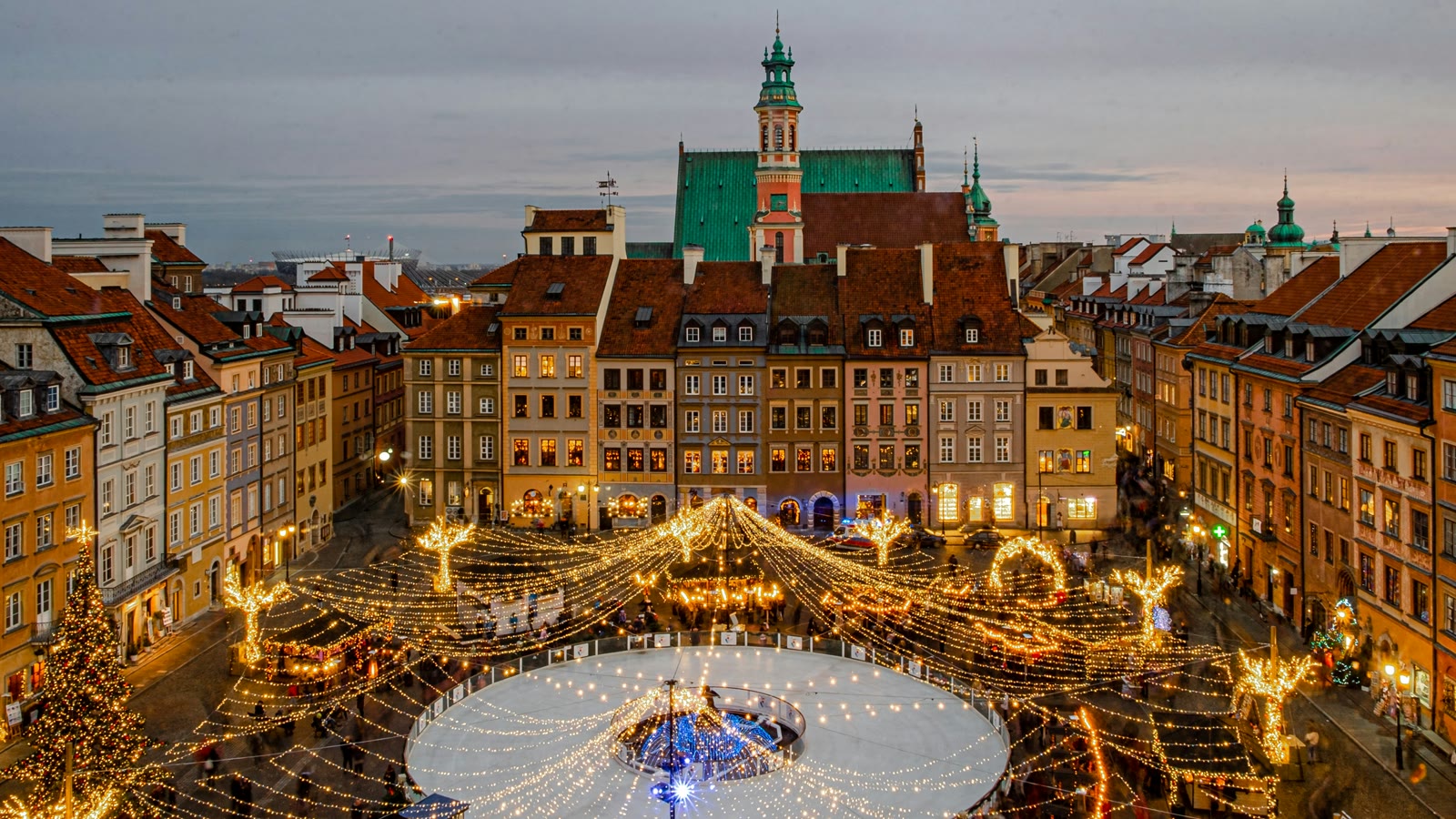
- Winter (December to February): Coldest season. Highs -2°C to 1°C (28°F to 34°F), frequent snow, 30 to 40 hours of monthly sunshine. Christmas markets and illuminations make December atmospheric despite the short days. Hotel rates are at annual lows in January and February (120 to 180 PLN/night for 3-star).
- Spring (March to May): Rapid transition. March starts cold (6°C) and often snowy; May finishes warm (19°C) with full outdoor dining. April and May are the driest months for rainfall days. The city parks bloom spectacularly, particularly Lazienki Park in late April and May.
- Summer (June to August): Warmest season. Highs 22°C to 24°C (72°F to 75°F), peak rainfall (66 to 78mm monthly), 230 to 250 hours of sunshine. The Vistula Boulevards come alive with pop-up bars. Hotel rates peak in July and August (350 to 550 PLN/night for 4-star).
- Autumn (September to November): Cooling season. September is warm and pleasant (18°C, 42mm rain); November is gray and cold (5°C, maximum rain days). Autumn foliage peaks in October. Hotel rates drop to shoulder-season levels in September and winter lows in November.
Explore Warsaw
- Warsaw Weather by Month, Detailed month-by-month climate data with temperatures in Celsius and Fahrenheit, rainfall in millimeters, and sunshine hours. Includes a comparison table and practical tips for each month.
- Best Time to Visit Warsaw, Seasonal breakdown of Warsaw weather, crowds, and prices. Specific date ranges for optimal weather, budget travel, festival timing, and months to avoid with data-backed reasons.
- Things to Do in Warsaw, Comprehensive guide to Warsaw attractions: historic landmarks (Old Town, Royal Castle, Wilanow Palace), museums (POLIN, Uprising Museum, Copernicus Science Centre), parks, food halls, nightlife, and day trips. Hours and ticket prices included.
- Events and Festivals in Warsaw, Year-round event calendar: Chopin concerts, Wianki midsummer festival, Christmas markets, film and music festivals, Museum Night, and New Year Eve. Dates, locations, and ticket information.
- Best Neighborhoods in Warsaw, Old Town, Srodmiescie, Powisle, Praga, and Mokotow: what each area is known for, who it suits, and average hotel prices. Essential for choosing where to base yourself.
- Where to Stay in Warsaw, Hotel recommendations across three areas: Old Town, Srodmiescie, and Praga. Luxury, mid-range, and budget picks for each with verified Booking.com links.
- Warsaw Travel Tips and FAQ, Practical information: Chopin and Modlin airports, public transport tickets and costs, tipping customs, safety, visas, money, and tap water safety. Answers to every first-time visitor question.
Where Is Warsaw and What Influences Its Weather?
Warsaw sits in east-central Poland on the Mazovian Plain, a flat lowland region that stretches for hundreds of kilometers in all directions. The city straddles the Vistula River (Wisla), Poland’s longest at 1,047km, which flows north from the Carpathian Mountains to the Baltic Sea. Warsaw’s elevation averages 100 meters above sea level. The city’s continental position, roughly 600km east of Berlin and 1,100km west of Moscow, places it at the boundary between Atlantic maritime air masses and Eurasian continental air. This means Warsaw can experience spring heatwaves sweeping up from the Mediterranean one week and Siberian cold fronts the next. Warsaw’s flat terrain provides no natural windbreaks, so easterly winter winds can be particularly harsh. The Vistula moderates riverside temperatures by 1 to 2 degrees and increases local humidity.
Warsaw Quick Facts
- Best months for good weather: Late May, June, September
- Warmest month: July (24°C / 75°F average high)
- Coldest month: January (-2°C / 28°F average high)
- Wettest month: July (78mm)
- Driest month: January (21mm)
- Sunniest month: July (250 hours)
- Annual precipitation: ~530mm
- Snow cover days: 50 to 60 per winter
- Record high: 37°C (99°F) in August 2015
- Record low: -30.7°C (-23°F) in January 1987
Suggested Hotels in Warsaw
Raffles Europejski Warsaw
This 5-star icon on the Royal Route reopened in 2018 after a meticulous restoration of its 1857 building. The 106 rooms blend Belle Époque elegance with contemporary Polish art. Best for luxury travelers who want the city’s most prestigious address. Check rates and availability
Novotel Warszawa Centrum
A reliable mid-range 4-star facing the Palace of Culture and Science, fully renovated in 2021. The 733 rooms are modern and soundproofed, and the 30th-floor bar has city views. Best for travelers who want unbeatable transport links. Check rates and availability
ibis Warszawa Stare Miasto
The most affordable hotel within a 10-minute walk of the Old Town. Standard ibis rooms with 24-hour bar. Best for budget travelers who want Old Town proximity without the Old Town price. Check rates and availability
