

This post may contain affiliate links. If you purchase through them, I may earn a small commission at no extra cost to you. Thanks for supporting our small business.
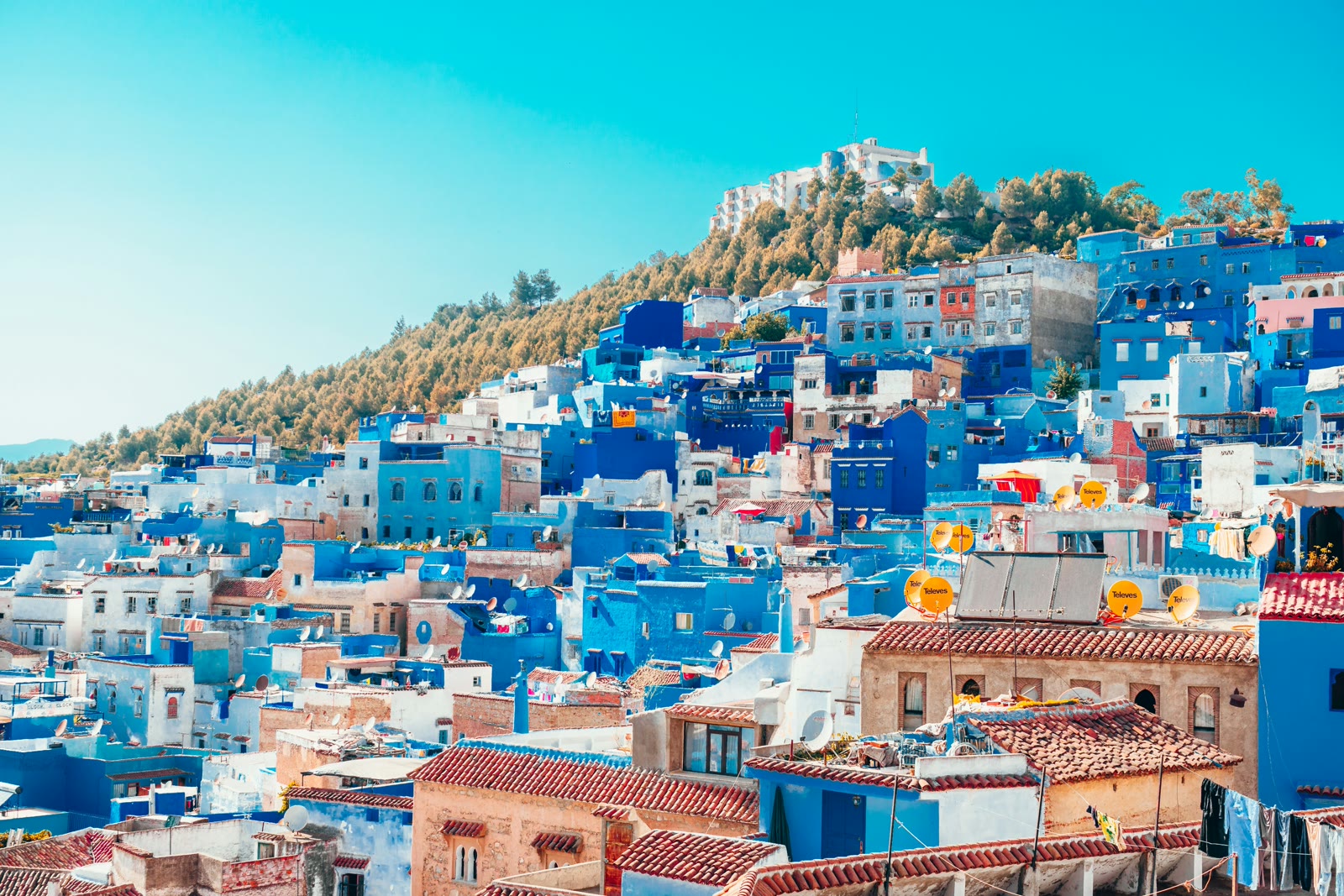
Chefchaouen is a small mountain city in northern Morocco’s Rif Mountains, known worldwide for its medina of blue-washed walls and cobbled lanes. At 600 metres above sea level, the climate is milder than the Moroccan lowlands: summer highs reach 33°C (91°F) and winter lows drop to 5°C (41°F), with most of the 700mm of annual rain falling between November and March. Founded in 1471 as a fortress against Portuguese expansion, Chefchaouen grew into a centre of Andalusian and Jewish refugee culture, and its blue paint tradition traces to Jewish settlers who arrived in the 15th century. Today the city of roughly 42,000 people draws travellers seeking an alternative to the intensity of Marrakech or Fez: quieter, cooler, and framed by mountain hiking trails. The surrounding Rif region is Morocco’s main cannabis-growing area, and while kif is illegal, its presence is unmistakable in the air and the offers you will receive in the medina. Below you will find guides to every aspect of visiting Chefchaouen, from month-by-month weather data to where to stay in the blue lanes.
Chefchaouen Weather at a Glance
Chefchaouen has a Mediterranean climate moderated by altitude. The elevation at 600 metres keeps summer temperatures bearable and winter temperatures cool but rarely freezing. The hottest months are July and August, both averaging 33°C (91°F) during the day and cooling to 18 to 19°C (64 to 66°F) at night. The coldest month is January, with lows of 5°C (41°F) and highs of 14°C (57°F). Rain is heavily concentrated in the winter half: November through March bring 78 to 115mm per month across 8 to 10 rain days each. June through August are nearly bone-dry, with July averaging just 2mm of rain and August 4mm. Snow is rare in the medina itself but the higher peaks of the Rif above 1,500 metres get reliable snow cover from December through February. The full month-by-month breakdown with a temperature and rainfall table is in the Chefchaouen weather by month article.
Chefchaouen Seasonal Snapshot
- Spring (March to May): The best season to visit. March starts cool and damp (18°C / 64°F, 78mm rain) but by May you get 24°C (75°F) with only 5 rain days. Wildflowers carpet the Rif valleys in April. Book accommodation 2 to 3 months ahead.
- Summer (June to August): Warm and dry. July and August peak at 33°C (91°F) with nearly no rain. The elevation keeps nights comfortable at 18°C (64°F). August is the busiest month with Moroccan family holidays and peak riad prices.
- Autumn (September to November): September still feels like summer at 29°C (84°F). October brings ideal hiking weather at 23°C (73°F) and spectacular low-angle light on the blue walls. November brings the return of rain (108mm).
- Winter (December to February): The wettest and coldest season. December receives 115mm of rain across 10 days. January temperatures range 5 to 14°C (41 to 57°F). The Almond Blossom Festival in February draws visitors despite the chill. Riad prices are at their lowest.
Chefchaouen Travel Guides
- Chefchaouen Weather by Month , Month-by-month temperature and rainfall data with a comparison table. Covers each season in detail, what to pack, and answers to common climate questions like when it snows and which months are rainiest.
- Best Time to Visit Chefchaouen , Season-by-season guide to picking your dates based on weather, crowds, budget, photography conditions, and hiking. Includes a month-by-month summary.
- Things to Do in Chefchaouen , Named attractions with practical details: medina walks, the Kasbah Museum (60 MAD entry), Ras El Ma spring, the Spanish Mosque sunset viewpoint, Akchour Waterfalls hike, and day trips to Tangier and Oued Laou beach.
- Chefchaouen Events & Festivals , The Almond Blossom Festival in February, Ramadan rhythms, religious holidays (Eid al-Adha, Eid al-Fitr), weekly Monday and Thursday souks, and seasonal highlights like the spring repainting of the medina.
- Chefchaouen Neighborhoods Guide , Breakdown of the medina zones (central, upper, Ras El Ma) and the new town. Price ranges, noise levels, accessibility notes, and which neighbourhood suits your travel style.
- Where to Stay in Chefchaouen , Area-by-area hotel guide with specific riad recommendations for the central medina and upper lanes. Includes three hotel picks per area with Booking.com links (Lina Ryad & Spa, Dar Echchaouen, Casa Perleta, and more).
- Chefchaouen Travel Tips & FAQ , Getting there (Tangier and Fez airports, CTM buses, grand taxis), money and ATMs, visa rules, safety advice, packing list, tipping customs, language tips, and answers to practical questions.
Where Is Chefchaouen and What Affects Its Weather?
Chefchaouen sits in the western Rif Mountains of northern Morocco, roughly 50km inland from the Mediterranean coast and 120km southeast of Tangier. The city is built into a valley at 600 metres elevation with peaks rising to over 2,000 metres to the east and north. This mountain position creates a distinct microclimate: cooler than Tangier in summer and wetter than Fez in winter. The Rif acts as a barrier that squeezes moisture from Mediterranean air masses, which is why Chefchaouen gets 700mm of annual rain while Fez, just 200km south but on the inland side of the Middle Atlas, gets only 400mm. The elevation also produces a diurnal temperature swing of 10 to 15°C (18 to 27°F) between day and night throughout the year, so evenings feel cool even in July.
Chefchaouen Quick Facts
- Best months for weather: May and October (both average 23 to 24°C / 73 to 75°F with manageable rain)
- Warmest months: July and August (33°C / 91°F daytime highs)
- Coldest month: January (lows of 5°C / 41°F)
- Wettest month: December (115mm, 10 rain days)
- Driest month: July (2mm, 1 rain day)
- Sunniest month: June and July (11 hours of sunshine per day)
- Nearest airport: Tangier Ibn Battouta Airport (TNG), 120km, 2.5 hours by road
- Elevation: 600 metres (1,970 feet) above sea level
- Population: Approximately 42,000
Suggested Hotels in Chefchaouen
Lina Ryad & Spa
The most polished accommodation in Chefchaouen, Lina Ryad sits in the heart of the medina with a rooftop terrace overlooking the blue city and mountains. Rooms blend traditional zellige tilework with modern bathrooms, and the spa offers a hammam and massage treatments. Best for couples and travellers wanting a full-service riad with spa facilities. Check rates and availability
Dar Echchaouen Maison d’Hotes & Riad
Located near Ras El Ma spring at the edge of the medina, Dar Echchaouen offers large rooms with Andalusian-Moroccan decor, a swimming pool (rare in Chefchaouen), and sweeping mountain views from its terrace. Best for families and travellers who want resort-style amenities without leaving the medina atmosphere. Check rates and availability
Casa Perleta
A small, family-run guesthouse in the medina with bright blue-and-white rooms, a rooftop terrace with panoramic views, and a breakfast that guests consistently praise. Best for solo travellers and couples on a mid-range budget who want personal service. Check rates and availability
