
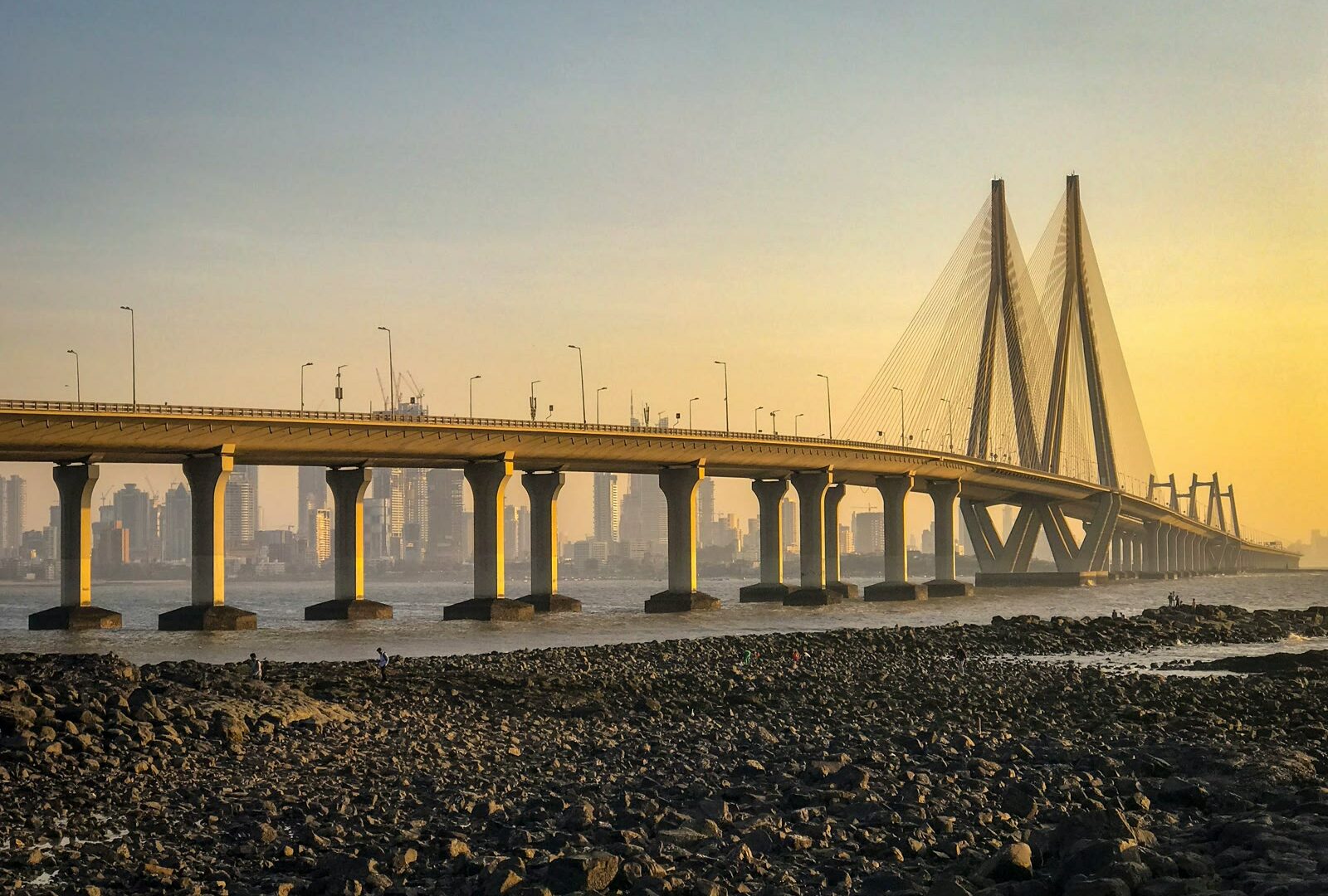
Asia does not share one monsoon season. Mumbai takes 868mm in July while Bali is nearly dry that month, and Bali saves its wettest month, January at 345mm, for the middle of India’s sunny season. This month-by-month guide to monsoon season in Asia pulls rainfall figures from each city’s weather guide on this site.
How Monsoon Season Works in Asia
Two wind systems do the work. The southwest monsoon pulls moist air from the Indian Ocean onto South Asia from June to September, the rains that push Mumbai past 2,200mm a year. Southeast Asia catches a delayed version of the same system from May to October. The wind then reverses into the northeast monsoon, called the northwest monsoon in Indonesia, from November to March, which is why Singapore, Malaysia’s east coast, and Bali get their rain while India and Thailand dry out. The reversal means two cities a few thousand kilometres apart can have opposite wet seasons.
When Each Country Gets Wet
- Mumbai gets the classic June to September southwest monsoon, with 2,258mm of rain a year. July is the peak at 868mm across 22 days, while January gets 0.6mm.
- Kochi sits on the Malabar Coast and takes 3,000mm a year across two separate monsoons: the southwest from June to September, about 80% of the total, and a lighter northeast monsoon from October to December. January is the driest month at 23mm.
- Calangute, in Goa, collects 2,771mm a year, nearly all from June to September. July brings 880mm and only 3 hours of daily sun, while January delivers 10 hours of sun and 2mm.
- Kolkata takes 1,582mm a year in its June to September monsoon, with humidity peaking at 85% in August. January is the driest month at 10mm and the most comfortable for walking.
- Bangkok runs its wet season from May to October on about 1,500mm a year. April is the hottest month at 35°C (95°F) before the rains arrive, and December is the coolest at 32°C (90°F).
- Chiang Mai gets a milder version of the same May to October rains, just 1,150mm a year. August is the wettest at 236mm, while February sees 5mm and December 15mm.
- Hanoi collects 1,680mm a year, with 85% falling from May to September. August is the wettest at 318mm over 18 days, and January is a cool, drizzly 19mm.
- Ubud, in Bali, runs on the opposite clock. The northwest monsoon brings rain from November to March, with January the wettest at 345mm, while the dry season bottoms out at 25mm in August. Temperatures hold near 26°C (79°F) all year.
- Kuala Lumpur gets 2,400mm spread across 180 to 200 rainy days, driven by two monsoons and two inter-monsoon spells. April at 290mm and October at 270mm are the transition peaks, but rain falls as short afternoon downpours rather than all-day drizzle.
- Singapore has a northeast monsoon from December to early March, peaking at 332mm over 19 days in December, and a southwest monsoon from June to September, when early-morning Sumatra squalls clear by 9am. Temperatures stay 25 to 32°C (77 to 90°F) every day of the year.
Monsoon Asia Month by Month
- January: the dry season peaks across India and Thailand, with Mumbai at 0.6mm and Chiang Mai at 7mm, while Bali’s wet season is at full strength and Singapore’s northeast monsoon is still active.
- February: still dry and sunny in South Asia, and Singapore’s northeast monsoon eases to its driest month at 119mm. Bali remains wet.
- March: pre-monsoon heat builds across India as Kolkata reaches 34°C (93°F) highs. Singapore swings into inter-monsoon thunderstorms at 186mm, and Bali’s wet season winds down.
- April: the hottest month across much of South Asia, with Bangkok at 35°C (95°F) and Kolkata at 36°C (97°F). Kuala Lumpur hits its first inter-monsoon peak at 290mm.
- May: the monsoon arrives. Hanoi’s rains begin mid-month at 188mm and Chiang Mai jumps to 158mm, while Kochi and Kolkata heat up before their rains break.
- June: the southwest monsoon slams India’s west coast, dumping 574mm on Mumbai and 760mm on Calangute. Hanoi reaches 240mm and Singapore’s southwest monsoon begins.
- July: the peak monsoon month. Mumbai records 868mm over 22 days, Calangute 880mm, and Hanoi 295mm. Bali, by contrast, is deep in its dry season.
- August: the wettest month in parts of the region, with Hanoi at 318mm and Chiang Mai at 236mm, while Kolkata’s humidity tops out at 85%. Ubud is at its driest at 25mm.
- September: the southwest monsoon retreats across India as Mumbai eases to 301mm. Hanoi drops to 260mm, and Singapore’s southwest monsoon stays light at 170mm.
- October: a transition month. Kochi’s northeast monsoon returns and Kuala Lumpur’s second inter-monsoon peak hits 270mm, while Hanoi falls to 130mm in its best weather month.
- November: the northeast monsoon strengthens over Singapore at 257mm and Malaysia, while India and Thailand dry out with Chiang Mai at 37mm and Mumbai at 16mm. Bali’s wet season begins.
- December: Singapore’s wettest month at 332mm over 19 days, and Bali is in its wet season. India and Thailand are dry and sunny, with Mumbai at 5mm and 270 hours of sunshine.
Planning Around the Rain
Monsoon rain is almost never all-day. Across the region it falls as short afternoon downpours of one to two hours, which is why Kuala Lumpur can log 180 to 200 rainy days a year and still leave mornings clear. In Singapore, the southwest-monsoon Sumatra squalls arrive before dawn and clear by 9am. To see the exact dry-season window for any city above, start with a guide like Mumbai weather by month, which lists rainfall and sunshine for every month.

