

 Patchy rain nearby
  Light drizzle
  Fog
Fog This post may contain affiliate links. If you purchase through them, I may earn a small commission at no extra cost to you. Thanks for supporting our small business.
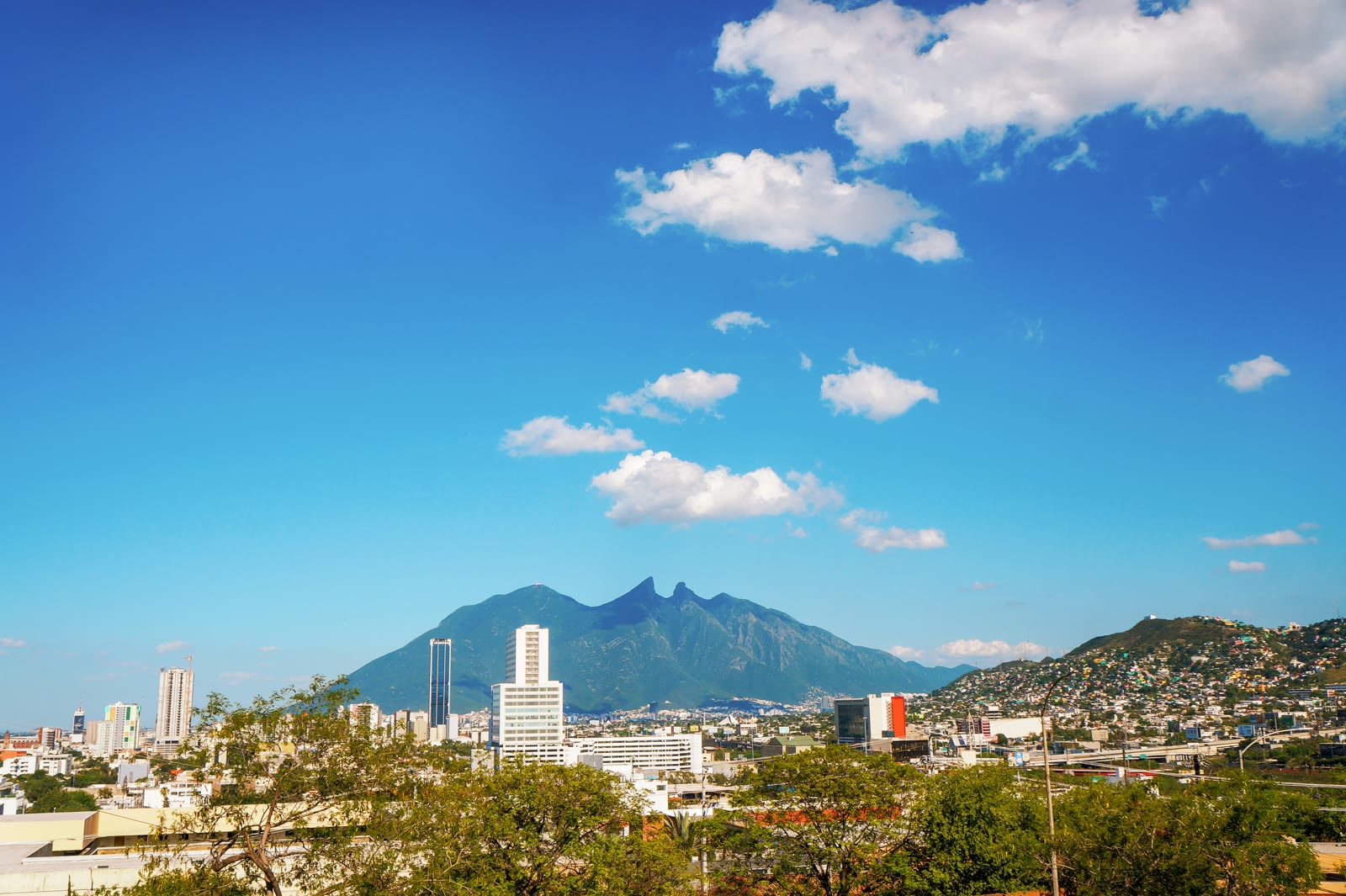
Monterrey, capital of Nuevo Leon, is Mexico’s third-largest metropolitan area with 5.3 million people spread across a mountain valley 220 km (137 miles) south of the Texas border. The city sits at 540 meters (1,770 feet) elevation, ringed by the Sierra Madre Oriental, with the distinctive saddle-shaped Cerro de la Silla dominating the eastern skyline. Monterrey runs on industry and business (it generates roughly 8 percent of Mexico’s GDP), but the mountains deliver a genuine outdoor adventure scene: hiking, rock climbing, canyoning, and cave exploration all within 30 minutes of downtown. The climate is semi-arid subtropical with hot summers that push past 35°C (95°F) and mild winters where daytime highs hover around 20°C (68°F). Annual rainfall averages 590 mm (23 inches), concentrated between May and October.
Welcome to Monterrey: Mexico’s Northern Powerhouse
Founded in 1596, Monterrey spent its first three centuries as a modest colonial outpost before the steel industry transformed it into Mexico’s industrial capital in the early 20th century. The former Monterrey Foundry Company, which once produced most of Mexico’s steel, is now Parque Fundidora, a 142-hectare urban park where blast furnaces share space with museums, an artificial riverwalk, and major music festivals. The city’s wealth is visible in San Pedro Garza Garcia, the richest municipality in Mexico, where luxury hotels, fine dining, and designer shopping cluster in the mountain foothills. But Monterrey is not a polished museum piece: it is a working city with a pragmatic, forward-looking culture that values efficiency over charm. Visitors come for the outdoor access, the contemporary art at MARCO, the distinctive cabrito (roast kid goat) cuisine, and the festival calendar anchored by Pal Norte and Festival Internacional Santa Lucia.
Monterrey Weather at a Glance
Monterrey’s climate splits into two distinct halves: a hot, rainy season from May through October and a mild, dry season from November through April. August is the hottest month with average highs of 35°C (95°F) and heat waves that push above 40°C (104°F) for days at a time. September brings the most rain at 150 mm (5.9 inches), largely from tropical cyclone remnants that can cause flooding. The dry season delivers the most comfortable conditions: December through February sees highs of 20°C to 22°C (68°F to 72°F) with just 15 to 17 mm (0.6 to 0.7 in) of rain per month. Cold fronts from the United States can drop temperatures below 10°C (50°F) overnight in winter. The mountains create microclimates: Chipinque and the higher canyons run 3°C to 5°C (5°F to 9°F) cooler than the valley floor. For detailed month-by-month data, see our Monterrey weather by month guide.
Monterrey Seasonal Snapshot
- Winter (December to February): Dry and mild with 20°C to 22°C highs, 8°C to 10°C lows, and minimal rain (15 to 17 mm per month). Best season for city sightseeing. Luztopia Christmas lights at Fundidora Park run through early January. Cold fronts bring 2 to 3 day cool spells.
- Spring (March to May): Warming rapidly from 26°C in March to 33°C in May. Rain increases from 20 mm to 60 mm. Best hiking season in March and early April before extreme heat sets in. Pal Norte music festival in late March or early April draws 100,000-plus attendees. Book hotels 6 weeks ahead for festival dates.
- Summer (June to August): Hot and humid with 34°C to 35°C highs, 23°C lows, and 70 to 80 mm monthly rainfall from afternoon thunderstorms. Heat indices exceed 40°C (104°F). The least comfortable season for outdoor activities. Hotel rates drop 25 to 40 percent. Machaca Fest in June. World Cup 2026 matches at Estadio BBVA.
- Autumn (September to November): September is the wettest month (150 mm, flood risk from tropical cyclones). October brings relief with 27°C highs and declining rain. November is dry and mild at 23°C with 25 mm of rain. The Festival Internacional Santa Lucia runs late September through early November. October and November are the best overall months to visit.
Monterrey Travel Guides
- Monterrey Weather by Month: Month-by-month temperature, rainfall, humidity and sunshine data. Includes what to pack for each season and how the mountain setting affects local conditions.
- Best Time to Visit Monterrey: Seasonal breakdown covering weather, hotel prices, crowd levels, and festival dates. Identifies the cheapest months (September, January), the best-weather window (October to November), and periods to avoid (June to August).
- Things to Do in Monterrey: Outdoor adventures (Chipinque, Cerro de la Silla, La Huasteca, Grutas de Garcia), urban attractions (Macroplaza, Paseo Santa Lucia, Fundidora Park, Barrio Antiguo), and museums (MARCO, Museo de Historia Mexicana, Horno 3).
- Monterrey Events and Festivals: Complete annual calendar covering Pal Norte (March/April), Machaca Fest (June), Festival Internacional Santa Lucia (September to November), Luztopia Christmas lights, and World Cup 2026 match dates.
- Monterrey Neighborhoods Guide: Area-by-area breakdown of San Pedro Garza Garcia, Valle Oriente, Centro, Barrio Antiguo, Tecnologico/Contry, and Cumbres. Who each neighborhood suits, average hotel prices, and walkability ratings.
- Where to Stay in Monterrey: Specific hotel recommendations for every area and budget tier (luxury, mid-range, budget) with Booking.com links. Covers San Pedro luxury towers, Valle Oriente chains, and Barrio Antiguo boutiques.
- Monterrey Travel Tips and FAQ: Airport transport (MTY), getting around (Uber, Metro, rental car), visa requirements, money and tipping, safety advice, drinking water guidance, language tips, and answers to frequently asked questions.
Monterrey Location and Climate Context
Monterrey occupies a valley at the eastern edge of the Sierra Madre Oriental, roughly 220 km (137 miles) south of the Texas border crossing at Laredo/Nuevo Laredo. The city’s elevation (540 m / 1,770 ft) and mountain enclosure create a heat-trapping basin effect: daytime temperatures run 2°C to 4°C hotter than surrounding lower-elevation areas, and cooling mountain breezes arrive inconsistently. The Sierra Madre blocks Pacific moisture, giving Monterrey a drier climate than central Mexican cities at similar latitudes, but the North American Monsoon draws Gulf of Mexico moisture into the region from May through October. The result is a climate closer to south Texas than to the Mexican altiplano: hot summers with short, intense thunderstorms, mild winters with occasional cold snaps, and 590 mm of annual rainfall concentrated in 6 months.
Monterrey Quick Facts
- Best months to visit: October and November (mild, dry, festival season)
- Warmest month: August (average high 35°C / 95°F)
- Coolest month: January (average high 20°C / 68°F, low 8°C / 46°F)
- Wettest month: September (150 mm / 5.9 in, 9 rain days)
- Driest month: December (15 mm / 0.6 in, 2 rain days)
- Annual rainfall: 590 mm (23 inches)
- Annual sunshine: Approximately 2,200 hours
- Airport: Monterrey International Airport (MTY), 25 km northeast of downtown
- Population: 5.3 million metropolitan area
- Elevation: 540 meters (1,770 feet)
- Time zone: Central Standard Time (UTC-6), no daylight saving
Where to Stay in Monterrey
Monterrey’s accommodation clusters in three main zones. San Pedro Garza Garcia offers the city’s full luxury hotel inventory plus fine dining and safe, walkable streets at US$150 to US$350 per night. Valle Oriente provides reliable chain hotels at US$80 to US$180 with good highway access to both the business district and Fundidora Park. Barrio Antiguo’s boutique hotels and apartments (US$60 to US$130) put you in the historic quarter amid bars, restaurants, and nightlife. Business travelers dominate Sunday through Thursday, so weekend rates at corporate-oriented hotels can drop 20 to 30 percent. For detailed recommendations including specific hotel names and Booking.com links for every budget tier, see our where to stay in Monterrey guide.
Suggested Hotels in Monterrey
Safi Royal Luxury Valle
Polished high-rise in San Pedro’s Valle district with rooftop pool, full-service O.Spa.Salon, and mountain views from floor-to-ceiling windows. Best for business travelers and couples who want a premium, full-service stay in the city’s safest and most upscale district. Check rates and availability
Fiesta Inn Monterrey Valle
Reliable mid-range Mexican chain in Valle Oriente with spacious rooms, outdoor pool, well-equipped gym, and breakfast buffet included in some rate plans. Best for families and business travelers who want consistent quality with good highway access to the entire city. Check rates and availability
ibis Monterrey Valle
Clean, functional budget option on the San Pedro border with compact but well-maintained rooms, reliable Wi-Fi, and 24-hour snack bar. Best for solo travelers and budget-conscious visitors who want the San Pedro location at a fraction of the area’s luxury hotel rates. Check rates and availability
