


 Patchy rain nearby
  Light rain shower
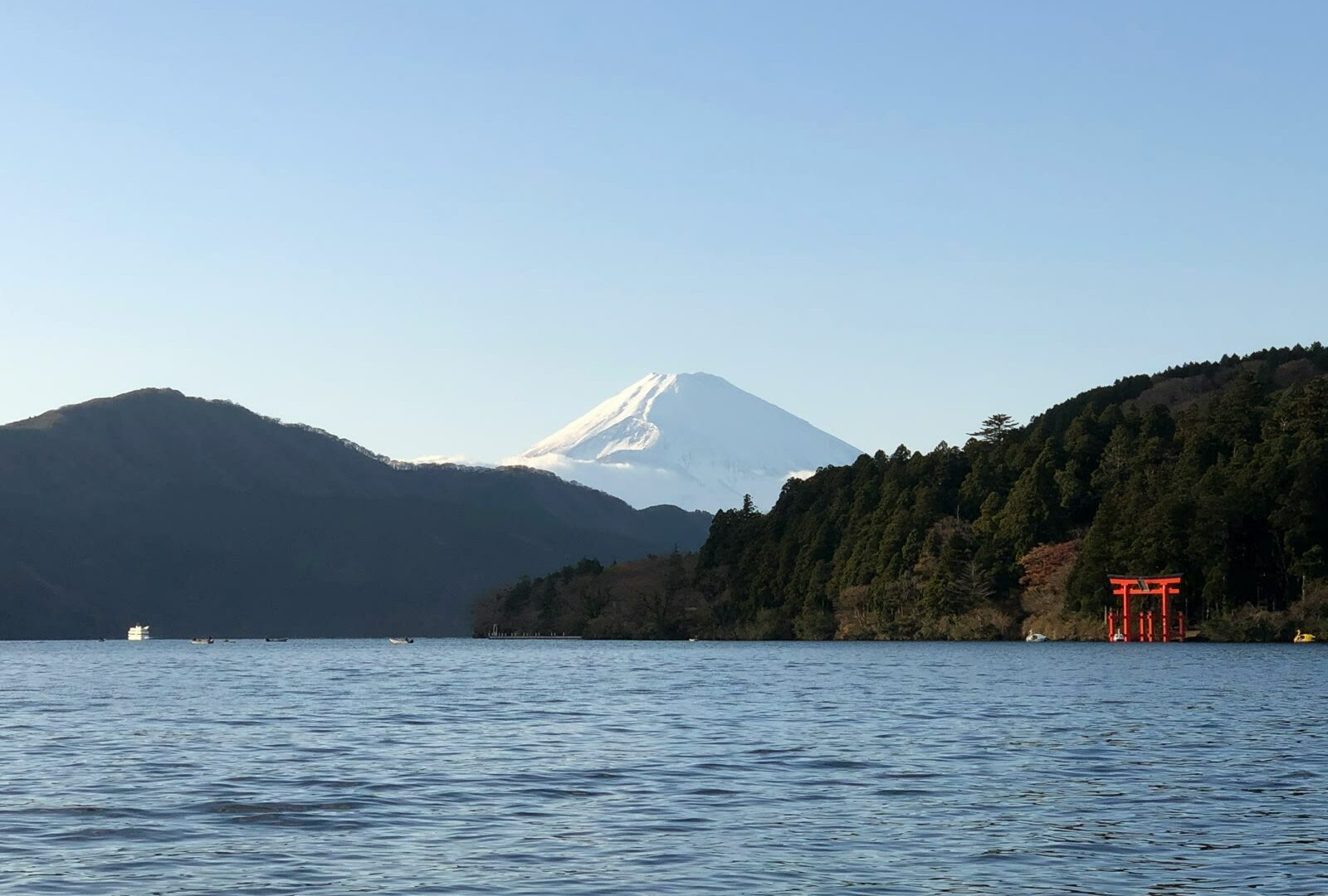
 Hakone lies inside the collapsed crater of an ancient volcano 80 km southwest of Tokyo, strung across seven distinct villages connected by a switchback railway, a cable car, a ropeway, and three replica pirate ships crossing a crater lake. It has been Tokyo’s weekend escape for over a century: the hot springs, Mount Fuji views, and mountain air draw 20 million visitors a year to a town of just 11,000 residents. Most come as day-trippers racing through the Hakone Loop; the ones who stay overnight at a ryokan with a private onsen and a kaiseki dinner see a different place entirely, one that quiets down after 17:00 when the tour buses leave and the lake reflects the mountains in near silence.
Welcome to Hakone
Hakone is part of the Fuji-Hakone-Izu National Park, sitting at elevations from 100 metres in Hakone Yumoto to 1,044 metres at Owakudani. The geography shapes everything: temperatures run 5-7°C cooler than Tokyo, clouds form against the mountain slopes and sit over Lake Ashi for days, and the volcanic activity that created the landscape still vents steam from the Owakudani valley. In the Edo period (1603-1868), Hakone was one of the most heavily guarded checkpoints on the Tokaido highway between Tokyo and Kyoto, a place where travellers were inspected, weapons confiscated, and hostages verified. That historical layer survives in the cedar avenue, the checkpoint museum, and the Old Tokaido walking trail. Today, Hakone is known for three things: onsen hot springs with Mount Fuji views, a scenic transport loop that is a destination in itself, and some of Japan’s best ryokan hospitality.
Hakone Weather at a Glance
Hakone has a humid subtropical climate moderated by elevation. Winters (December to February) are cold and dry, with highs of 7-9°C (45-48°F), overnight lows below freezing at higher elevations, and Mount Fuji visible on 60-70% of mornings. Summers (June to August) are warm but not hot: July highs average 27°C (81°F) compared to Tokyo’s 31°C (88°F). The trade-off is heavy rainfall. June alone sees 235mm over 18 rainy days during the tsuyu season, and September is the wettest month at 260mm with added typhoon risk. Annual rainfall totals roughly 2,000mm, about 500mm more than Tokyo. The driest months are December and January (55-65mm), and the sunniest are December, January, and February (5.5 hours daily). The combination of elevation, volcanic topography, and Pacific moisture creates persistent fog over Lake Ashi: Mount Fuji is hidden by cloud on up to 60% of days annually, with the best visibility window running from November through February.
Seasonal Snapshot
- Spring (March to May): Cherry blossoms peak April 5-18 depending on elevation. Temperatures rise from 11°C (52°F) in March to 21°C (70°F) in May. Rainfall increases through the season (135mm to 160mm). The Hakone Tozan Railway cherry blossom illumination runs in April. Golden Week (April 29 to May 5) is the busiest period of spring, with long queues for all transport.
- Summer (June to August): Tsuyu rainy season in June (235mm, 18 rain days, humidity above 80%). Hydrangeas bloom along the train line from mid-June to mid-July. July and August highs reach 27-28°C (81-82°F), cooler than Tokyo, but afternoon thunderstorms are common. Mount Fuji visibility drops to 15-20%. The Lake Ashinoko Summer Festival on August 5 features 3,000 fireworks over the lake.
- Autumn (September to November): September is wet (260mm) with typhoon risk. October improves, with temperatures of 10-18°C (50-64°F) and the start of autumn colour at higher elevations. November is the single best month overall: 100mm of rain, highs of 14°C (57°F), foliage peaking November 10-20 at Lake Ashi, and Fuji visibility improving to 40%. The Daimyo Gyoretsu parade on November 3 is Hakone’s largest annual event.
- Winter (December to February): Cold and dry, with highs of 7-9°C (45-48°F), overnight lows below freezing, and 3-5 light snowfalls per winter. December and January are the best months for Mount Fuji views (60-70% visibility). Hotel rates are 25-40% below peak. Lake Ashi winter fireworks run on select Saturday evenings. The Dondoyaki fire festival at Hakone Shrine on January 15 draws large local crowds.
Hakone Quick Facts
- Best month for weather: November (low rainfall, autumn colour, clear Fuji views)
- Best month for Mount Fuji views: December and January (60-70% of mornings)
- Best month for cherry blossoms: April 5-12 (Lake Ashi and Gora area)
- Warmest month: August (28°C / 82°F high, 20°C / 68°F low)
- Coldest month: January (7°C / 45°F high, -2°C / 28°F low)
- Wettest month: September (260mm, typhoon risk)
- Driest months: December and January (55-65mm)
- Annual rainfall: ~2,000mm (500mm more than Tokyo)
- Elevation range: 100m (Yumoto) to 1,044m (Owakudani)
- Transport from Tokyo: 85 min by Odakyu Romancecar from Shinjuku (2,280 yen)
- Best value ticket: Hakone Free Pass (2-day, 6,100 yen from Shinjuku, covers all 8 transport modes)
Hakone Travel Guides
- Hakone Weather by Month – Detailed monthly breakdown with temperatures, rainfall, humidity, and sunshine hours. Includes a month-by-month comparison table and season-by-season analysis so you know exactly what weather to expect for your travel dates.
- Best Time to Visit Hakone – The best months for weather, Mount Fuji views, cherry blossoms, and autumn colour, with specific date ranges. Covers which months to avoid (June rain, September typhoons, Golden Week crowds) and why.
- Things to Do in Hakone – Named attractions with locations, opening hours, ticket prices, and practical tips. Covers the Open-Air Museum, Owakudani, pirate ship cruise, Hakone Shrine, Old Tokaido trail, onsen, and museums.
- Hakone Events & Festivals – Specific named events with dates, locations, and what to expect. From the Daimyo Gyoretsu parade to fire festivals, hydrangea train season, and summer fireworks on Lake Ashi.
- Best Neighborhoods in Hakone – Five distinct areas explained with boundaries, atmosphere, who each suits, and average hotel prices. Covers Hakone Yumoto, Gora, Moto-Hakone, Sengokuhara, and Miyanoshita.
- Where to Stay in Hakone – Area-by-area guide with specific hotel recommendations in each district. Under each area, three suggested hotels (luxury, mid-range, budget) with Booking.com links.
- Hakone Travel Tips & FAQ – How to get there from Tokyo, the Hakone Free Pass explained, onsen etiquette, luggage storage and delivery, cash vs. card, day trip vs. overnight advice. Includes suggested hotels.
Where is Hakone?
Hakone sits in Kanagawa Prefecture, 80 km southwest of central Tokyo and 25 km east of Mount Fuji. It occupies the 11 km-wide caldera of an ancient volcano within the Fuji-Hakone-Izu National Park. The town is not a single settlement but a collection of seven villages spread around Lake Ashi and across the surrounding slopes: Hakone Yumoto (the gateway), Tonosawa, Ohiradai, Miyanoshita, Kowakidani, Gora, and the lakeside communities of Moto-Hakone and Hakone-machi. Mount Fuji rises to the northwest, visible from the lake and upper elevations on clear days. The Odakyu Railway connects Hakone Yumoto to Shinjuku in 85 minutes, and the JR Tokaido Shinkansen connects Odawara (the nearest major station) to Tokyo in 35 minutes.
Suggested Hotels in Hakone
Gora Kadan
A former imperial villa converted into one of Japan’s finest ryokan, set in Gora’s forested hills. Every room has a private onsen bath, and the kaiseki dinners change monthly to follow seasonal ingredients. Best for couples celebrating a milestone who want the definitive luxury ryokan experience. Check rates and availability
Hyatt Regency Hakone Resort & Spa
A Western-style resort with spacious rooms starting at 40 sqm, two onsen baths, and full English-speaking service, a short shuttle from Gora Station. Best for international travellers who want resort comfort and onsen access without the formality of a traditional ryokan. Check rates and availability
Hakone Yumoto Hotel
Functional Western-Japanese rooms a 3-minute walk from Hakone Yumoto Station, with a top-floor indoor onsen. Best for solo travellers and couples who want a clean, affordable base for exploring the Hakone Loop without frills. Check rates and availability
City Articles
Best Neighborhoods in Hakone
Hakone is not a single town but a collection of seven distinct areas spread across the caldera of an ancient volcano, connected by the Hakone Tozan Railway, cable cars, ropeway, buses, and a sightseeing boat. Each area has a distinct character: some are transport hubs with budget hotels, others are quiet onsen villages with high-end […]
Read MoreBest Time to Visit Hakone
Hakone has two outstanding visit windows and two periods you may want to avoid. The best months overall are April through May and October through November, when temperatures are comfortable, rainfall is moderate, and visibility for Mount Fuji is at its seasonal best. Summer brings heavy rain and humidity, while winter delivers the clearest skies […]
Read MoreHakone Events & Festivals
Hakone’s event calendar follows the seasons closely, with fire festivals in winter, cherry blossom illuminations in spring, hydrangea train rides in summer, and autumn foliage night viewings in fall. Most events are concentrated around the Hakone Yumoto and Lake Ashi areas, and the Hakone Free Pass covers transport to nearly all of them. Book accommodation […]
Read MoreHakone Travel Tips & FAQ
Hakone is one of the easiest day trips from Tokyo, but staying overnight lets you experience the ryokan culture and onsen bathing that make the region worth visiting beyond the postcard views. This guide covers the practical details: how to get here, what tickets to buy, where to store luggage, whether you need cash, and […]
Read MoreHakone Weather by Month
Hakone sits at elevations ranging from 100 metres in Yumoto to over 1,000 metres around Owakudani, which means its weather is noticeably cooler than Tokyo, just 80 km to the east. The town’s position in the Fuji-Hakone-Izu National Park gives it four distinct seasons, with summer highs rarely exceeding 28°C (82°F) and winter lows dropping […]
Read MoreThings to Do in Hakone
Hakone packs an unusual density of experiences into a compact area: you can ride a pirate ship across a crater lake, walk through an active volcanic valley, soak in a hot spring with Mount Fuji in the distance, and see masterpieces by Picasso and Rodin, all within a single day on the Hakone Loop. The […]
Read MoreWhere to Stay in Hakone
Hakone accommodation splits into three categories: traditional ryokan with in-room meals and private onsen (the definitive Hakone experience), Western-style resort hotels (easier for non-Japanese speakers and families), and budget options in Hakone Yumoto. Ryokan rates are almost always quoted per person, per night, including dinner and breakfast. Do not compare a 20,000 yen ryokan rate […]
Read More