

 Patchy light snow
 Light rain
 Sunny
 Patchy rain nearby
 Light drizzle
This post may contain affiliate links. If you purchase through them, I may earn a small commission at no extra cost to you. Thanks for supporting our small business.
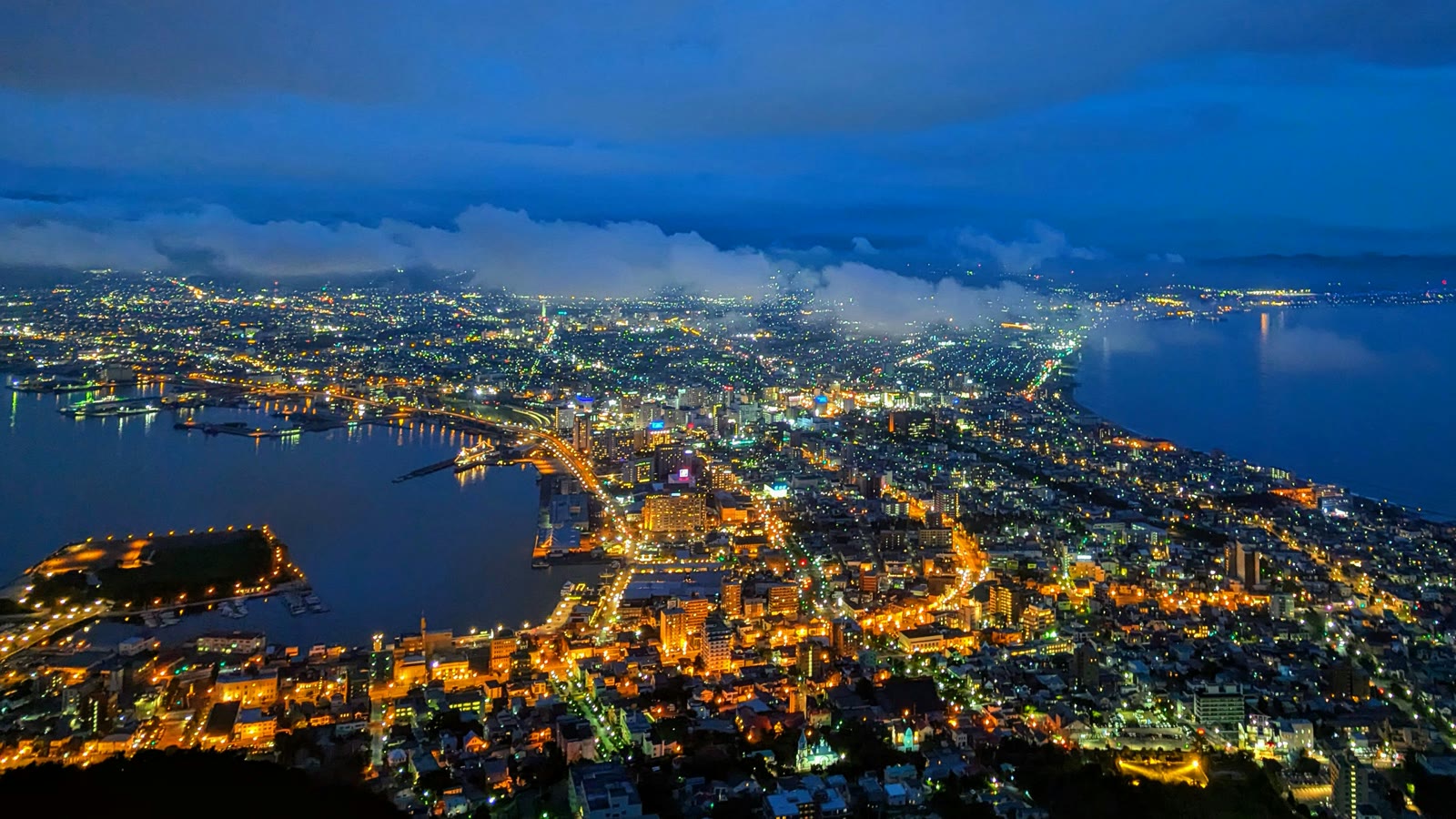
Hakodate sits on the southern tip of Hokkaido, facing the Tsugaru Strait that separates Japan’s northern island from Honshu. As one of the first Japanese ports opened to international trade in 1854, Hakodate carries a visible Western influence in its Motomachi district of churches, consulates, and colonial architecture. Today the city of 260,000 draws visitors for its celebrated night view from Mount Hakodate, the star-shaped Goryokaku fort, fresh seafood at the Morning Market, and nearby hot springs at Yunokawa Onsen.
Hakodate Weather at a Glance
Hakodate has a humid continental climate with cold, snowy winters and mild, humid summers. Average highs range from 1°C (34°F) in January to 25°C (77°F) in August. The city receives roughly 1,210mm (48 inches) of precipitation annually, with about 3 metres of cumulative snowfall each winter. Hakodate’s position between Hakodate Bay and the Tsugaru Strait moderates extremes, and summer temperatures are noticeably cooler than Tokyo or Osaka, making it a popular summer escape for Japanese travellers. For a detailed month-by-month breakdown, see the Hakodate weather by month guide.
Hakodate Seasonal Snapshot
- Spring (April to May): Cherry blossoms at Goryokaku in late April to early May. Highs of 12 to 17°C (54 to 63°F). The Goryokaku Festival in mid-May. See best time to visit.
- Summer (June to August): Mild at 20 to 25°C (68 to 77°F). Wettest season with 135 to 170mm monthly rain. Hakodate Port Festival (early August) with fireworks and squid dance. Peak hotel rates.
- Autumn (September to November): Best weather from September to October at 16 to 22°C (61 to 72°F). Autumn foliage peaks mid-October to early November. First snow flurries by late November.
- Winter (December to March): Cold and snowy with highs of 1 to 3°C (34 to 37°F). Christmas Fantasy (December) and winter illuminations (December to February). Lowest hotel rates in January and February.
Hakodate Travel Guides
Browse our complete collection of Hakodate guides below, each covering a specific topic with practical details, specific names, and real numbers.
- Hakodate Weather by Month: Temperatures, Snowfall and Rainfall – Month-by-month climate data with average highs, lows, precipitation in mm, and sunshine hours.
- Best Time to Visit Hakodate: Weather, Cherry Blossoms and Prices – Which months deliver the best weather, lowest hotel rates, and seasonal highlights.
- Things to Do in Hakodate: Mt. Hakodate View, Goryokaku and Morning Market – The night view from Mount Hakodate, the star-shaped Goryokaku fort, Morning Market seafood, Motomachi historic district, and Yunokawa Onsen.
- Hakodate Events and Festivals: Port Festival, Cherry Blossoms and Christmas – Dates, locations, and what to expect at the city’s major annual events.
- Best Neighborhoods in Hakodate: Motomachi, Station and Yunokawa Onsen – Where to base yourself based on your travel style, budget, and interests.
- Where to Stay in Hakodate: Hotels in Every Area and Budget – Specific hotel recommendations with Booking.com links for Motomachi, the station area, and Yunokawa Onsen.
- Hakodate Travel Tips and FAQ: Transport, Day Trips and Safety – Getting there by Shinkansen and plane, getting around by tram, day trips, and practical tips.
Where is Hakodate and What Influences Its Weather?
Hakodate occupies a narrow peninsula at the southern tip of Hokkaido, bordered by Hakodate Bay to the west and the Tsugaru Strait to the south and east. The city sits at roughly 42 degrees north (similar to Chicago or Rome) and is surrounded by sea on three sides. Mount Hakodate (334m) rises directly behind the city centre. In winter, cold northwesterly winds from Siberia pick up moisture over the Sea of Japan and dump heavy snow on western Hokkaido, with Hakodate receiving about 3 metres per season. In summer, the Tsushima Current brings warm water from the south, moderating temperatures to a comfortable 25°C (77°F) at their peak and keeping humidity lower than mainland Japan.
Hakodate Quick Facts
- Population: 260,000 (city).
- Elevation: Sea level to 334 metres (1,096 feet) at Mount Hakodate summit.
- Climate type: Humid continental (Köppen Dfa/Dfb).
- Annual precipitation: 1,210mm (48 inches).
- Annual snowfall: ~3 metres (10 feet) cumulative.
- Warmest month: August, average high 25°C (77°F).
- Coldest month: January, average high 1°C (34°F), low -6°C (21°F).
- Wettest months: August to September, 160 to 170mm each.
- Snowiest months: January to February.
- Best months to visit: May (cherry blossoms), October (autumn foliage).
- Tokyo by train: 4 hours by Shinkansen.
- Cherry blossom peak: Late April to early May at Goryokaku.
Suggested Hotels in Hakodate
La Vista Hakodate Bay
Top-rated hotel in the Bay Area with rooftop natural hot spring baths overlooking the harbour, a breakfast buffet famous for fresh seafood from the Morning Market, and walking access to the Kanemori Red Brick Warehouses. Best for couples and onsen enthusiasts. Check rates and availability
Hakodate Kokusai Hotel
Well-established 4-star hotel near JR Hakodate Station with large rooms, a Japanese restaurant on site, and a concierge desk. Best for families and first-time visitors who want a reliable full-service hotel. Check rates and availability
Smile Hotel Hakodate
Clean budget chain 3 minutes from the station with the Morning Market across the street and compact but functional rooms. Best for solo travellers and budget-conscious visitors. Check rates and availability
