


 Patchy rain nearby
  Sunny
Sunny Hyderabad, the capital of Telangana, is a city where 16th-century minarets share the skyline with 21st-century glass tech campuses. The “City of Pearls” delivers one of India’s most layered urban experiences: mornings exploring the 500-year-old Golconda Fort, afternoons working through a legendary Hyderabadi biryani, and evenings at a rooftop microbrewery in Jubilee Hills. With a population of roughly 10 million spread across 650 square kilometers, Hyderabad is big, but its key attractions cluster into manageable zones that you can cover in 3-4 days.
Welcome to Hyderabad: The Deccan’s Dual City
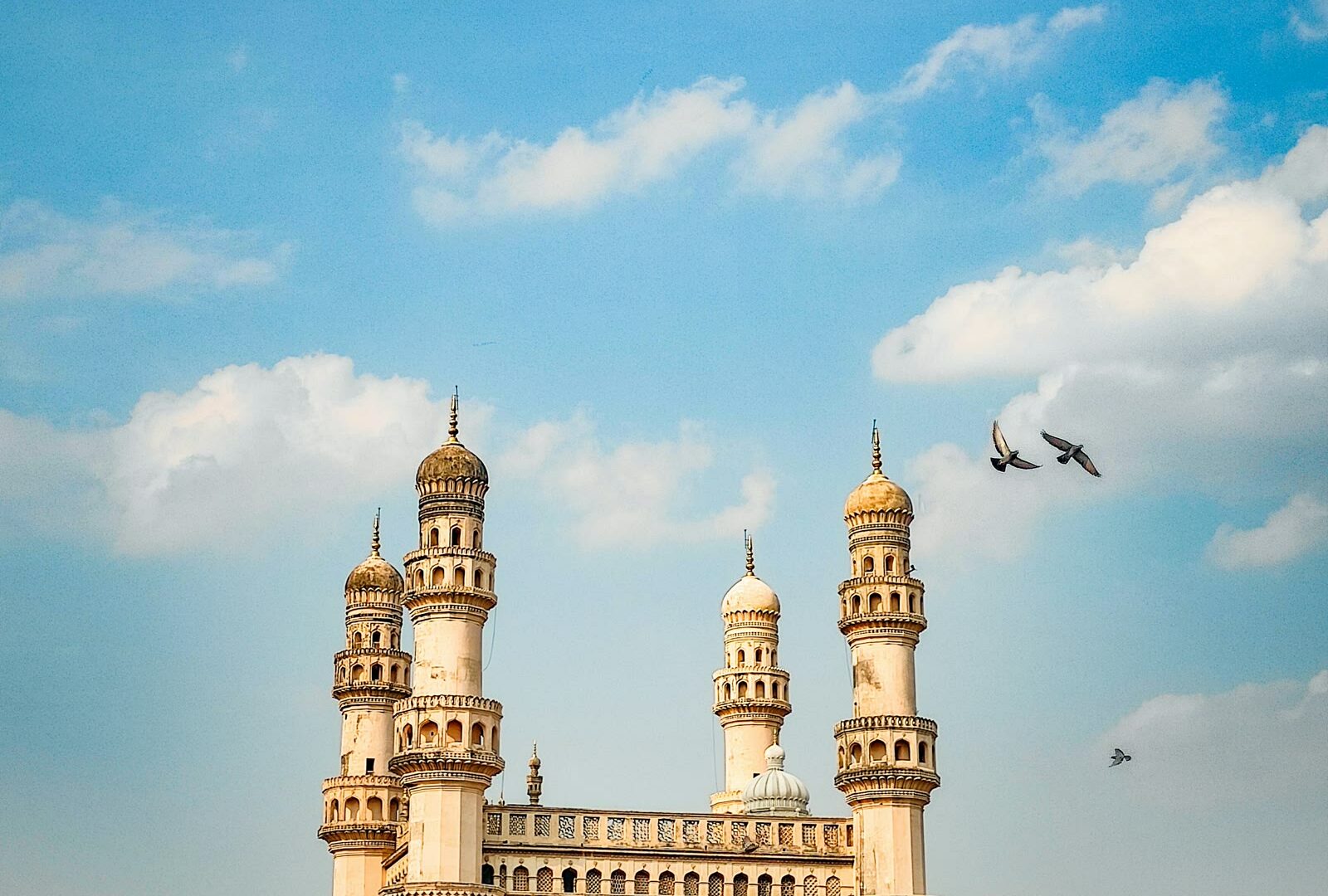
Hyderabad sits at 536 meters (1,759 feet) on the Deccan Plateau, giving it a hot semi-arid climate that’s less humid than coastal Indian cities. The Musi River divides the old city to the south from the newer developments to the north, while Hussain Sagar Lake splits Hyderabad proper from its twin city, Secunderabad. The city’s identity rests on three pillars: the 400-year legacy of the Qutb Shahi and Nizam dynasties (visible in Charminar, Golconda, and the Falaknuma Palace), the legendary Hyderabadi cuisine (biryani, haleem, and Irani chai), and the modern IT industry that earned the city the nickname “Cyberabad.”
Hyderabad Weather at a Glance
Hyderabad has three distinct seasons. Winter (November to February) is the sweet spot: daytime highs of 28-32°C (82-90°F), cool evenings at 14-17°C (57-63°F), and essentially zero rain. Summer (March to June) is intense: April and May average 39-40°C (102-104°F) with heat waves to 44°C (111°F). If you visit in summer, the combination of air-conditioned museums, hotel pools, and the evening food scene makes it manageable if you plan outdoor activities before 11:00 AM. Monsoon (July to October) brings 790mm (31 inches) of annual rainfall, mostly as 1-2 hour afternoon thunderstorms. July and August are the wettest months at 170-175mm each. The monsoon turns the arid Deccan landscape green and clears the air, but waterlogging on old city roads can disrupt travel for an hour or two after heavy storms. Annual sunshine averages 2,700 hours, with December and January being the sunniest winter months at 9 hours daily.
Seasonal Snapshot
- Winter (Nov-Feb): Perfect weather for sightseeing, peak tourist season, hotel rates at their highest. Charminar and Golconda Fort are comfortable all day. Pack a light sweater for mornings at 10-14°C (50-57°F).
- Summer (Mar-Jun): Hot and dry, April-May the most intense. Hotel rates drop 30-40%. Air-conditioned sites like Salar Jung Museum and Ramoji Film City are your daytime refuge. Evening food walks in the old city are the best summer activity.
- Monsoon (Jul-Oct): Afternoon thunderstorms, mornings usually clear. Best season for air quality, lowest hotel rates, and seeing the Deccan plateau green. September-October is the value sweet spot: rains easing, temperatures dropping, prices still low.
Quick Facts About Hyderabad
- Best weather months: November through February
- Warmest months: April and May, averaging 39-40°C (102-104°F)
- Coolest month: December, average low 14°C (57°F)
- Wettest months: July and August (170-175mm each)
- Annual rainfall: 790mm (31 inches)
- Annual sunshine: 2,700 hours
- Elevation: 536 meters (1,759 feet)
- Climate type: Hot semi-arid (Köppen BSh)
- Airport: Rajiv Gandhi International Airport (HYD), 24km southwest of the city center
Explore Hyderabad: Complete Travel Guides
Plan every aspect of your Hyderabad trip with our detailed guides below. From month-by-month weather data to a neighborhood-by-neighborhood hotel guide, these articles cover everything you need for a well-planned visit.
- Hyderabad Weather by Month – Detailed monthly breakdown of temperatures, rainfall, humidity, and sunshine hours. Includes a month-by-month comparison table so you can see exactly what weather to expect for your travel dates.
- Best Time to Visit Hyderabad – Find the ideal window for your trip based on weather, crowds, hotel prices, and festivals. Covers the best months, shoulder seasons, and periods to avoid with specific date ranges and price comparisons.
- Things to Do in Hyderabad – The complete attractions guide: Charminar, Golconda Fort, Qutb Shahi Tombs, Salar Jung Museum, the legendary biryani trail, and Ramoji Film City. Entry fees, opening hours, and insider tips for every site.
- Hyderabad Events and Festivals – Time your visit around Ramadan food walks, Diwali fireworks, the Deccan Festival, Bonalu, and Ganesh Chaturthi. Dates, locations, and what to expect at each celebration.
- Hyderabad Neighborhoods – Where to base yourself: the historic old city, upscale Banjara Hills, dining-focused Jubilee Hills, the business-friendly HITEC City corridor, and budget-friendly Secunderabad.
- Where to Stay in Hyderabad – Hotel recommendations by area and budget tier, from the Taj Falaknuma Palace (the sixth Nizam’s restored 1894 palace) to clean budget guesthouses near Charminar. Specific hotel names, locations, and what each property is best for.
- Hyderabad Travel Tips and FAQ – Airport transfers (HYD to city: INR 500-800 by cab, 45-60 min), Metro guide, visa requirements, tipping norms, tap water warnings, SIM card options, daily budgets, and a season-specific packing list.
Location and Climate Influences
Hyderabad is in south-central India, roughly 570km north of Chennai and 700km southeast of Mumbai. The city sits on the Deccan Plateau, a vast elevated tableland that dominates peninsular India. The plateau elevation (500-600 meters above sea level) moderates nighttime temperatures: even in May, when daytime highs hit 40°C (104°F), nights drop to 26°C (79°F), which is significantly cooler than coastal Chennai or Kolkata at sea level. The city’s distance from the coast (roughly 350km from the Bay of Bengal) means it doesn’t get the humid, sticky heat of Mumbai or Chennai. Hyderabad’s rainfall comes from the southwest monsoon, which loses intensity as it travels inland from the Arabian Sea and crosses the Western Ghats, so the city receives roughly a third of Mumbai’s annual rainfall. The rocky terrain of the Deccan means water runs off quickly, contributing to the city’s periodic water scarcity rather than the flooding that plagues flatter cities.
Suggested Hotels in Hyderabad
Taj Falaknuma Palace
The restored 1894 palace of the sixth Nizam, perched on a hill 5km south of Charminar. The 60 rooms and suites feature Venetian chandeliers, hand-painted frescoes, and period furniture, with guests arriving via horse-drawn carriage. The Adaa restaurant serves Hyderabadi royal cuisine. Best for a once-in-a-lifetime splurge, honeymoon, or anniversary. Check rates and availability
Park Hyatt Hyderabad
The top luxury pick in Banjara Hills on Road No. 2, with a 30-meter outdoor pool, full-service spa, and the acclaimed Tre-Forni Italian restaurant. Rooms start at 45 square meters with rainfall showers and floor-to-ceiling windows. Best for couples and luxury travelers who want a central base with resort-caliber facilities. Check rates and availability
Hyatt Place Hyderabad Banjara Hills
On Road No. 1 at the junction of Banjara Hills and HITEC City, offering 28-square-meter rooms with separate work areas, free hot breakfast, and a 24/7 fitness center. Best for travelers who want a branded hotel with easy access to both the city center and the tech corridor. Check rates and availability
City Articles
Best Time to Visit Hyderabad: Weather, Crowds & Price Guide
Hyderabad is a year-round destination, but the experience varies dramatically by season. A winter morning at Golconda Fort with temperatures at 16°C (61°F) is a completely different trip from a May afternoon at the same site when it’s 42°C (108°F) and you’re the only tourist there. This guide breaks down the best time to visit […]
Read MoreHyderabad Events and Festivals: Annual Celebrations, Dates & Tips
Hyderabad’s event calendar reflects its dual identity: a 400-year-old Islamic princely state layered onto a modern Indian tech capital. The city’s biggest celebrations are the Islamic festivals of Ramadan and Eid, the Hindu festival of Diwali, and the secular Deccan Festival. This guide lists each major event with its typical timing, location, and what to […]
Read MoreHyderabad Neighborhoods: Best Areas to Stay, Eat & Explore
Hyderabad is a sprawling city of roughly 650 square kilometers, and choosing the right neighborhood for your stay makes a huge difference to your trip. The city’s layout is essentially a west-to-east gradient: the old city near the Musi River in the south-center, the upscale residential and commercial areas of Banjara Hills and Jubilee Hills […]
Read MoreHyderabad Travel Tips & FAQ: Transport, Safety, Costs & Practical Info
Hyderabad rewards travelers who come prepared. The city is generally safe, affordable by Indian metro standards, and easier to navigate than Delhi or Mumbai thanks to less aggressive touts and a functional Metro system. But it has its quirks: the old city and HITEC City feel like different countries, summer heat demands serious planning, and […]
Read MoreHyderabad Weather by Month: Temperatures, Rainfall & Climate Guide
Hyderabad has a hot semi-arid climate (Köppen BSh) with three distinct seasons: a long, scorching summer from March to June, a monsoon period from July to September, and a mild, dry winter from November to February. The city sits at 536 meters (1,759 feet) above sea level on the Deccan Plateau, which moderates nighttime temperatures […]
Read MoreThings to Do in Hyderabad: Historic Sites, Food & Culture Guide
Hyderabad packs 400 years of history into its streets, from the 16th-century Qutb Shahi dynasty to the 21st-century tech campuses of Cyberabad. The city splits roughly into two halves: the old city south of the Musi River, where you’ll find Charminar, the Nizam’s palaces, and legendary biryani joints, and the newer western corridor of Banjara […]
Read MoreWhere to Stay in Hyderabad: Best Hotels by Area & Budget
Hyderabad’s hotel scene splits across three main zones: the upscale Banjara Hills/Jubilee Hills corridor for luxury and dining, the HITEC City/Gachibowli area for business travelers close to tech campuses, and the Begumpet/Secunderabad belt for mid-range and budget options close to the railway station. Unlike Delhi or Mumbai, Hyderabad’s hotels are relatively affordable: you can find […]
Read More