

 Cloudy
 Sunny
This post may contain affiliate links. If you purchase through them, I may earn a small commission at no extra cost to you. Thanks for supporting our small business.
Leh Travel Guide: Weather, Seasons and What to Know Before You Go
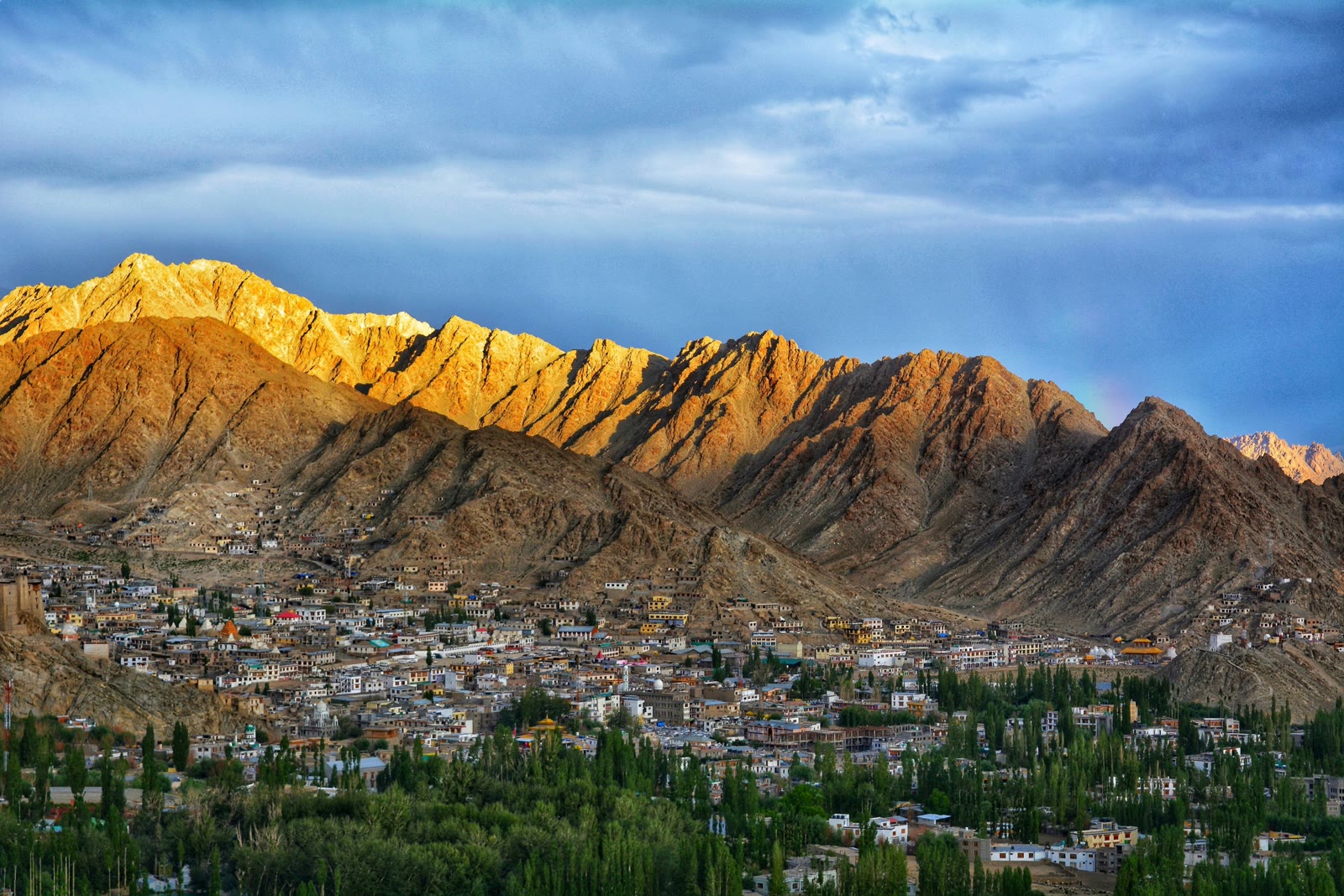
Leh is the capital of Ladakh, a town of around 30,000 people at 3,524 metres (11,562 ft) in India’s far north. It sits in a high-altitude cold desert behind the Himalaya, so the weather runs to extremes: 25°C (77°F) summer days, -20°C (-4°F) winter nights and barely 100 mm of rain a year. This page is the hub for planning a trip, covering the climate and seasons at a glance, then linking to our detailed guides on everything from monthly weather to where to stay.
Leh Weather at a Glance
Leh’s climate is a cold desert shaped by altitude and aridity. Because the town lies in the rain shadow of the Himalaya and Karakoram, it receives only about 100 mm of precipitation a year, nearly all of it in July and August when the tail of the Indian monsoon reaches Ladakh. The rest of the year stays dry, with 5-11 mm a month, and sunshine runs six to nine hours a day with humidity rarely above 40%. The dry air is why your skin, lips and throat dry out fast.
The daily temperature swing is what surprises first-time visitors. In summer (June to August), days reach 23-25°C (73-77°F) but nights cool to 8-11°C (46-52°F). In winter (December to February), days sit near or below freezing and nights drop to -12°C to -14°C (10-7°F), with January the coldest month at an average low of -14°C (7°F). At 3,500 metres the sun is intense, so 20°C in the sun can feel like 30°C at sea level while shade brings the cold back immediately.
Two highways connect Leh to the rest of India: the Srinagar-Leh road (434 km) and the Manali-Leh road (428 km). Both are snowbound from roughly November to May, so flights from Delhi are the only reliable access in winter and the main way in for most visitors all year. The warmest month is July at 25°C (77°F); the wettest is August with 14 mm of rain.
Seasonal Snapshot in Leh
- Summer (June to August): warm days of 23-25°C (73-77°F), the Hemis Festival, both highways open and every lake and pass accessible, but peak crowds and the year’s highest hotel rates.
- Autumn (September to November): clear skies and golden trees, the Ladakh Festival in early September, nights below freezing by October and roads closing from late October.
- Winter (December to February): highs near freezing, nights of -12°C to -14°C (10-7°F), most of the town shut down; only the Chadar trek and February mask festivals draw visitors.
- Spring (March to May): sunny days but freezing nights, apricot blossoms in late April, and the Srinagar-Leh and Manali-Leh highways reopening in April and late May.
Leh Travel Guide: Start Here
- Leh Weather by Month: average temperatures, rainfall and sunshine for every month of the year, with a full comparison table.
- Best Time to Visit Leh: the exact months for good weather, low prices and small crowds, and which months to avoid.
- Things to Do in Leh: 15 monasteries, palaces, lakes and passes with opening hours and entry prices.
- Festivals in Leh: the Hemis Festival, Ladakh Festival, Losar and the winter mask dances, with dates and locations.
- Best Neighborhoods in Leh: the Main Bazaar, Changspa Road and the quieter Fort Road side, with what each area suits and costs.
- Where to Stay in Leh: the best areas and three specific hotels in each, from luxury to budget, with booking links.
- Leh Travel Tips and FAQ: airport and transport costs, permits, altitude sickness, money and safety.
Where Is Leh and What Shapes Its Climate
Leh lies on the upper Indus river in the Leh district of Ladakh, a union territory in northern India, roughly 400 km east of Srinagar and 250 km from the China border across the Karakoram. Its climate, classified as a cold desert (Koppen BWk), comes from three factors: the altitude of 3,524 metres, the rain shadow cast by the Himalaya and Karakoram ranges, and thin, dry air that lets heat escape quickly at night. The surrounding peaks block almost all monsoon moisture, which is why a region surrounded by some of the wettest mountains on earth stays bone dry, while the clear skies produce the huge swing between day and night temperatures.
Quick Facts About Leh Weather
- Warmest month: July, average high 25°C (77°F).
- Coldest month: January, average low -14°C (7°F).
- Annual rainfall: about 100 mm, nearly all in July and August.
- Wettest month: August, with 14 mm of rain.
- Sunshine: six to nine hours a day, roughly 300 clear days a year.
- Humidity: 20-40%, so the air stays dry year-round.
- Altitude: 3,524 metres (11,562 ft) above sea level.
- Best months to visit: June to September for full access and warm days.
Where to Stay in Leh
Most visitors base themselves in one of three areas: the Main Bazaar and Old Town for walkability, Changspa Road for the backpacker scene, or the Fort Road and Shanti Stupa side for quieter, greener hotels. Nearly all properties shut from November to April, so a winter visit means choosing a heated hotel carefully. Three solid picks are below.
Suggested Hotels in Leh
The Grand Dragon Ladakh
Leh’s original luxury hotel, with a large garden courtyard, an on-site restaurant, oxygen support and reliably heated rooms a 10-minute walk from the Main Bazaar. Best for travellers who want a proper hotel base and dependable heating at altitude. Check rates and availability
The Zen Ladakh
A five-star resort on Fort Road with a heated indoor pool, spa, gym and fine-dining restaurant, about 3 km from the airport. Best for couples and families who want the most polished, winter-proof stay in Leh. Check rates and availability
Gomang Boutique Hotel
Leh’s first boutique hotel, on Upper Changspa Road, with an oxygen lounge, free WiFi and modern design-led rooms. Best for couples and solo travellers who want style and comfort at a mid-range price. Check rates and availability
