

 Sunny
Sunny  Patchy rain nearby
 This post may contain affiliate links. If you purchase through them, I may earn a small commission at no extra cost to you. Thanks for supporting our small business.
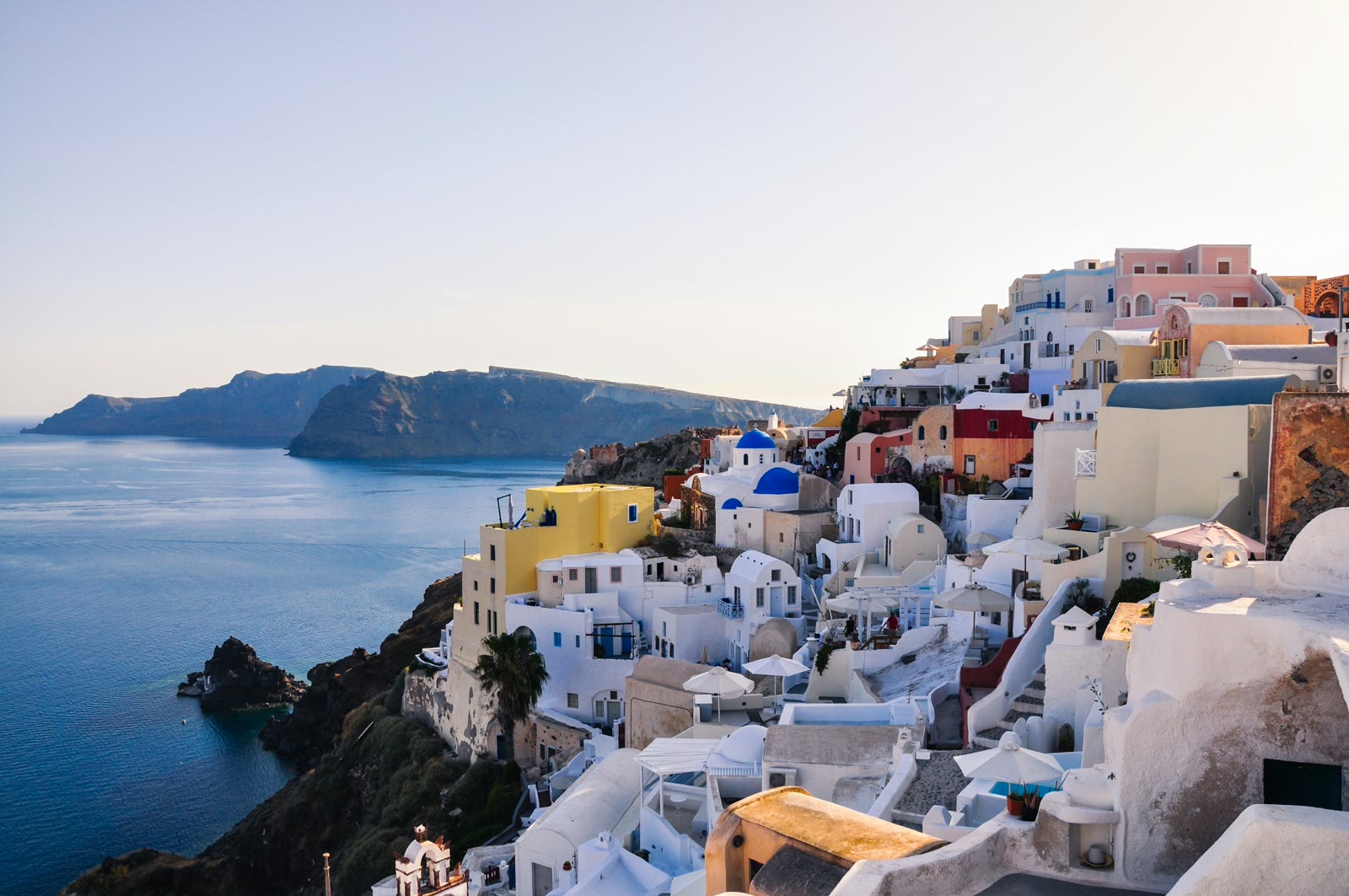
Mykonos is the most famous of the Cycladic islands, a 86-square-kilometre speck in the central Aegean Sea whose whitewashed cube houses and blue-domed churches have defined the Greek island postcard for half a century. The island sits at roughly 37.45 degrees latitude, receiving 300 days of sunshine per year and shaped by the meltemi, a northerly summer wind that has cooled sailors and sunbathers since antiquity.
The island’s climate follows the textbook Mediterranean pattern: long, hot, bone-dry summers from June through September, mild shoulder months in May and October, and a quiet winter season from November through March when rainfall arrives and most tourist infrastructure closes. July and August bring daytime highs of 29 degrees Celsius (84 degrees Fahrenheit), while January hovers at 13 degrees Celsius (55 degrees Fahrenheit). The surrounding Aegean Sea warms from 16 degrees Celsius (61 degrees Fahrenheit) in February to a peak of 25 degrees Celsius (77 degrees Fahrenheit) in August, making late summer and early autumn the best months for swimming.
What sets Mykonos apart from neighbouring islands is the meltemi. Between mid-June and mid-September, this northerly wind funnels through the Cyclades at 30-50 km/h (19-31 mph), strongest in July and August. It keeps humidity bearable when mainland Greece swelters at 35 degrees Celsius plus, but it also churns the sea on north-facing beaches like Panormos and Agios Sostis and can shut down ferry services for 24-48 hours when it gusts above force 7 on the Beaufort scale (50-60 km/h). South coast beaches, from Ornos to Super Paradise, sit in the wind shadow and stay calm.
Mykonos Weather at a Glance: Seasonal Snapshot
- Spring (March to May): March still feels cool at 15 degrees Celsius (59 degrees Fahrenheit) with 45mm of rain, but by May the island transforms. Daytime highs reach 23 degrees Celsius (73 degrees Fahrenheit), wildflowers blanket the hillsides, and the first direct international flights resume. Hotel prices are 30-40% below July levels and the meltemi has not yet arrived. Sea temperature sits at 17-19 degrees Celsius (63-66 degrees Fahrenheit), swimmable with a wetsuit top.
- Summer (June to August): June delivers near-perfect conditions at 27 degrees Celsius (81 degrees Fahrenheit) with negligible rain (5mm). The meltemi arrives mid-month. July and August are peak season with daytime highs of 29 degrees Celsius (84 degrees Fahrenheit), sea temperatures at 24-25 degrees Celsius (75-77 degrees Fahrenheit), and up to 13 hours of sunshine. The entire island operates at full capacity from beach clubs to ferry routes. Book everything at least a month ahead.
- Autumn (September to November): September is arguably the best month, with summer warmth at 26 degrees Celsius (79 degrees Fahrenheit) and the sea still at 24 degrees Celsius (75 degrees Fahrenheit), warmer than June. The meltemi eases by mid-month and crowds thin after the first week of September. October cools to 22 degrees Celsius (72 degrees Fahrenheit) with 40mm of rain and most beach clubs close by mid-month. By November, rain increases to 65mm and most hotels shut for the season.
- Winter (December to February): Mykonos effectively hibernates. Daytime highs reach 13-15 degrees Celsius (55-59 degrees Fahrenheit), rainfall peaks at 75-85mm per month (roughly 10 rainy days each), and 80-90% of hotels, restaurants, and bars close. Ferry schedules shrink to 1-2 daily crossings. No direct international flights land at JMK between November and April. The island becomes a quiet community of about 3,500 year-round residents.
Mykonos Quick Facts
- Best months for beach weather: June through September, with September offering the warmest sea (24-25 degrees Celsius / 75-77 degrees Fahrenheit) and fewer crowds than July and August.
- Warmest month: July and August tie at 29 degrees Celsius (84 degrees Fahrenheit) average high, with sea temperature peaking at 25 degrees Celsius (77 degrees Fahrenheit) in August.
- Coolest month: January at 13 degrees Celsius (55 degrees Fahrenheit) average high, with the coldest sea at 16 degrees Celsius (61 degrees Fahrenheit) in February.
- Wettest month: December at 85mm of rain across roughly 10 rainy days. July and August see only 3mm each, functionally zero rain.
- Sunniest months: July at 13 hours per day of sunshine, June and August at 12 hours. December and January manage only 4 hours.
- Meltemi wind season: Mid-June through mid-September, strongest in July and August. South coast beaches (Ornos, Platis Gialos, Paradise, Psarou) are naturally sheltered.
- Sea temperature range: 16 degrees Celsius (61 degrees Fahrenheit) in February to 25 degrees Celsius (77 degrees Fahrenheit) in August. Swimmable without a wetsuit from June through October.
- Airport: Mykonos Island National Airport (JMK), 4 km southeast of Mykonos Town. Direct seasonal flights from major European cities May through October. Year-round flights from Athens (40 minutes, EUR 50-120 one-way).
Mykonos Travel Guides
- Mykonos Weather by Month: Month-by-month breakdown of temperatures in Celsius and Fahrenheit, rainfall in millimetres, sea temperatures, daily sunshine hours, and the meltemi wind season. Includes a detailed comparison table for every month.
- Best Time to Visit Mykonos: When to go for nightlife and beach clubs, the cheapest months for hotels and flights, the quietest period for couples, and which months to avoid entirely when the island shuts down.
- Things to Do in Mykonos: From the windmills and Little Venice in Chora to the Delos archaeological island, sunset sailing cruises, snorkelling at Paradise Reef, and inland Jeep safaris to Ano Mera and Fokos Beach.
- Best Beaches in Mykonos: The party sands of Paradise and Super Paradise, the luxury sun loungers of Psarou, family-friendly Ornos, quiet Agrari, and the completely undeveloped wild coves of Fokos and Agios Sostis.
- Mykonos Events and Festivals: Greek Orthodox Easter processions, the XLSIOR dance festival in August, the Mykonos Biennale art festival, open-air cinema, and the grape harvest celebration at Vioma Organic Farm.
- Where to Stay in Mykonos: Area-by-area guide to Mykonos Town, the Ornos family corridor, and the Platis Gialos beach club strip. Hotel recommendations for every budget from luxury cliffside suites to family-run Cycladic guesthouses.
- Mykonos Travel Tips and FAQ: Practical answers about JMK airport transfers, Athens ferry connections (Piraeus and Rafina), the 32-taxi shortage, public bus routes, tap water safety, tipping customs, dress codes, and daily budget estimates.
Where is Mykonos and What Influences Its Weather
Mykonos sits in the central Aegean Sea at 37.45 degrees north, roughly 150 km southeast of Athens, in the Cyclades island group. Its closest neighbouring islands are Tinos (20 minutes by ferry to the northwest), Syros (30 minutes west), and Naxos and Paros (45-60 minutes south). The island measures roughly 14 km east to west and 10 km north to south, with a highest point of 372 metres at Mount Profitis Ilias in the centre. Its small size and low elevation mean no microclimate variation; what you get in Mykonos Town is the same as at any beach. The dominant weather control is the meltemi wind, a seasonal northerly that funnels through the Aegean when high pressure over the Balkans meets low pressure over Turkey. This wind moderates peak summer temperatures by 3-5 degrees Celsius compared to Athens and keeps humidity at comfortable levels around 55-65% even in August.
Suggested Hotels in Mykonos
Cavo Tagoo Mykonos
Luxury cliffside hotel carved into the rock above the old port with an iconic infinity pool featuring a 40-metre aquarium bar. Every room has a private plunge pool or jacuzzi with direct sea views toward the island of Delos. Best for honeymooners and couples who want five-star design within a 5-minute walk of Little Venice. Check rates and availability
Yiannaki Hotel
Mid-range hotel in Ornos with a large saltwater swimming pool, Cycladic white-and-blue decor, and free parking. Located a 5-minute walk from family-friendly Ornos Beach and the bus stop for Mykonos Town (EUR 1.80, 10-minute ride). Best for couples and small families seeking good value near the beach without the south coast price tag. Check rates and availability
Sofia Village
Family-run Cycladic-style hotel perched 400 metres above Mykonos Town with a swimming pool and terrace overlooking the Aegean Sea and neighbouring islands. Rooms are simple but clean, each with a fridge, kettle, air conditioning, and private balcony. Best for budget-conscious travellers who want walking access to Chora without the noise or cost of the town centre. Check rates and availability
