

 Sunny
Sunny  Patchy rain nearby
 This post may contain affiliate links. If you purchase through them, I may earn a small commission at no extra cost to you. Thanks for supporting our small business.
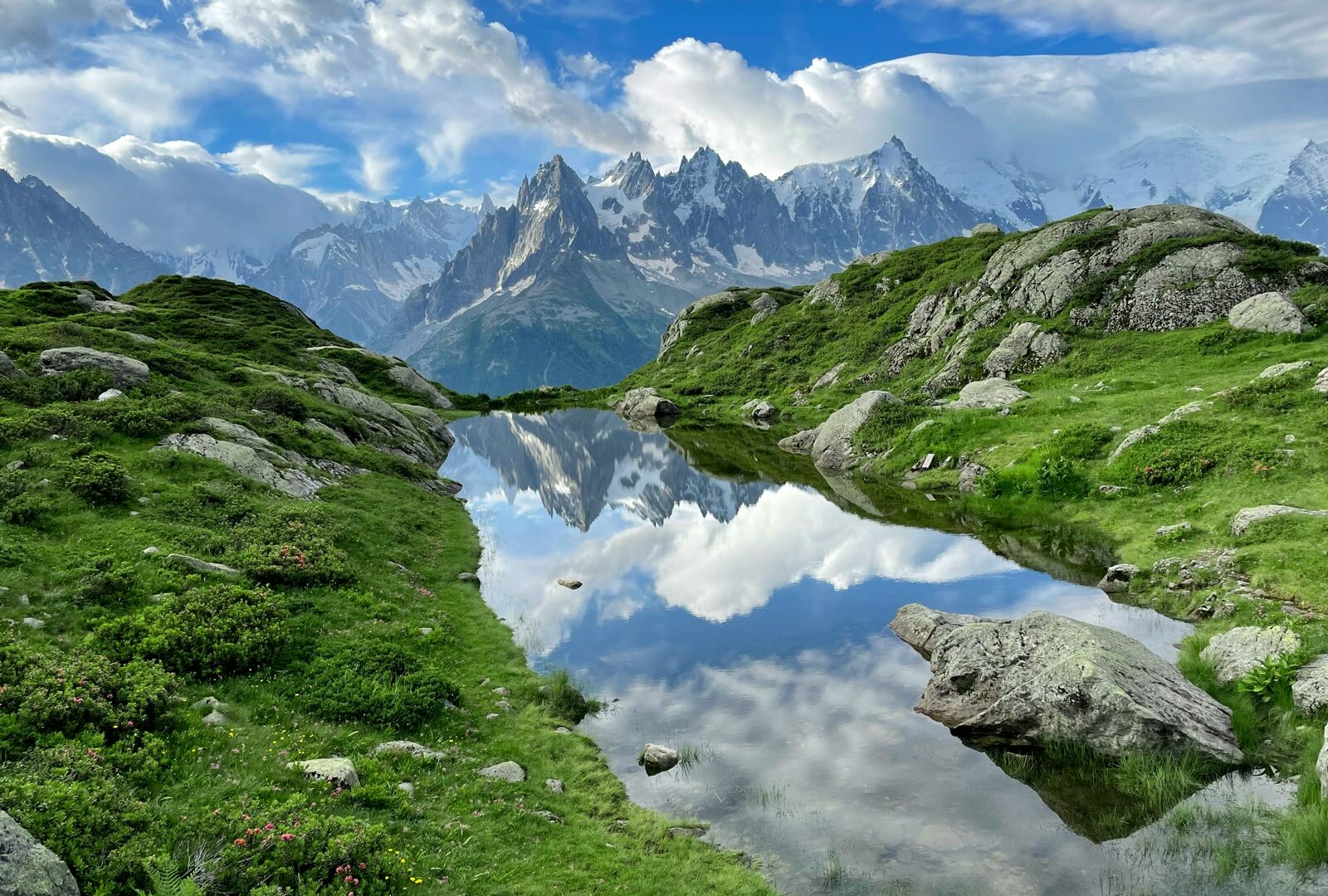
Chamonix sits at 1,035 metres (3,396 feet) in the French Alps, at the foot of Mont Blanc, Western Europe’s highest peak at 4,807 metres. The town hosted the first Winter Olympics in 1924 and has been a global centre for skiing, mountaineering, and alpine adventure ever since. Chamonix has an alpine climate with cold, snowy winters ideal for skiing from December through April, and mild summers with daytime highs of 22-23°C (72-73°F) perfect for hiking and climbing from June through September. The valley receives about 1,275mm of precipitation annually, with snowfall averaging 8-10 metres at altitude. About 2.5 million visitors come to Chamonix each year, split roughly evenly between winter sports enthusiasts and summer mountain travellers.
Welcome to Chamonix: An Alpine Year-Round Destination
Chamonix stretches for 15km along the Arve River valley, from the hamlet of Le Tour near the Swiss border to the village of Les Houches near the Mont Blanc Tunnel entrance to Italy. The town centre is compact and pedestrian-friendly, with Rue du Docteur Paccard forming the main axis of shops, restaurants, and bars. Five separate ski areas ring the valley: Grands Montets (expert terrain), Brévent-Flégère (best views), Le Tour-Vallorcine (beginners), Les Houches (tree-lined), and the Vallée Blanche (world-famous off-piste descent). In summer, the same lift system opens access to hundreds of kilometres of hiking trails, including sections of the Tour du Mont Blanc circuit. The Aiguille du Midi cable car, which rises to 3,842 metres in 20 minutes, operates year-round and is Chamonix’s most-visited attraction.
Chamonix has two distinct high seasons. Winter runs from Christmas week through late April, peaking during French school holidays in February. Summer runs from late June through early September, peaking in August. The shoulder seasons (late April to mid-June and October to late November) are much quieter, with many lifts and some businesses closed. September and March offer the best balance of good conditions and manageable crowds. The complete Chamonix weather by month guide breaks down temperatures, snowfall, and sunshine for every month.
Chamonix Seasons at a Glance
- Winter (December to March): Snow-covered peaks, five ski areas fully operational, temperatures from -6°C to 5°C. The Aiguille du Midi and Montenvers train run year-round. Christmas and February holidays are the busiest and most expensive periods. The best time to visit Chamonix guide covers seasonal costs and crowd levels in detail.
- Spring (April to May): Melting snow, blooming valley flowers, very few tourists. Most ski lifts close by late April. Hotel rates drop 30-40% from winter peaks. Lower hiking trails clear by early May, but high-altitude routes remain snow-covered until June. The quietest and cheapest season.
- Summer (June to September): Warm days (21-23°C), all lifts running, hiking and climbing in full swing. Afternoon thunderstorms common in July and August. The Tour du Mont Blanc hiking season runs late June through early September. August is the busiest summer month. September offers the best combination of warm weather, open trails, and smaller crowds.
- Autumn (October to November): Golden larch forests, first snowfalls, very quiet. Most lifts close by early October. November is the sleepiest month. Excellent for photography and solitude. Winter season begins in late November.
Explore Chamonix: Complete Travel Guide
- Chamonix Weather by Month: Month-by-month breakdown of temperatures, rainfall, snowfall, and sunshine hours. Includes a quick-reference climate data table with average highs, lows, precipitation, and snow conditions for each month.
- Best Time to Visit Chamonix: When to go for skiing, hiking, and avoiding crowds. Seasonal cost comparison, month-by-month crowd calendar, and activity-specific recommendations for every type of traveller.
- Things to Do in Chamonix: Comprehensive guide to attractions including the Aiguille du Midi cable car, Mer de Glace glacier, Lac Blanc hike, Vallée Blanche ski descent, paragliding, museums, and more with ticket prices and practical tips.
- Chamonix Events and Festivals: Year-round calendar covering the UTMB ultramarathon, Kandahar World Cup ski races, Cosmojazz festival at altitude, Fête des Guides, ice climbing competitions, and the Chamonix Film Festival.
- Chamonix Neighbourhoods Guide: Detailed profiles of Centre-Ville, Argentière, Les Houches, Les Praz, and Le Tour. Compare atmosphere, ski access, restaurant scenes, and price ranges to find your ideal base.
- Where to Stay in Chamonix: Hotel recommendations at luxury, mid-range, and budget tiers for each major area. Includes Booking.com links, description of standout features, and which type of traveller each hotel suits.
- Chamonix Travel Tips and FAQ: Practical information covering Geneva Airport transfers (25-35 euros), train connections, Mont Blanc Tunnel tolls (46.40 euros), what to pack for alpine conditions, tipping customs, safety at altitude, visa requirements, and answers to common visitor questions.
Where Is Chamonix and What Shapes Its Weather?
Chamonix is in southeastern France, in the Auvergne-Rhône-Alpes region, bordering both Switzerland and Italy. The town sits in a deep glacial valley oriented northeast-southwest, flanked by the Aiguilles Rouges range to the north and the Mont Blanc massif to the south. This geography creates a distinct microclimate: the Mont Blanc massif acts as a massive weather barrier, forcing moisture-laden air from the Mediterranean and Atlantic upward, producing significant precipitation on the French side. The valley’s orientation means the town centre and Brévent slopes get more afternoon sun, while the Argentière side stays shadier and colder. The Aiguille du Midi summit (3,842m) is typically 15-20°C colder than the valley floor. The closest major city is Geneva, Switzerland (88km), and the nearest Italian town is Courmayeur (22km through the Mont Blanc Tunnel).
Chamonix Quick Facts
- Best months for skiing: February and March (best snow conditions, though February has the most crowds)
- Best months for hiking: July through mid-September (all trails snow-free, lifts running)
- Warmest month: July (avg high 23°C / 73°F, avg low 11°C / 52°F)
- Coldest month: January (avg high 3°C / 37°F, avg low -6°C / 21°F)
- Wettest month: August (130mm over 15 days)
- Cheapest months: May and November (low season, many businesses closed)
- Altitude: 1,035 metres (3,396 feet) in the town centre; highest lift access at 3,842 metres (Aiguille du Midi)
- Nearest airport: Geneva International Airport (GVA), 88km / 55 miles (60-90 minutes by road)
- Annual visitors: approximately 2.5 million
- Language: French, but English is widely spoken in tourism services
- Currency: Euro (EUR)
Suggested Hotels in Chamonix
Hôtel Mont-Blanc Chamonix
Chamonix’s premier 5-star hotel in the town centre, set within a garden with direct Mont Blanc views. It features a Clarins spa with a heated indoor pool, outdoor hot tub, cocktail bar, and the Matafan restaurant. Best for couples and travellers wanting a luxury alpine experience with full services. Check rates and availability
Hotel Du Clocher
A converted townhouse on a quiet dead-end lane in the heart of Chamonix, with comfortable mountain-view rooms and a restaurant serving traditional Savoyard dishes. Located steps from the pedestrian zone but sheltered from noise. Best for couples and solo travellers seeking a central, characterful base at moderate prices. Check rates and availability
Eden Hotel Chamonix Les Praz
Budget-friendly hotel and apartments in the quiet Les Praz hamlet, 100 metres from the Flégère cable car and a 25-minute riverside walk to the town centre. Rooms and apartments have valley or Mont Blanc views. Best for hikers, skiers, and budget travellers who prioritise lift access over being in town. Check rates and availability
