

 Smoky haze
 Light drizzle
 Mist
 Overcast
 Light rain
This post may contain affiliate links. If you purchase through them, I may earn a small commission at no extra cost to you. Thanks for supporting our small business.
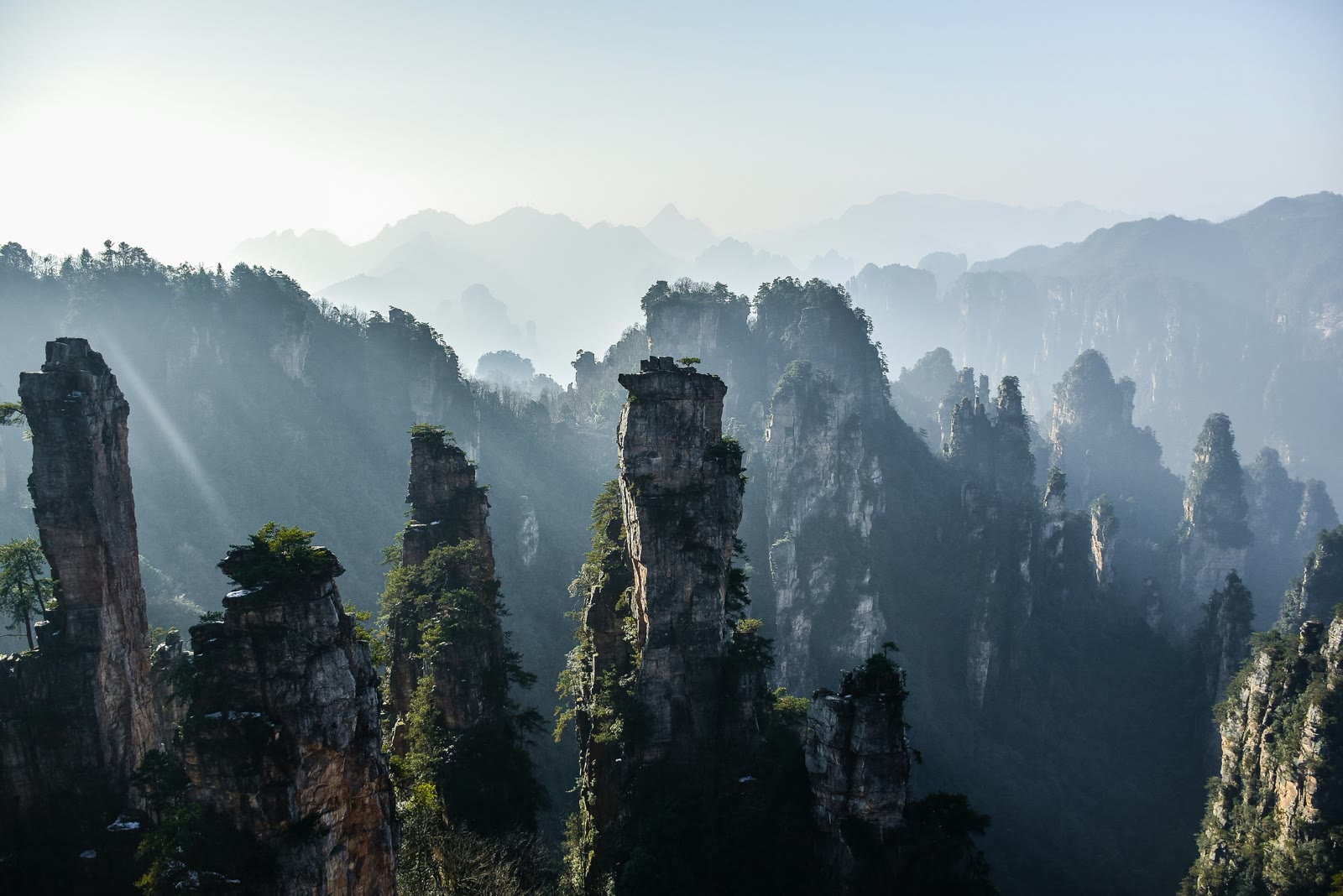
Zhangjiajie is a prefecture-level city in northwest Hunan, China, best known as the real-world inspiration for the floating mountains in the film Avatar. The area centers on the Wulingyuan UNESCO World Heritage Site, where more than 3,000 quartz-sandstone pillars rise above misty valleys, alongside the Tianmen Mountain cableway and the Grand Canyon glass bridge. With a humid subtropical climate, mild spring and autumn, and a rainy summer, the city rewards visitors who time their trip and split their stay between the city center and the park gate.
Welcome to Zhangjiajie
Zhangjiajie works differently from most Chinese cities you will visit. The sightseeing is not in the center but spread across three zones: the Wulingyuan scenic area, where the National Forest Park holds the famous pillars, the Tianmen Mountain complex that rises directly behind the downtown, and the Grand Canyon with its glass bridge, 40km to the east. The city itself, in Yongding District, is the transport hub with the airport (DYG), the high-speed rail station and the Tianmen cable car station, while Wulingyuan District is the tourist base where most hotels sit. Plan on two nights in Wulingyuan for the park and one in the city for Tianmen Mountain, and you will spend far less time in shuttles.
Zhangjiajie Weather at a Glance
Zhangjiajie has a humid subtropical climate (Koppen Cfa) with four distinct seasons, an annual average of 15.7°C (60°F) and roughly 1,400mm of rain a year, more than half of it falling between April and August. Summer is hot and muggy, with July the warmest month at an average of 26°C (79°F) and afternoon highs that reach 33°C (91°F) or more. Winter is short and cold, with January the coldest month at an average high of 9°C (48°F) and lows near 3°C (37°F), plus the only real snow of the year.
The factor that matters most here is fog. Because the sandstone pillars trap moisture, cloud and mist sit in the valleys on many days, especially in spring and early summer, and a viewpoint that is clear at 9am can be socked in by 11am. The clearest, driest stretch runs from September to November, and that is when the glass bridge and cable cars deliver their best views. Rain clears the haze, so the day after a summer thunderstorm is often the greenest of the year.
Zhangjiajie Seasonal Snapshot
- Spring (March to May): warming from 16°C to 26°C, rain rising from 90mm to 180mm, full green foliage and frequent mist, plus May Day crowds in the first week of May.
- Summer (June to August): hot and wet, highs of 30°C to 33°C, 170mm to 210mm of rain a month, afternoon thunderstorms and peak school-holiday crowds.
- Autumn (September to November): the best season, highs of 16°C to 28°C, rain dropping to 65mm to 110mm, the clearest skies and autumn foliage.
- Winter (December to February): cold and dry, highs of 9°C to 11°C, snow on the peaks, the cheapest park tickets at CNY 115 and empty trails.
Zhangjiajie Quick Facts
- Best months to visit: April, May, September and October.
- Warmest month: July, averaging 26°C (79°F) with highs to 33°C (91°F).
- Coolest month: January, averaging a high of 9°C (48°F) and a low of 3°C (37°F).
- Wettest months: June and July, around 200mm to 210mm of rain each.
- Driest month: December, around 40mm of rain.
- National Forest Park pass: CNY 240 for four days in high season, CNY 115 in low season (December to February).
- Airport: Zhangjiajie Hehua International Airport (DYG), about 4.5km from the city center.
- Time zone: China Standard Time (UTC+8), with no daylight saving.
Zhangjiajie Travel Guides
- Zhangjiajie Weather by Month covers temperatures, rainfall and sunshine for every month, with a comparison table and a seasonal breakdown.
- Best Time to Visit Zhangjiajie lays out the best months for weather, the cheapest and least crowded windows, and which months to avoid.
- Things to Do in Zhangjiajie lists every major sight with ticket prices, opening hours and practical tips.
- Zhangjiajie Events and Festivals details the Country Music Week, the Forest Protection Festival and the Tujia celebrations.
- Zhangjiajie Neighborhoods explains Yongding, Wulingyuan and Cili County, with hotel prices and who each area suits.
- Where to Stay in Zhangjiajie covers the best districts and specific hotels near the park gate and the cable car.
- Zhangjiajie Travel Tips and FAQ answers the practical questions on airports, trains, visas, money and safety.
Where to Stay in Zhangjiajie
Most visitors split their stay between Wulingyuan District, which puts you a short walk from the National Forest Park entrance, and Yongding city center, which puts you beside the Tianmen Mountain cable car and the airport. Wulingyuan hotels run about CNY 250 to 800 a night and are the best choice for the forest park, while Yongding is cheaper at CNY 150 to 500 a night and more convenient for the cable car and transport. Two nights in Wulingyuan plus one in the city is the standard split.
Suggested Hotels in Zhangjiajie
Pullman Zhangjiajie
The Pullman Zhangjiajie is a five-star resort in Wulingyuan with a seasonal outdoor pool, indoor pool, sauna and tennis courts, all a short walk from the forest park entrance. Best for couples and families who want proper resort facilities after long days on the trails. Check rates and availability
Wyndham Zhangjiajie Wulingyuan
Wyndham Zhangjiajie Wulingyuan offers adults-only rooms with garden, pool or mountain views in the Wulingyuan district, with air conditioning and free WiFi. Best for couples and solo travelers who want a quiet, modern base near the park. Check rates and availability
Travel of Swan International Hostel
Travel of Swan International Hostel is a 10-minute walk from the Wulingyuan entrance to the National Forest Park, and the staff help book park tickets and plan daily routes. Best for backpackers and budget travelers who value location over frills. Check rates and availability
