

 Sunny
Sunny  Overcast
  Partly Cloudy
  Light snow
 This post may contain affiliate links. If you purchase through them, I may earn a small commission at no extra cost to you. Thanks for supporting our small business.
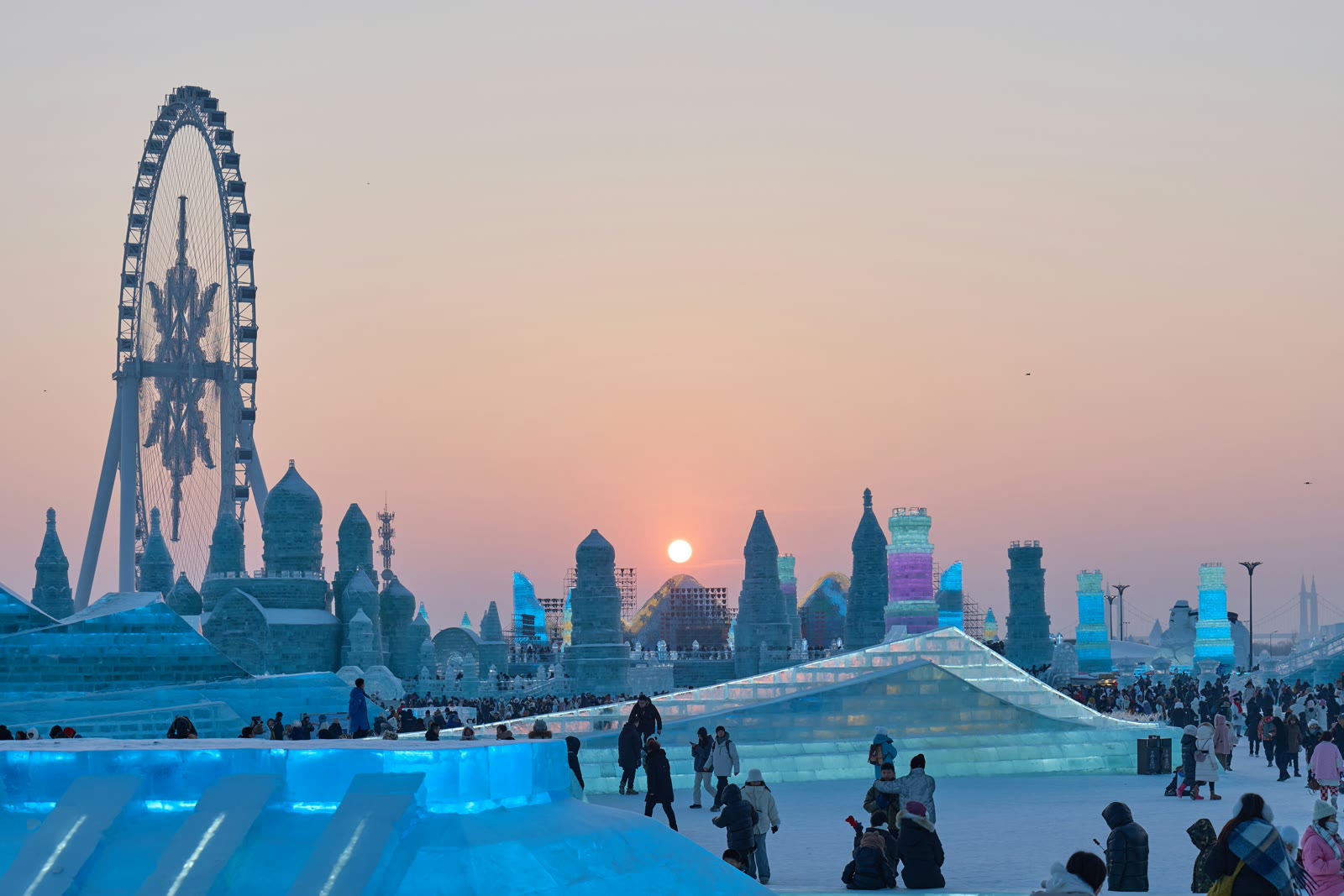
Harbin is the capital of China’s northernmost province, Heilongjiang, and one of the most climatically extreme major cities on Earth. Winter temperatures routinely drop below -25 degrees C (-13 degrees F), the Songhua River freezes solid enough to drive cars across, and the world’s largest ice sculpture festival transforms the city into a frozen fantasyland for two months each year. But Harbin is more than its cold: it has the best-preserved Russian architectural heritage in China, a UNESCO-recognized musical tradition dating to the early 20th century, and a food culture that fuses northeastern Chinese cooking with Eastern European influences. This guide connects you to everything you need to plan a trip to Harbin, from monthly weather data to specific hotel recommendations.
Welcome to Harbin: China’s Ice City
Founded in 1898 as a construction camp for the Chinese Eastern Railway, Harbin grew into a cosmopolitan city of Russian engineers, Jewish refugees, Polish merchants, and Chinese laborers. By the 1920s, Harbin had over 100,000 Russian residents, 20 Orthodox churches, and a thriving European cultural scene that earned it the nickname “the Moscow of the East.” That heritage survives in the onion domes of St. Sophia Cathedral, the Baroque facades along Central Street, and the city’s enduring love of classical music and beer. Today, Harbin is a city of 10 million people that oscillates between two extremes: a frozen winter wonderland from December through February, and a warm, humid summer city with riverside beer gardens and outdoor concerts from June through August. The temperature swings between these seasons average 52 degrees C (94 degrees F), among the widest of any major city globally.
Harbin Weather at a Glance
Harbin has a monsoon-influenced humid continental climate (Koppen Dwa). The city sits at 45 degrees N latitude, roughly the same as Montreal or Milan, but its position on the Songhua River plain exposes it directly to the Siberian High in winter, producing temperatures far colder than cities at equivalent latitudes. The annual mean temperature is just 4.2 degrees C (39.6 degrees F). Winters are long (November to March), cold, and dry, with average January highs of -12.5 degrees C (9.5 degrees F) and lows of -24.5 degrees C (-12.1 degrees F). Summers are short (June to August), warm, and wet, with July highs averaging 28.1 degrees C (82.6 degrees F) and humidity around 77%. Annual precipitation totals 525mm (20.7 inches), with roughly 65% falling in June through August. Snow cover lasts about 105 days per year, typically from mid-November through late March.
Harbin Seasonal Snapshot
- Winter (December to February): Temperatures -12 to -25 degrees C (9 to -13 degrees F). Ice Festival season, frozen river activities, Siberian Tiger Park at its best. Daylight limited to 8 to 9 hours. Hotels at peak rates. Dress in multiple layers rated to -30 degrees C.
- Spring (March to May): Rapid warmup from subzero to 21 degrees C (70 degrees F) by May. Dust storms in March and April. Lilacs bloom citywide in May, Harbin’s most comfortable month for sightseeing. Lowest hotel rates of the year.
- Summer (June to August): Warm (26 to 28 degrees C, 79 to 82 degrees F) and humid (66 to 78%). Peak rainfall in July (161mm). Beer Festival, Summer Music Festival, river beaches. Domestic tourism peak during school holidays. Mosquitoes active.
- Autumn (September to November): September is ideal (21 degrees C days, clear skies). October brings autumn colors and the first hard freeze by mid-month. November is effectively winter: snow, ice, and subzero temperatures. Autumn lasts roughly 6 to 7 weeks.
Harbin Travel Guides
Every guide linked below is written with concrete, practical information: real temperatures in degrees, ticket prices in CNY, specific bus numbers and metro lines, and hotel links you can book directly. No vague generalizations or filler.
- Harbin Weather by Month: Month-by-month temperature, rainfall, humidity, and sunshine data with a detailed what-to-wear guide for every season.
- Best Time to Visit Harbin: Ice Festival dates, the best months for comfortable sightseeing, which months to avoid, and crowd and price calendars.
- Things to Do in Harbin: Ice and Snow World, Siberian Tiger Park, St. Sophia Cathedral, Central Street, Russian cuisine, and more with ticket prices and hours.
- Harbin Events and Festivals: Complete calendar from the Ice Festival and Chinese New Year through the Summer Music Festival, Beer Festival, and autumn leaf season.
- Best Neighborhoods in Harbin: Daoli, Daowai, Nangang, Songbei, and Pingfang districts broken down by character, hotel prices, and who each area suits best.
- Where to Stay in Harbin: Specific hotel recommendations with Booking.com links across three districts and all budget levels, from the Shangri-La to Ibis.
- Harbin Travel Tips and FAQ: Airport transfers (HRB), visas including the 144-hour transit policy, metro and taxi guide, VPN advice, safety tips, and payment information.
Harbin Quick Facts
- Best month for the Ice Festival: January 10 to 25 (after New Year crowds, before end-of-season risk)
- Warmest month: July (28.1 degrees C / 82.6 degrees F average high)
- Coldest month: January (-12.5 degrees C / 9.5 degrees F average high, -24.5 degrees C / -12.1 degrees F average low)
- Wettest month: July (161.3mm of rain across 14.4 days)
- Driest month: January (3.4mm precipitation)
- Sunniest month: May (260 hours, 8.4 hours/day)
- Annual snowfall: Variable, typically 30 to 50cm total; snow cover lasts 105 days
- Ice Festival dates: Officially January 5 to February 25; soft opening from December 23
- Airport: Harbin Taiping International (HRB), 33km from city center, airport bus 20 CNY
- Metro: 3 lines, fares 2 to 6 CNY, Line 2 connects Central Street to Sun Island
Suggested Hotels in Harbin
Shangri-La Harbin
Harbin’s premier luxury hotel with Songhua River views, an indoor swimming pool, and the most consistent English-speaking service in the city. The lobby bar is a local institution popular with business travelers and diplomats. Best for couples and travelers seeking dependable five-star comfort in the city center. Check rates and availability
Sofitel Harbin (Wanda)
French-managed mid-range to upscale hotel with a spa, sauna, and heated indoor pool. Reliable international standards at a step below Shangri-La pricing, conveniently located near Central Street with English-speaking front desk staff. Best for travelers who want a known brand and consistent quality without paying top-tier rates. Check rates and availability
Ibis Harbin Central Avenue
The best value option in the city center, located directly on Central Street’s cobblestones. Rooms are compact (18 square meters) but clean, well-heated, and include private bathrooms and free WiFi. Best for solo travelers and budget-conscious visitors who prioritize location above spacious rooms or luxury amenities. Check rates and availability
