

 Overcast
  Patchy rain nearby
  Sunny
Sunny This post may contain affiliate links. If you purchase through them, I may earn a small commission at no extra cost to you. Thanks for supporting our small business.
- Warmest months: July and August, both averaging 22.4 degrees C (72 degrees F) highs
- Coldest month: January, average high 6.9 degrees C (44 degrees F), low 1.4 degrees C (35 degrees F)
- Wettest month: November (188mm), driest month: July (35mm)
- Annual rainfall: approximately 1,150mm, falling on 164 days
- Annual snowfall: 38cm, mostly December through February
- Sea temperature range: 7 degrees C (January) to 16 degrees C (July/August)
- Sunniest month: July (290 hours), cloudiest month: December (55 hours)
- Best beach months: July and August, when English Bay and Kitsilano beaches are packed
- Ski season: December through April on the North Shore mountains
- Population: approximately 675,000 (city), 2.7 million (Metro Vancouver)
- Time zone: Pacific Time (UTC-8, UTC-7 during daylight saving, March to November)
- Airport: Vancouver International Airport (YVR), 12km south of downtown in Richmond
Suggested Hotels in Vancouver
Vancouver has accommodation for every budget. Here are three recommended options in the city center.
Fairmont Pacific Rim
The city’s premier five-star hotel at Canada Place, with a rooftop pool overlooking the harbor, a 4,000-square-foot gym, and nightly live jazz in the lobby. Best for luxury travelers and couples. Check rates and availability
Blue Horizon Hotel
A contemporary mid-range hotel on Robson Street with an indoor pool, hot tub, steam room, and corner rooms with full balconies and city views. Best for shoppers and first-time visitors. Check rates and availability
The Sylvia Hotel
Vancouver’s ivy-covered heritage hotel on English Bay, operating since 1912 with ocean-view rooms, a restaurant, and a lounge. Best for romantics and travelers who want character and beach access. Check rates and availability
Where is Vancouver and What Influences Its Weather
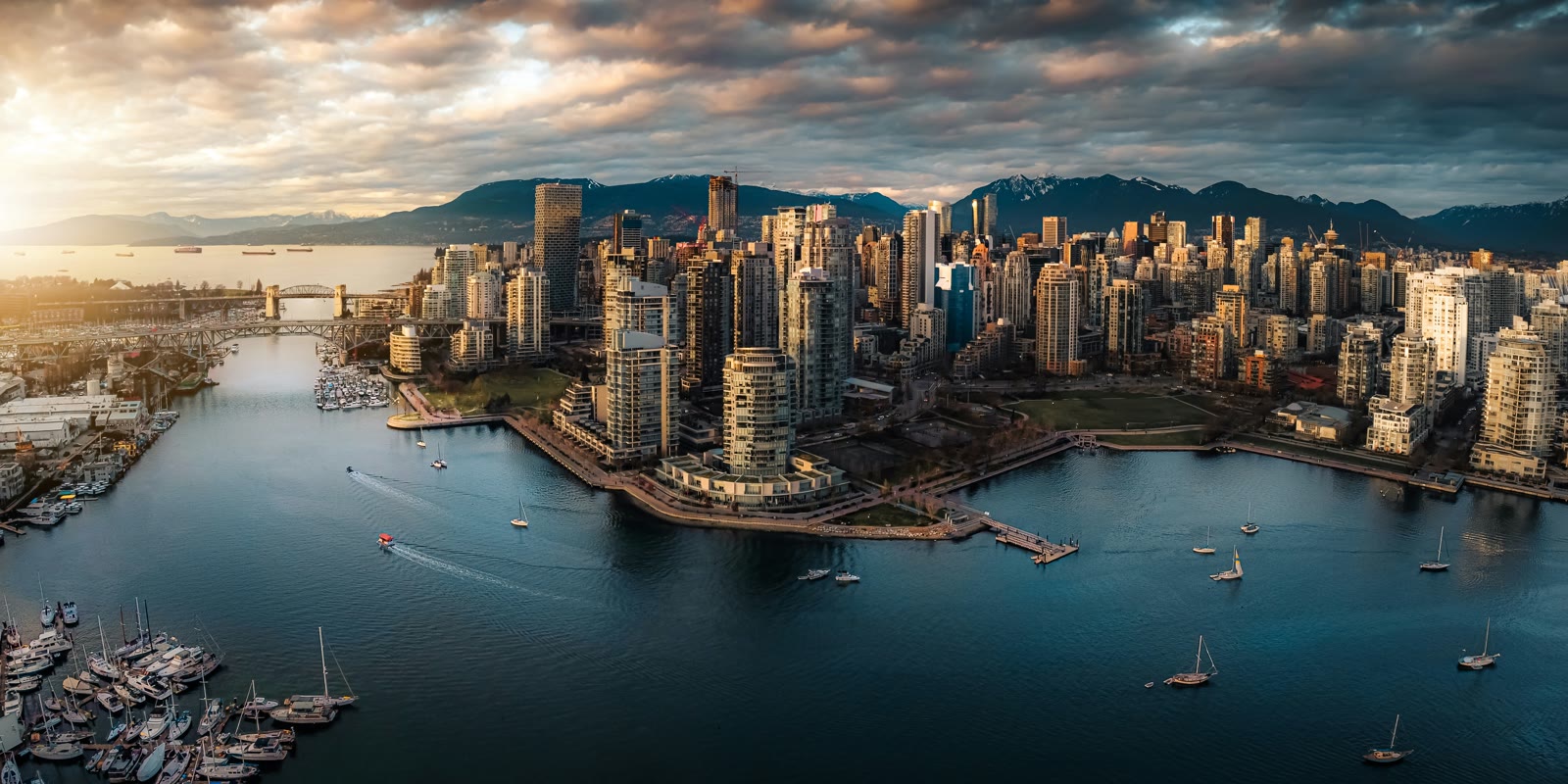
Vancouver sits on the southwest coast of British Columbia, on a peninsula bordered by the Pacific Ocean to the west, Burrard Inlet to the north, and the Fraser River to the south. The Coast Mountains, including the North Shore peaks of Grouse, Cypress, and Seymour, rise directly behind the city and create a rain shadow effect: the mountains force moist Pacific air upward, wringing out precipitation on the coastal slopes while leaving the interior Fraser Valley significantly drier. The city is 230km north of Seattle, Washington, and 125km northwest of the US border at Blaine. Vancouver Island, a 32,000-square-kilometre landmass, sits 40km across the Strait of Georgia and shields the city from the full force of Pacific storms. The result is a climate that is warmer in winter and cooler in summer than most locations at this latitude. Vancouver’s growing season averages 221 days, from late March through early November, longer than any other major Canadian city.
Vancouver Quick Facts
- Warmest months: July and August, both averaging 22.4 degrees C (72 degrees F) highs
- Coldest month: January, average high 6.9 degrees C (44 degrees F), low 1.4 degrees C (35 degrees F)
- Wettest month: November (188mm), driest month: July (35mm)
- Annual rainfall: approximately 1,150mm, falling on 164 days
- Annual snowfall: 38cm, mostly December through February
- Sea temperature range: 7 degrees C (January) to 16 degrees C (July/August)
- Sunniest month: July (290 hours), cloudiest month: December (55 hours)
- Best beach months: July and August, when English Bay and Kitsilano beaches are packed
- Ski season: December through April on the North Shore mountains
- Population: approximately 675,000 (city), 2.7 million (Metro Vancouver)
- Time zone: Pacific Time (UTC-8, UTC-7 during daylight saving, March to November)
- Airport: Vancouver International Airport (YVR), 12km south of downtown in Richmond
Suggested Hotels in Vancouver
Vancouver has accommodation for every budget. Here are three recommended options in the city center.
Fairmont Pacific Rim
The city’s premier five-star hotel at Canada Place, with a rooftop pool overlooking the harbor, a 4,000-square-foot gym, and nightly live jazz in the lobby. Best for luxury travelers and couples. Check rates and availability
Blue Horizon Hotel
A contemporary mid-range hotel on Robson Street with an indoor pool, hot tub, steam room, and corner rooms with full balconies and city views. Best for shoppers and first-time visitors. Check rates and availability
The Sylvia Hotel
Vancouver’s ivy-covered heritage hotel on English Bay, operating since 1912 with ocean-view rooms, a restaurant, and a lounge. Best for romantics and travelers who want character and beach access. Check rates and availability
- Vancouver Weather by Month: Month-by-month breakdown of temperatures, rainfall, sunshine, and sea temperatures. Includes a comparison table and seasonal overview.
- Best Time to Visit Vancouver: When to visit for the best weather, lowest prices, fewest crowds, and specific events. Covers every season with honest assessments.
- Things to Do in Vancouver: Detailed guide to the city’s top attractions with ticket prices, opening hours, and practical tips. Covers Stanley Park, Grouse Mountain, Granville Island, museums, and free activities.
- Vancouver Events and Festivals: Annual calendar of celebrations from the Cherry Blossom Festival to the Christmas Market. Includes dates, locations, and what to expect at each event.
- Best Neighborhoods in Vancouver: Area-by-area breakdown of Downtown, West End, Yaletown, Gastown, Commercial Drive, Kitsilano, and Mount Pleasant. Find the right neighborhood for your trip.
- Where to Stay in Vancouver: Hotel recommendations by area and budget, from five-star waterfront properties to budget-friendly heritage hotels. Includes specific Booking.com links.
- Vancouver Travel Tips and FAQ: Airport transport, SkyTrain guide, tipping customs, visa requirements, safety advice, day trip ideas, and recommended hotels.
Where is Vancouver and What Influences Its Weather
Vancouver sits on the southwest coast of British Columbia, on a peninsula bordered by the Pacific Ocean to the west, Burrard Inlet to the north, and the Fraser River to the south. The Coast Mountains, including the North Shore peaks of Grouse, Cypress, and Seymour, rise directly behind the city and create a rain shadow effect: the mountains force moist Pacific air upward, wringing out precipitation on the coastal slopes while leaving the interior Fraser Valley significantly drier. The city is 230km north of Seattle, Washington, and 125km northwest of the US border at Blaine. Vancouver Island, a 32,000-square-kilometre landmass, sits 40km across the Strait of Georgia and shields the city from the full force of Pacific storms. The result is a climate that is warmer in winter and cooler in summer than most locations at this latitude. Vancouver’s growing season averages 221 days, from late March through early November, longer than any other major Canadian city.
Vancouver Quick Facts
- Warmest months: July and August, both averaging 22.4 degrees C (72 degrees F) highs
- Coldest month: January, average high 6.9 degrees C (44 degrees F), low 1.4 degrees C (35 degrees F)
- Wettest month: November (188mm), driest month: July (35mm)
- Annual rainfall: approximately 1,150mm, falling on 164 days
- Annual snowfall: 38cm, mostly December through February
- Sea temperature range: 7 degrees C (January) to 16 degrees C (July/August)
- Sunniest month: July (290 hours), cloudiest month: December (55 hours)
- Best beach months: July and August, when English Bay and Kitsilano beaches are packed
- Ski season: December through April on the North Shore mountains
- Population: approximately 675,000 (city), 2.7 million (Metro Vancouver)
- Time zone: Pacific Time (UTC-8, UTC-7 during daylight saving, March to November)
- Airport: Vancouver International Airport (YVR), 12km south of downtown in Richmond
Suggested Hotels in Vancouver
Vancouver has accommodation for every budget. Here are three recommended options in the city center.
Fairmont Pacific Rim
The city’s premier five-star hotel at Canada Place, with a rooftop pool overlooking the harbor, a 4,000-square-foot gym, and nightly live jazz in the lobby. Best for luxury travelers and couples. Check rates and availability
Blue Horizon Hotel
A contemporary mid-range hotel on Robson Street with an indoor pool, hot tub, steam room, and corner rooms with full balconies and city views. Best for shoppers and first-time visitors. Check rates and availability
The Sylvia Hotel
Vancouver’s ivy-covered heritage hotel on English Bay, operating since 1912 with ocean-view rooms, a restaurant, and a lounge. Best for romantics and travelers who want character and beach access. Check rates and availability
Vancouver Travel Guides
Our complete Vancouver travel guide covers everything you need to plan your trip. Each article focuses on a specific topic with practical details, real prices, and local tips.
- Vancouver Weather by Month: Month-by-month breakdown of temperatures, rainfall, sunshine, and sea temperatures. Includes a comparison table and seasonal overview.
- Best Time to Visit Vancouver: When to visit for the best weather, lowest prices, fewest crowds, and specific events. Covers every season with honest assessments.
- Things to Do in Vancouver: Detailed guide to the city’s top attractions with ticket prices, opening hours, and practical tips. Covers Stanley Park, Grouse Mountain, Granville Island, museums, and free activities.
- Vancouver Events and Festivals: Annual calendar of celebrations from the Cherry Blossom Festival to the Christmas Market. Includes dates, locations, and what to expect at each event.
- Best Neighborhoods in Vancouver: Area-by-area breakdown of Downtown, West End, Yaletown, Gastown, Commercial Drive, Kitsilano, and Mount Pleasant. Find the right neighborhood for your trip.
- Where to Stay in Vancouver: Hotel recommendations by area and budget, from five-star waterfront properties to budget-friendly heritage hotels. Includes specific Booking.com links.
- Vancouver Travel Tips and FAQ: Airport transport, SkyTrain guide, tipping customs, visa requirements, safety advice, day trip ideas, and recommended hotels.
Where is Vancouver and What Influences Its Weather
Vancouver sits on the southwest coast of British Columbia, on a peninsula bordered by the Pacific Ocean to the west, Burrard Inlet to the north, and the Fraser River to the south. The Coast Mountains, including the North Shore peaks of Grouse, Cypress, and Seymour, rise directly behind the city and create a rain shadow effect: the mountains force moist Pacific air upward, wringing out precipitation on the coastal slopes while leaving the interior Fraser Valley significantly drier. The city is 230km north of Seattle, Washington, and 125km northwest of the US border at Blaine. Vancouver Island, a 32,000-square-kilometre landmass, sits 40km across the Strait of Georgia and shields the city from the full force of Pacific storms. The result is a climate that is warmer in winter and cooler in summer than most locations at this latitude. Vancouver’s growing season averages 221 days, from late March through early November, longer than any other major Canadian city.
Vancouver Quick Facts
- Warmest months: July and August, both averaging 22.4 degrees C (72 degrees F) highs
- Coldest month: January, average high 6.9 degrees C (44 degrees F), low 1.4 degrees C (35 degrees F)
- Wettest month: November (188mm), driest month: July (35mm)
- Annual rainfall: approximately 1,150mm, falling on 164 days
- Annual snowfall: 38cm, mostly December through February
- Sea temperature range: 7 degrees C (January) to 16 degrees C (July/August)
- Sunniest month: July (290 hours), cloudiest month: December (55 hours)
- Best beach months: July and August, when English Bay and Kitsilano beaches are packed
- Ski season: December through April on the North Shore mountains
- Population: approximately 675,000 (city), 2.7 million (Metro Vancouver)
- Time zone: Pacific Time (UTC-8, UTC-7 during daylight saving, March to November)
- Airport: Vancouver International Airport (YVR), 12km south of downtown in Richmond
Suggested Hotels in Vancouver
Vancouver has accommodation for every budget. Here are three recommended options in the city center.
Fairmont Pacific Rim
The city’s premier five-star hotel at Canada Place, with a rooftop pool overlooking the harbor, a 4,000-square-foot gym, and nightly live jazz in the lobby. Best for luxury travelers and couples. Check rates and availability
Blue Horizon Hotel
A contemporary mid-range hotel on Robson Street with an indoor pool, hot tub, steam room, and corner rooms with full balconies and city views. Best for shoppers and first-time visitors. Check rates and availability
The Sylvia Hotel
Vancouver’s ivy-covered heritage hotel on English Bay, operating since 1912 with ocean-view rooms, a restaurant, and a lounge. Best for romantics and travelers who want character and beach access. Check rates and availability
- Winter (December to February): Cool and rainy in the city, snowy on the mountains. Ski season at Grouse, Cypress, and Seymour peaks. Hotel prices are at their lowest. The Vancouver Christmas Market and Dine Out Vancouver Festival are highlights.
- Spring (March to May): Cherry blossoms peak in April, rainfall drops from 113mm to 65mm, and temperatures climb from 10 degrees C (51 degrees F) to 17 degrees C (62 degrees F). The Sun Run in April and patio season beginning in May mark the city’s awakening.
- Summer (June to August): Warm, dry, and sunny with up to 290 hours of sunshine in July. Beaches, patios, the Celebration of Light fireworks, Pride, and the Jazz Festival make this the busiest season. Book hotels months ahead.
- Autumn (September to November): September still feels like summer, October brings stunning fall foliage, and November is reliably wet. The International Film Festival and Fringe Festival run in September, and crowds thin considerably after mid-September.
Vancouver Travel Guides
Our complete Vancouver travel guide covers everything you need to plan your trip. Each article focuses on a specific topic with practical details, real prices, and local tips.
- Vancouver Weather by Month: Month-by-month breakdown of temperatures, rainfall, sunshine, and sea temperatures. Includes a comparison table and seasonal overview.
- Best Time to Visit Vancouver: When to visit for the best weather, lowest prices, fewest crowds, and specific events. Covers every season with honest assessments.
- Things to Do in Vancouver: Detailed guide to the city’s top attractions with ticket prices, opening hours, and practical tips. Covers Stanley Park, Grouse Mountain, Granville Island, museums, and free activities.
- Vancouver Events and Festivals: Annual calendar of celebrations from the Cherry Blossom Festival to the Christmas Market. Includes dates, locations, and what to expect at each event.
- Best Neighborhoods in Vancouver: Area-by-area breakdown of Downtown, West End, Yaletown, Gastown, Commercial Drive, Kitsilano, and Mount Pleasant. Find the right neighborhood for your trip.
- Where to Stay in Vancouver: Hotel recommendations by area and budget, from five-star waterfront properties to budget-friendly heritage hotels. Includes specific Booking.com links.
- Vancouver Travel Tips and FAQ: Airport transport, SkyTrain guide, tipping customs, visa requirements, safety advice, day trip ideas, and recommended hotels.
Where is Vancouver and What Influences Its Weather
Vancouver sits on the southwest coast of British Columbia, on a peninsula bordered by the Pacific Ocean to the west, Burrard Inlet to the north, and the Fraser River to the south. The Coast Mountains, including the North Shore peaks of Grouse, Cypress, and Seymour, rise directly behind the city and create a rain shadow effect: the mountains force moist Pacific air upward, wringing out precipitation on the coastal slopes while leaving the interior Fraser Valley significantly drier. The city is 230km north of Seattle, Washington, and 125km northwest of the US border at Blaine. Vancouver Island, a 32,000-square-kilometre landmass, sits 40km across the Strait of Georgia and shields the city from the full force of Pacific storms. The result is a climate that is warmer in winter and cooler in summer than most locations at this latitude. Vancouver’s growing season averages 221 days, from late March through early November, longer than any other major Canadian city.
Vancouver Quick Facts
- Warmest months: July and August, both averaging 22.4 degrees C (72 degrees F) highs
- Coldest month: January, average high 6.9 degrees C (44 degrees F), low 1.4 degrees C (35 degrees F)
- Wettest month: November (188mm), driest month: July (35mm)
- Annual rainfall: approximately 1,150mm, falling on 164 days
- Annual snowfall: 38cm, mostly December through February
- Sea temperature range: 7 degrees C (January) to 16 degrees C (July/August)
- Sunniest month: July (290 hours), cloudiest month: December (55 hours)
- Best beach months: July and August, when English Bay and Kitsilano beaches are packed
- Ski season: December through April on the North Shore mountains
- Population: approximately 675,000 (city), 2.7 million (Metro Vancouver)
- Time zone: Pacific Time (UTC-8, UTC-7 during daylight saving, March to November)
- Airport: Vancouver International Airport (YVR), 12km south of downtown in Richmond
Suggested Hotels in Vancouver
Vancouver has accommodation for every budget. Here are three recommended options in the city center.
Fairmont Pacific Rim
The city’s premier five-star hotel at Canada Place, with a rooftop pool overlooking the harbor, a 4,000-square-foot gym, and nightly live jazz in the lobby. Best for luxury travelers and couples. Check rates and availability
Blue Horizon Hotel
A contemporary mid-range hotel on Robson Street with an indoor pool, hot tub, steam room, and corner rooms with full balconies and city views. Best for shoppers and first-time visitors. Check rates and availability
The Sylvia Hotel
Vancouver’s ivy-covered heritage hotel on English Bay, operating since 1912 with ocean-view rooms, a restaurant, and a lounge. Best for romantics and travelers who want character and beach access. Check rates and availability
Vancouver is Canada’s mildest major city, a place where temperate rainforest meets the Pacific Ocean and the Coast Mountains rise from the shoreline. Located at 49.3 degrees north in British Columbia, the city shares the same latitude as Paris but enjoys a far more moderate climate thanks to the warming influence of the North Pacific Current. Winters are cool and rainy rather than freezing, and summers are dry and warm without the humidity of eastern Canadian cities. Vancouver averages 10.4 degrees C (50.7 degrees F) annually at the airport, with July highs of 22 degrees C (72 degrees F) and January lows just above freezing at 1.4 degrees C (35 degrees F). The city’s legendary rainfall, about 1,150mm annually, falls mostly between October and April, while July and August can go weeks without a drop.
Vancouver Weather at a Glance
Vancouver has an oceanic climate (Koppen Cfb) with four distinct but mild seasons. Winter (December to February) brings temperatures of 1 to 8 degrees C (35 to 47 degrees F) with rain on about 17 days per month. Snow falls occasionally, averaging 38cm per year, but rarely stays on the ground more than a few days except on the North Shore mountains. Spring (March to May) warms from 3 degrees C (38 degrees F) to 9 degrees C (48 degrees F), with the city’s 40,000 cherry trees blooming in late March and April. Summer (June to August) is the reward: 19 to 22 degrees C (67 to 72 degrees F), just 35 to 54mm of rain per month, and 230 to 290 hours of monthly sunshine. Autumn (September to November) starts pleasantly before November brings 188mm of rain and the gray sets in for the winter.
Vancouver Seasonal Snapshot
- Winter (December to February): Cool and rainy in the city, snowy on the mountains. Ski season at Grouse, Cypress, and Seymour peaks. Hotel prices are at their lowest. The Vancouver Christmas Market and Dine Out Vancouver Festival are highlights.
- Spring (March to May): Cherry blossoms peak in April, rainfall drops from 113mm to 65mm, and temperatures climb from 10 degrees C (51 degrees F) to 17 degrees C (62 degrees F). The Sun Run in April and patio season beginning in May mark the city’s awakening.
- Summer (June to August): Warm, dry, and sunny with up to 290 hours of sunshine in July. Beaches, patios, the Celebration of Light fireworks, Pride, and the Jazz Festival make this the busiest season. Book hotels months ahead.
- Autumn (September to November): September still feels like summer, October brings stunning fall foliage, and November is reliably wet. The International Film Festival and Fringe Festival run in September, and crowds thin considerably after mid-September.
Vancouver Travel Guides
Our complete Vancouver travel guide covers everything you need to plan your trip. Each article focuses on a specific topic with practical details, real prices, and local tips.
- Vancouver Weather by Month: Month-by-month breakdown of temperatures, rainfall, sunshine, and sea temperatures. Includes a comparison table and seasonal overview.
- Best Time to Visit Vancouver: When to visit for the best weather, lowest prices, fewest crowds, and specific events. Covers every season with honest assessments.
- Things to Do in Vancouver: Detailed guide to the city’s top attractions with ticket prices, opening hours, and practical tips. Covers Stanley Park, Grouse Mountain, Granville Island, museums, and free activities.
- Vancouver Events and Festivals: Annual calendar of celebrations from the Cherry Blossom Festival to the Christmas Market. Includes dates, locations, and what to expect at each event.
- Best Neighborhoods in Vancouver: Area-by-area breakdown of Downtown, West End, Yaletown, Gastown, Commercial Drive, Kitsilano, and Mount Pleasant. Find the right neighborhood for your trip.
- Where to Stay in Vancouver: Hotel recommendations by area and budget, from five-star waterfront properties to budget-friendly heritage hotels. Includes specific Booking.com links.
- Vancouver Travel Tips and FAQ: Airport transport, SkyTrain guide, tipping customs, visa requirements, safety advice, day trip ideas, and recommended hotels.
Where is Vancouver and What Influences Its Weather
Vancouver sits on the southwest coast of British Columbia, on a peninsula bordered by the Pacific Ocean to the west, Burrard Inlet to the north, and the Fraser River to the south. The Coast Mountains, including the North Shore peaks of Grouse, Cypress, and Seymour, rise directly behind the city and create a rain shadow effect: the mountains force moist Pacific air upward, wringing out precipitation on the coastal slopes while leaving the interior Fraser Valley significantly drier. The city is 230km north of Seattle, Washington, and 125km northwest of the US border at Blaine. Vancouver Island, a 32,000-square-kilometre landmass, sits 40km across the Strait of Georgia and shields the city from the full force of Pacific storms. The result is a climate that is warmer in winter and cooler in summer than most locations at this latitude. Vancouver’s growing season averages 221 days, from late March through early November, longer than any other major Canadian city.
Vancouver Quick Facts
- Warmest months: July and August, both averaging 22.4 degrees C (72 degrees F) highs
- Coldest month: January, average high 6.9 degrees C (44 degrees F), low 1.4 degrees C (35 degrees F)
- Wettest month: November (188mm), driest month: July (35mm)
- Annual rainfall: approximately 1,150mm, falling on 164 days
- Annual snowfall: 38cm, mostly December through February
- Sea temperature range: 7 degrees C (January) to 16 degrees C (July/August)
- Sunniest month: July (290 hours), cloudiest month: December (55 hours)
- Best beach months: July and August, when English Bay and Kitsilano beaches are packed
- Ski season: December through April on the North Shore mountains
- Population: approximately 675,000 (city), 2.7 million (Metro Vancouver)
- Time zone: Pacific Time (UTC-8, UTC-7 during daylight saving, March to November)
- Airport: Vancouver International Airport (YVR), 12km south of downtown in Richmond
Suggested Hotels in Vancouver
Vancouver has accommodation for every budget. Here are three recommended options in the city center.
Fairmont Pacific Rim
The city’s premier five-star hotel at Canada Place, with a rooftop pool overlooking the harbor, a 4,000-square-foot gym, and nightly live jazz in the lobby. Best for luxury travelers and couples. Check rates and availability
Blue Horizon Hotel
A contemporary mid-range hotel on Robson Street with an indoor pool, hot tub, steam room, and corner rooms with full balconies and city views. Best for shoppers and first-time visitors. Check rates and availability
The Sylvia Hotel
Vancouver’s ivy-covered heritage hotel on English Bay, operating since 1912 with ocean-view rooms, a restaurant, and a lounge. Best for romantics and travelers who want character and beach access. Check rates and availability
