

 Sunny
Sunny  Light rain shower
  Mist
Mist  Partly Cloudy
 This post may contain affiliate links. If you purchase through them, I may earn a small commission at no extra cost to you. Thanks for supporting our small business.
Petrópolis is Brazil’s Imperial City, a mountain retreat in the Serra dos Órgãos founded in 1843 by Emperor Pedro II as a summer escape from Rio de Janeiro, 68 km (42 mi) down the BR-040. At 838 m (2,749 ft) it runs about 6°C (11°F) cooler than the coast, which is the whole point of coming. This Petrópolis travel guide covers the climate, the seasons, the districts and the hotels so you can plan the trip with real numbers instead of guesswork.
Welcome to Petrópolis
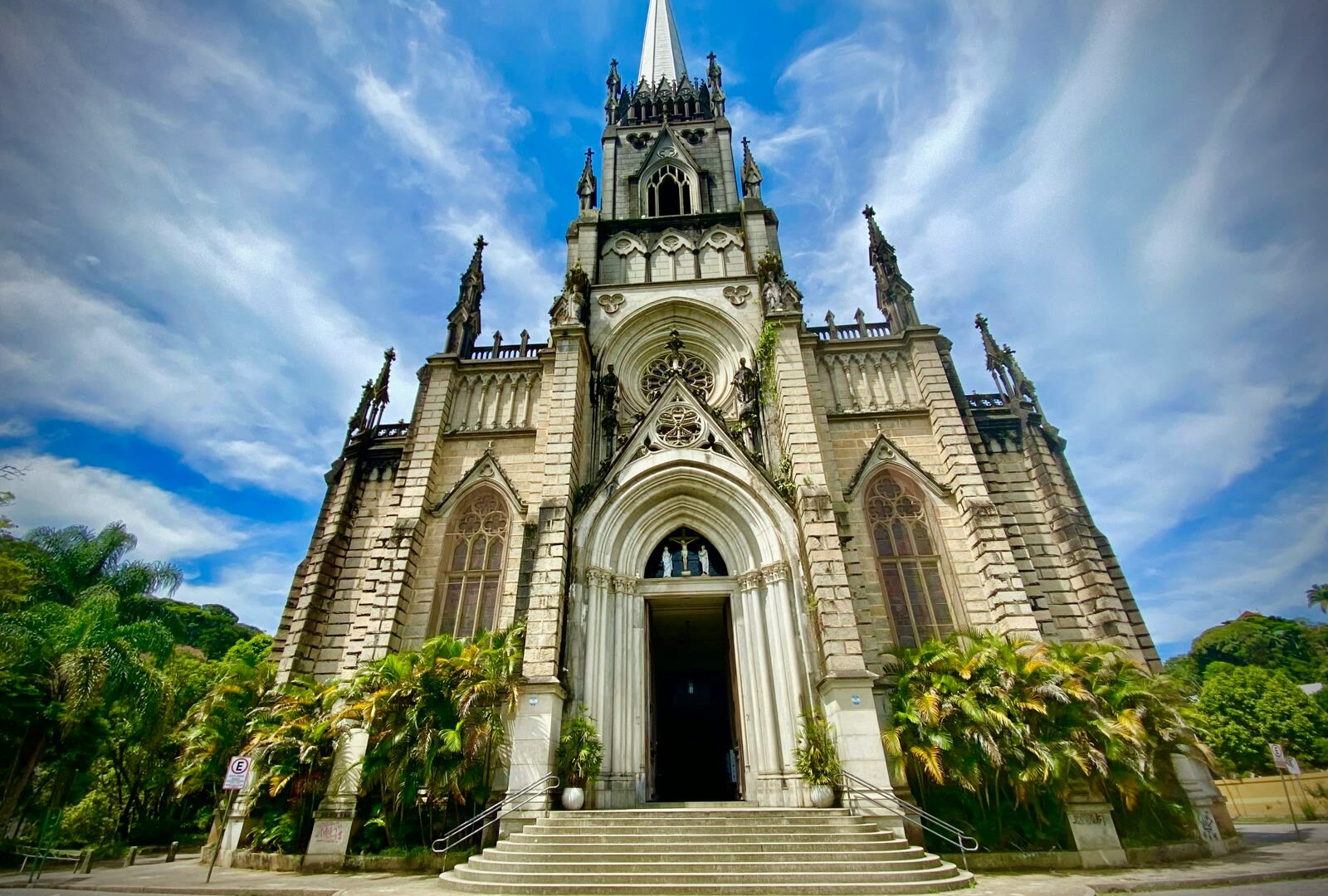
The city grew around Pedro II’s summer palace, now the Museu Imperial, and still feels like a 19th-century European town dropped into the Atlantic forest. You walk between the imperial palace, a neo-Gothic cathedral and a glass conservatory on cobbled streets, then drive 15 km up the valley to Itaipava for restaurants and mountain air. Two or three days is the right length for a first visit, and the city works as a weekend break, a festival trip or a day out of Rio.
Petrópolis Weather at a Glance
Petrópolis has a subtropical highland climate (Cwb), with a mean annual temperature of 19.7°C (67.5°F) and about 1,700 mm (67 in) of rain concentrated in summer. January, the warmest and wettest month, averages 23°C (73°F) with around 230 mm of rain, while July, the coolest and driest, averages 17°C (63°F) with about 45 mm. The temperature rarely drops below 7°C (44°F) or climbs above 33°C (91°F), so extremes are mild by Brazilian standards.
The pattern is simple: a hot, stormy, humid summer from December to March, and a cool, dry, clear winter from June to August, with the dry season being the best time for walking and hiking. Afternoon thunderstorms are a daily summer event, while winter brings morning fog that clears by 10:00. Get the full numbers in the weather by month article.
Seasonal Snapshot
- Summer (December to February): hot and stormy, highs around 27°C (81°F), 190 to 230 mm of rain a month. Museums and indoor sights, not hiking.
- Autumn (March to May): drying out and mild, 19°C to 23°C (66°F to 73°F), rain falling to 70 mm by May. The best balance of weather and quiet.
- Winter (June to August): clear and dry, highs around 22°C (72°F), lows near 10°C (50°F), 45 to 50 mm of rain. Bauernfest and the Winter Festival in June and July.
- Spring (September to November): warming with rain returning, 19°C to 21°C (66°F to 70°F). October is still a good bet before the December peak.
Plan Your Trip to Petrópolis
- Weather by month for the temperature, rainfall and sunshine numbers month by month, plus what to pack.
- Best time to visit to line up the best weather, lowest prices and the festival dates.
- Things to do covering the Museu Imperial, palaces, the Bohemia brewery and the Serra trails.
- Events and festivals for the Bauernfest, Winter Festival and the rest of the calendar.
- Neighborhoods to see how the centre, Itaipava and the Serra districts differ.
- Where to stay with specific hotels in the centre and Itaipava for every budget.
- Travel tips and FAQ for the airports, bus, money, safety and the questions visitors ask most.
Where to Stay in Petrópolis
Stay in the historic centre if you want to walk to the museums, or in Itaipava if you want a resort and the region’s best restaurants. The centre holds heritage hotels like the Hotel Casablanca Imperial and the budget Kastel Grão Pará, while Itaipava has the Granja Brasil apartment resort and the Quinta da Paz Resort. Prices climb sharply on weekends and during the July festivals, so book ahead. The where to stay guide breaks down every area and hotel tier in detail.
Suggested Hotels in Petrópolis
Granja Brasil
A large apartment resort in Itaipava with an outdoor pool, gym, tennis court and an on-site restaurant, offering full apartments rather than standard hotel rooms. Best for families and longer stays who want kitchen space and resort amenities. ‘ + booking(HOTEL_GRANJA) + ‘
Hotel Casablanca Imperial
A colonial-style hotel on Rua da Imperatriz 286 in the historic centre, rated 9.8 for location by guests, with a well-reviewed breakfast. Best for first-time visitors who want every major sight within walking distance. ‘ + booking(HOTEL_CASABLANCA) + ‘
Kastel Grão Pará
A central, no-frills hotel 500 m from the Museu Imperial with free breakfast and Wi-Fi and an indoor pool, at the lower end of centre prices. Best for budget travelers who want to stay in the middle of the action. ‘ + booking(HOTEL_GRAO) + ‘
Quick Facts About Petrópolis
- Best weather: May to August, when rainfall drops to 45 to 70 mm a month.
- Warmest month: February, averaging 24°C (75°F).
- Coolest month: July, averaging 17°C (63°F).
- Wettest month: January, about 230 mm of rain.
- Altitude: 838 m (2,749 ft), roughly 6°C (11°F) cooler than Rio de Janeiro.
- Distance from Rio: 68 km (42 mi), about 1 hour 15 minutes by car or 1 hour 30 minutes by bus.
- Key event: Bauernfest, the German festival, from mid-June to early July.
Location and Climate Influences
Petrópolis sits in the Serra dos Órgãos, part of the coastal range that traps moisture coming off the Atlantic, which is why the city is so much wetter and cooler than Rio on the other side of the mountains. The altitude of 838 m drives the temperature difference, and the valley setting funnels cloud into the centre on winter mornings. The result is a mountain climate with a reliable dry season from May to August, the months when the city is at its best for walking, hiking and the festivals.
