

 Overcast
 Sunny
 Partly Cloudy
 Light rain shower
This post may contain affiliate links. If you purchase through them, I may earn a small commission at no extra cost to you. Thanks for supporting our small business.
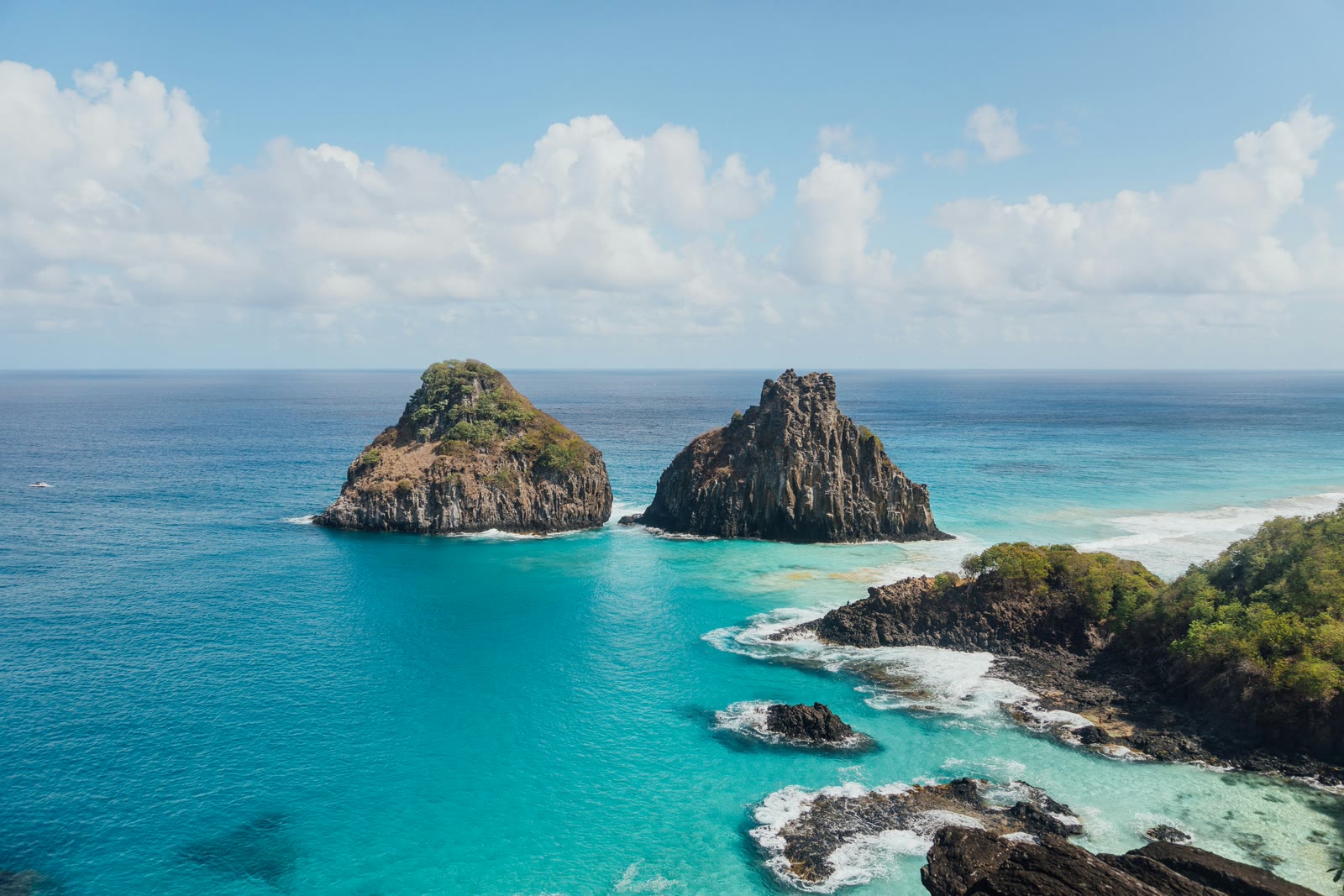
Fernando de Noronha is a UNESCO-protected volcanic archipelago 354 km off Brazil’s northeast coast in the state of Pernambuco. The main island has a tropical climate with a dry season from August to January and a wet season from February to July, holding between 24 and 31°C all year with the sea at 26 to 29°C. Roughly 3,100 people live there, and a strict permit system caps visitor numbers to protect beaches, reefs, and the resident spinner-dolphin pod.
Welcome to Fernando de Noronha
Travelers make the trip for a short list of reasons: Baía do Sancho, repeatedly named the world’s best beach; the spinner dolphins of Baía dos Golfinhos, the largest resident pod on the planet; and water so clear that snorkeling straight off the sand beats most boat trips. The trade-off is cost and planning. Two mandatory fees, pricey flights, and pousada rates that rival big-city hotels mean a four-day visit can easily run R$ 4,000 to R$ 8,000 per person before you set foot on a beach.
In exchange you get a place with no traffic lights, no big resorts, and hard daily limits on how many people can enter the marine national park. The beaches are genuinely empty by Caribbean standards, and the wildlife is protected seriously enough that the best dolphin bay is closed to boats entirely. This guide maps the weather, the seasons, and where to stay so you can plan the trip without surprises.
Seasonal Snapshot
- Dry season (August to January): the best weather, with September to November the driest at 12 to 25 mm a month and 8 to 9 hours of sun a day. Peak prices hit late December around Réveillon.
- Wet season (February to July): March and April are the wettest at 220 to 270 mm, mostly heavy afternoon downpours; the island is greener and turtles nest on Praia do Leão.
- Best diving: August to December, when visibility passes 30 m and the sea runs 26 to 28°C.
- Best surfing: January to March, when the Cacimba do Padre break is most consistent.
Fernando de Noronha Travel Guide
- Weather by Month: temperatures, rainfall, sea temperature, and sunshine hour by hour across the year.
- Best Time to Visit: the driest months, the cheapest months, and which ones to avoid.
- Things to Do: 15 beaches, viewpoints, tours, and historic sites with prices and access rules.
- Events and Festivals: Réveillon, the surf contests, Festa de São Pedro, and the sailing regatta.
- Neighborhoods: the village, the beach lanes, and the remote east side, and who each suits.
- Where to Stay: pousadas by area, from luxury bungalows to budget guest houses.
- Travel Tips and FAQ: flights, permits, money, visas, and safety in one place.
Location and Climate
The archipelago lies at 3 degrees 51 minutes south, just below the Equator, where the southeast trade winds meet the open Atlantic. That position drives a simple rhythm: the Intertropical Convergence Zone brings rain from February to July, then retreats and leaves the island dry from August to January. The ocean moderates the heat, so highs stay near 30°C instead of the 35°C-plus you see in mainland Pernambuco. Wind is strongest from August to October, and humidity sits between 70 and 85 percent year-round.
Quick Facts
- Warmest months: January to March, with highs of 31°C and sea temperatures of 28 to 29°C.
- Coolest month: August, with highs around 29°C and lows of 23°C.
- Wettest month: April, around 270 mm of rain.
- Driest months: October and November, around 12 mm each.
- Best beach months: August to November.
- Sea temperature: 26 to 29°C all year.
- Sunshine: 6 hours a day in the wet season, 8 to 9 in the dry season.
- Airport: Fernando de Noronha Airport (FEN).
Where to Stay in Fernando de Noronha
The island has no chain resorts, just pousadas and small guest houses spread between the village, the beachfront lanes near Conceição, and the remote east side. Prices run from about R$ 250 a night inland to over R$ 1,500 for a luxury bungalow near Sueste Bay. The village is the convenient all-rounder, Floresta Nova is the quiet mid-island option, and Sueste is where the top-end properties cluster.
Suggested Hotels in Fernando de Noronha
Pousada Maravilha
The island’s flagship luxury pousada, 50 m from Baía do Sueste, with an infinity pool and panoramic sea views from every bungalow. Best for honeymooners and travelers who want the top-end experience. Check rates and availability
Dolphin Hotel
A full-service mid-range hotel in the center of Vila dos Remédios with a pool, hot tub, and cable-TV rooms a short walk from Praia do Cachorro. Best for first-time visitors who want restaurants and the historic center on their doorstep. Check rates and availability
Pousada Maria Bonita Noronha
A family-run budget pousada with air-conditioned rooms, balconies, and a vegetarian-friendly breakfast, 12 minutes on foot from the village. Best for couples and solo travelers keeping costs down. Check rates and availability
