


 Cloudy
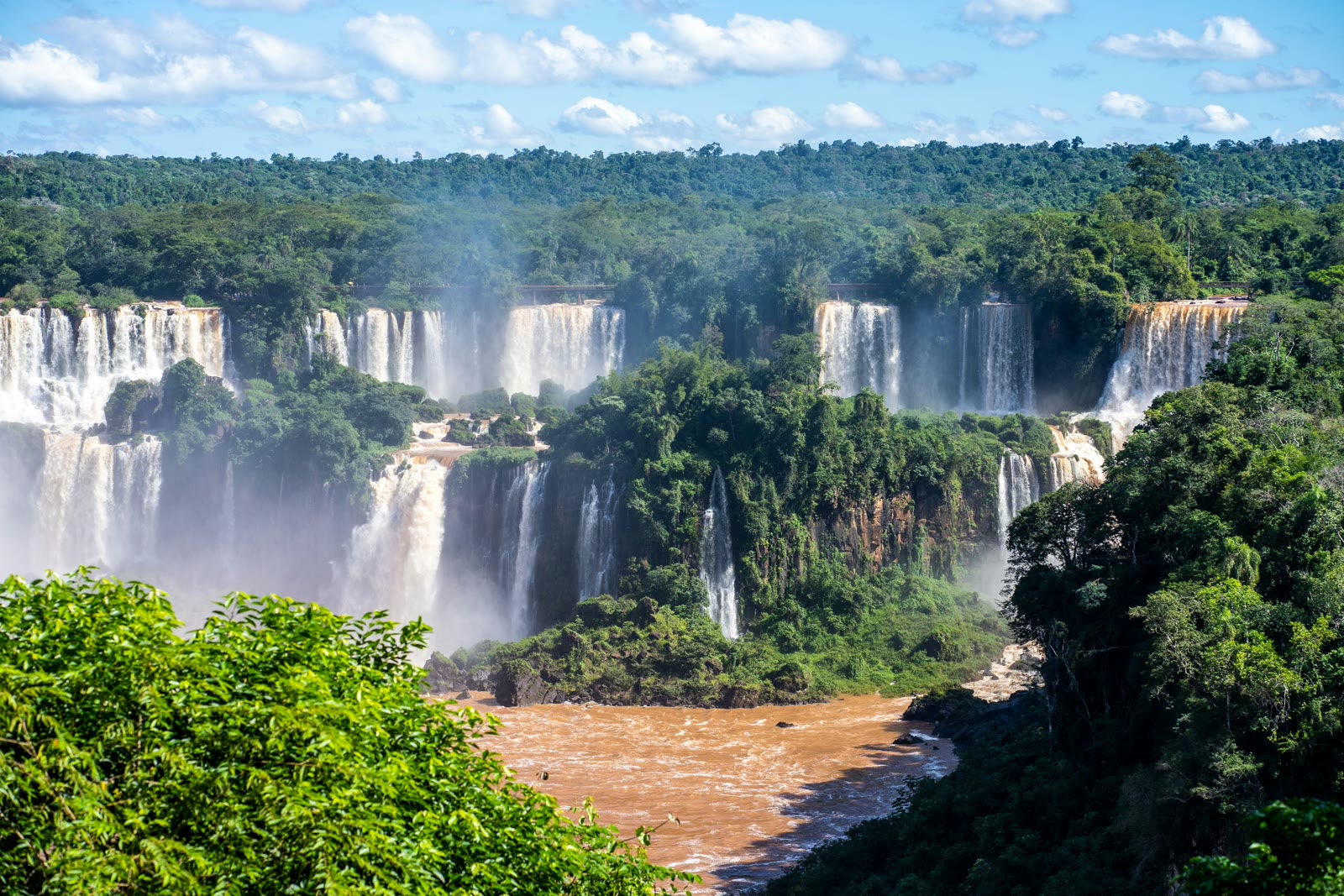
 Foz do Iguaçu is home to the largest waterfall system on the planet , 275 individual cascades stretching 2.7 km across the Iguaçu River where Brazil meets Argentina. The city of 260,000 sits at the tri-border where Brazil, Argentina, and Paraguay converge, giving it a unique multicultural character you will not find anywhere else in South America. Beyond the falls, Foz has the world’s second-largest hydroelectric dam, a trinational landmark, and some of Brazil’s best-preserved Atlantic rainforest. This guide covers when to visit, what to do, where to stay, and everything practical you need to plan your trip.
Where Is Foz do Iguaçu and What Makes It Special
Foz do Iguaçu sits at the western tip of Paraná state in southern Brazil, where the Iguaçu River meets the Paraná River. The city is 640 km west of Curitiba (the state capital) and 1,060 km from São Paulo. The Iguaçu Falls themselves sit 20 km southeast of the city center inside Iguaçu National Park, a UNESCO World Heritage site that protects 185,000 hectares of Atlantic Forest , one of the most biodiverse ecosystems on Earth with over 2,000 plant species, 400 bird species, and mammals including jaguars, tapirs, and howler monkeys. The climate is humid subtropical with distinct wet and dry seasons, hot summers, and mild winters. Elevation is 173 meters (568 ft) above sea level.
Weather at a Glance
Foz do Iguaçu has a humid subtropical climate (Cfa) with hot summers and mild winters. Summer (December-February) brings highs of 32-33°C (90-91°F), high humidity, and frequent afternoon thunderstorms , the falls roar at maximum volume but you’ll sweat on the walkways. Winter (June-August) is mild and dry with highs around 23°C (73°F), lows of 11°C (52°F), and the clearest skies for photography, though secondary falls reduce to a trickle. The shoulder seasons (March-May and September-November) offer the best balance of comfortable temperatures, manageable crowds, and good waterfall volume. Annual rainfall averages 1,700 mm (67 inches).
Seasonal Snapshot
- Summer (December-February): Hottest and wettest, 32-33°C highs, 170-180 mm rain per month, falls at maximum power, peak crowds and hotel rates in January
- Autumn (March-May): Cooling trend, 24-31°C highs, moderate rain, water volume still high through March, May is one of the best months overall with purple jacaranda blooms
- Winter (June-August): Mild days 23-25°C, cool nights 11-13°C, driest season with 90-110 mm rain, clearest skies for photography, lower waterfall volume but best visibility
- Spring (September-November): Warming trend, 27-31°C highs, rainfall rises through October (wettest month at 190 mm), orchids and bromeliads bloom along the trails
Quick Facts
- Best months for weather: April, May, September
- Best months for maximum waterfall power: January, February
- Warmest month: January (33°C / 91°F average high)
- Coolest month: July (11°C / 52°F average low)
- Wettest month: October (190 mm / 7.5 inches)
- Driest month: July (90 mm / 3.5 inches)
- Park entry (Brazilian side): R$97 (foreigners), R$53 (Brazilian residents)
- Airport: Foz do Iguaçu International Airport (IGU), 13 km from downtown
Foz do Iguaçu Travel Guides
- Foz do Iguaçu Weather by Month: Complete month-by-month climate data with temperatures, rainfall, humidity, and what to expect at the falls each month.
- Best Time to Visit Foz do Iguaçu: When to go for ideal weather, maximum waterfall volume, lowest prices, smallest crowds, and the best photography conditions.
- Things to Do in Foz do Iguaçu: Every major attraction from the Brazilian and Argentine sides of the falls to the Itaipu Dam, Bird Park, and tri-border landmark with practical details.
- Events and Festivals in Foz do Iguaçu: Carnival at the sambadrome, the gastronomic festival, Christmas at Itaipu, New Year’s Eve, and the June Festivals with specific dates.
- Foz do Iguaçu Neighborhoods: Centro, Avenida das Cataratas corridor, Vila A, Jardim Central, and Jardim América broken down by location, character, and who each area suits.
- Where to Stay in Foz do Iguaçu: Hotels in every area and budget tier with specific recommendations for luxury resorts near the falls and city-center options.
- Foz do Iguaçu Travel Tips and FAQ: Airport transport, visas for Argentina and Paraguay, currency, safety, what to pack, tipping customs, and the park strategy that beats the crowds.
Suggested Hotels in Foz do Iguaçu
Wish Foz do Iguaçu
This 5-star resort sits amid tropical gardens with multiple swimming pools, a full-service spa, and direct shuttle service to Iguaçu Falls. Awarded Best Resort in South America in 2016 and Best Resort for Families in 2017 and 2018. Best for families and couples who want resort amenities within 20 minutes of the falls. Check rates and availability
Hotel Foz do Iguaçu
Centrally located mid-range hotel with outdoor swimming pool, on-site restaurant serving Brazilian and international cuisine, and a children’s playground. Less than 18 km from Iguaçu National Park with easy access to public buses heading to both the Brazilian and Argentine sides of the falls. Best for travelers who want a comfortable base in the city center without resort prices. Check rates and availability
Ibis Foz do Iguaçu
Reliable budget chain hotel in the city center on Rua Almirante Barroso, walkable to restaurants, shops, and the main bus terminal for falls-bound buses. Offers clean compact rooms with free WiFi, a 24-hour reception, and an on-site restaurant serving breakfast. Best for solo travelers and budget-conscious visitors who plan to spend their days at the falls. Check rates and availability
City Articles
Best Time to Visit Foz do Iguaçu
Foz do Iguaçu is a year-round destination but the experience varies dramatically with the seasons. The best time for you depends on what you prioritize: maximum waterfall power, comfortable hiking weather, lower prices, or smaller crowds. Here’s the complete breakdown with specific date ranges so you can match the conditions to your travel style. Best […]
Read MoreEvents and Festivals in Foz do Iguaçu
Foz do Iguaçu’s event calendar runs on two tracks: Brazilian national holidays and local festivals that reflect the city’s trinational character at the Argentina-Paraguay border. The biggest events cluster around Carnival (February/March) and the winter holiday season (July). Here are the specific festivals, dates, and what to expect at each one. Events & Festivals in […]
Read MoreFoz do Iguaçu Neighborhoods Guide
Foz do Iguaçu’s 15 neighborhoods fan out from the city center along two main axes: Avenida Brasil (east-west commercial spine) and Avenida das Cataratas (the 20 km road running south to the national park). Where you stay and spend your evenings matters because distances are substantial , the park entrance is 20 km from downtown. […]
Read MoreFoz do Iguaçu Travel Tips and FAQ
Foz do Iguaçu sits at one of South America’s most unusual geographic points , the tri-border where Brazil, Argentina, and Paraguay meet. This creates practical complexities around transport, currency, border crossings, and language that most visitors underestimate. Here are the answers to the questions every traveler to Foz do Iguaçu eventually asks. Foz do Iguaçu […]
Read MoreFoz do Iguaçu Weather by Month
Foz do Iguaçu has a humid subtropical climate (Cfa) with hot humid summers, mild winters, and rainfall distributed throughout the year. The city sits at 173 meters (568 ft) above sea level in the Paraná River basin, where the massive Iguaçu River plunges over the Paraná Plateau. The falls themselves generate a permanent mist microclimate […]
Read MoreThings to Do in Foz do Iguaçu
Foz do Iguaçu has one obvious headliner (the falls) but the region packs in far more than a single natural wonder. You have the world’s largest hydroelectric dam, a trinational border point, a world-class bird park, and access to the Argentine side of the falls which offers a completely different perspective. Here’s every attraction worth […]
Read MoreWhere to Stay in Foz do Iguaçu
Foz do Iguaçu has accommodation for every budget, from luxury resorts perched near the park entrance to city-center hotels that put you close to the bus terminal and restaurant scene. The key decision is location: staying near the falls on Avenida das Cataratas means 5-15 minute access to the park but isolation from city services. […]
Read More