

 Patchy rain nearby
  Overcast
  Sunny
Sunny This post may contain affiliate links. If you purchase through them, I may earn a small commission at no extra cost to you. Thanks for supporting our small business.
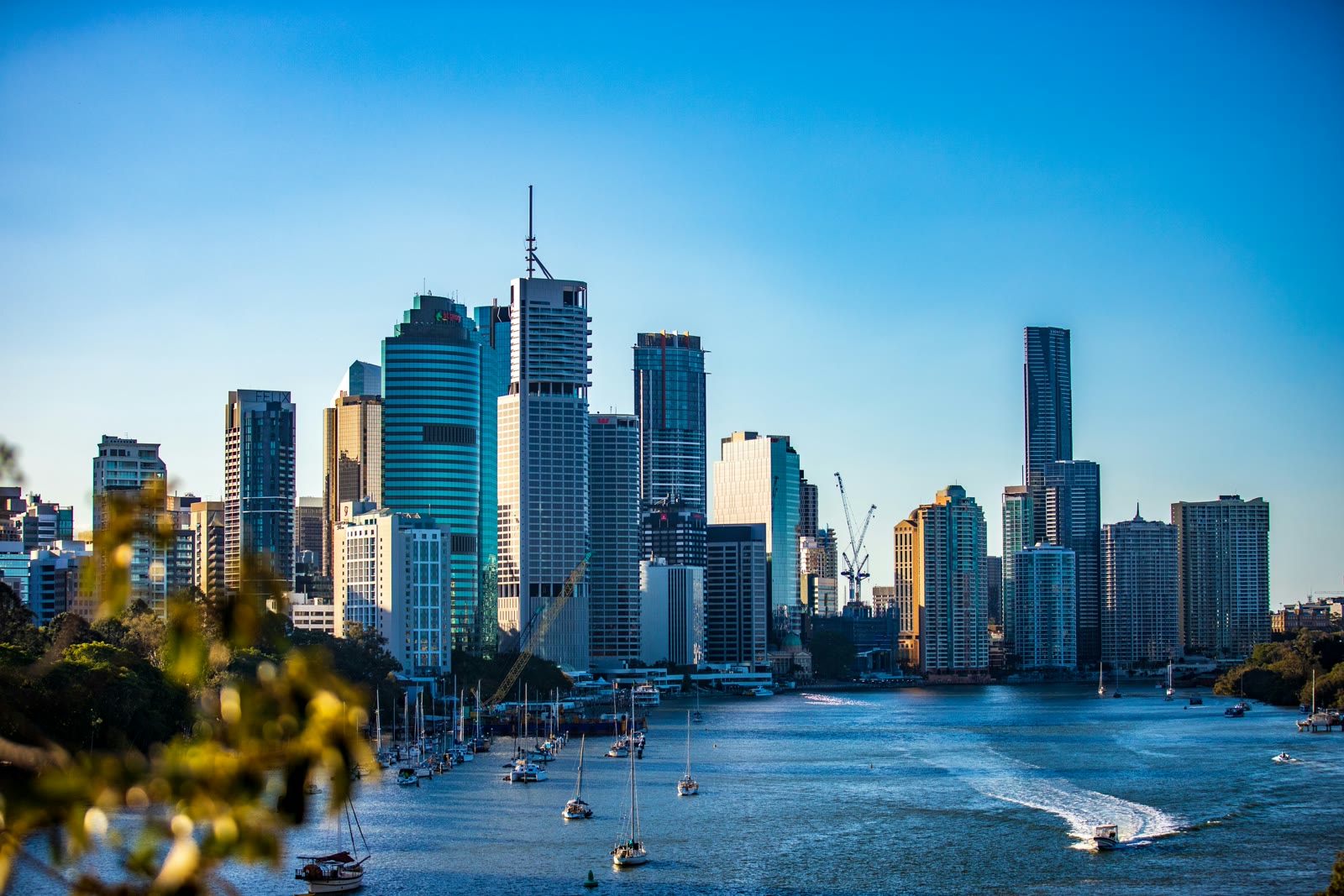
Brisbane, Queensland’s subtropical capital with 2.5 million residents, is built along the winding Brisbane River and averages 283 sunny days per year. Its humid subtropical climate brings hot, stormy summers and mild, dry winters, making it Australia’s most consistently sunny capital city.
Welcome to Brisbane
Brisbane Airport (BNE) connects to the CBD by Airtrain (23 minutes, AUD 20). The compact city center is walkable, but the real joy is the CityCat ferry network with 21 terminals from UQ to Northshore Hamilton. South Bank’s free Streets Beach lagoon, the cultural complex of GOMA and the Queensland Museum, and the 1927 Lone Pine Koala Sanctuary anchor the visitor experience.
The Story Bridge climb, Mount Coot-tha lookout, and riverside dining at Howard Smith Wharves fill the gaps. For an area-by-area breakdown, start with the Brisbane neighborhoods guide.
Brisbane Climate Overview
Brisbane’s humid subtropical climate delivers hot, humid summers (December-February) with 30°C (86°F) highs and 154-161mm of monthly rain from afternoon thunderstorms. Sea temperatures peak at 27°C (81°F). Winters (June-August) are mild and dry: July averages 21°C (70°F) by day and 9°C (48°F) at night, with only 39-49mm of monthly rain.
The shoulder seasons are ideal: autumn (March-May) brings 24-29°C (75-84°F) warmth with declining rain, while spring (September-November) delivers 26-28°C (79-82°F) with September being the driest month at just 35mm. For comprehensive monthly data with tables, see the Brisbane weather by month guide.
Seasonal Snapshot
Summer (December-February): Hot (30°C/86°F), humid, afternoon thunderstorms. The Brisbane International tennis tournament in January. Hotel prices drop after New Year. Streets Beach is at its best.
Autumn (March-May): Warm and stable. March is 29°C (84°F), May drops to 24°C (75°F). Ideal for outdoor activities. Paniyiri Greek Festival in May. Easter brings domestic travel surges. For seasonal planning, consult the {L(base+’-best-time-to-visit’, ‘best time to visit Brisbane’)} guide.
Winter (June-August): Mild days (21-23°C/70-73°F), cool nights (9-10°C/48-50°F). Driest season with 39-63mm monthly rain. The Ekka (agricultural show) dominates August. Peak tourist season with 20-30% higher hotel rates.
Spring (September-November): Perfect weather. September is the driest month (35mm). Jacarandas bloom in October. Brisbane Festival and Riverfire fireworks in September. Best season alongside autumn.
Things to Do in Brisbane
South Bank’s free Streets Beach (7:00 AM-midnight) and the Lone Pine Koala Sanctuary (AUD 49, 9:00 AM-5:00 PM) are the two essential experiences. Mount Coot-tha lookout (free, 287m) offers CBD panoramas. GOMA and the Queensland Museum (free) anchor the Cultural Centre.
The Story Bridge climb (AUD 99-129) takes you 80 meters above the river. The CityCat ferry (AUD 4.80) is transport and sightseeing in one. For full hours, prices, and transport tips, see things to do in Brisbane.
Brisbane Events and Festivals
Brisbane Festival and Riverfire (September) light up the river with 500+ events and a fireworks finale drawing 500,000 spectators. The Ekka (August) is Queensland’s largest event at the showgrounds. The Brisbane International tennis (January) kicks off the sports calendar. Paniyiri Greek Festival (May) fills Musgrave Park with honey puffs and dancing. See the Brisbane events and festivals calendar for dates.
Brisbane Neighborhoods
The CBD puts you on top of Queen Street Mall and Central Station. South Bank is the cultural and family hub with the beach and museums. Fortitude Valley is the nightlife center. New Farm offers a village atmosphere along the river. Paddington has boutique shopping and Queenslander cottages. For hotel prices and area suitability, see Brisbane neighborhoods.
Where to Stay in Brisbane
W Brisbane and the Emporium Hotel South Bank define luxury. The CBD has the widest range from ibis Styles to five-star chains. South Bank suits families and culture seekers. Fortitude Valley has budget and boutique options near the nightlife. Budget rooms start at AUD 100-160, mid-range AUD 180-300, luxury AUD 300-600 per night. For hotel recommendations by area, see where to stay in Brisbane.
Suggested Hotels in Brisbane
W Brisbane
The W Brisbane is a design-led luxury hotel on the river with a pool deck, playful interiors, and the Three Blue Ducks restaurant. Best for couples and design-conscious travelers wanting a lifestyle hotel with Brisbane River views.
Emporium Hotel South Bank
The Emporium Hotel South Bank features a rooftop infinity pool, piano bar, and suites with spa baths and balconies, steps from Streets Beach and GOMA. Best for couples wanting boutique luxury in Brisbane’s cultural heart.
Brisbane City YHA
Brisbane City YHA offers a rooftop pool with CBD views, communal kitchen, and dorm beds plus private rooms at hostel prices near Roma Street station. Best for backpackers and solo budget travelers wanting social atmosphere.
Brisbane Travel Tips
Brisbane Airport (BNE): Airtrain to Central Station, 23 min, AUD 20. Go Card for transport (AUD 10 deposit). CityCat ferry: best way to see the river. Free CityHopper ferry between North Quay and New Farm. ETA or eVisitor visa required for most visitors.
Tipping not expected. Sun protection (SPF 50+) essential year-round. Don’t swim in the Brisbane River; use Streets Beach or the coast. For detailed visa, safety, and FAQ, read Brisbane travel tips and FAQ.
