

 Mist
 Light drizzle
This post may contain affiliate links. If you purchase through them, I may earn a small commission at no extra cost to you. Thanks for supporting our small business.
Newcastle is Australia’s seventh largest city and the second largest in New South Wales, a coastal city of about 505,000 people built around a deep water harbour 162 km north of Sydney. It has a humid subtropical climate with warm, humid summers and mild, dry winters, and it averages about 1,130 mm of rain a year. The city turns its working harbour and surf beaches into its main draw, with free ocean baths, a 5 km coastal walk and one of the best regional art collections in the country. This guide covers the climate, the seasons and where to stay, with links to detailed articles on each topic.
Welcome to Newcastle
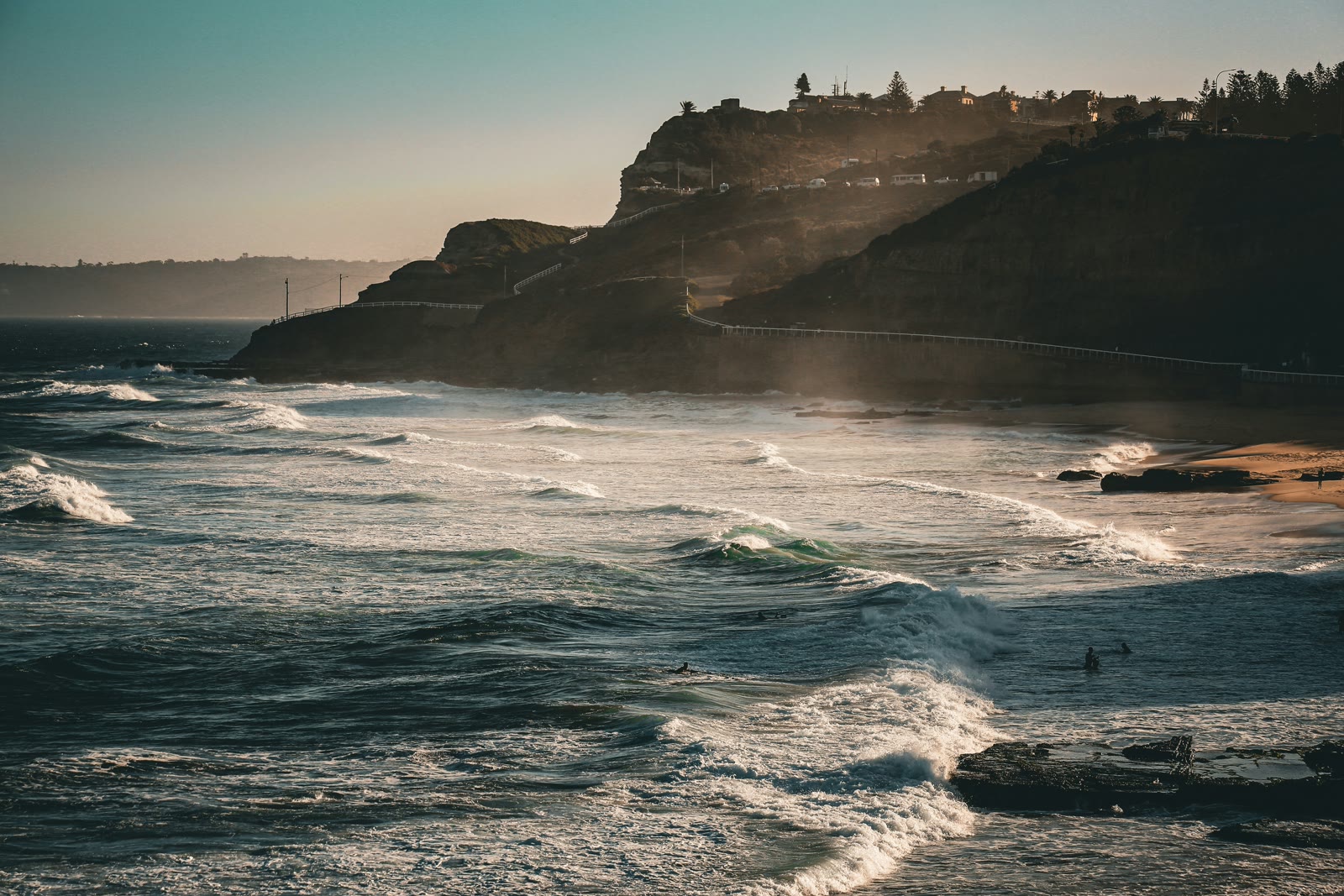
Newcastle grew from a coal port and steel town into a beach city, and the shift is visible along its waterfront. The old rail yards became the Honeysuckle precinct, the working harbour now hosts a light rail line and waterfront restaurants, and the beaches from Nobbys to Merewether anchor most visits. July averages 16.9°C (62°F) by day and 8.5°C (47°F) at night, while January, the warmest month, reaches 25.6°C (78°F) by day and 19.2°C (66°F) at night. The Pacific keeps the city milder than inland New South Wales, and the afternoon nor’easter sea breeze arrives most summer days.
The city sits at the mouth of the Hunter River, with Stockton Beach stretching 32 km north from the opposite bank and the Hunter Valley wine region 50 km to the west. Newcastle Airport (NTL) at Williamtown is 28 km north of the centre, and hourly trains connect the city to Sydney in about 2 hours 40 minutes. Most first time visitors split their time between the East End beaches, the Honeysuckle waterfront and a day trip to the Hunter Valley.
Newcastle Seasonal Snapshot
- Summer (December to February): Warm and humid, highs of 25 to 26°C (77 to 78°F), sea at 22 to 23°C. Peak beach season and the busiest, most expensive months, with Surfest in February.
- Autumn (March to May): Warm days easing from 25°C to 20°C, the wettest season with 116 to 120 mm monthly. Sea still swimmable in March and April, smaller crowds, lower prices.
- Winter (June to August): Mild and clear, highs of 17 to 18°C (63 to 65°F), lows near 8 to 10°C. Driest and cheapest season, peak whale watching, sea down to 17°C.
- Spring (September to November): Driest stretch, highs climbing from 20°C to 24°C (69 to 75°F). Best window for the coastal walks and the spring arts festivals.
Newcastle Quick Facts
- Population: about 505,000 in the greater Newcastle area, the seventh largest city in Australia.
- Climate: humid subtropical (Köppen Cfa), about 1,130 mm of rain a year spread across all months.
- Warmest month: January, averaging 25.6°C (78°F) by day and 19.2°C (66°F) at night.
- Coolest month: July, averaging 16.9°C (62°F) by day and 8.5°C (47°F) at night.
- Wettest month: March at 120 mm; driest month November at 71 mm.
- Sea temperature: 22 to 23°C (72 to 73°F) in summer, 17 to 18°C (63 to 64°F) in winter.
- Distance from Sydney: 162 km, about 2 hours by car or 2 hours 40 minutes by train.
- Airport: Newcastle Airport (NTL) at Williamtown, 28 km north of the CBD.
Where to Stay in Newcastle
Newcastle’s accommodation clusters in three zones. The East End around Newcastle Beach and Nobbys Beach suits swimmers and surfers, with beachfront hotels like Noah’s on the Beach and Novotel Newcastle Beach. The City Centre and Honeysuckle hold the five star options, including Crystalbrook Kingsley and QT Newcastle, and suit first time visitors and anyone arriving by train. Hamilton and the outer suburbs offer the best value, with apartments and airport hotels from about AU$120 a night. The full area by area breakdown with specific hotel picks is in our where to stay guide.
Suggested Hotels in Newcastle
Crystalbrook Kingsley
A five star hotel at 282 King Street in the CBD, with the Roundhouse rooftop restaurant and Ms Mary bar, set in the former council administration building. Best for couples and travellers who want the city’s top luxury stay with rooftop views. Check rates and availability
Rydges Newcastle
A four star hotel on the Honeysuckle harbourfront with a 25 m pool, gym and the Wharf 350 restaurant overlooking the water. Best for families and travellers who want harbour views without five star prices. Check rates and availability
ibis Newcastle
A three star hotel in the Honeysuckle Precinct, 200 m from the light rail, with a bistro, bar and 24 hour reception. Best for budget travellers who want a reliable, walkable base near the harbour. Check rates and availability
Explore Newcastle
- Newcastle Weather by Month – temperature, rainfall and sea temperature data for every month, with a full comparison table.
- Best Time to Visit Newcastle – the best months for the beach, value, low crowds and specific events.
- Things to Do in Newcastle – the ocean baths, Bathers Way, Fort Scratchley, the art gallery and Hunter Valley day trips.
- Newcastle Events and Festivals – Surfest, the Newcastle 500, Food Month, the Jazz Festival and the spring arts program.
- Newcastle Neighbourhoods – the East End, Cooks Hill, Honeysuckle, Merewether and Hamilton explained.
- Where to Stay in Newcastle – hotels in each area, from five star to budget, with booking links.
- Newcastle Travel Tips and FAQ – the airport, light rail, Opal cards, visas, tipping, safety and costs.
