

 Overcast
  Fog
Fog  Patchy rain nearby
 This post may contain affiliate links. If you purchase through them, I may earn a small commission at no extra cost to you. Thanks for supporting our small business.
Boston is a city shaped by its position on the edge of the North Atlantic. Winters bring genuine cold and 49 inches of snow per year, summers arrive with Gulf Stream humidity that can push the feels-like temperature past 90°F (32°C), and the brief windows of spring and fall deliver the kind of crisp, clear weather that makes walking a 2.5-mile brick trail through 250 years of American history feel effortless. This guide covers everything you need to plan a Boston trip: when to visit, what to pack, where to stay, and how to navigate the city’s distinct neighborhoods.
Welcome to Boston
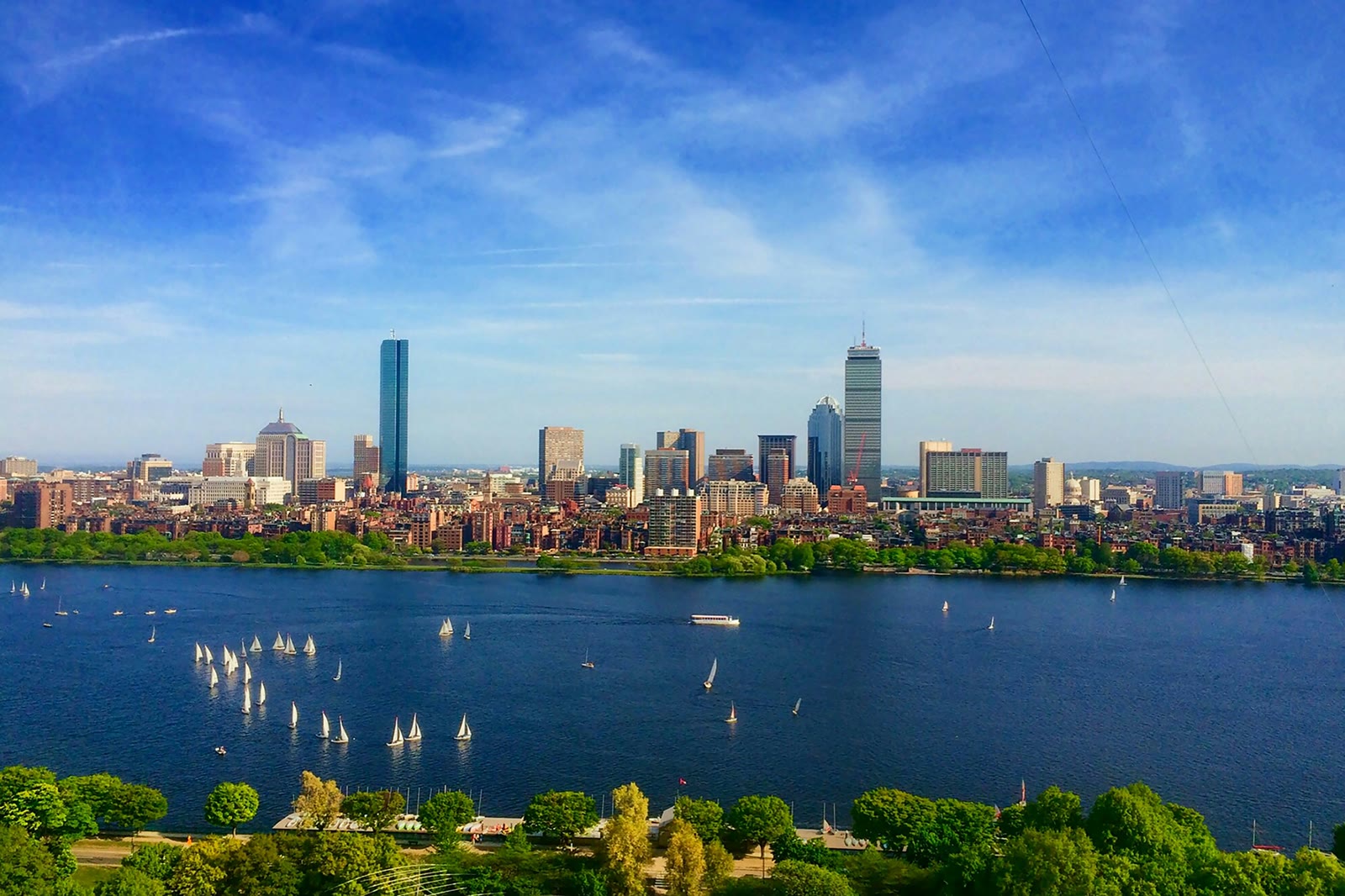
Boston packs more history per square mile than any American city, but it is not frozen in amber. The same streets that Paul Revere rode in 1775 now host a biotech boom that has transformed the Seaport from parking lots to glass towers in 15 years, a food scene powered by 35 colleges producing culinary talent, and a sports culture that treats Fenway Park with the reverence most cities reserve for cathedrals. The city is small, just 48 square miles, and you can walk the core from the North End to Fenway in under an hour. But each neighborhood feels distinct: Beacon Hill’s gas-lit cobblestones, Back Bay’s Parisian boulevard width, the North End’s espresso-and-cannoli rhythm, and the Seaport’s glass-and-steel modernity.
Boston Weather at a Glance
Boston has a humid continental climate (Koppen Dfa) with four distinct seasons and no true dry season. The city receives 43.8 inches (1,112 mm) of precipitation annually spread evenly across all 12 months. Snow averages 49 inches per year, almost all between December and March, with January alone accounting for 14 inches. The Atlantic Ocean moderates spring temperatures, keeping April and May cooler than inland cities at the same latitude, but adds humidity to the summer air mass. July is the warmest month at 82°F (28°C), January the coldest at 36°F (2°C). A nor’easter can shut down the city with a foot of snow in winter, and a heat wave can push temperatures past 95°F (35°C) for several days in July. For the full monthly breakdown, see the Boston weather by month guide.
Seasonal Snapshot
- Spring (April to May): 56°F to 66°F (13°C to 19°C). Cherry blossoms peak mid-April on the Charles River Esplanade. The Boston Marathon runs on the third Monday in April. University graduations in May fill every hotel room in the metro area, book 6 weeks ahead. Pack layers and waterproof shoes for slushy March and rainy April days.
- Summer (June to August): 76°F to 82°F (24°C to 28°C). Humidity builds through July and peaks in early August. July 4th Harborfest is the busiest week of the year. Sunset is after 8 PM through mid-July. Free concerts at the Hatch Shell on the Esplanade run Wednesday through Sunday evenings. Pack light cotton, sunscreen, and insect repellent.
- Fall (September to mid-November): 73°F to 51°F (23°C to 11°C). September is the single best month for weather. Peak fall foliage in the Boston Common and Public Garden arrives October 15 to 25. The Head of the Charles Regatta on the third weekend of October draws 400,000 spectators. November hotel rates drop 40 to 50 percent from October highs, making it the best budget month with tolerable weather.
- Winter (December to March): 36°F to 41°F (2°C to 5°C). Snow averages 49 inches per season concentrated between December and March. January and February have the lowest hotel rates of the year, 60 to 70 percent below summer. First Night Boston on December 31 draws crowds for ice sculptures and fireworks. Pack a heavy waterproof coat, insulated boots, hat, and gloves.
Boston Travel Guides
- Boston Weather by Month: Complete monthly climate data with temperatures, rainfall, snowfall, and sea temperature. Includes a quick-reference table with NOAA data from Logan Airport.
- Best Time to Visit Boston: Season-by-season breakdown with specific date ranges, crowd calendars, hotel price windows, and which months to avoid for weather, cost, or crowds.
- Things to Do in Boston: The Freedom Trail, Museum of Fine Arts, Isabella Stewart Gardner Museum, Fenway Park tours, Boston Harbor Islands ferries, and neighborhood food walks with ticket prices and hours.
- Boston Events and Festivals: The Boston Marathon, July 4th Harborfest, Head of the Charles Regatta, St. Patrick’s Day parade, First Night, and free summer concerts at the Hatch Shell with 2026 dates.
- Best Neighborhoods in Boston: Beacon Hill, Back Bay, the North End, Seaport, South End, and Chinatown with boundaries, who each suits, and average hotel prices.
- Where to Stay in Boston: Hotel recommendations for Back Bay, Waterfront/North End, and the Seaport District with specific properties for luxury, mid-range, and budget travelers.
- Boston Travel Tips and FAQ: Logan Airport transport options, MBTA subway guide with fares, tipping norms, safety advice, seasonal packing lists, and practical answers for first-time visitors.
Location and What Influences Boston Weather
Boston sits at 42.36°N latitude on a peninsula at the mouth of the Charles River where it meets Boston Harbor and the Atlantic Ocean. The city’s weather is shaped by three competing forces: cold continental air masses descending from Canada, warm moist air pushing up from the Gulf of Mexico and the Gulf Stream, and the moderating influence of the Atlantic Ocean which cools spring and early summer while keeping autumn milder than inland New England. The result is a climate of dramatic swings: a 60°F (16°C) day in March can follow a 6-inch snowstorm by 48 hours, and July heat waves can break with a 30-degree temperature drop in an afternoon thunderstorm. Nor’easters, the signature winter storm of the New England coast, develop when cold Arctic air collides with warm Atlantic moisture off Cape Hatteras, spinning up the Eastern Seaboard and dumping heavy snow on Boston from December through March.
Boston Quick Facts
- Best months to visit: September (best weather), May (spring blooms, pre-peak prices), October (peak foliage)
- Warmest month: July, average high 82°F (28°C)
- Coldest month: January, average low 22°F (-6°C)
- Wettest month: November, 4.0 inches (102 mm) precipitation
- Snowiest month: January, 14 inches (36 cm)
- Harbor water temperature: 68°F (20°C) peak in August, 38°F (3°C) low in February
- Sunniest months: June through August, 9 hours average daily sunshine
- Annual snowfall: 49 inches (124 cm) on average, concentrated December through March
- Airport: Boston Logan International (BOS), 3 miles from downtown, Silver Line SL1 bus to South Station (free from airport, US$2.40 outbound)
- Time zone: Eastern Time (UTC-5, UTC-4 during daylight saving, March to November)
Suggested Hotels in Boston
Four Seasons Boston
This 5-star hotel at 200 Boylston Street overlooks the Boston Public Garden with a heated indoor pool, a full-service spa occupying an entire floor, and rooms with floor-to-ceiling views. Best for luxury travelers and couples celebrating. Check rates and availability
Boston Marriott Long Wharf
A 4-star waterfront hotel at 296 State Street next to the New England Aquarium with harbor-view rooms and direct access to the Harborwalk. Best for families and first-time visitors. Check rates and availability
YOTEL Boston
The best entry-level option in the Seaport at 65 Seaport Boulevard with compact, cleverly designed rooms and a rooftop terrace with harbor views. Best for solo travelers and couples on a mid-range budget. Check rates and availability
