

 Overcast
  Sunny
Sunny This post may contain affiliate links. If you purchase through them, I may earn a small commission at no extra cost to you. Thanks for supporting our small business.
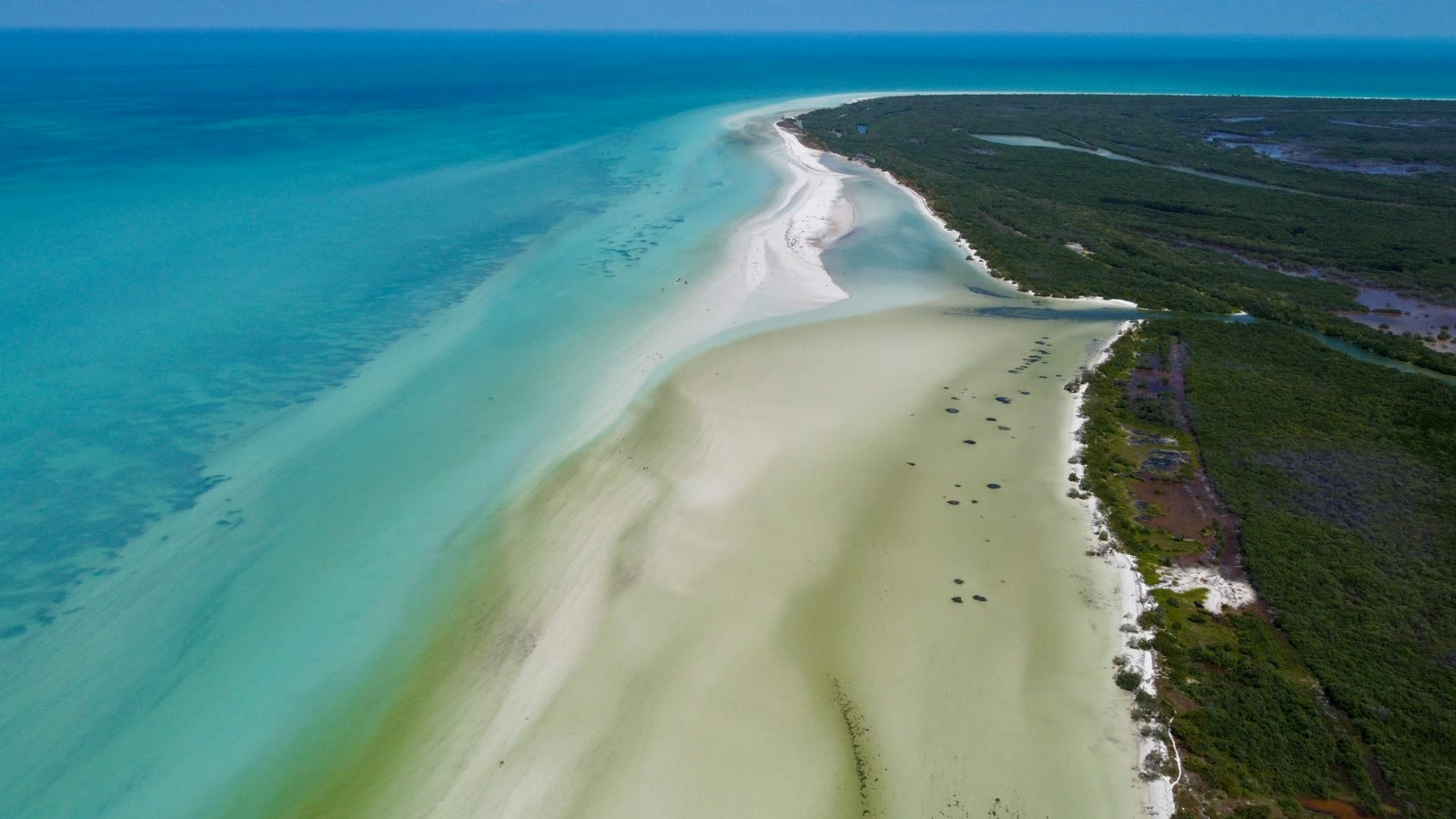
Isla Holbox (pronounced “hole-bosh”) is a 42km barrier island off the northern coast of Mexico’s Yucatan Peninsula in the state of Quintana Roo. Unlike the high-rise resort zones of Cancun and Playa del Carmen 200km south, Holbox has no paved roads, no chain hotels, and no cars beyond service vehicles. The island sits inside the 154,000-hectare Yum Balam Nature Reserve, which protects the surrounding waters and mangrove lagoons where flamingos, sea turtles, and whale sharks feed each year. Holbox’s north-facing beaches are wider and quieter than the Riviera Maya’s east-facing coast, and the island’s position behind the peninsula provides natural protection from the sargassum seaweed that affects Cancun. Expect golf carts instead of taxis, sandy streets instead of sidewalks, and a pace of life that runs on ferry schedules rather than clocks.
Holbox Weather at a Glance
Holbox has a tropical savanna climate (Koppen Aw) with two distinct seasons. The dry season runs November through May, delivering 7-8.5 hours of daily sunshine, daytime highs of 28-32degC (82-90degF), and just 3-7 rainy days per month. February is the driest month at 25mm (1 inch) of rain. The wet season runs June through October, with afternoon thunderstorms replacing the dry-season sun. Daytime highs climb to 32-33degC (90-91degF), humidity rises above 80%, and September sees 188mm (7.4 inches) of rain across 15 days. Hurricane season officially spans June 1 to November 30, with the highest risk window from mid-August through late October.
Sea temperatures range from 25degC (77degF) in January-February to 29degC (84degF) in July-September. The coolest and windiest period is December-February when nortes (cold fronts from North America) bring 2-3 day spells of blustery conditions every 7-10 days. The calmest, hottest period is July-August when the trade winds weaken and the Gulf of Mexico feels more like a warm bath than an ocean.
Holbox Seasonal Snapshot
- Winter (December-February): Peak tourist season. Daytime 28-29degC (82-84degF), nighttime 19-20degC (66-68degF). Driest months of the year. Nortes bring windy spells every 7-10 days. Hotel rates at their highest, especially Christmas-New Year. Book 3-4 months ahead for December holidays.
- Spring (March-May): Shoulder season with warming temperatures (30-32degC/86-90degF) and increasing humidity. March-April offers excellent conditions with minimal rain. Easter week (Semana Santa) brings massive crowds. Whale shark season opens mid-May. Flamingo numbers peak in the lagoon.
- Summer (June-August): Hottest months at 32-33degC (90-91degF) with high humidity. Afternoon thunderstorms most days but mornings typically sunny. Peak whale shark season (July-August, 95%+ encounter rates). Bioluminescent plankton at its brightest. Mexican school holidays fill the island July-August. Hurricane risk increases in August.
- Fall (September-November): Wettest months (September-October) with peak hurricane risk. Hotel rates drop 30-50%. Whale shark season ends mid-September. Migratory birds arrive. November brings the return of dry weather, the Street Art Festival, and rising hotel rates toward the end of the month.
Holbox Travel Guides
- Holbox Weather by Month: Monthly breakdown of temperatures, rainfall, sunshine hours, and sea temperatures with a quick-reference comparison table. Covers what to expect every month from January through December.
- Best Time to Visit Holbox: Data-driven guide to the best months for whale sharks, good weather, lower prices, fewer crowds, wildlife viewing, and avoiding sargassum. Specific date ranges and event windows.
- Things to Do in Holbox: Complete activity guide covering whale shark swimming, bioluminescent kayaking, flamingo watching at Punta Mosquito, kiteboarding, snorkeling at Cabo Catoche, street art walks, and fishing trips. Operator names, prices, and practical tips.
- Holbox Events and Festivals: Annual events calendar including the Whale Shark Festival (July), International Street Art Festival (November), fishing tournament (October), and traditional celebrations like Semana Santa and Dia de Muertos.
- Holbox Neighborhoods Guide: Breakdown of the island’s four areas: Town Center, Hotel Zone (West Beach), East Beach (Punta Cocos), and Inland. Hotel price ranges, beach quality, and which area suits your travel style.
- Where to Stay in Holbox: Curated hotel recommendations across luxury, mid-range, and budget tiers with specific property names, standout features, and verified Booking.com links for each.
- Holbox Travel Tips and FAQ: Practical guide to getting from Cancun airport, ferry schedules, ATM and cash advice, what to pack, WiFi reality, safety tips, and answers to common visitor questions.
Holbox Quick Facts
- Location: Northern tip of Quintana Roo, Mexico, inside Yum Balam Nature Reserve (154,000 hectares)
- Population: Approximately 2,000 permanent residents
- Nearest airport: Cancun International (CUN), 140km south (2 hours by car + 20-minute ferry)
- Ferry: Chiquila-Holbox, every 30 minutes 6:00 AM-9:30 PM, MXN 150 (US$7.50) each way
- Getting around: Walking, bicycle (MXN 150-200/day), or golf cart (MXN 500-800/4hrs). No cars on the island
- Currency: Mexican Peso (MXN). Cash is essential, ATMs frequently run out, especially weekends
- Language: Spanish (English widely spoken at hotels and tour operators)
- Best beach months: March-April for warm water and clear skies; November-February for dry weather but cooler water
- Whale shark season: Mid-May to mid-September, peak mid-July to late August
- Warmest months: July-August (33degC/91degF daytime, 29degC/84degF sea)
- Wettest months: September (188mm) and October (168mm)
- Hurricane season: June-November, highest risk August-October
Where Is Holbox and What Makes Its Weather Unique?
Holbox sits at the northeastern edge of the Yucatan Peninsula where the Gulf of Mexico meets the Caribbean Sea. The island is separated from the mainland by the shallow Yalahau Lagoon, which creates a distinct microclimate: the lagoon acts as a heat sink that moderates nighttime temperatures, keeping them 1-2degC warmer than inland Quintana Roo in winter. Holbox receives less rainfall than Cancun (200km south) because the northeasterly trade winds that drive rain across the Riviera Maya lose moisture by the time they reach this far north. The island averages 1,100mm (43 inches) of rain annually, about 15% less than Cancun.
The dominant weather feature in winter is the norte: cold fronts that sweep down from the Great Plains of the United States, crossing the Gulf of Mexico and arriving on Holbox as 2-3 day periods of strong northwest winds (30-40 km/h, 20-25 mph), cloud cover, and a 3-5degC temperature drop. Nortes occur every 7-10 days from December through February and are what keep winter from being the undisputed best season. Once a norte passes, conditions return to calm and sunny within 24 hours.
Where to Stay in Holbox
Holbox has roughly 60 accommodation options from US$20/night backpacker dorms to US$400+/night beachfront suites. The island divides into four distinct areas: the Town Center (close to everything, narrower beach, US$30-150/night), the Hotel Zone on the west end (widest beaches, upscale properties, US$150-400/night), the East Beach toward Punta Cocos (quiet, natural, popular with kiteboarders, US$100-175/night), and the Inland area south of the main road (budget guesthouses, local neighborhood, US$20-60/night). See our Holbox neighborhoods guide for a detailed breakdown of each area.
Suggested Hotels in Holbox
Las Nubes de Holbox
The island’s most upscale property on the western tip with 29 rooms, a beachfront infinity pool, and a mangrove-edged shoreline. Rooms have no TVs and the hotel runs its own water desalination plant for consistent water pressure. Best for couples and honeymooners seeking seclusion. Check rates and availability
Casa Las Tortugas Petit Beach Hotel
A 26-room boutique hotel steps from the main square with a palm-shaded beachfront restaurant (Mandarina) that serves one of the island’s best breakfasts. Rooms have handcrafted Mexican furniture and the courtyard pool is a standout. Best for first-time visitors who want town-center convenience with boutique style. Check rates and availability
Tribu Hostel
Holbox’s most popular backpacker hostel 2 blocks from the main square with dorm beds from MXN 250 (US$12) and a rooftop terrace with hammocks and communal kitchen. Best for solo travelers and backpackers on a budget. Check rates and availability
