

 Patchy rain nearby
 Overcast
 Sunny
 Cloudy
This post may contain affiliate links. If you purchase through them, I may earn a small commission at no extra cost to you. Thanks for supporting our small business.
Uluru (Ayers Rock): Weather, Best Time to Visit and Travel Guide
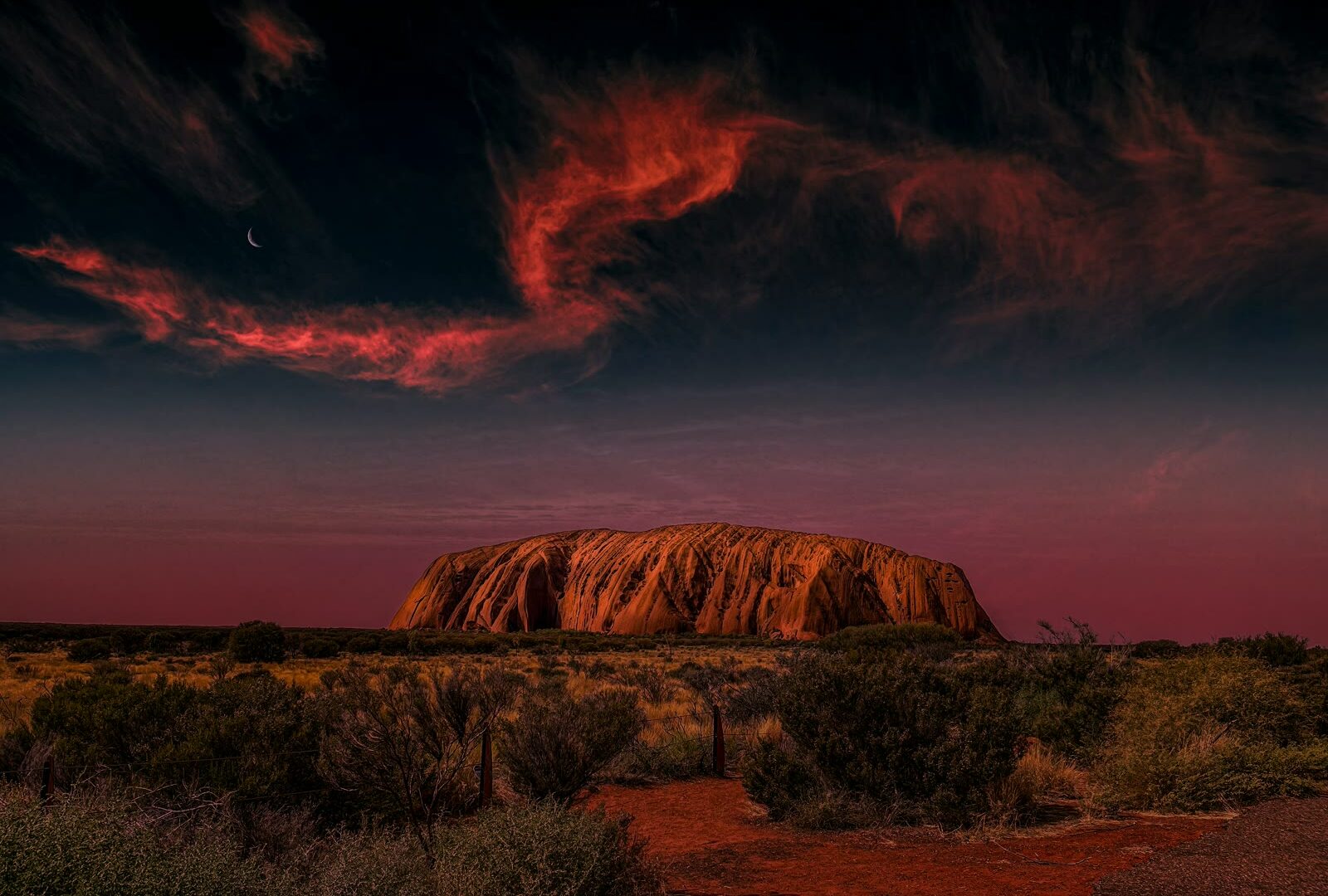
Uluru, formerly Ayers Rock, is a 348-metre sandstone monolith in the Red Centre of Australia’s Northern Territory, rising from the desert 450 km southwest of Alice Springs. It forms Uluru-Kata Tjuta National Park alongside Kata Tjuta (the Olgas), a cluster of 36 domes 25 km to the west. The climate is arid desert: summer highs average 37 to 39°C (99 to 101°F) from December to February, while winter days sit near 20°C (68°F) and nights drop to 4°C (39°F). Around 280 to 300 mm of rain falls each year, almost all of it in short summer thunderstorms. This hub links to seven detailed guides covering everything from monthly temperatures to where to stay.
Welcome to Uluru
Uluru sits at 25.3 degrees south inside Uluru-Kata Tjuta National Park, which covers 1,326 square kilometres. The rock itself is 348 metres high, 3.6 km long and 9.4 km around, and it is sacred to the Anangu people, who have lived in this country for at least 30,000 years. The nearest town is Yulara, 20 km away and purpose-built for visitors, and the nearest city is Alice Springs, 450 km northeast. Every part of a visit is shaped by the desert climate, so check the weather numbers below before you book flights or a room.
Weather at a Glance
Uluru’s arid climate means two distinct halves of the year. The hot season runs October to March, when daytime highs sit between 31°C and 39°C (88 to 102°F) and afternoon thunderstorms bring most of the year’s 280 to 300 mm of rain. The cool season runs April to September, when highs stay at a comfortable 20 to 29°C (68 to 84°F), rain nearly stops and nights turn cold, with July lows averaging 4°C (39°F) and frequent frosts. Sunshine is abundant all year at 9 to 10 hours a day, and the UV index stays extreme in every month.
The single biggest planning fact is the day-to-night swing. Even in January, a 38°C (101°F) day drops to around 23°C (73°F) at night, and in July a 20°C (68°F) afternoon becomes a 4°C (39°F) pre-dawn. Bring layers whatever month you choose, and schedule outdoor walking for the cool hours around sunrise.
Seasonal Snapshot
- Summer (December to February): hottest and wettest, 36 to 39°C (98 to 101°F) by day, 36 to 42 mm of rain a month, thick flies, lowest prices.
- Autumn (March to May): heat fades from 34°C to 23°C (93 to 74°F), rain tapers off, one of the best windows to visit.
- Winter (June to August): clear and cool, 20 to 23°C (68 to 73°F) highs, 4 to 6°C (39 to 43°F) nights, near-zero rain, peak crowds.
- Spring (September to November): warms from 28°C to 35°C (82 to 95°F), dry and clear, great for photography until the heat returns.
Quick Facts About Uluru’s Climate
- Best months to visit: April to September, when highs stay under 30°C (86°F) and flies are gone.
- Warmest month: January, averaging 38.5°C (101°F) by day and 22.7°C (73°F) at night.
- Coolest month: July, averaging 20.3°C (69°F) by day and 4.0°C (39°F) at night.
- Wettest months: February with about 42 mm, then January at 40 mm, both as summer storms.
- Driest months: August at 9 mm and September at 11 mm.
- Sunshine: 9 to 10 hours a day, over 3,000 hours a year, among Australia’s sunniest places.
- Park entry: A$38 per adult for a 3-day pass, A$95 for a family.
Plan Your Trip: All Our Uluru Guides
- Uluru Weather by Month: the full month by month table of highs, lows and rainfall for planning your dates. Read the Uluru weather by month guide.
- Best Time to Visit: the exact months for the best weather, lowest prices and fewest crowds, plus school holiday dates. Read the best time to visit Uluru guide.
- Things to Do: 16 attractions, walks and paid experiences with opening hours, distances and ticket prices. Read the things to do in Uluru guide.
- Events and Festivals: the Tjungu Festival, the Camel Cup and the year-round night shows, with dates and costs. Read the Uluru events and festivals guide.
- Areas Around Uluru: Yulara, Curtin Springs, Kings Canyon and Alice Springs compared, with typical room prices. Read the areas around Uluru guide.
- Where to Stay: specific hotels in Yulara and Alice Springs, with a luxury, mid-range and budget pick for each. Read the where to stay in Uluru guide.
- Travel Tips and FAQ: flights into Ayers Rock Airport, what to pack, safety, and the questions everyone asks. Read the Uluru travel tips guide.
Where to Stay in Uluru
There is one place to sleep near the rock: the Ayers Rock Resort at Yulara, a single complex of five tiers from campground to five-star, 20 km from Uluru and 6 km from the airport. The alternative is Alice Springs, 450 km northeast, which has cheaper hotels and suits self-drive loops through the Red Centre. Curtin Springs station offers a budget roadhouse stay 85 km east of Yulara, and there is no accommodation inside the national park itself.
Suggested Hotels in Uluru
Sails in the Desert
The five-star flagship of the Ayers Rock Resort, wrapped in white canvas sails around a pool and gardens with fine dining on site. Best for couples wanting the most comfortable stay at the rock. Check rates and availability
Desert Gardens Hotel
The reliable mid-range choice, with garden rooms, a pool and a section of rooms facing Uluru. Best for families and first-time visitors. Check rates and availability
Outback Hotel and Lodge
The budget tier of the resort, with hotel rooms, simpler lodge rooms and a pub and beer garden. Best for solo travellers and backpackers. Check rates and availability
