

 Patchy rain nearby
 This post may contain affiliate links. If you purchase through them, I may earn a small commission at no extra cost to you. Thanks for supporting our small business.
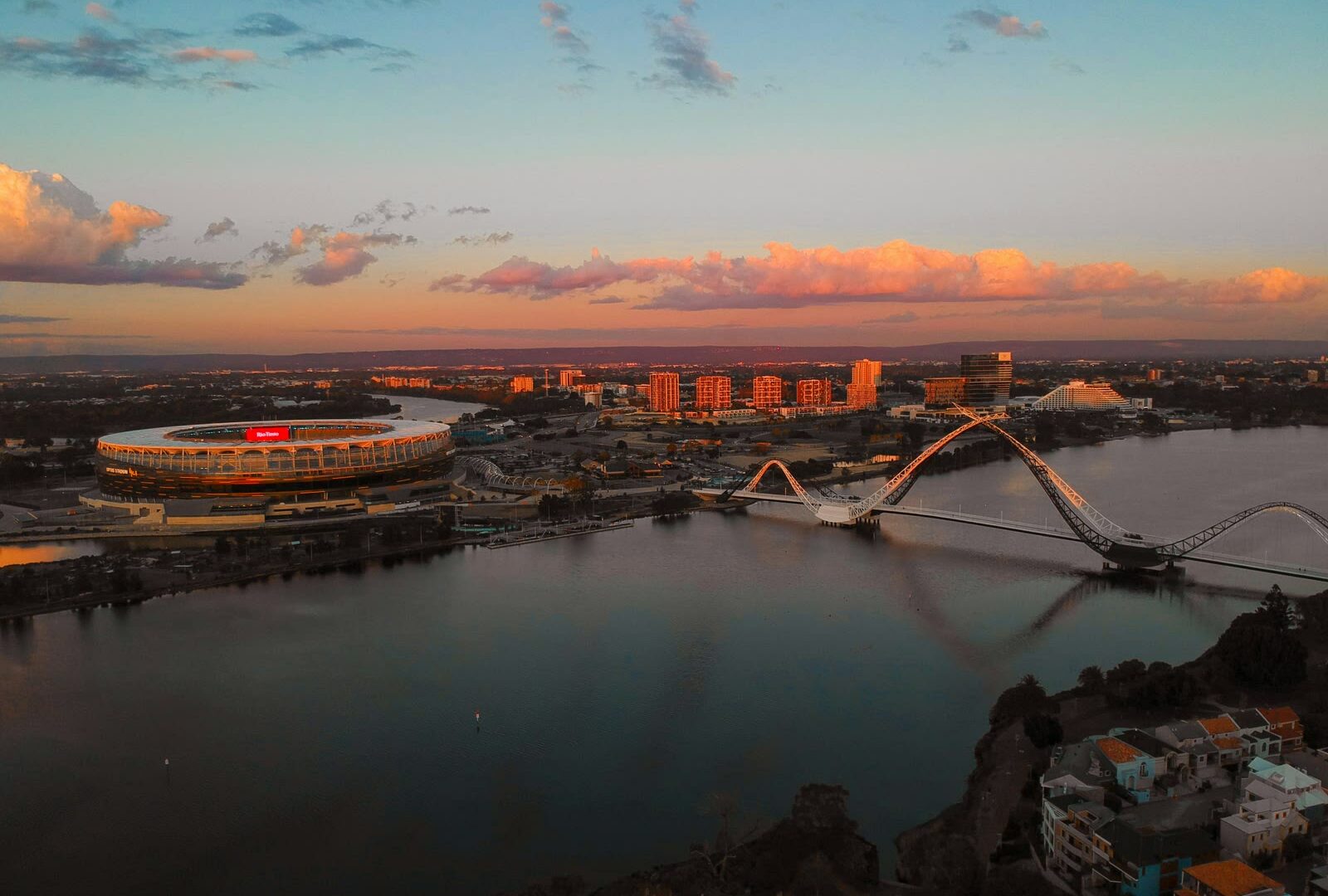
Perth, the sun-drenched capital of Western Australia, sits on the banks of the Swan River where it meets the Indian Ocean. It’s the world’s most isolated capital city, with Adelaide 2,700km to the east and Singapore closer than Sydney. The city receives 3,200 hours of sunshine annually, more than any other Australian capital, and its Mediterranean climate produces hot, dry summers from December to February and mild, wet winters from June to August. Perth has a population of 2.1 million and stretches 150km along a coastline of white-sand beaches from Two Rocks in the north to Mandurah in the south. This guide covers everything you need to plan a trip, from monthly weather data to hotel recommendations.
Welcome to Perth
Perth was founded in 1829 as the Swan River Colony and remained a remote outpost for much of its early history. The discovery of gold at Coolgardie and Kalgoorlie in the 1890s transformed the city, funding the construction of grand colonial buildings that still line St Georges Terrace. Today Perth is a modern resource-economy city with a laid-back outdoor lifestyle. Locals swim at Cottesloe Beach before work, cycle the 50km of riverside paths on weekends, and gather at Elizabeth Quay for sunset drinks. Kings Park, at 400 hectares, is one of the world’s largest inner-city parks and offers panoramic views from its elevated position on Mount Eliza.
The city’s isolation shapes its character. Perth is more self-contained than Sydney or Melbourne, with a strong local food and arts scene that doesn’t rely on touring exhibitions or imported trends. The Swan Valley, 25km northeast, is Western Australia’s oldest wine region with over 40 cellar doors. Fremantle, the historic port at the Swan River mouth, operates as a distinct town with Victorian-era architecture, a working fishing harbour, and a UNESCO World Heritage-listed prison. Rottnest Island, 19km offshore, is car-free and home to the quokka, a small marsupial found nowhere else.
Perth Climate Overview
Perth has a hot-summer Mediterranean climate (Koppen Csa). Summer runs from December to February with average highs of 31degC (88degF) and just 9 to 13mm of rain per month. Heatwaves of 40degC+ (104degF+) occur 3 to 5 times per summer, driven by easterly desert winds. The Fremantle Doctor, a cooling sea breeze, arrives most afternoons around 2pm, dropping temperatures by 4 to 6degC within an hour. Winters are mild with average highs of 18degC (64degF) in July, the coldest month. June through August brings 135 to 177mm of monthly rainfall across 14 to 15 wet days, though clear, crisp days break up the rainy periods. Snow has never been recorded in the city.
Annual rainfall averages 730mm, almost all falling between May and September. Sea temperatures range from 22degC (72degF) in February to 17degC (63degF) in September. Spring (September to November) is the standout season: wildflowers blanket Kings Park and the Perth Hills from September through October, temperatures climb from 20degC to 26degC, and rainfall drops from 81mm to 22mm. UV levels are extreme year-round, reaching index 12+ in summer.
Perth Seasonal Snapshot
- Summer (December to February): Hot and dry, 31degC average highs, 9 to 13mm rain. Beach season at its peak. The Fremantle Doctor sea breeze cools afternoons. Australia Day fireworks on January 26 draw 300,000 people. Heatwaves of 40degC+ possible.
- Autumn (March to May): March still feels like summer at 29degC. April cools to 26degC with 44mm rain. May brings 12 rainy days and 22degC highs. Swan Valley harvest season. Good for walking tours and wine tasting.
- Winter (June to August): Mild days at 18 to 19degC, cold nights at 8 to 9degC. The wettest season with 135 to 177mm monthly rainfall. Best for museums, the Perth Mint, and indoor attractions. Whale watching starts in August.
- Spring (September to November): The best season overall. September averages 20degC with wildflowers at peak. October warms to 23degC with 52mm rain. November reaches 26degC with just 22mm rain. Kings Park Festival in September draws 200,000 visitors.
Explore Perth: Complete Travel Guides
Our Perth guide covers every aspect of visiting the city. Click through to any article below for detailed, practical information.
- Perth Weather by Month: Month-by-month breakdown of temperatures, rainfall, sea temperatures, and sunshine hours with a comparison table. Understand the Fremantle Doctor, summer heatwaves, and the best months for beach weather.
- Best Time to Visit Perth: Compare seasons for weather quality, crowd levels, and accommodation prices. Includes specific month-by-month advice on when to avoid and why.
- Things to Do in Perth: The complete list of attractions from Cottesloe Beach and Rottnest Island to Kings Park, Swan Valley wineries, Fremantle Prison, and Elizabeth Quay, with opening hours, ticket prices, and transport details.
- Perth Events and Festivals: Calendar of major events including Australia Day Skyworks (January 26), Fringe World, Perth Festival, Sculpture by the Sea, Kings Park Festival, and the Perth Royal Show, with dates and prices.
- Best Neighborhoods in Perth: Detailed profiles of Perth’s neighbourhoods from the CBD and Northbridge to Fremantle, Subiaco, Mount Lawley, Cottesloe, and South Perth, with hotel price ranges and transport links.
- Where to Stay in Perth: Hotel recommendations by area with specific properties at luxury, mid-range, and budget price points in the CBD, Crown Perth, Fremantle, and Scarborough, with verified Booking.com links.
- Perth Travel Tips and FAQ: Practical travel tips covering Perth Airport terminals and transfers, SmartRider public transport, Australian visa requirements, tipping customs (not expected), safety at beaches, and what to pack by season.
Perth Quick Facts
- Best beach months: November to March (sea temperatures 21 to 22degC, air temperatures 26 to 31degC)
- Warmest month: January and February (31degC / 88degF average high)
- Coolest month: July (18degC / 64degF average high, 8degC / 46degF low)
- Wettest month: June (177mm over 14 days)
- Driest months: January (9mm) and December (11mm)
- Warmest sea temperature: 22degC in January and February
- Annual sunshine: 3,200 hours (sunniest Australian capital)
- Population: 2.1 million (Greater Perth)
- Time zone: AWST (UTC+8), no daylight saving
- Airport: Perth Airport (PER), 15km east of CBD, train to city in 18 minutes for AUD 5.20
Suggested Hotels in Perth
COMO The Treasury
Perth’s premier luxury hotel set in restored 19th-century state buildings on Cathedral Avenue. 48 rooms with 4-metre ceilings, rooftop dining at Wildflower, and a 20-metre indoor pool. Best for luxury travelers and special occasions. Check rates and availability
QT Perth
Design-focused 4-star hotel on Murray Street with bold interiors, a rooftop bar, and Italian restaurant. Central CBD location, 184 rooms with local art. Best for couples and design-conscious travelers. Check rates and availability
Ibis Perth
Clean, compact budget hotel on Murray Street in the CBD, a 5-minute walk from the Perth Cultural Centre and Northbridge. Best for budget travelers and solo visitors who just need a comfortable place to sleep. Check rates and availability
