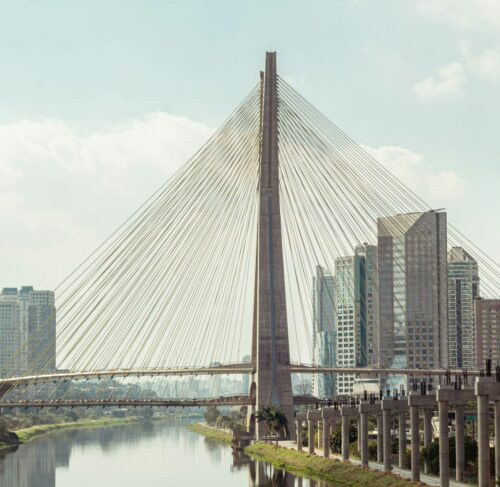
São Paulo is the largest city in the Americas and Brazil‘s economic and cultural engine, a sprawling metropolis of 12.3 million people (22 million in the metro area) set on a plateau 760 meters above sea level. It’s not a postcard destination. The city’s appeal is in its intensity: a restaurant scene that’s the best in South America, art museums holding Latin America’s finest European and Brazilian collections
a depth of immigrant communities from Japanese to Lebanese to Italian that makes every neighborhood distinct.
Welcome to São Paulo
São Paulo rewards planning. Unlike Rio de Janeiro, where the attractions announce themselves, São Paulo’s best experiences are behind unmarked doors: a Japanese izakaya in Liberdade, a gallery opening in Vila Madalena, a two-Michelin-star restaurant in Jardins.
The scale is overwhelming: the metro area spans 7,947 square kilometers. You’ll rely on the metro (5 BRL per ride) and Uber (20-30 BRL for most trips) to move between neighborhoods. Walking works within bairros like Jardins and Paulista but not between them.
Safety requires street smarts. The Jardins, Paulista, and Pinheiros areas are safe during the day and evening with normal urban awareness. The Centro Histórico is fine during weekday business hours but empties after 6:00 PM. Phone snatching is the most common crime, do not hold your phone in your hand while walking on the street. Use ATMs inside banks during business hours. Portuguese is essential outside tourist-facing businesses, download a translation app with offline Portuguese.
São Paulo Climate Overview
São Paulo’s subtropical highland climate delivers moderate temperatures year-round thanks to its 760-meter elevation. The brazil/sao-paulo/sao-paulo/sao-paulo-weather-by-month/”>São Paulo weather by month guide has complete data. Summer (December to February) brings 28°C (82°F) highs, 79% humidity, and daily afternoon thunderstorms.
January is the wettest month at 240mm of rain over 18 days. Winter (June to August) is dry and cool: 22°C (72°F) daytime highs, 11°C (52°F) nighttime lows, and only 40mm of monthly rain. The “garoa” morning drizzle is common in winter but usually clears by 10:00 AM. Spring (September to November) and autumn (March to May) offer the best balance of manageable rain, comfortable temperatures, and clear skies.
Seasonal Snapshot: When to Go
The brazil/sao-paulo/sao-paulo/sao-paulo-best-time-to-visit/”>best time to visit São Paulo is April to May and August to September. These shoulder months avoid summer rains and winter cold. April delivers 25°C (77°F) with rain dropping to 75mm.
August is the driest month and best for clear views from city observation decks. January (after New Year) and June offer the lowest hotel prices, with the trade-off of heavy summer rain or winter chill. December through February brings daily thunderstorms that flood major roads. Carnaval (February/March) has growing street blocos but São Paulo isn’t a Carnaval destination like Rio or Salvador. The São Paulo Pride Parade in June draws 3 million people to Avenida Paulista, the world’s largest LGBTQ+ event.
Things to Do in São Paulo
The brazil/sao-paulo/sao-paulo/sao-paulo-things-to-do/”>things to do in São Paulo guide covers MASP on Avenida Paulista (60 BRL, free Tuesdays), the Pinacoteca in the historic Luz district (25 BRL, free Saturdays), Ibirapuera Park with three museums and Niemeyer architecture (free), the Mercado Municipal for mortadella sandwiches and Amazonian fruits, Beco do Batman’s open-air graffiti gallery in Vila Madalena, the Liberdade Japanese district with weekend street markets
the Museu do Futebol inside Pacaembu Stadium (24 BRL).
Events and Festivals
The brazil/sao-paulo/sao-paulo/sao-paulo-events-festivals/”>São Paulo events and festivals calendar includes Carnaval in February/March (Sambódromo parades and 600+ street blocos), Virada Cultural in May (24-hour free cultural marathon), the São Paulo Pride Parade in June (3 million people), SP-Arte in April (Latin America’s largest art fair), the São Paulo Biennial (September to December, even-numbered years, free), the Formula 1 Brazilian Grand Prix at Interlagos in November
São Paulo Restaurant Week in April and September (prix-fixe menus from 55 BRL).
Neighborhoods
The brazil/sao-paulo/sao-paulo/sao-paulo-neighborhoods/”>São Paulo neighborhoods guide covers Jardins (upscale, tree-lined, best restaurants and shopping), Avenida Paulista and Bela Vista (cultural spine with MASP and Italian cantinas), Pinheiros and Vila Madalena (creative, bohemian, best nightlife), Centro Histórico (architecture and museums but sketchy after dark), and Itaim Bibi and Vila Olímpia (business district and upscale clubs).
Where to Stay
The brazil/sao-paulo/sao-paulo/sao-paulo-where-to-stay/”>where to stay in São Paulo guide recommends hotels across Jardins/Paulista, Pinheiros/Vila Madalena, and Itaim Bibi. Jardins is the safest and most convenient base. Pinheiros offers creative energy and great bars. Itaim suits business travelers. Each area has luxury, mid-range, and budget hotel recommendations with Booking.com links.
Suggested Hotels in São Paulo
Hotel Fasano São Paulo
A timeless luxury hotel in Jardins with 60 rooms, a rooftop pool, the celebrated Fasano restaurant, and Baretto jazz bar. Best for luxury travelers and couples wanting São Paulo’s most iconic hotel. Check rates and availability
Hotel Emiliano
A stylish boutique hotel on Oscar Freire with 57 minimalist rooms, a rooftop lounge, champagne bar, and butler service. Best for design-focused travelers wanting the best shopping street location. Check rates and availability
Ibis Budget São Paulo Paulista
A reliable budget hotel near MASP with compact, clean rooms from 180 BRL and a 3-minute walk to Avenida Paulista. Best for budget travelers wanting excellent location at a low price. Check rates and availability
Travel Tips and FAQ
The brazil/sao-paulo/sao-paulo/sao-paulo-travel-tips-faq/”>São Paulo travel tips and FAQ covers Guarulhos (GRU) and Congonhas (CGH) airports, the eVisa for US/Canada/Australia citizens ($80.90), metro and Uber transport, safety including phone-snatching prevention, tipping customs (10% service typically included)
Portuguese language tips. The metro costs 5 BRL per ride. Uber is safer than street taxis. Keep your phone hidden while walking to prevent snatching.