

 Overcast
  Patchy rain nearby
  Thundery outbreaks in nearby
  Partly Cloudy
 This post may contain affiliate links. If you purchase through them, I may earn a small commission at no extra cost to you. Thanks for supporting our small business.
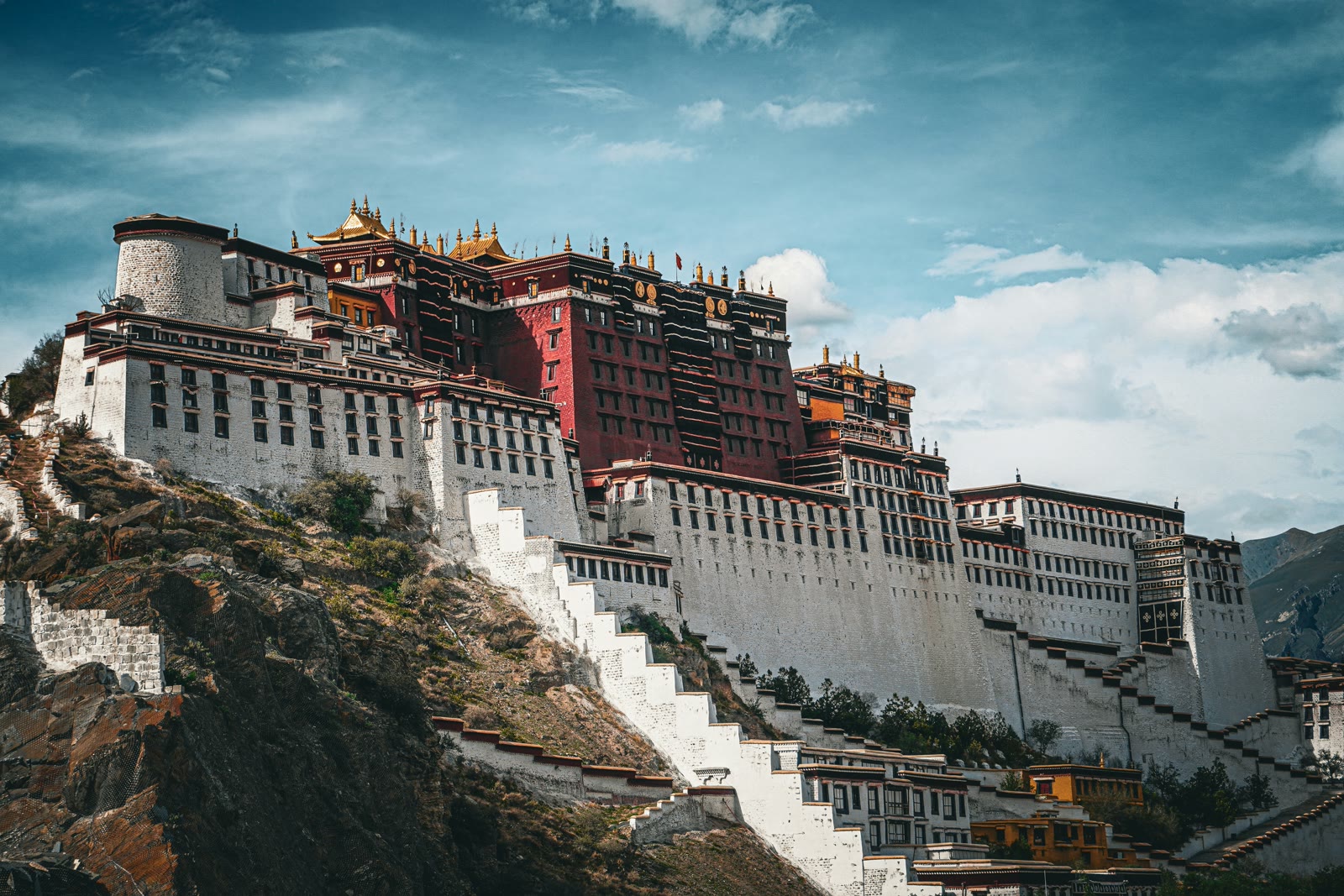
Lhasa, the capital of Tibet at 3,656 metres (11,995 feet), sits in a high-altitude valley on the Tibetan Plateau, ringed by mountains and bisected by the Kyichu River. Known as the “Sunlight City” for its 3,000-plus annual hours of sunshine, Lhasa has a cold semi-arid climate with extreme daily temperature swings of 15-17°C and a brief summer monsoon from June through September. The city is the spiritual and political centre of Tibetan Buddhism, home to the UNESCO-listed Potala Palace, Jokhang Temple, and three great Gelugpa monasteries. Oxygen levels are roughly 68% of sea level, and ultraviolet radiation is intense year-round. This guide covers everything from monthly weather to the best hotels in each district.
Welcome to Lhasa: What to Expect
Walking through Lhasa for the first time, the thin air is the first thing you notice: even a gentle uphill slope leaves you breathing harder than expected. The city spreads along the Kyichu Valley floor and up surrounding hillsides, with the gold-roofed Potala Palace dominating the skyline from its perch on Red Hill. Morning brings the smell of juniper incense and butter lamps as pilgrims begin their kora around the Jokhang Temple. Afternoons from June through September reliably bring short but intense rain showers, typically clearing by evening. The old city (Barkhor) centres on the Jokhang Temple, while modern Lhasa extends west along Beijing Road to the railway station. Lhasa is not a large city by Chinese standards (roughly 900,000 residents in the urban district), and most sights cluster within a 5km radius.
Lhasa Weather at a Glance
Lhasa’s high-altitude plateau climate means cold, bone-dry winters and mild, monsoon-influenced summers. January averages 7°C during the day and -9°C at night with essentially zero rain. July, the warmest month, reaches 22°C by day and 10°C at night but brings 130mm of rainfall across 20 days, almost entirely as afternoon showers. The annual temperature range is relatively narrow (roughly 15°C between January and July highs), but the daily range is extreme: 15-17°C between daytime highs and overnight lows is normal year-round. Annual precipitation totals about 430mm, 85% of which falls from June through September. Lhasa receives around 3,000 hours of sunshine annually, among the highest for any city its size. UV levels are extreme: SPF 50+ sunscreen and sunglasses are essential even on cloudy days. For the full monthly breakdown with temperature and rainfall tables, see our Lhasa Weather by Month article.
Lhasa Seasonal Snapshot
- Winter (November-February): Daytime highs 7-11°C, nighttime lows -9 to -5°C. Near-zero rainfall, intensely blue skies, 8-9 hours of daily sun. Few tourists, hotel rates at annual lows. Many guesthouses close. Losar (Tibetan New Year, usually February) is a cultural highlight but means business closures.
- Spring (March-April): Warming trend: highs 12-16°C, lows -2 to 1°C. Only 4-10mm of rain. Dust storms possible in March from plateau winds. Apricot blossoms and greening barley fields by late April. Moderate tourist numbers and hotel rates.
- Summer (May-August): Highs 20-23°C, lows 5-10°C. Monsoon arrives June: July-August each bring 120-130mm across 20 rain days. Rain falls as afternoon showers; mornings are reliably clear. Landscape at its greenest. Peak domestic tourism; book hotels 2-4 weeks ahead. Shoton Festival in August.
- Autumn (September-October): Highs 16-19°C, lows 1-7°C. Monsoon recedes, skies clear, golden poplar foliage. September and October are excellent months for comfortable weather and manageable crowds. Hotel rates drop from summer highs after mid-October.
Lhasa Quick Facts
- Best months to visit: May and September (comfortable temperatures, low rainfall, manageable crowds)
- Warmest month: July (average high 22°C / 72°F)
- Coldest month: January (average low -9°C / 16°F)
- Wettest month: July (130mm / 5.1 inches)
- Annual sunshine: 3,000-plus hours
- Elevation: 3,656 metres (11,995 feet)
- Oxygen level: 68% of sea level
- Airport: Lhasa Gonggar (LXA), 62km southwest
- Currency: Chinese Yuan (CNY)
- Language: Tibetan, Mandarin Chinese
Lhasa Location and Geography
Lhasa sits in the Kyichu Valley on the southern Tibetan Plateau, a vast high-altitude region often called the “Roof of the World.” The city is ringed by mountains: the Nyenchen Tanglha range lies to the north and the Himalayan foothills to the south. The Kyichu River, a tributary of the Yarlung Tsangpo (Brahmaputra), flows through the city from northeast to southwest. Lhasa’s latitude (29.6°N) places it at roughly the same distance from the equator as Cairo or Houston, but its extreme altitude produces a climate entirely unlike those cities. The nearest major Chinese city is Chengdu (1,300km east), connected by a 2-hour flight or 36-hour train journey on the Qinghai-Tibet Railway. Lhasa is 720km from Kathmandu, Nepal, across the Himalayan passes.
Lhasa Travel Guides
- Lhasa Weather by Month: Month-by-month temperatures, rainfall, sunshine hours, and what to pack. Includes a climate data table for every month.
- Best Time to Visit Lhasa: Seasonal breakdown with specific date ranges for best weather, lowest prices, smallest crowds, and festival timing.
- Things to Do in Lhasa: Potala Palace, Jokhang Temple, Sera Monastery debating monks, Drepung Monastery, Ganden Monastery, Barkhor pilgrim circuit, Namtso Lake, and Yamdrok Lake day trips, with ticket prices, hours, and transport details.
- Lhasa Events and Festivals: Tibetan New Year (Losar), Saga Dawa, Shoton Yogurt Festival, Monlam Great Prayer Festival, Butter Lamp Festival, and the Garma Rigi Bathing Festival, with approximate dates and locations.
- Lhasa Neighborhoods Guide: The Barkhor old city, Potala Palace area, western Lhasa near the railway station, and the eastern university district, with who each area suits and average hotel prices.
- Where to Stay in Lhasa: Hotels by area and budget tier: luxury (St. Regis, Shangri-La, InterContinental), mid-range (Atour, Echarm, Hilton Garden Inn), and boutique guesthouses (House of Shambhala, Shambhala Palace) in the old city.
- Lhasa Travel Tips and FAQ: Tibet Travel Permit process, Lhasa Gonggar Airport and railway station, altitude sickness prevention, getting around the city, money and payments, safety, etiquette, and answers to frequently asked questions.
Suggested Hotels in Lhasa
The St. Regis Lhasa Resort
Lhasa’s top luxury property with Potala Palace views, an indoor swimming pool, the Iridium Spa, and three restaurants in a contemporary Tibetan-design complex. Best for honeymooners and luxury travellers wanting the finest accommodation in Tibet. Check rates and availability
Shangri-La Lhasa
A luxury hotel near Norbulingka with 289 mountain-view rooms, an oxygen lounge (particularly useful at this altitude), four restaurants, and extensive gardens. Best for travellers wanting five-star comfort with Tibetan design elements and reliable international standards. Check rates and availability
House of Shambhala
A boutique Tibetan courtyard guesthouse in the Barkhor old city, 5 minutes from the Jokhang Temple, with hand-painted ceilings, Tibetan rugs, and a rooftop terrace with Potala Palace views. Best for couples and culture-focused travellers wanting an authentic, intimate Tibetan stay at moderate prices. Check rates and availability
