


 Partly Cloudy
  Sunny
Sunny  Patchy rain nearby
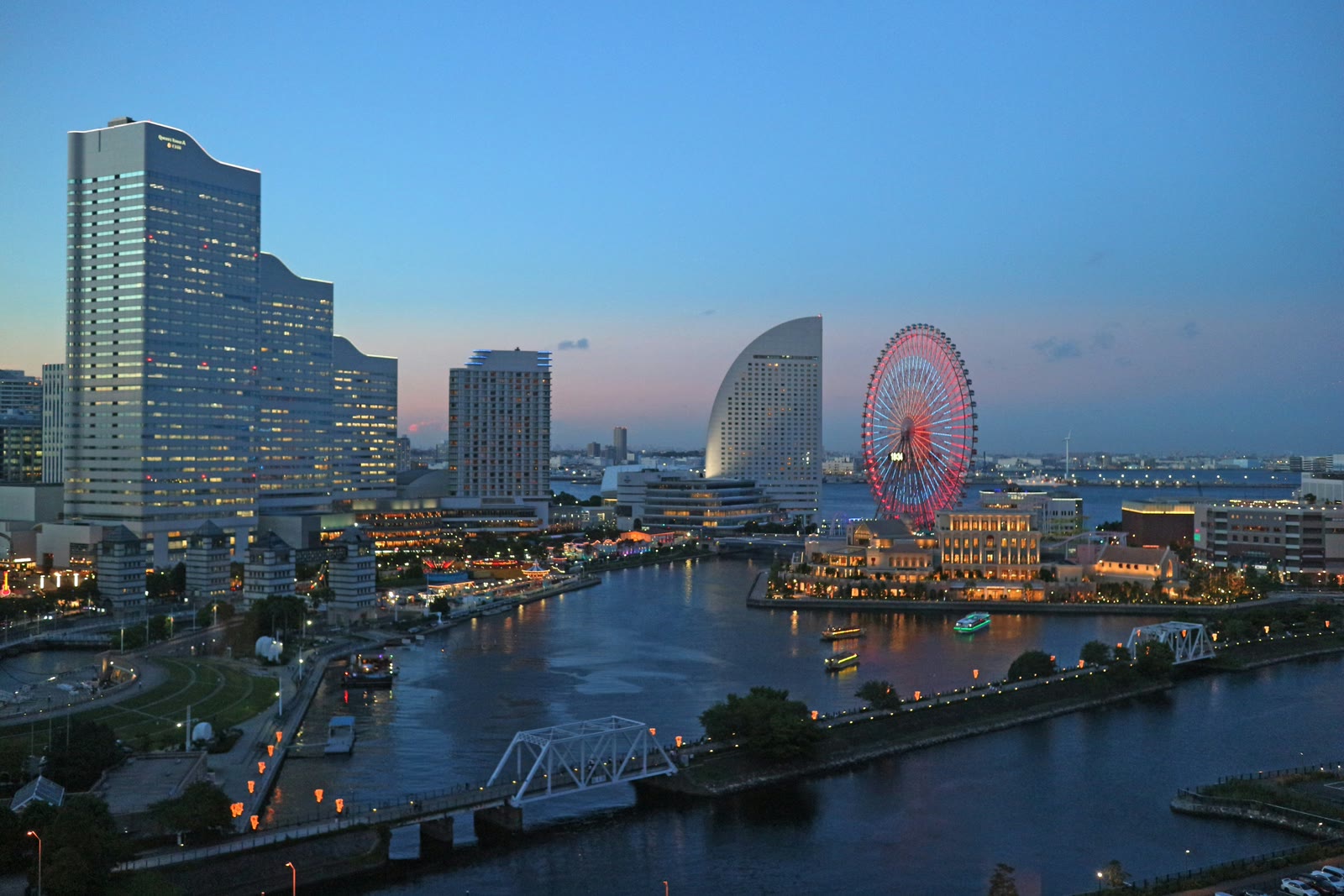
 Yokohama, Japan’s second-largest city with 3.7 million residents, sits on Tokyo Bay just 30 minutes south of Tokyo Station. It’s a port city that opened Japan to the world in 1859 and never stopped looking outward. The result is a city where a 1457 pagoda stands inside a traditional silk merchant’s garden, a 296-meter skyscraper dominates the waterfront, and the largest Chinatown in Japan crackles with 600 restaurants across 10 city blocks. Yokohama has a humid subtropical climate with hot, sticky summers (31°C/88°F in August), mild winters (10°C/50°F in January), 1,730 mm of annual rainfall, a rainy season from mid-June to late July, and typhoon risk from August through October.
Welcome to Yokohama
Unlike Tokyo’s sprawling urban grid, Yokohama compresses its best sights into a walkable waterfront loop. You can start your morning at the observation deck of Landmark Tower (1,000 yen, open 10:00), walk 10 minutes to the Red Brick Warehouse for lunch, spend the afternoon in Chinatown’s alleys and Sankeien Garden’s 17 historic buildings, and finish with craft beer in the dive bars of Noge. The city’s flat terrain and well-marked walking routes make it one of Japan’s most pedestrian-friendly cities.
Yokohama’s weather shapes the visitor experience more than in many Japanese cities. The Minato Mirai waterfront is glorious on a clear autumn day but windswept and closed during a September typhoon. Cherry blossom season in late March packs Sankeien Garden; the rainy season in June empties it. The Pikachu Outbreak parade in early August draws 2 million visitors to the waterfront at the hottest, most humid time of year. Knowing when to go matters here, and this guide covers all seven angles: monthly weather data, the best times to visit, what to do, the events calendar, the neighborhoods, where to stay, and the practical travel tips you’ll actually use.
Yokohama Weather at a Glance
Yokohama’s humid subtropical climate (Koppen Cfa) delivers four distinct seasons moderated by the Pacific Ocean. Summer lasts from late June through September with daytime highs of 29-31°C (84-88°F), humidity above 78%, and 160-240 mm of monthly rain including typhoon-driven downpours. Winter runs December through February with highs of 10-12°C (50-54°F), lows of 2-5°C (36-41°F), and only 65-70 mm of monthly rain. The swing seasons (April-May and October-November) offer the best weather: 17-22°C (63-72°F), manageable humidity, and moderate rainfall. Snow is rare, occurring once every 3-4 years. The sea temperature ranges from 14°C (57°F) in February to 27°C (81°F) in August.
Yokohama Seasonal Snapshot
- Spring (March to May): Cherry blossoms peak March 25 to April 5. Daytime 13-22°C (55-72°F). Golden Week (April 29 to May 5) brings domestic crowds and 30-50% hotel price spikes. The best compromise is the second half of April or late May after the holiday rush.
- Summer (June to August): Tsuyu rainy season June 8 to July 18 with 14-16 rainy days per month. Late July and August bring heat (31°C/88°F), humidity (80%+), and typhoon season. Pikachu Outbreak and fireworks festivals draw crowds despite the weather. Hotel rates hit annual lows in late June.
- Autumn (September to November): September is the wettest month (240 mm) with 2-3 typhoon disruptions. Conditions improve sharply after October 15 with clear skies, 22°C (72°F) highs, Oktoberfest, and the Jazz Promenade. November is the single best month: 17°C (63°F), 100 mm of rain, autumn foliage at its peak.
- Winter (December to February): Dry (65-70 mm/month), cool (10°C/50°F highs), and uncrowded except for New Year’s week. Christmas illuminations and the Red Brick Warehouse market run through December 25. Hotel rates bottom out in January and February. Mount Fuji visible from Landmark Tower on clear mornings.
Yokohama Travel Guides
- Yokohama Weather by Month: Month-by-month temperatures in °C and °F, rainfall in mm, humidity, sunshine hours, sea temperatures, and a comparison table covering all 12 months.
- Best Time to Visit Yokohama: Optimal date ranges for weather, lowest prices, fewest crowds, cherry blossoms, and typhoon avoidance. Season-by-season breakdown with hotel pricing data.
- Things to Do in Yokohama: 12 attractions across Minato Mirai, Chinatown, gardens, and museums. Each entry includes hours, admission fees, nearest station, and practical tips.
- Yokohama Events and Festivals: Annual calendar from cherry blossom illuminations and Pikachu Outbreak to Oktoberfest, Jazz Promenade, Christmas Market, and Chinese New Year with specific dates and locations.
- Yokohama Neighborhoods Guide: Six districts from Minato Mirai to Noge’s bar alleys. Boundaries, atmosphere, hotel price ranges, transit access, and who each area suits.
- Where to Stay in Yokohama: Hotel recommendations by area at three price points. Luxury towers in Minato Mirai, mid-range options in Kannai, and budget picks in Shin-Yokohama with Booking.com links.
- Yokohama Travel Tips and FAQ: Haneda and Narita airport transfers with costs, train and bus tickets, visa rules, money and ATMs, safety, internet and SIM cards, power plugs, and language tips.
Yokohama Quick Facts
- Population: 3.7 million (Japan’s largest municipality by population, second-largest city after Tokyo’s 23 wards)
- Best months for weather: November, April, May, October (after the 15th)
- Warmest month: August, average high 31°C (88°F)
- Coldest month: January, average high 10°C (50°F)
- Wettest month: September (240 mm, 14 rainy days)
- Driest months: January and December (65 mm, 6 rainy days)
- Rainy season (tsuyu): Roughly June 8 to July 18
- Typhoon season: August through October, peaking in September
- Sea temperature range: 14°C (57°F) in February to 27°C (81°F) in August
- Annual sunshine: Approximately 1,900 hours
- Nearest airports: Haneda (HND, 25-30 min, 450 yen by train), Narita (NRT, 85-110 min, 4,370 yen by Narita Express)
- Time zone: Japan Standard Time (UTC+9), no daylight saving
- Currency: Japanese yen (JPY). 100 yen was approximately US$0.67 in mid-2026
Where to Stay in Yokohama
Yokohama’s hotels cluster in three areas. Minato Mirai has the luxury high-rises with bay views (InterContinental Pier 8, Yokohama Bay Hotel Tokyu) and upper-mid-range chains (Mitsui Garden Premier). Kannai and Bashamichi offer character-rich mid-range options (Hotel New Grand, The Gate Hotel by Hulic) at lower prices. Shin-Yokohama, built around the Shinkansen station, has the cheapest large rooms (Shin-Yokohama Prince, Best Western Fino) but requires a 10-minute subway ride to the waterfront. For the full breakdown with specific recommendations at three budget levels, see the where to stay guide.
Suggested Hotels in Yokohama
InterContinental Yokohama Pier 8
Yokohama’s newest 5-star sits on its own pier with floor-to-ceiling harbor-view rooms, a rooftop bar, and direct waterfront promenade access. Opened in 2022, it’s the city’s top luxury address. Best for couples and luxury travelers. Check rates and availability
The Gate Hotel Yokohama by Hulic
A stylish 4-star near Marine Tower with a rooftop terrace bar, bay views, and rooms of 22-30 square meters. Modern Japanese design at a mid-range price point. Best for couples and design-conscious travelers. Check rates and availability
APA Hotel Yokohama Kannai
A reliable budget chain with compact functional rooms, a public bath, and rates starting at 6,000 yen. Located 3 minutes from Kannai Station, 10 minutes on foot to Chinatown and the waterfront. Best for solo travelers and budget-focused visitors. Check rates and availability
City Articles
Best Time to Visit Yokohama
Yokohama works year-round but the best window for weather is mid-October to November and April to mid-May. You’ll get daytime highs of 17-22°C (63-72°F), low humidity, and minimal rain outside of the early October typhoon tail. Cherry blossom season (late March to early April) is the most scenic period but also the most expensive, with […]
Read MoreThings to Do in Yokohama
Yokohama packs Japan’s largest Chinatown, a futuristic waterfront district, one of the country’s tallest buildings, and a 250-year-old traditional garden into a compact, walkable area. It’s 30 minutes from Tokyo Station by JR train and works as a day trip or a 2-3 day standalone destination. Here are the top attractions with practical details: opening […]
Read MoreWhere to Stay in Yokohama
Yokohama’s hotel scene splits between the high-rise luxury towers of Minato Mirai, the historic mid-range hotels of Kannai, the business-focused chains of Shin-Yokohama, and a handful of character properties in Motomachi and Yamate. Nearly every hotel is within a 15-minute walk of a train station. Here’s where to stay by area with specific hotel recommendations […]
Read MoreYokohama Events and Festivals
Yokohama’s event calendar reflects its dual identity as a historic port and a modern entertainment hub. The fireworks festivals in summer draw half a million spectators, the jazz festival in autumn runs across 30 venues, and the Christmas Market transforms the Red Brick Warehouse into a European-style winter village. Here’s the full annual calendar with […]
Read MoreYokohama Neighborhoods
Yokohama’s neighborhoods form concentric rings around the original port: the futuristic Minato Mirai waterfront, the historic Kannai district with its European-era architecture, the bustling Chinatown, the bohemian Noge bar district, and the upscale Yamate residential bluff. Each area has a distinct character and hotel price point. Here’s the breakdown with boundaries, what each area is […]
Read MoreYokohama Travel Tips and FAQ
Yokohama runs at a slightly slower pace than Tokyo but shares the same transit system, currency, and cultural norms. You can drink the tap water, the trains run on time, and English signage is better than in most Japanese cities thanks to the port’s international history. Here’s the practical information you need for a smooth […]
Read MoreYokohama Weather by Month
Yokohama sits on the Pacific coast of Honshu, 30 km south of Tokyo, and shares the same humid subtropical climate (Köppen Cfa). The city gets 1,730 mm of rain annually, about the same as Tokyo. Summers are hot and sticky with the rainy season (tsuyu) from mid-June to late July, and typhoons between August and […]
Read More