

 Sunny
 Cloudy
 Patchy rain nearby
This post may contain affiliate links. If you purchase through them, I may earn a small commission at no extra cost to you. Thanks for supporting our small business.
Miyakojima is a coral island in Japan’s Okinawa Prefecture, about 300 km southwest of Naha and 280 km east of Taiwan. Its subtropical climate keeps January at a mild 18.3°C (64.9°F) average and July at 28.9°C (84.0°F), with about 2,076 mm of rain spread across the year and a typhoon season from July to October. The island is best known for Yonaha Maehama Beach, a 7 km stretch of white sand repeatedly ranked Japan’s best, and for some of the country’s clearest snorkeling and diving water. Use this page for the climate overview, seasonal snapshot, and quick facts, then open the guides below for month-by-month data, hotels, and things to do.
Welcome to Miyakojima
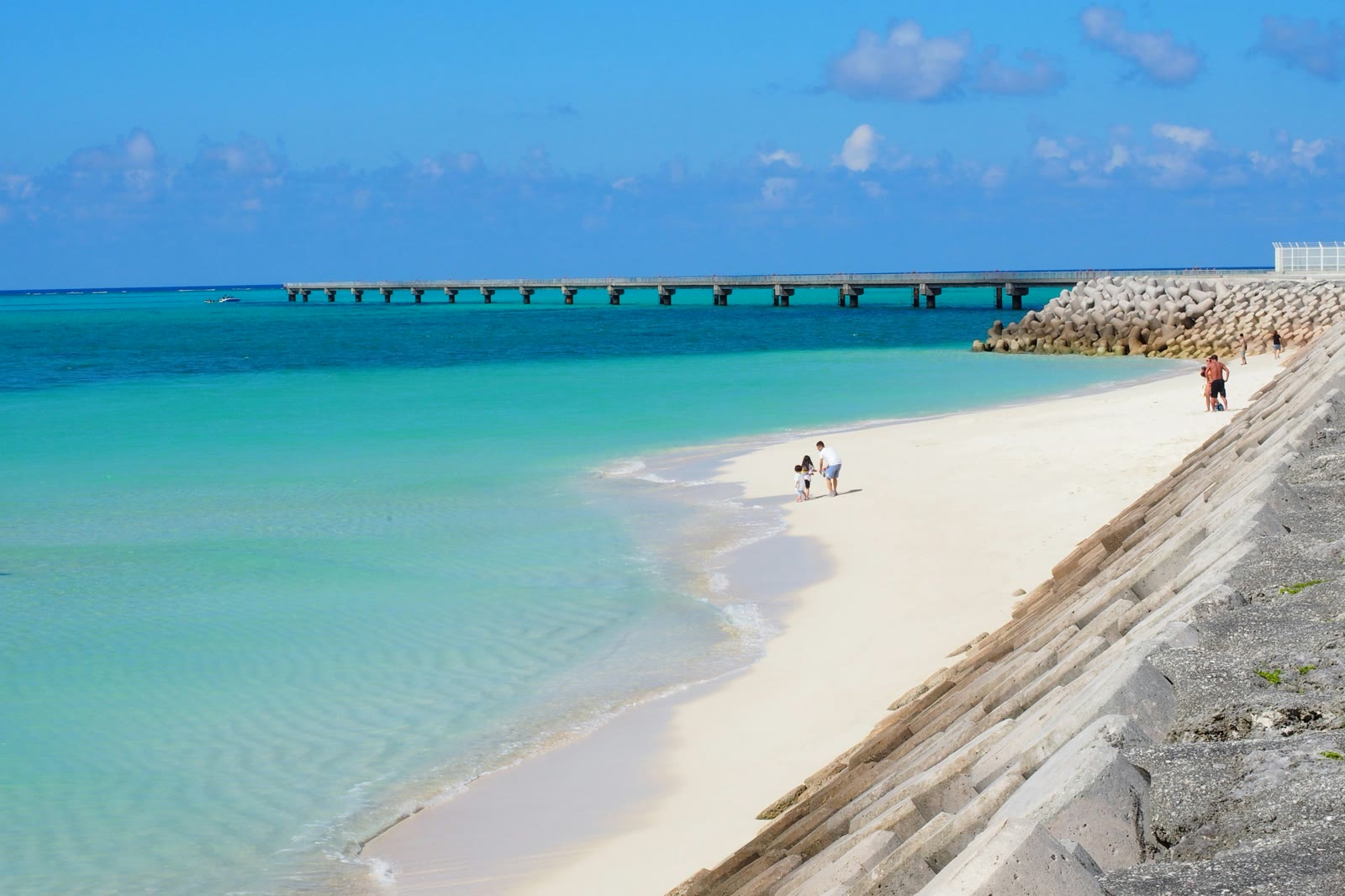
Miyakojima City is built around Miyako Island and the three connected islands of Irabu, Ikema, and Kurima, all joined by toll-free bridges. The population is about 55,000, and the pace is noticeably calmer than Naha on Okinawa’s main island. Locals call the water “Miyako Blue,” a bright turquoise that comes from shallow white-sand bottoms and coral reefs. Two airports serve the island: Miyako Airport (MMY) in Hirara and Shimojishima Airport (SHI) on the western side.
Most visitors come for the beaches and the reef, but the island also has a distinctive food culture built on Miyako soba noodles, sea-salt farming, and prized mangoes, plus the Paantu mud festival, a UNESCO-listed ritual held each autumn. A rental car is the standard way to explore, and the whole island can be crossed in under 30 minutes.
The island’s identity mixes Ryukyu heritage with an 1873 rescue story, when villagers saved the crew of a wrecked German merchant ship, an event now marked by the Ueno German Culture Village. The outer islands joined Miyako by road through the Ikema Ohashi (1,425 m), Kurima Ohashi (1,690 m), and Irabu Ohashi (3,540 m) bridges, and Irabu Ohashi has been Japan’s longest toll-free bridge since 2019.
A typical trip lasts three or four days: one day on Yonaha Maehama and the south-coast beaches, one day snorkeling or taking a boat out to the Yabiji reef, and one day driving the Irabu Ohashi bridge and stopping at Cape Higashi-Hennazaki. Meals center on Miyako soba, a flat noodle in pork broth that costs about JPY 700 to 900 a bowl, plus local sea salt and summer mangoes.
Miyakojima Weather at a Glance
Miyakojima has a monsoon-influenced tropical rainforest climate (Köppen Af), which in practice means two seasons: a mild, cloudier winter from December to February, and a long, hot, humid stretch from May to October. Temperatures stay warm all year, with a yearly mean of 23.8°C (74.8°F). The coldest month, January, averages 18.3°C (64.9°F), and the warmest, July, averages 28.9°C (84.0°F).
Rainfall totals 2,076 mm a year and is heaviest in August (257.4 mm) and September (259.3 mm), much of it from typhoons. February is the driest month at 119.8 mm. Humidity runs from 71% in December to 84% in June, so even the dry months feel damp. Sunshine peaks in July at 241 hours and bottoms out in January at 85.5 hours.
Sea temperature runs from about 22°C (72°F) in February to 29°C (84°F) in August, which keeps snorkeling viable most of the year. The clearest, calmest water usually falls between May and October. Winter brings stronger north winds and more cloud, which is also why airfare and hotel rates bottom out from January to February.
Typhoon season runs July through October and peaks in August and September, when a single storm can stop flights and ferries for a day or more. If you travel then, keep one flexible day and book refundable rates. The island’s safest travel windows are April to June and October to November.
Miyakojima’s Four Seasons
- Winter (December to February): Highs of 20.6 to 22.2°C (69.1 to 72.0°F), lows near 16 to 18°C (61 to 64°F), and the cloudiest, cheapest stretch of the year.
- Spring (March to May): Rapid warming from 20.1°C (68.2°F) in March to 25.0°C (77.0°F) in May, with beaches reopening in April and rain building toward the rainy season.
- Summer (June to September): Hot and humid, with July peaking at 28.9°C (84.0°F), plus the wettest months and the heart of typhoon season.
- Autumn (October and November): Cooling to 25.5°C (77.9°F) and 23.1°C (73.6°F), with easing rain, warm sea, and the Paantu festival in the ninth lunar month.
For most travelers the best overall window is April to June, when the water is warm and the rain has not yet peaked, or October to November, when the sea is still swimmable and the Paantu festival takes place.
Explore Miyakojima: All Our Guides
These seven guides cover the island in detail. Open each one for the specifics you need to plan a trip.
- Miyakojima Weather by Month: monthly temperatures, rainfall, humidity, and sunshine with a full comparison table.
- Best Time to Visit Miyakojima: the exact windows for good weather, lower prices, and the festivals.
- Things to Do in Miyakojima: beaches, snorkeling reefs, landmarks, and local food with prices and hours.
- Miyakojima Events and Festivals: the Paantu mud festival, summer fireworks, mango festival, and more.
- Miyakojima Neighborhoods: Hirara, the southwest coast, and the outer islands, with who each area suits.
- Where to Stay in Miyakojima: nine specific hotels across three areas, from budget to luxury.
- Miyakojima Travel Tips and FAQ: the two airports, transport, money, typhoon safety, and common questions.
Miyakojima Location and Getting Around
Miyakojima sits in the southern Ryukyu Islands, closer to Taiwan than to Tokyo. The main flight connection is from Naha on Okinawa’s main island, a 50-minute hop, with direct flights from Tokyo Haneda, Osaka Kansai, and several international cities into the budget-focused Shimojishima Airport. There is no rail on the island. Rental cars cost about JPY 6,000 to 10,000 a day, and the Miyako Kyoei Bus covers Hirara and the major beaches. All three outer-island bridges are free to cross.
Flights from Naha to Miyako Airport take about 50 minutes and run through the day. Direct services from Tokyo Haneda take roughly 3 hours and from Osaka Kansai about 2 hours 15 minutes, while budget carriers into Shimojishima Airport add cheaper options from mainland Japan and a few international cities. On the island, the Miyako Kyoei Bus links Hirara to the main beaches, but a rental car, usually JPY 6,000 to 10,000 a day, is the standard way to reach the outer islands and quieter coves.
Miyakojima Quick Facts
- Best beach months: April to June and September to November, when the water is warm and rain is lighter.
- Warmest month: July, with a mean of 28.9°C (84.0°F) and a high of 31.7°C (89.1°F).
- Coolest month: January, with a mean of 18.3°C (64.9°F).
- Wettest months: August (257.4 mm) and September (259.3 mm).
- Driest month: February (119.8 mm).
- Sea temperature: about 22°C (72°F) in February to 29°C (84°F) in August.
- Annual sunshine: 1,744 hours, peaking at 241 hours in July.
- Typhoon season: July to October, with the highest risk in August and September.
- Airports: Miyako (MMY) in Hirara and Shimojishima (SHI) on the western side.
Where to Stay in Miyakojima
Hirara has the most restaurants and the best value hotels, the southwest coast around Maehama and Shigira holds the big beachfront resorts, and Irabu Island across the bridge is the fastest-growing villa area. Below are three well-reviewed picks spanning luxury, mid-range, and budget.
Expect to pay roughly JPY 8,000 to 18,000 a night for a Hirara business hotel or guesthouse, and JPY 25,000 to 60,000 for a beachfront or villa resort on the southwest coast or Irabu Island. Rates peak in July and August and again around Golden Week in early May, so book the big beach resorts well ahead if you are traveling then.
Suggested Hotels in Miyakojima
Miyakojima Tokyu Hotel and Resorts
Miyakojima Tokyu Hotel and Resorts sits directly behind Yonaha Maehama Beach with five restaurants, an outdoor pool, and rooms that all have ocean-view balconies. Best for families and couples who want Japan’s top-rated beach outside the door. Check rates and availability
Hotel Locus
Hotel Locus is a modern three-star a two-minute walk from Painagama Beach, with an outdoor pool, a hot tub, and the on-site Doug’s Diner and Bar. Best for couples who want to be near the sand without resort prices. Check rates and availability
Hotel Risingsun Miyakojima
Hotel Risingsun Miyakojima is a clean three-star with a shared lounge, a restaurant, and free parking, about ten minutes from Miyako Airport. Best for budget travelers who plan to spend their days exploring. Check rates and availability
