

 Sunny
 Cloudy
 Patchy rain nearby
This post may contain affiliate links. If you purchase through them, I may earn a small commission at no extra cost to you. Thanks for supporting our small business.
Kamakura is a coastal city 50km south of Tokyo that served as Japan’s political capital from 1185 to 1333 during the Kamakura Shogunate. Today it draws visitors for its 65 Buddhist temples, 19 Shinto shrines, the 13.35-meter bronze Great Buddha (Daibutsu), and two swimmable beaches on Sagami Bay. The city’s compact size (40 square kilometers) and efficient Enoden vintage train line make it possible to cover major sights in a day trip from Tokyo, but staying overnight reveals temple grounds at dawn and a relaxed coastal atmosphere that disappears during midday crowds.
Welcome to Kamakura
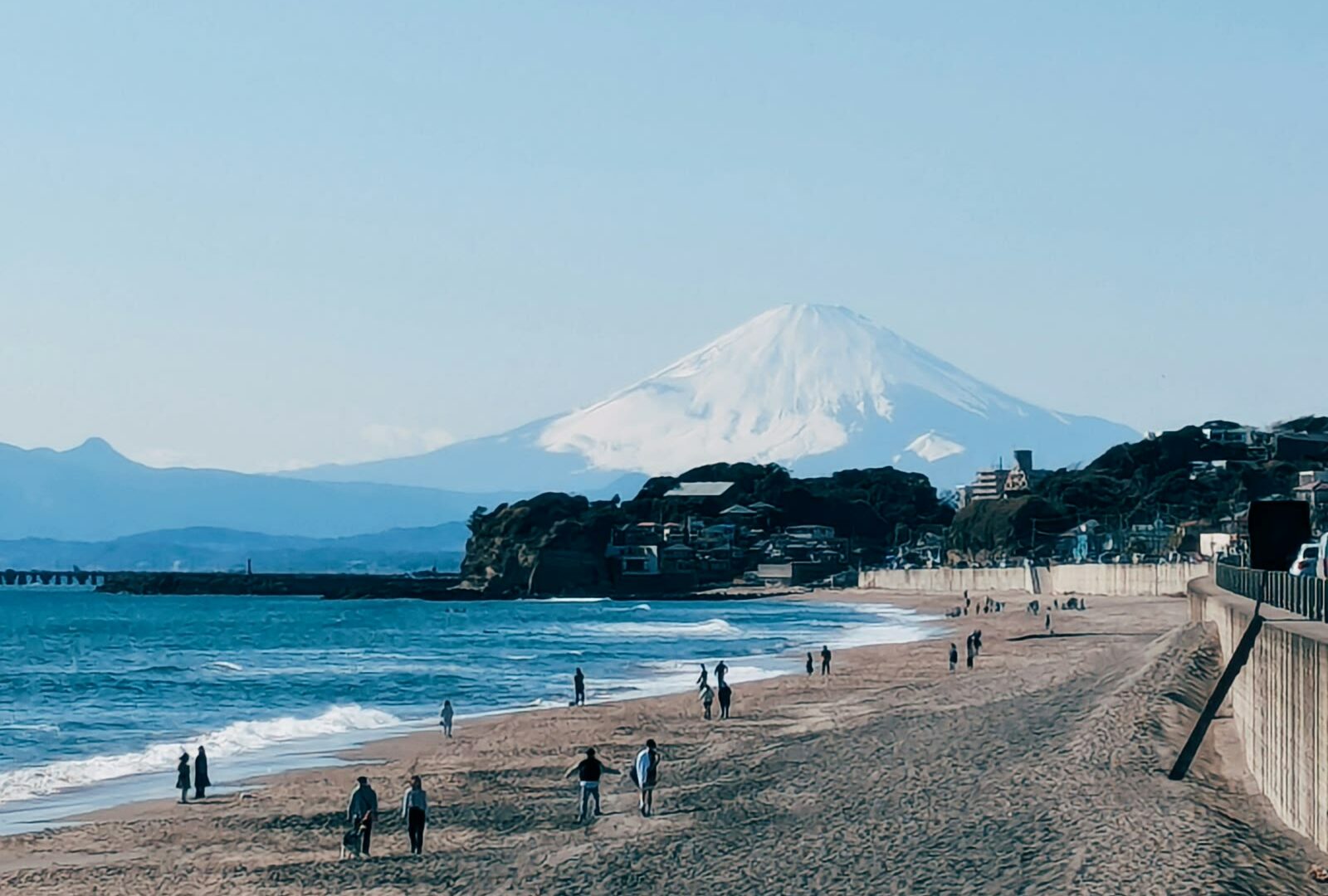
Sandwiched between wooded hills and the Pacific Ocean, Kamakura packs more history into a small area than almost anywhere in Japan. This was the seat of the Minamoto shoguns who established samurai rule, and the Zen temples they built remain active training monasteries 800 years later. The city’s other face is its 3km of beachfront, where surfers chase waves in winter and families crowd the sand in July and August. The Enoden train rattling along the coast between Kamakura and Enoshima is an attraction in itself: a 10km vintage railway with ocean views that has appeared in countless Japanese films and anime. On clear winter days, Mount Fuji rises across Sagami Bay, visible from the beach and the hillside temples.
Weather at a Glance
Kamakura has a humid subtropical climate with four distinct seasons. Summers (July-August) are hot and sticky with highs of 31°C (88°F) and humidity around 75-80%. Winters (January-February) are mild by Japanese standards, with average highs of 10°C (50°F) and lows of 3°C (37°F). The June tsuyu rainy season brings 190mm of rain over 14-16 days, and September carries typhoon risk with 210mm of precipitation. The sweet spots are April (highs of 18°C/64°F, cherry blossoms, the Kamakura Matsuri festival) and October-November (highs of 22°C/72°F tapering to 17°C/63°F, autumn foliage, clear skies). Snow is extremely rare, occurring once every few years.
Seasonal Snapshot
- Spring (March-May): Cherry blossoms peak late March to early April. Temperatures rise from 13°C (55°F) in March to 22°C (72°F) by May. The Kamakura Matsuri festival with yabusame horseback archery fills April weekends. Hiking trails are at their best in May before the rains arrive.
- Summer (June-August): Rainy season dominates June with 14-16 wet days, but hydrangeas explode at Meigetsu-in. July and August are beach season with water temperatures reaching 27°C (81°F). The Kamakura Fireworks Festival in late July draws 150,000 spectators to Yuigahama Bay. Expect crowds and humidity.
- Autumn (September-November): September brings typhoon risk and 210mm of rain. By October, humidity breaks and clear days return with highs of 22°C (72°F). November’s autumn foliage peaks at Zen temples, with evening illuminations at several sites through early December. This is the best season for photography and comfortable temple walking.
- Winter (December-February): Crisp and often sunny with highs of 10-12°C (50-54°F) and lows of 3-5°C (37-41°F). The clearest Mount Fuji views of the year. Hatsumode shrine visits January 1-3 bring 2.5 million visitors to Tsurugaoka Hachimangu. Plum blossoms start in mid-February at Zuisen-ji and Jomyo-ji.
Quick Facts
- Best months for sightseeing: April and October
- Warmest month: August (31°C / 88°F average high)
- Coldest month: January (10°C / 50°F average high)
- Wettest month: September (210mm)
- Driest months: January and December (50mm)
- Sea temperature range: 15°C (59°F) in February to 27°C (81°F) in August
- Beach season: July 1 – August 31 (lifeguards on duty)
- Cherry blossom peak: March 28 – April 5 (typical)
- Autumn foliage peak: November 25 – December 5
- Sunshine hours: 4-6 hours/day year-round (lowest in June and September)
- Getting there from Tokyo: 55-60 minutes by JR Yokosuka Line, ¥950 one way
Location Context
Kamakura sits on the Pacific coast of Kanagawa Prefecture, 50km south-southwest of central Tokyo. The city occupies a natural amphitheater: wooded hills to the north and east, Sagami Bay to the south, and the Miura Peninsula to the east. This topography shields it from the strongest winter winds off the Pacific while exposing it to summer typhoons. The Enoden railway runs along the coastline connecting Kamakura to Fujisawa via Enoshima Island. Kamakura’s climate is moderated by the ocean, making it 1-2°C cooler in summer and 1-2°C warmer in winter than inland Tokyo.
Kamakura Travel Guides
- Kamakura Weather by Month: Detailed month-by-month breakdown of temperatures, rainfall, sunshine hours, and sea temperatures with a comparison table covering all 12 months. Find out exactly when cherry blossoms bloom and when typhoon risk is highest.
- Best Time to Visit Kamakura: Season-by-season guidance on the best windows for cherry blossoms (late March), beaches (late July), autumn colors (late November), and budget travel (September and January). Includes which months to avoid and why.
- Things to Do in Kamakura: All major attractions with entry fees, opening hours, and practical tips. Covers the Great Buddha, Tsurugaoka Hachimangu, Hase-dera, five major Zen temples, the Daibutsu hiking trail, Yuigahama Beach, Enoshima Island, and Komachi-dori shopping street.
- Kamakura Events and Festivals: The full annual calendar: Kamakura Matsuri (April), hydrangea season (June), fireworks festival (July), Reitaisai (September), autumn leaf illuminations (November-December), Hatsumode (January), and Setsubun (February).
- Kamakura Neighborhoods Guide: Breakdown of every district from bustling Kamakura Station and temple-quiet Kita-Kamakura to beachfront Yuigahama and the sunset views at Inamuragasaki. Who each neighborhood suits and what you’ll find there.
- Where to Stay in Kamakura: Area-by-area hotel recommendations with specific properties at luxury, mid-range, and budget tiers. Covers the station area and beach/Hase neighborhoods with Booking.com links.
- Kamakura Travel Tips and FAQ: Transport from Tokyo, how the Enoden pass works, temple etiquette, accessibility, cash vs cards, tipping (don’t), and answers to 7 frequently asked questions from first-time visitors.
Suggested Hotels in Kamakura
Kamakura Prince Hotel
A hillside luxury resort at the southern end of Yuigahama Beach with panoramic Sagami Bay views from most rooms, an outdoor pool open during summer, and a French-Japanese fusion restaurant with floor-to-ceiling windows facing Enoshima Island. Best for couples and travelers celebrating a special occasion. Check rates and availability
WeBase Kamakura
A modern hostel-hotel hybrid a 5-minute walk from Kamakura Station with dormitory beds, private rooms with en-suite bathrooms, a shared guest kitchen, and a rooftop terrace offering partial ocean views. Best for solo travelers, backpackers, and anyone who values a social atmosphere and a central location. Check rates and availability
Guest House Kamakura Zen-ya
An 80-year-old converted wooden house tucked in a quiet residential lane 8 minutes from Kamakura Station, with tatami mat rooms, shared Japanese-style baths, and a small traditional garden. Best for travelers seeking an authentic budget stay in a historic building. Check rates and availability
