

 Overcast
  Sunny
Sunny  Mist
Mist  Cloudy
 This post may contain affiliate links. If you purchase through them, I may earn a small commission at no extra cost to you. Thanks for supporting our small business.
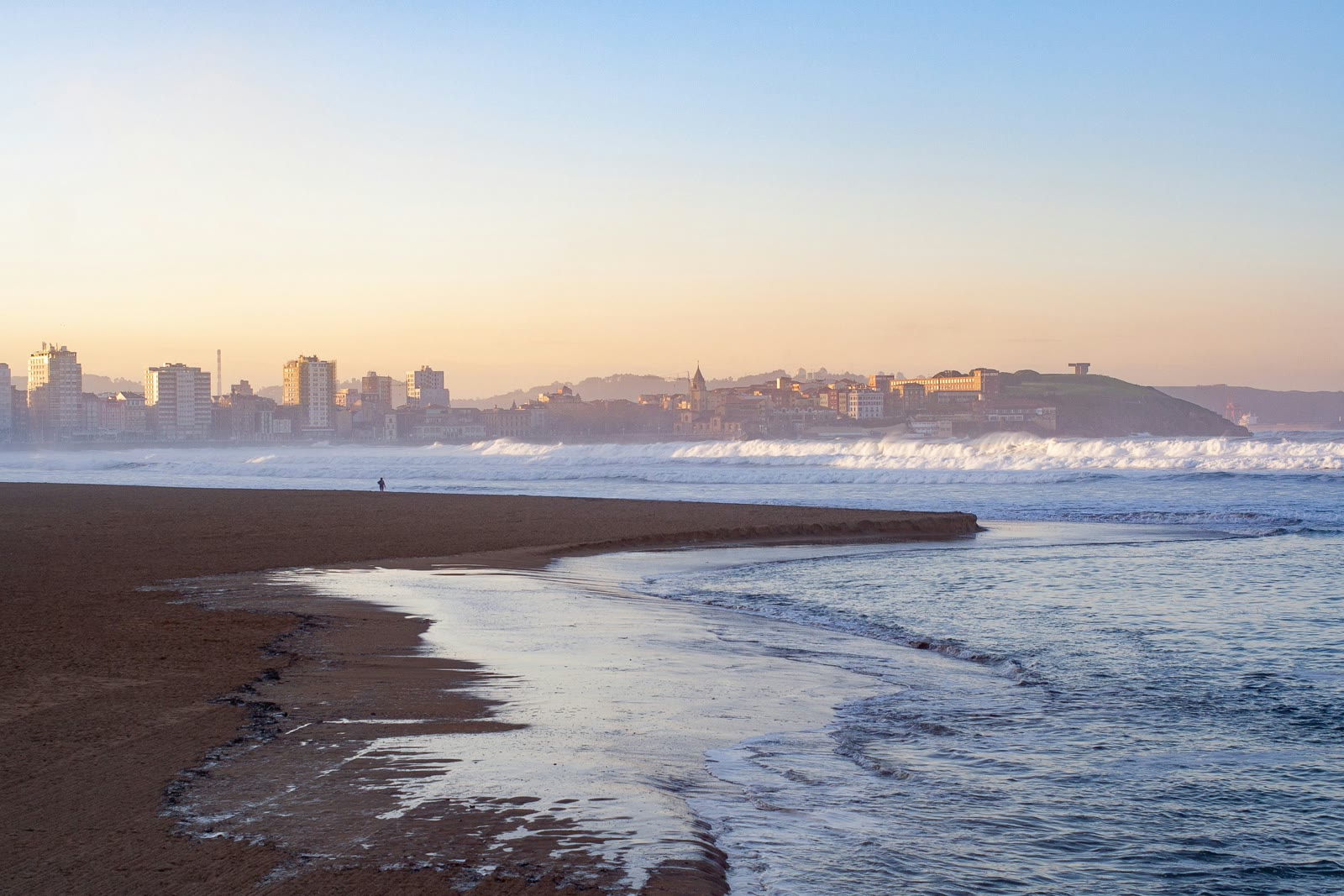
Gijón is the largest city in Asturias and the maritime heart of Spain’s Green Coast. It delivers something rare: a proper urban beach (San Lorenzo, 1.5 km of golden sand), a medieval fishermen’s quarter where cider is still poured the traditional way, and a cultural scene anchored by a world-class botanical garden and a 14th-century mill turned luxury parador. Temperatures stay between 13°C (55°F) in winter and 23°C (73°F) in summer, with the Cantabrian Sea moderating any extremes. Rain is part of the deal (about 1,000 mm annually), which is what keeps the surrounding hills so green. This guide covers everything you need to plan your trip, from the best month to visit to which neighbourhood to book your hotel in.
Weather in Gijón at a Glance
Gijón has an oceanic climate (Cfb) with mild temperatures year-round and no real extremes. The Gulf Stream keeps winters warmer than you might expect for a city on the 43rd parallel: January highs average 13°C (55°F), about the same as Barcelona. Summers are warm but never oppressive, with July and August highs of 23°C (73°F). The trade-off is rain: Gijón gets roughly 125 rainy days per year, with November the wettest month (130 mm) and July the driest (45 mm). The sea is swimmable from June through September, peaking at 20°C (68°F) in August. Snow is essentially nonexistent in the city, though the Picos de Europa mountains, 90 minutes away, have reliable snow December through April.
Gijón by Season
- Summer (June to August): Peak season. 21-23°C (70-73°F), minimal rain, sea 17-20°C. San Lorenzo Beach is in full swing with lifeguards, chiringuitos, and sunbathers. Semana Grande in August brings nightly concerts and fireworks. Book accommodation at least six weeks ahead.
- Autumn (September to November): September is still warm (22°C) with thinning crowds, making it a prime month. October brings autumnal colours and 110 mm of rain. November is the wettest month (130 mm) but hosts the FICX film festival.
- Winter (December to February): Cool and wet. Highs of 13°C (55°F), lows of 7°C (45°F). The Christmas market fills Plaza Mayor in December. Carnival (Antroxu) in February brings the biggest street party of the winter. Hotel rates are at their lowest.
- Spring (March to May): Temperatures climb from 15°C (59°F) in March to 18°C (64°F) in May. Rain is moderate. The Atlantic Botanical Garden blooms in April and May. La Ascensión festival in May fills Plaza Mayor with concerts and food stalls.
Gijón Travel Guides
Plan every part of your trip with these detailed guides:
- Gijón Weather by Month: Monthly temperatures, rainfall, sea temperatures and what to pack for every month of the year in Gijón.
- Best Time to Visit Gijón: Season-by-season breakdown of the best months for weather, beaches, festivals, surfing, and budget travel.
- Things to Do in Gijón: The top attractions, from San Lorenzo Beach and the Roman baths to the Picos de Europa day trip, with opening hours and ticket prices.
- Gijón Events and Festivals: Complete calendar: Semana Grande in August, Antroxu Carnival, FICX film festival, San Juan beach bonfires, and more.
- Best Neighborhoods in Gijón: Cimadevilla, Centro, La Arena, El Natahoyo, and Somió: find the right area for your stay.
- Where to Stay in Gijón: Area-by-area hotel recommendations for every budget, from the luxury Parador to budget guesthouses.
- Gijón Travel Tips and FAQ: Airport transfers, public transport, tipping, safety, and how to drink Asturian cider like a local.
Gijón Quick Facts
- Best beach months: July and August (sea 19-20°C, minimal rain)
- Warmest month: August (high 23°C/73°F, low 16°C/61°F)
- Coolest month: January (high 13°C/55°F, low 7°C/45°F)
- Wettest month: November (130 mm, 14 rainy days)
- Driest month: July (45 mm, 8 rainy days)
- Sunniest months: June and July (210 hours each)
- Sea temperature range: 12°C (February) to 20°C (August)
- Annual rainfall: Approximately 1,000 mm across 125 days
- Nearest airport: Asturias Airport (OVD), 30 km west, 45 minutes by bus (€5.60)
- Train to Madrid: 4 hours 30 minutes on Renfe AVE/Alvia from Gijón-Sanz Crespo
- Population: About 270,000 (city), 850,000 (metro area)
- Language: Spanish (Castellano), with some Asturian (Asturianu) spoken locally
Where to Stay in Gijón
Gijón breaks down into five distinct areas for accommodation: Cimadevilla (historic old town, best for first-time visitors), Centro (commercial hub near transport, best for short stays), La Arena/El Bibio (beachfront, best for families and sunseekers), El Natahoyo (modern redevelopment near the aquarium, quieter), and Somió (affluent suburb, home to the Parador). For a detailed breakdown of each area with specific hotel picks, see our Gijón neighborhoods guide and where to stay in Gijón guide.
Suggested Hotels in Gijón
Parador de Gijón
A restored 18th-century water mill surrounded by gardens, this is Gijón’s top luxury option. Spacious rooms (30-40 m²), an outdoor pool (seasonal), and a restaurant serving fabada and fresh Asturian seafood. Free parking. Best for couples and those seeking a quiet, upscale retreat with garden views. Check rates and availability
Silken Ciudad Gijón
A modern four-star near the marina with an indoor heated pool, sauna, and gym. Rooms are contemporary with some offering sea views. The breakfast buffet is excellent. Best for couples wanting modern comfort with wellness amenities at a mid-range price. Check rates and availability
Hotel Myro
A small, well-reviewed two-star near the train station with clean rooms, private bathrooms, and genuinely helpful owners. No restaurant, but dozens of cafés are within a two-minute walk. Best for budget-conscious travellers wanting a reliable, central base. Check rates and availability
For a more comprehensive set of hotel recommendations covering every area and budget, see the full where to stay in Gijón guide.
