

 Overcast
 Sunny
 Patchy rain nearby
This post may contain affiliate links. If you purchase through them, I may earn a small commission at no extra cost to you. Thanks for supporting our small business.
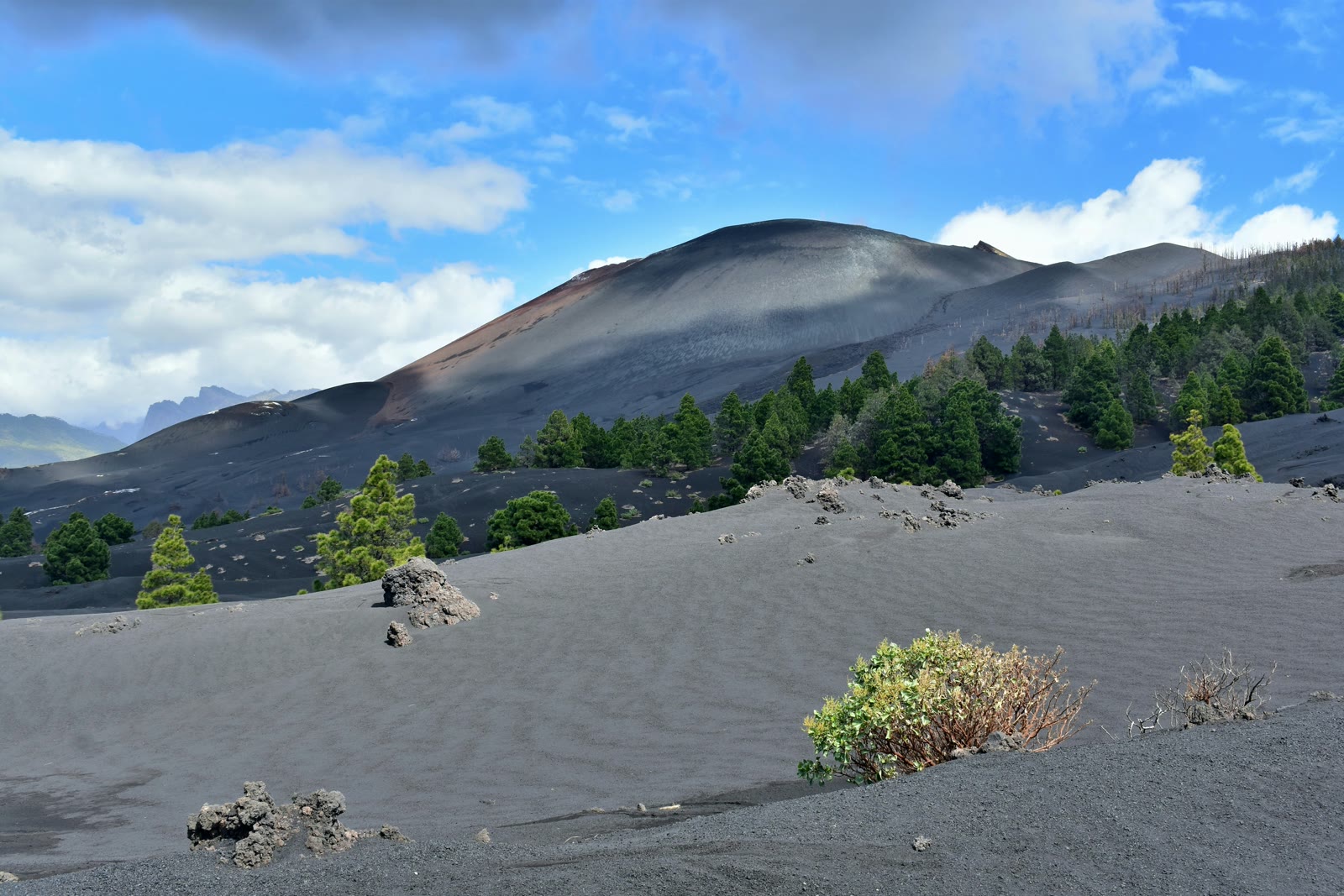
La Palma, the northwesternmost of Spain’s Canary Islands, is a 708 square kilometre volcanic island about 1,400 km southwest of Madrid. It is nicknamed La Isla Bonita (the beautiful island) and La Isla Verde (the green island) for a reason: a giant erosion caldera, a laurel forest fed by cloud, black-sand beaches and the world’s largest optical telescope all fit onto an island you can drive across in under an hour. Coastal temperatures sit between 18°C and 26°C all year, and the island splits into a green, cloudy east and a dry, sunny west. This guide covers the climate, the seasons and the seven in-depth articles below, each linked throughout.
Welcome to La Palma
Most travellers land at La Palma Airport on the east coast and drive through a landscape that changes every ten minutes: banana terraces, pine forest, bare volcanic rock, then a wall of cloud sitting at 1,500 m. The capital, Santa Cruz de La Palma, holds a 16th-century old town of cobbled streets and wooden balconies that feels a world away from the resort strip at Los Cancajos five minutes south. This is not a place built around package tourism; it is an island of hikers, stargazers and locals who have farmed these steep terraces for 500 years. Expect good food, quiet beaches and skies dark enough to see the Milky Way from a roadside pull-off.
La Palma Weather at a Glance
La Palma’s climate is subtropical and remarkably stable, cooled by the Canary Current and shaped by the northeast trade winds. At sea level the average is 20.7°C, with winter highs of 20°C in January and summer highs of 26°C in August. Rain is the real variable: the airport station records about 369 mm a year, but the green northeast can take more than 1,000 mm while the southwest around Fuencaliente gets under 300 mm. Altitude adds a second climate layer: Roque de los Muchachos at 2,426 m averages 18°C in summer and 3°C in winter, with occasional snow between December and March. The sea runs 19°C in winter and 23°C in autumn. For the full month-by-month numbers, see the La Palma weather by month article.
La Palma Seasons: A Snapshot
- Winter (December to February): 20-21°C by day, 15-16°C at night, the wettest months of the year. Snow on the peaks only. The west coast stays sunny, which is why northern Europeans winter here.
- Spring (March to May): 21-22°C, rain fading to almost nothing by May, hillsides turning gold on the dry side. The calmest, clearest season for hiking and swimming.
- Summer (June to August): 24-26°C, nearly zero rain, sea at 22-23°C. Watch for the calima, a hot Saharan dust wind that spikes temperatures a few days each summer.
- Autumn (September to November): 26°C in September fading to 22°C by November, when rain and cloud return to the east. October keeps warm seas with autumn prices.
Best Time to Visit La Palma
There is no single best month; it depends on what you want. May to September is sunniest and warmest, March to May and October to November are best for hiking, and a new-moon week between May and September gives the darkest skies for stargazing. The cheapest flights and rooms land in mid-January to mid-March and November. For the exact trade-offs on price, crowds, hiking and events, read the best time to visit La Palma article.
La Palma Travel Guides
- La Palma weather by month – monthly temperatures, rainfall, sea temperatures and sunshine hours, plus the east-west climate divide.
- best time to visit La Palma – the exact months for weather, lower prices, fewer crowds, hiking and stargazing, and which months to avoid.
- things to do in La Palma – the observatory, the caldera, the volcanoes, the beaches and the towns, with hours and prices.
- La Palma events and festivals – Los Indianos, the five-yearly Bajada de la Virgen, Corpus Christi and the wine festivals, with dates.
- La Palma neighborhoods – Santa Cruz, Los Llanos, Puerto Naos, Tazacorte, Fuencaliente and the interior, with what each costs.
- where to stay in La Palma – the three stay zones with three verified hotels each, from luxury to budget.
- La Palma travel tips – airport and ferry routes, car hire and bus fares, money, safety, packing and FAQs.
Quick Facts About La Palma
- Best months for sun: May to September. Warmest sea: September and October at 23°C.
- Wettest month: December (75 mm in Santa Cruz). Driest: July (1 mm).
- Capital: Santa Cruz de La Palma (about 15,000 people). Largest town: Los Llanos de Aridane.
- Airport: La Palma (SPC), 8 km south of the capital. Main ferry port: Santa Cruz de La Palma.
- Time zone: WET/WEST, the same as London, one hour behind mainland Spain. Currency: euro.
- Sunniest side: the west, around Puerto Naos and Tazacorte. Greenest side: the northeast, around Los Tilos.
Where to Stay in La Palma
Choose your base by which side you want to wake up on. The east coast suits first-time visitors who want the capital, the airport and the calm Los Cancajos beach. The west, around Los Llanos, Puerto Naos and Tazacorte, is the sunniest with the longest beach. The south, at Fuencaliente, is resort and volcano country. The where to stay guide lists verified hotels in each zone, and the neighborhoods article breaks down every town.
Suggested Hotels in La Palma
Hotel Hacienda de Abajo
An adults-only boutique hotel in a historic Tazacorte mansion with free spa access and an acclaimed restaurant. Best for couples seeking quiet luxury. Check rates and availability
H10 Taburiente Playa
A seafront 4-star in Los Cancajos with three pools, a buffet restaurant and a kids’ club, 300 m from the beach. Best for families and all-inclusive stays. Check rates and availability
Hotel San Telmo
A restored 17th-century townhouse in central Santa Cruz with a patio and roof terrace. Best for solo travellers and couples who want the old town on their doorstep. Check rates and availability
